

HIPAA rules shape how digital health data stays private in modern medicine. So it might surprise you that healthcare organizations face 350 percent more cybersecurity incidents than any other industry. Most people think compliance is all about paperwork and red tape, but the real Security Rule sets a whole new bar and flips the script on patient trust and how clinics defend sensitive information.
Table of Contents
- What is the Security Rule in HIPAA?
- Why the Security Rule Matters for Health Data Protection
- How the Security Rule Works in Practice
- Key Concepts and Requirements of the Security Rule
- Real-World Implications of the Security Rule for Businesses
Quick Summary
| Takeaway | Explanation |
|---|---|
| Implement Robust Safeguards | Healthcare organizations must enforce administrative, physical, and technical safeguards to protect electronic health information. |
| Conduct Regular Risk Assessments | Organizations must identify and mitigate potential vulnerabilities in their electronic health information systems continuously. |
| Train Workforce on Security Protocols | Employee training and awareness are essential to maintaining data protection and preventing breaches. |
| Adhere to Compliance Requirements | Strict legal mandates must be followed to avoid serious penalties and maintain patient trust. |
| Develop Ongoing Risk Management Strategies | Continuous evaluation of risks and regular updates to protocols are crucial to address evolving cybersecurity threats. |
What is the Security Rule in HIPAA?
The Security Rule in HIPAA represents a critical component of federal healthcare privacy regulations, specifically designed to protect sensitive electronic personal health information (ePHI) across healthcare organizations. Established by the U.S. Department of Health and Human Services, this rule sets comprehensive national standards for securing digital health data and ensuring patient confidentiality in an increasingly digital healthcare landscape.
Understanding the Core Purpose
At its fundamental level, the Security Rule mandates that healthcare providers, health plans, and healthcare clearinghouses implement robust safeguards to protect electronic protected health information from unauthorized access, potential breaches, and security threats.
Below is a table summarizing the three main categories of safeguards mandated by the HIPAA Security Rule and their primary focus areas.
| Safeguard Category | Primary Focus |
|---|---|
| Administrative | Policies, procedures, and processes for managing security measures |
| Physical | Protection of electronic systems, related buildings, and equipment |
| Technical | Technology processes that protect and control access to ePHI |
According to Health and Human Services, the rule requires covered entities to maintain three primary categories of protection:
- Administrative Safeguards: Policies and procedures that manage the selection, development, and implementation of security measures
- Physical Safeguards: Mechanisms to protect electronic information systems and related buildings and equipment
- Technical Safeguards: Technological processes that protect and control access to electronic health information
Key Compliance Requirements
The Security Rule establishes specific requirements that organizations must follow to maintain compliance. These requirements are not merely suggestions but legally mandated standards that help prevent data breaches and protect patient privacy. Healthcare organizations must conduct comprehensive risk assessments, implement security management processes, and develop detailed contingency plans for potential data emergencies.
Moreover, the rule emphasizes workforce training and security awareness. Organizations must ensure that all employees understand their roles in protecting electronic health information, implementing strict access controls, and maintaining the confidentiality of patient data. By creating a culture of security consciousness, healthcare entities can significantly reduce the risk of unintentional data exposures and potential compliance violations.
The Security Rule represents more than a regulatory requirement it is a critical framework for maintaining patient trust, protecting sensitive medical information, and ensuring the integrity of digital healthcare systems in an era of increasing cybersecurity challenges.
Why the Security Rule Matters for Health Data Protection
Health data protection has become increasingly critical in an era of digital transformation, where electronic personal health information (ePHI) faces unprecedented cybersecurity risks. The Security Rule in HIPAA serves as a fundamental framework to address these evolving challenges, ensuring comprehensive protection of sensitive medical information across healthcare ecosystems.
The Rising Threat Landscape
Cybersecurity threats targeting healthcare systems have grown exponentially in recent years. According to National Institute of Standards and Technology, healthcare organizations experience an average of 350% more cybersecurity incidents compared to other industries. These attacks can result in devastating consequences:
- Unauthorized patient data exposure
- Potential identity theft
- Financial fraud
- Significant reputational damage to healthcare providers
Comprehensive Data Protection Strategy
The Security Rule provides a multilayered approach to protecting electronic health information. By mandating rigorous administrative, physical, and technical safeguards, the rule ensures that healthcare organizations implement robust defense mechanisms against potential breaches. This comprehensive strategy goes beyond mere compliance it represents a proactive approach to patient privacy and data security.
Moreover, the rule requires organizations to develop ongoing risk management processes. This means continuously assessing potential vulnerabilities, implementing dynamic security protocols, and training healthcare professionals to recognize and mitigate potential security threats. The goal is not just to protect data but to create a culture of security awareness and accountability within healthcare institutions.
Ultimately, the Security Rule matters because it transforms data protection from a technical requirement into a fundamental patient right. By establishing clear standards and expectations, it provides patients with confidence that their most sensitive personal information remains secure, even in an increasingly digital and interconnected healthcare environment.

How the Security Rule Works in Practice
Implementing the HIPAA Security Rule requires a systematic and comprehensive approach that transforms theoretical guidelines into actionable security practices. Healthcare organizations must develop a strategic framework that addresses complex technological and organizational challenges while maintaining the integrity of electronic protected health information (ePHI).
Risk Assessment and Management
Practical implementation begins with a thorough risk assessment process. According to National Institute of Standards and Technology, organizations must conduct comprehensive evaluations that identify potential vulnerabilities in their electronic health information systems. This process involves:
- Mapping all electronic health information storage and transmission networks
- Identifying potential internal and external security threats
- Evaluating current security protocols and their effectiveness
- Documenting potential risks and developing mitigation strategies
Security Protocol Implementation
Once risks are identified, healthcare organizations must develop and implement robust security protocols. These protocols encompass multiple layers of protection, including technological solutions, administrative procedures, and workforce training programs. Key implementation strategies involve creating strict access controls, developing encryption mechanisms for sensitive data, and establishing clear protocols for managing and monitoring electronic health information.
The practical application of the Security Rule requires ongoing commitment. Organizations must continuously update their security infrastructure, conduct regular employee training sessions, and maintain detailed documentation of their security practices. This dynamic approach ensures that security measures remain responsive to emerging technological threats and changing regulatory requirements.
Ultimately, successful implementation of the Security Rule transforms data protection from a theoretical concept into a practical, living system of safeguards. By creating a comprehensive and adaptive approach to protecting electronic health information, healthcare organizations can effectively balance technological innovation with patient privacy and data security.
Key Concepts and Requirements of the Security Rule
The HIPAA Security Rule establishes a comprehensive framework for protecting electronic personal health information (ePHI), defining critical standards that healthcare organizations must implement to ensure data confidentiality and security. Understanding these key concepts is essential for organizations seeking to maintain robust healthcare information protection strategies.
Foundational Safeguard Categories
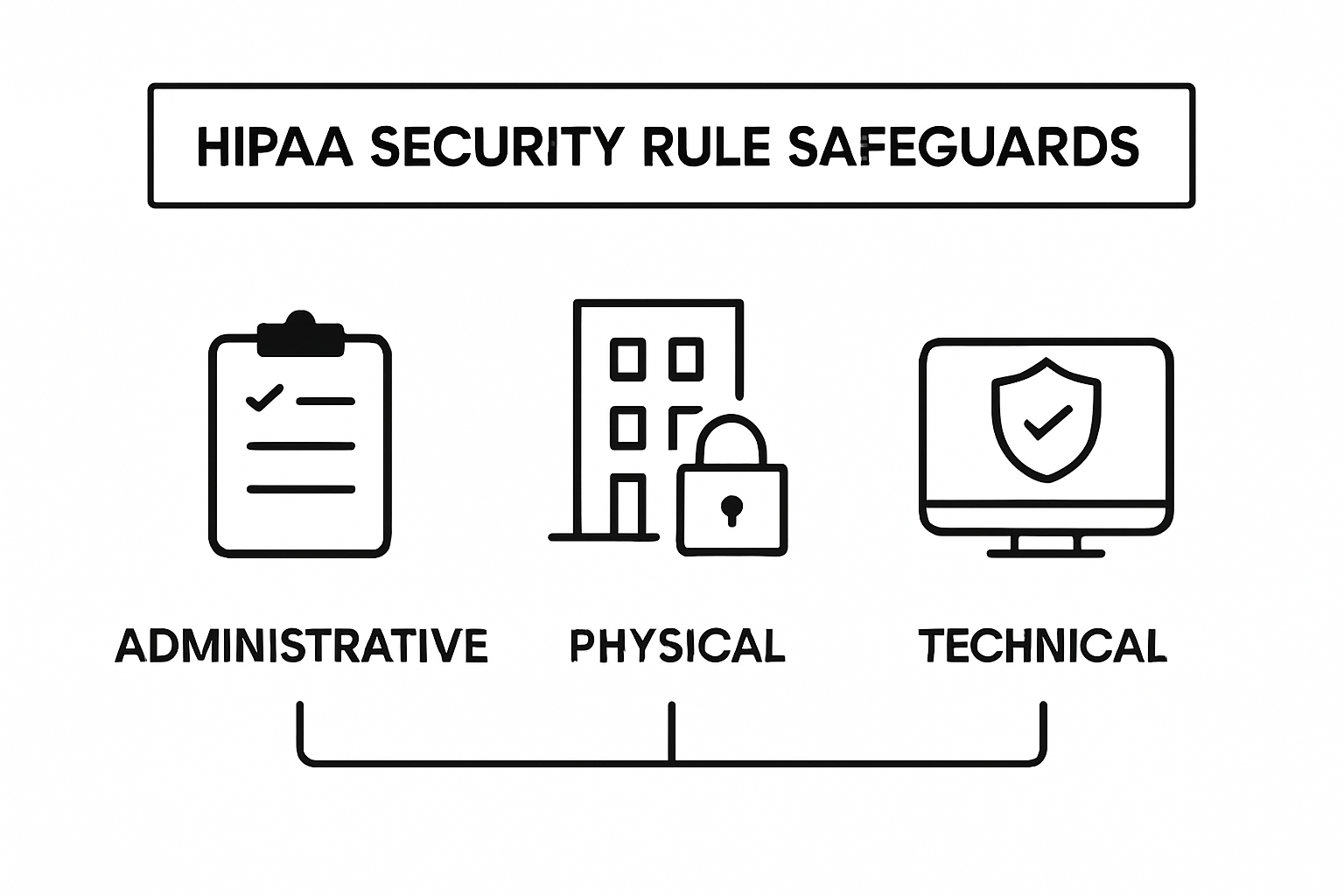
The Security Rule mandates three primary categories of safeguards that work together to create a comprehensive protection mechanism. According to Health and Human Services, these safeguards are designed to address different aspects of information security:
- Administrative Safeguards: Policies and procedures that manage the selection, development, and implementation of security measures
- Physical Safeguards: Mechanisms to protect electronic information systems, equipment, and buildings
- Technical Safeguards: Technological processes that protect and control access to electronic health information
Compliance and Implementation Requirements
Successful implementation of the Security Rule requires organizations to meet several critical compliance requirements. These include conducting comprehensive risk assessments, developing detailed security management processes, and creating robust workforce training programs. Healthcare entities must demonstrate:
- Clear documentation of security policies
- Ongoing risk management strategies
- Mechanisms for monitoring and addressing potential security vulnerabilities
- Comprehensive employee training on data protection protocols
The Security Rule is not a static set of guidelines but a dynamic framework that requires continuous adaptation. Organizations must regularly review and update their security protocols to address emerging technological challenges and potential cybersecurity threats. This approach ensures that patient data remains protected in an increasingly complex digital healthcare environment, balancing technological innovation with stringent privacy protections.
Real-World Implications of the Security Rule for Businesses
The HIPAA Security Rule represents far more than a regulatory checkbox for businesses it fundamentally transforms how organizations manage, protect, and conceptualize electronic personal health information (ePHI). Beyond compliance, the rule introduces profound operational, financial, and strategic considerations for businesses across healthcare and related industries.
Financial and Legal Consequences
Non-compliance with the Security Rule can result in significant financial penalties and legal risks. According to Health and Human Services, organizations may face tiered penalty structures ranging from $100 to $50,000 per violation, with annual maximum penalties reaching $1.5 million for repeated violations. These potential consequences extend beyond immediate financial impact:
The following table outlines the potential financial and legal consequences for healthcare organizations failing to comply with the HIPAA Security Rule.
| Consequence | Description |
|---|---|
| Financial Penalties | Fines ranging from $100 to $50,000 per violation, with annual maximums up to $1.5M |
| Mandatory Corrective Action Plans | Required remediation steps imposed by regulators |
| Federal Investigations | Potential investigations by federal authorities following breaches |
| Public Disclosure of Breaches | Requirement to notify affected parties and sometimes the public |
| Loss of Business Licenses | Possible revocation or suspension of operational licensure |
| Reputational Damage | Harm to the organization’s public trust and standing |
- Mandatory corrective action plans
- Potential federal investigations
- Public disclosure of security breaches
- Potential loss of business licenses
- Substantial reputational damage
Operational Transformation Requirements
Implementing the Security Rule demands comprehensive organizational changes. Businesses must fundamentally restructure their technological infrastructure, develop robust security protocols, and create a culture of continuous compliance. This transformation involves:
- Implementing advanced encryption technologies
- Developing comprehensive employee training programs
- Creating detailed documentation and audit trails
- Establishing strict access control mechanisms
- Regularly updating security infrastructure
The Security Rule compels businesses to view data protection not as an external requirement but as a core strategic imperative. By mandating proactive risk management and comprehensive security frameworks, the rule drives organizations toward more mature, sophisticated approaches to handling sensitive electronic health information. Successful implementation requires viewing security as an ongoing, dynamic process that evolves with technological landscapes and emerging threat environments.
Bridge the Gap Between HIPAA Security and Smooth Operations
If reading about the complexities of HIPAA's Security Rule left you concerned about staying compliant while keeping your processes efficient, you are not alone. Many organizations feel the pressure of maintaining strong safeguards for electronic personal health information, coupled with detailed documentation, ongoing risk assessments, and secure internal collaboration. Missing just one aspect can put your company at risk of breaches, penalties, or even lost business partnerships. Now you can turn these strict requirements into an opportunity to elevate your operations.
Take the next step to transform your compliance workflow. Skypher offers an AI-driven Questionnaire Automation Tool that helps you conquer security questionnaires and proof-of-concept demands quickly and accurately. With seamless integration across your existing third-party risk management platforms, Skypher makes demonstrating HIPAA Security Rule compliance simple while fostering real-time team collaboration. Ensure your customers and partners trust your commitment to security. Visit Skypher's main site today and see how you can save time, minimize errors, and boost productivity. Take action now to strengthen your compliance posture before your next security audit.
Frequently Asked Questions
What is the Security Rule in HIPAA?
The Security Rule in HIPAA is a federal regulation that establishes national standards for the protection of electronic personal health information (ePHI) in healthcare organizations. It aims to safeguard sensitive health data from unauthorized access and breaches.
What are the main categories of safeguards required by the Security Rule?
The Security Rule mandates three primary categories of safeguards: Administrative Safeguards, which involve policies and procedures; Physical Safeguards, which protect physical systems and facilities; and Technical Safeguards, which involve technological processes for securing ePHI.
How can healthcare organizations ensure compliance with the Security Rule?
Healthcare organizations can ensure compliance by conducting thorough risk assessments, implementing robust security management processes, and providing ongoing training to employees about data protection protocols. Regular updates to security measures and documentation are also essential.
Why is the Security Rule important for patient data protection?
The Security Rule is crucial for patient data protection as it creates a comprehensive framework to address increasing cybersecurity threats. It ensures that sensitive health information remains confidential and secure, ultimately maintaining patient trust within the healthcare system.