

SOC 2 audit costs can skyrocket past $50,000 for complex technology companies, catching even seasoned American and European CISOs off guard. For tech leaders under pressure to prove security compliance without draining resources, these unpredictable expenses pose real challenges. Understanding the full scope of SOC 2 audit investments, from upfront fees to hidden remediation costs, equips organizations to deliver robust data protection while streamlining operations—no matter where your team is based.
Table of Contents
- SOC 2 Audit Cost Fundamentals
- Types of SOC 2 Audits and Cost Differences
- Key Drivers Influencing SOC 2 Audit Costs
- Hidden Fees and Common Budget Pitfalls
- Cost-Saving Strategies for SOC 2 Audits
Key Takeaways
| Point | Details |
|---|---|
| Cost Variation | SOC 2 audit costs range significantly, influenced by organizational size and complexity, with expenses varying from $10,000 to $60,000 or more. |
| Audit Types | Organizations can choose between SOC 2 Type I, which is less expensive, and SOC 2 Type II, which offers a comprehensive evaluation but at a higher cost. |
| Hidden Fees | Organizations should anticipate hidden costs such as remediation efforts and potential scope creep, which can substantially increase overall expenses. |
| Proactive Preparation | Conducting internal assessments and utilizing automation tools can lead to significant cost savings and efficient compliance management. |
SOC 2 Audit Cost Fundamentals
Understanding the financial landscape of SOC 2 audits requires a strategic approach for technology organizations seeking robust security verification. SOC 2 audits represent complex evaluations of an organization's security controls, with costs that can vary dramatically based on multiple interconnected factors. These comprehensive assessments examine how companies protect customer data across critical operational domains.
The primary cost drivers for SOC 2 audits typically include organizational size, complexity of technological infrastructure, and depth of security controls being evaluated. Small to medium enterprises might encounter audit expenses ranging from $10,000 to $30,000, while larger organizations with intricate systems could see costs escalate to $50,000 or higher. Understanding SOC 2 AICPA compliance becomes crucial for accurately budgeting these essential security verification processes.

Key cost components encompass preliminary readiness assessments, detailed documentation preparation, independent auditor engagement, and potential remediation efforts. Organizations must budget not just for the audit itself, but for potential system modifications, staff training, and ongoing compliance maintenance. Technical environments with multiple cloud platforms, complex network architectures, and numerous third-party integrations will inherently require more comprehensive and expensive audit processes.
Pro tip: Conduct an internal gap analysis before initiating the SOC 2 audit to identify potential compliance weaknesses and reduce overall audit costs by addressing issues proactively.
Types of SOC 2 Audits and Cost Differences
SOC 2 audits are not a one-size-fits-all process, with multiple audit types designed to assess different aspects of an organization's security controls and compliance posture. The two primary audit types, SOC 2 Type I and SOC 2 Type II, represent distinct approaches to evaluating an organization's security infrastructure, each with unique cost implications and strategic purposes.
SOC 2 Type I provides a snapshot of an organization's security systems at a specific point in time, offering a more affordable initial assessment. These audits typically cost between $5,000 and $15,000, making them attractive for smaller organizations or those beginning their compliance journey. Understanding SOC II Type 1 reveals that these audits focus on design effectiveness, examining an organization's security controls and policies at a specific moment.
In contrast, SOC 2 Type II represents a more comprehensive and expensive audit approach. These in-depth assessments evaluate the operational effectiveness of security controls over a sustained period, usually six to twelve months. Costs for Type II audits can range from $20,000 to $60,000, depending on organizational complexity, number of trust services criteria being evaluated, and the sophistication of existing security infrastructure. Large enterprises with complex technological ecosystems will typically encounter higher audit expenses due to the extensive documentation and testing required.
Here is a comparative overview of SOC 2 Type I vs Type II audits:
| Audit Type | Assessment Focus | Typical Duration | Estimated Cost Range |
|---|---|---|---|
| SOC 2 Type I | Design effectiveness | Point-in-time | $5,000 - $15,000 |
| SOC 2 Type II | Operational effectiveness | 6-12 months | $20,000 - $60,000 |
Pro tip: Conduct a preliminary internal assessment to understand which SOC 2 audit type best aligns with your organization's compliance goals and budget constraints, potentially saving significant resources in the long term.
Key Drivers Influencing SOC 2 Audit Costs
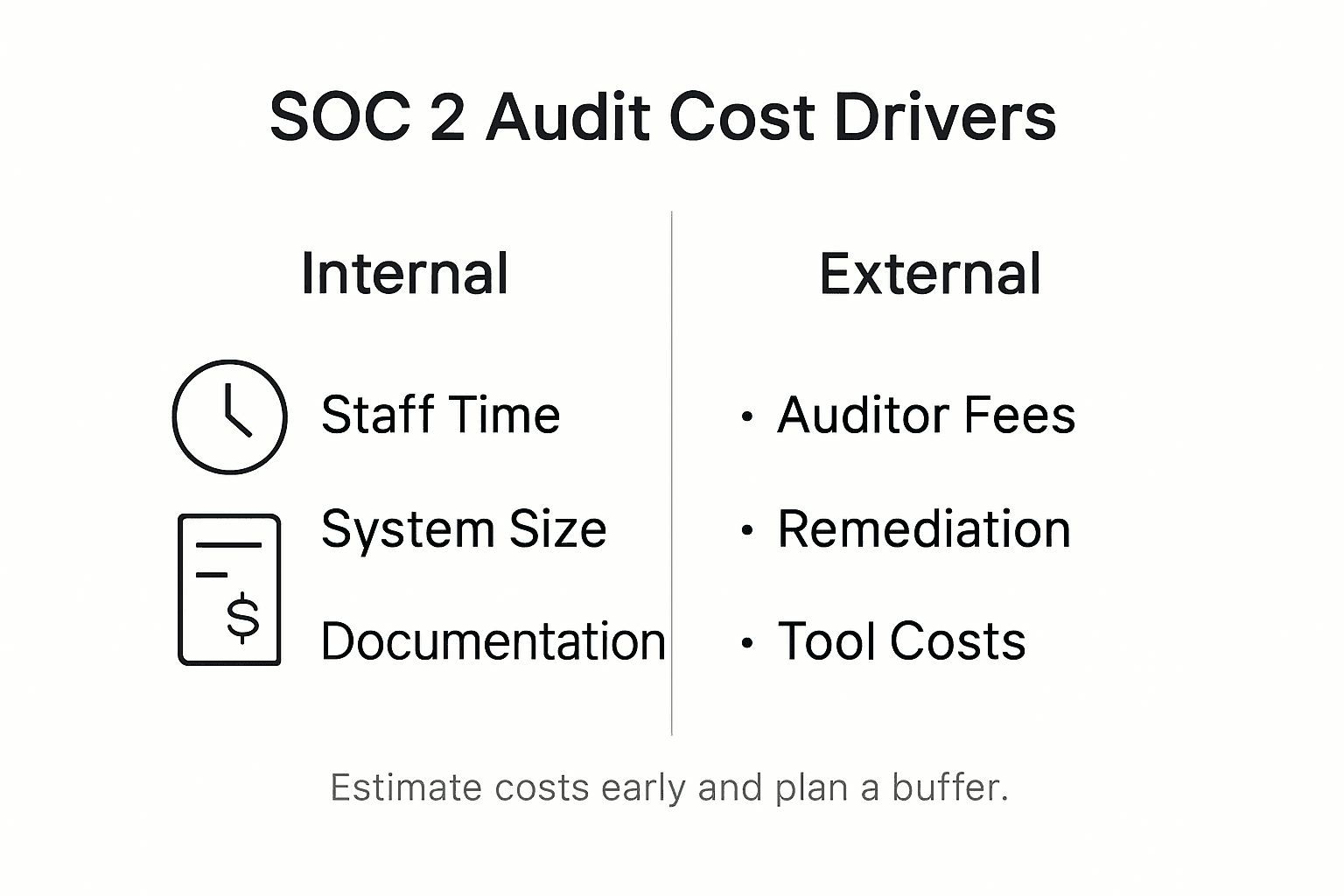
Understanding the financial landscape of SOC 2 audits requires a nuanced exploration of the complex factors that directly impact pricing and scope. Organizational complexity emerges as the primary driver, with each unique technological infrastructure presenting distinct challenges and assessment requirements that significantly influence audit expenses.
The number and sophistication of trust service criteria play a critical role in determining audit costs. Organizations must carefully evaluate which criteria they need to assess, recognizing that each additional trust service parameter exponentially increases the audit's complexity and associated expenses. SOC 2 Compliance Cost for Tech Firms highlights that companies with multiple cloud platforms, intricate third-party integrations, and sophisticated security architectures will encounter substantially higher audit fees.
Additional key cost drivers include the current maturity of an organization's existing security controls, the depth of documentation required, and the level of preparedness before the audit begins. Enterprises with well-established, documented security frameworks can significantly reduce audit duration and associated costs. Conversely, organizations with immature or loosely defined security processes will require extensive remediation efforts, additional consulting time, and more comprehensive audit investigations, which directly translate to increased financial investment.
Pro tip: Conduct a comprehensive internal security control gap analysis before initiating the SOC 2 audit process to identify and proactively address potential compliance weaknesses, potentially reducing overall audit expenses and preparation time.
Hidden Fees and Common Budget Pitfalls
SOC 2 audit expenses extend far beyond the initial quoted price, presenting numerous financial surprises for unprepared organizations. Scope creep represents one of the most significant unexpected cost drivers, where initial audit parameters unexpectedly expand, triggering substantial additional expenses that can dramatically inflate the total investment.
Companies frequently underestimate the costs associated with remediation efforts required to address security control gaps identified during the audit process. Comprehensive SOC 2 audit cost breakdowns reveal that organizations often need to allocate substantial additional budget for implementing recommended security improvements, consulting support, and potential re-testing of corrected systems.
Additional hidden fees emerge from multiple sources, including unexpected consulting charges, additional testing requirements, compliance documentation preparation, and potential technology infrastructure modifications. Smaller organizations are particularly vulnerable to these financial pitfalls, as they typically lack the internal resources to efficiently manage complex audit requirements. Enterprises must also factor in potential costs related to staff training, security tool upgrades, and the potential need for specialized external expertise to navigate intricate compliance landscapes.
Below is a summary of common hidden SOC 2 audit fees and their financial impact:
| Hidden Fee Source | Typical Trigger | Potential Impact |
|---|---|---|
| Scope creep | Expanded audit parameters | Significant cost increases |
| Remediation efforts | Security gaps discovered | Added consulting expenses |
| Unexpected consulting | Need for expert guidance | Higher audit budget required |
| Additional documentation | New compliance demands | Longer preparation time |
Pro tip: Create a comprehensive SOC 2 audit budget that includes a 30% contingency fund to cover unexpected expenses and potential remediation efforts, protecting your organization from financial surprises.
Cost-Saving Strategies for SOC 2 Audits
Navigating the complex landscape of SOC 2 audit expenses requires a strategic approach that balances comprehensive security assessment with financial prudence. Proactive preparation emerges as the most critical cost-saving strategy, enabling organizations to minimize audit duration and reduce potential remediation expenses through meticulous internal groundwork.
Technology-driven cost optimization has become increasingly important, with organizations leveraging automation tools and streamlined compliance platforms to reduce manual effort and associated consulting fees. Step-by-step compliance strategies for 2026 demonstrate that companies can significantly reduce audit expenses by implementing robust internal control frameworks, conducting comprehensive pre-audit assessments, and utilizing advanced technological solutions that minimize human intervention.
Another critical cost-saving approach involves strategic scoping of the SOC 2 audit. Organizations can minimize expenses by carefully selecting which trust service criteria to include, focusing on the most relevant security parameters for their specific business context. Smaller organizations and startups can particularly benefit from this approach, targeting only the most essential compliance requirements and gradually expanding their audit scope as their technological infrastructure and security needs evolve.
Pro tip: Invest in continuous internal security monitoring and documentation processes to create a perpetual state of audit readiness, ultimately reducing the time and resources required for formal SOC 2 assessments.
Simplify Your SOC 2 Audit Costs with Smart Automation
Managing complex SOC 2 audits can quickly become overwhelming and costly because of varied factors like organizational complexity and documentation demands. The key challenge is reducing inefficiencies in security questionnaire responses and audit preparation while maintaining comprehensive compliance under tight budgets. Skypher’s AI-powered automation tools and seamless platform integrations are designed specifically to ease this burden for technology and finance organizations.
Experience the benefits of:
- Accelerated questionnaire completion with powerful AI trusted for speed and accuracy
- Integration with over 40 third-party risk management platforms, including ServiceNow and Slack
- Real-time collaboration that keeps your teams aligned and responsive
- Customizable Trust Center that centralizes your security posture

Don’t let hidden fees and scope creep derail your SOC 2 audit plans. Get ahead with Skypher and transform your security questionnaire process into a streamlined strategic advantage. Visit our site now to explore how our AI Questionnaire Automation Tool and integrated features can reduce your SOC 2 audit costs while improving accuracy and team collaboration.
Frequently Asked Questions
What are the typical costs associated with SOC 2 audits?
SOC 2 audit costs generally range from $10,000 to $30,000 for small to medium enterprises. Larger organizations with complex systems may face costs exceeding $50,000.
What is the difference between SOC 2 Type I and Type II audits?
SOC 2 Type I assesses the design effectiveness of controls at a specific point in time, costing between $5,000 and $15,000. SOC 2 Type II evaluates operational effectiveness over 6 to 12 months, with costs ranging from $20,000 to $60,000.
What are the main factors influencing SOC 2 audit costs?
Key cost drivers include organizational size, technological complexity, the number of trust service criteria evaluated, and the maturity of existing security controls. These elements significantly impact the overall expenses associated with the audit.
How can organizations reduce their SOC 2 audit costs?
Organizations can reduce costs by conducting internal gap analyses, leveraging automation tools, selectively scoping the audit, and maintaining continuous internal security monitoring to be audit-ready.