

SOC 2 compliance is now the gold standard for proving your company’s commitment to security. The catch? Over 60 percent of organizations fail their first SOC 2 audit due to gaps in documentation or employee training. Here’s the twist you might not see coming. The fastest way to ace your audit is by ditching the checkbox mindset and building a living, breathing compliance culture that works every single day.
Table of Contents
- Key Components of the SOC 2 Checklist
- Actionable Steps to Prepare for a SOC 2 Audit
- Common Compliance Pitfalls and How to Avoid Them
- Maintaining Continuous SOC 2 Compliance
Quick Summary
| Takeaway | Explanation |
|---|---|
| Trust Service Criteria are Fundamental | Understanding and implementing the five Trust Service Criteria—Security, Availability, Processing Integrity, Confidentiality, and Privacy—is essential for SOC 2 compliance and security excellence. |
| Thorough Documentation is Crucial | Organizations must ensure meticulous documentation of security policies, implementation evidence, and management protocols to pass audits and demonstrate compliance effectively. |
| Proactive Employee Training is Essential | Continuous employee education on security policies and practices helps mitigate human risks and creates a culture of security awareness throughout the organization. |
| Continuous Monitoring and Internal Audits | Maintaining SOC 2 compliance demands regular internal audits, real-time monitoring, and vulnerability assessments to iteratively improve security posture and compliance effectiveness. |
Key Components of the SOC 2 Checklist
The SOC 2 compliance framework represents a critical cybersecurity standard that organizations must navigate with precision and strategic planning. Understanding the key components is essential for businesses seeking to demonstrate robust security practices and build trust with stakeholders.
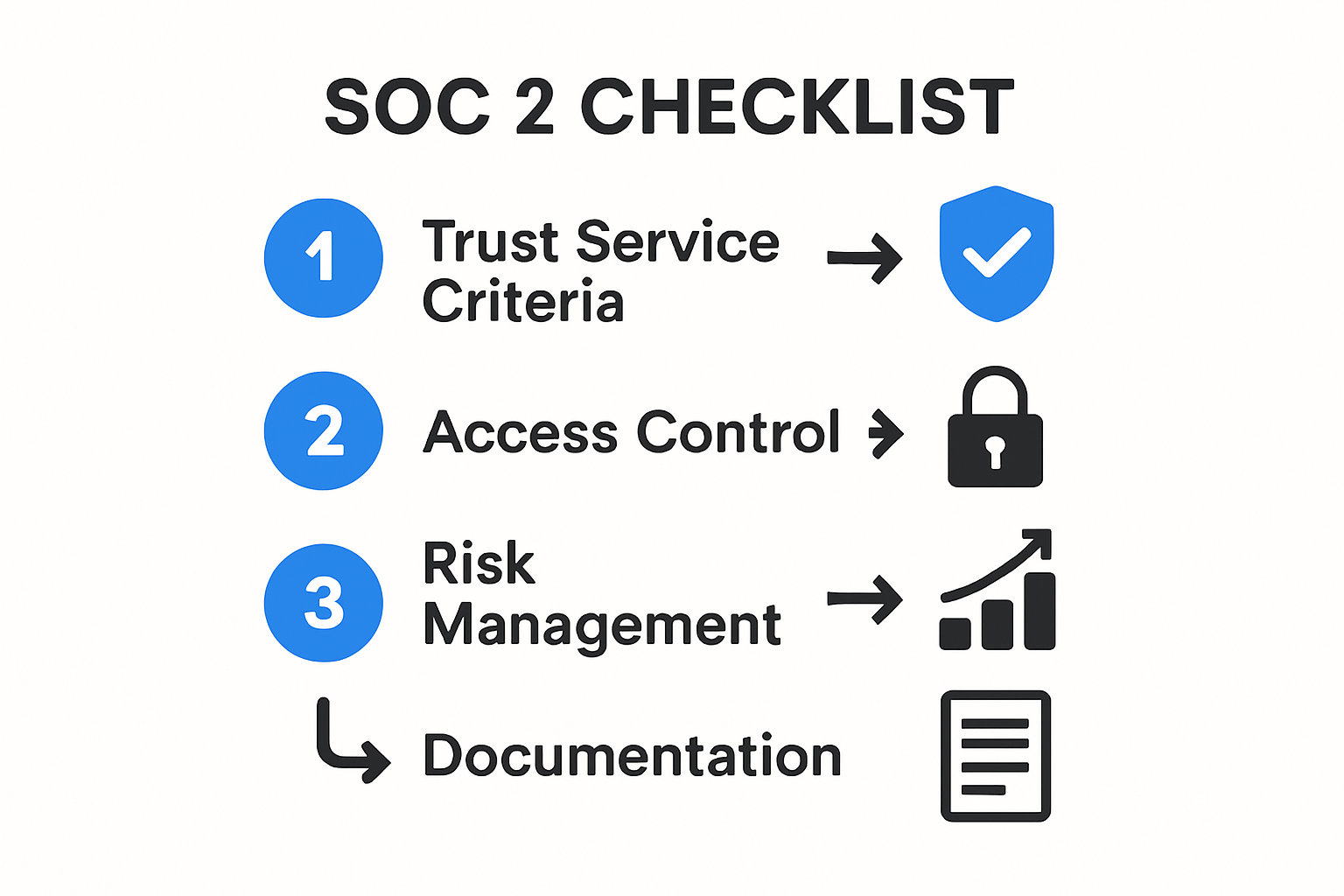
Trust Service Criteria Framework
At the core of the SOC 2 checklist are the five Trust Service Criteria that provide a comprehensive approach to security and operational excellence. Cybersecurity experts at CyberAssess highlight these criteria as fundamental pillars of the compliance process:
- Security: Protecting systems against unauthorized access and potential threats
- Availability: Ensuring systems are operational and accessible as agreed
- Processing Integrity: Maintaining accurate and timely data processing
- Confidentiality: Safeguarding sensitive information from unauthorized disclosure
- Privacy: Managing personal information according to established privacy principles
Each criterion requires specific controls and documentation that demonstrate an organization's commitment to maintaining rigorous security standards. Companies must develop detailed policies and evidence-based practices that address each of these critical areas.
Below is a table summarizing the five Trust Service Criteria and their primary focus to help organizations quickly understand each component required for SOC 2 compliance.
| Trust Service Criterion | Primary Focus |
|---|---|
| Security | Preventing unauthorized access and threats |
| Availability | Ensuring operational uptime and accessibility |
| Processing Integrity | Accuracy and timeliness of system/data processing |
| Confidentiality | Protecting sensitive data from unauthorized access |
| Privacy | Managing personal information per privacy policies |
Access Control and Risk Management
Cycode's security research emphasizes the importance of comprehensive access control and risk mitigation strategies. Organizations must implement robust mechanisms to:
- Restrict System Access: Create granular user permissions and authentication protocols
- Monitor User Activities: Track and log system interactions to detect potential security anomalies
- Implement Change Management: Develop structured processes for managing system modifications
- Conduct Regular Risk Assessments: Continuously evaluate potential vulnerabilities and threats
Effective access control goes beyond simple password protection. It involves creating a multi layered security approach that includes role based access controls, multi factor authentication, and continuous monitoring of user activities. Security Scientists emphasize that SOC 2 compliance is not a one time achievement but a continuous process of risk management and security improvement.
Documentation and Evidence Collection
Successful SOC 2 compliance hinges on meticulous documentation and the ability to provide concrete evidence of security controls. Organizations must develop comprehensive documentation that demonstrates:
- Detailed security policies and procedures
- Evidence of control implementation
- Regular security assessments and audit trails
- Incident response and management protocols
The documentation process requires a systematic approach where every security control is not just implemented but thoroughly documented and capable of withstanding rigorous external audits. Auditors will examine these documents closely to verify the effectiveness of an organization's security practices.
Navigating the SOC 2 checklist demands a holistic approach that combines technical controls, strategic planning, and ongoing commitment to security excellence. By understanding and implementing these key components, organizations can build a robust framework that protects their systems, builds customer trust, and demonstrates their dedication to maintaining the highest standards of cybersecurity.

Actionable Steps to Prepare for a SOC 2 Audit
Preparing for a SOC 2 audit requires strategic planning and a systematic approach to demonstrate an organization's commitment to robust security practices. The process demands meticulous attention to detail and a comprehensive understanding of the compliance requirements.
The following table provides a step-by-step overview of the main actions organizations should take when preparing for a SOC 2 audit, summarizing each stage and its key activities.
| Step | Key Activities |
|---|---|
| Define Audit Scope and Objectives | Determine audit coverage, select relevant TSCs, set audit timeline |
| Conduct Gap Analysis & Readiness | Identify vulnerabilities, create remediation plan, engage external auditor |
| Prepare Documentation & Evidence | Document policies, collect implementation evidence, ensure audit trail and assessments |
| Remediate & Implement Controls | Address gaps, implement improvements, validate effectiveness |
| Review & Continuous Improvement | Ongoing reviews, updates to controls and documentation, readiness for future audits |
Define Audit Scope and Objectives
Security experts at Secureframe recommend beginning with a clear definition of the audit's scope. This critical first step involves making several key decisions:
- Determine Audit Coverage: Choose whether the audit will encompass the entire organization or focus on specific services
- Select Trust Services Criteria: Identify which criteria are most relevant to your organization's operations
- Establish Audit Timeline: Plan for a minimum six month period for Type II audits, which provides a more comprehensive evaluation of security controls
Organizations must carefully assess their unique security landscape and align the audit scope with their specific business needs. This strategic approach ensures a targeted and meaningful compliance assessment that reflects the organization's true security posture.
Comprehensive Gap Analysis and Readiness Assessment
A thorough gap analysis serves as the foundation for successful SOC 2 preparation. Compliance professionals emphasize the importance of conducting a comprehensive evaluation of existing systems and controls. This process involves:
- Identifying potential vulnerabilities in current security infrastructure
- Developing a detailed remediation plan to address identified gaps
- Creating a roadmap for implementing necessary security improvements
Engaging an experienced SOC 2 auditor for a readiness assessment provides an external perspective on your organization's compliance preparedness. These professional assessments offer:
- Objective evaluation of existing security controls
- Detailed recommendations for improving security practices
- Insights into potential audit challenges and how to address them
Documentation and Evidence Preparation
Successful SOC 2 compliance hinges on meticulous documentation. Cybersecurity experts recommend developing a comprehensive documentation strategy that includes:
- Detailed security policies and procedures
- Comprehensive logs of security controls and their implementation
- Evidence of consistent control execution
- Incident response and management protocols
- Regular security assessment documentation
The documentation process requires a systematic approach that goes beyond simply creating documents. Organizations must demonstrate:
- Consistent application of security policies
- Regular review and updates to security controls
- Clear evidence of ongoing security management
Preparing for a SOC 2 audit is not a one time event but a continuous journey of security improvement. By following these actionable steps, organizations can approach the audit process with confidence, demonstrating their commitment to maintaining the highest standards of security and building trust with stakeholders.
Successful preparation requires a proactive approach, combining technical expertise, strategic planning, and a commitment to continuous security improvement. The SOC 2 audit is ultimately an opportunity to showcase an organization's dedication to protecting its most valuable assets: its data and its customers' trust.
Common Compliance Pitfalls and How to Avoid Them
Navigating the SOC 2 compliance landscape requires vigilance and strategic planning. Organizations often encounter significant challenges that can derail their compliance efforts if not addressed proactively.
Documentation and Policy Management Challenges
Audit experts at AuditPeak highlight documentation as a critical area where organizations frequently stumble. Inadequate documentation can transform a seemingly straightforward compliance process into a complex nightmare. Key strategies to overcome these challenges include:
- Implement Systematic Documentation Processes: Create a centralized repository for all security policies and procedures
- Establish Regular Review Cycles: Schedule quarterly reviews of existing documentation
- Ensure Consistency and Clarity: Develop clear, concise policies that are easily understandable by all stakeholders
- Maintain Version Control: Track and archive document versions to demonstrate continuous improvement
Successful documentation goes beyond simply creating policies. Organizations must demonstrate that these policies are living documents actively used and understood across the entire organization. This means developing documentation that is not just comprehensive but also practical and actionable.
Employee Training and Awareness Gaps
Compliance specialists emphasize that human factors represent a significant compliance risk. Many organizations underestimate the importance of comprehensive employee training. Effective strategies include:
- Develop Comprehensive Training Programs: Create engaging security awareness modules
- Implement Regular Security Workshops: Conduct periodic training sessions that go beyond basic compliance
- Create Interactive Learning Experiences: Use real world scenarios and practical demonstrations
- Establish Accountability Mechanisms: Develop clear consequences for security policy violations
Training should not be a one time event but a continuous process of education and awareness. Organizations must create a culture of security where every employee understands their role in maintaining compliance and protecting sensitive information.
Continuous Monitoring and Proactive Risk Management
Treating SOC 2 compliance as a static achievement is a critical error. Risk management experts recommend a dynamic approach to compliance that emphasizes:
- Implement Real Time Monitoring Systems: Deploy tools that provide continuous security insights
- Conduct Regular Risk Assessments: Perform frequent evaluations of potential vulnerabilities
- Develop Rapid Response Protocols: Create clear procedures for addressing detected security issues
- Maintain Audit Trail Documentation: Keep comprehensive logs of all security activities and responses
Proactive risk management transforms compliance from a checkbox exercise into a strategic approach to organizational security. This means developing systems that not only detect potential issues but also provide actionable insights for continuous improvement.
Addressing these common pitfalls requires a holistic approach that combines technical solutions, employee education, and a commitment to ongoing improvement. Organizations that view SOC 2 compliance as a continuous journey rather than a destination will be best positioned to protect their assets and build trust with stakeholders.
Maintaining Continuous SOC 2 Compliance
Achieving SOC 2 compliance is not a one time achievement but an ongoing commitment to security excellence. Organizations must develop a systematic approach to maintaining compliance that goes beyond initial certification.
Regular Internal Audits and Monitoring
Compliance experts at Van Rein Training emphasize the critical importance of continuous internal auditing. This proactive approach involves:
- Systematic Control Assessments: Conduct quarterly comprehensive reviews of existing security controls
- Vulnerability Tracking: Implement ongoing vulnerability detection and assessment processes
- Performance Metrics: Develop key performance indicators to measure compliance effectiveness
- Documented Evidence: Maintain detailed logs of all audit activities and findings
Effective internal auditing goes beyond simple checklist compliance. Organizations must create a dynamic system that continuously evaluates and improves security mechanisms. This means developing a culture of proactive risk identification and swift remediation.
Technology and Security Control Management
Governance and Risk Management Specialists recommend a comprehensive technology management strategy that includes:
- Automated Security Tools: Deploy advanced monitoring systems that provide real time threat detection
- Access Control Management: Implement robust user authentication and permission management
- Comprehensive Logging: Maintain detailed records of system access and changes
- Incident Response Planning: Develop clear protocols for addressing potential security breaches
Technology management requires a holistic approach that integrates multiple layers of security controls. This means creating a flexible infrastructure that can adapt to emerging security challenges while maintaining consistent compliance standards.
Continuous Employee Training and Awareness
Employee education represents a critical component of maintaining SOC 2 compliance. Security training professionals recommend developing a comprehensive training approach that includes:
- Regular Security Workshops: Conduct mandatory training sessions on current security practices
- Role Specific Training: Develop targeted training modules for different organizational roles
- Simulated Security Scenarios: Create practical learning experiences that test employee response
- Compliance Culture Development: Foster an organizational environment that prioritizes security awareness
Successful continuous compliance requires more than technical controls. It demands creating a security minded culture where every employee understands their role in protecting organizational assets and maintaining regulatory standards.
Maintaining SOC 2 compliance is a dynamic process that requires consistent effort, technological innovation, and organizational commitment. Organizations that view compliance as a continuous journey rather than a destination will be best positioned to protect their systems, build stakeholder trust, and demonstrate their commitment to robust security practices.
The most successful organizations approach SOC 2 compliance as a strategic advantage a comprehensive approach to security that goes far beyond mere regulatory requirements. By integrating continuous monitoring, advanced technology, and comprehensive employee training, businesses can transform compliance from a necessary requirement into a powerful competitive differentiator.
Frequently Asked Questions
What is SOC 2 compliance?
SOC 2 compliance is a framework developed by the American Institute of CPAs (AICPA) that ensures organizations manage customer data securely to protect the privacy of their clients and enhance their trust in the organization.
What are the key components of the SOC 2 checklist?
The key components of the SOC 2 checklist include the Trust Service Criteria: Security, Availability, Processing Integrity, Confidentiality, and Privacy, as well as access control, risk management, and thorough documentation of security policies.
How can organizations prepare for a SOC 2 audit?
Organizations can prepare for a SOC 2 audit by defining the audit scope and objectives, conducting a comprehensive gap analysis, preparing documentation and evidence of security controls, remediating any identified gaps, and establishing a plan for continuous improvement.
What common pitfalls should be avoided during SOC 2 compliance?
Common pitfalls in SOC 2 compliance include inadequate documentation and policy management, gaps in employee training and awareness, and treating compliance as a one-time event rather than an ongoing process of monitoring and improvement.
Ready to Eliminate SOC 2 Compliance Bottlenecks?
Overwhelmed by never-ending documentation and constant evidence requests while preparing for your SOC 2 audit? You are not alone. Many organizations struggle with repetitive tasks, missing audit trails, and inconsistent responses that put compliance at risk. Skypher turns these challenges into a thing of the past. Our AI Questionnaire Automation Tool supports the core SOC 2 requirements, including evidence collection, version control, and accurate policy management. You get real-time collaboration and seamless integrations with your existing risk management systems so that compliance processes are no longer a manual burden.
Remove uncertainty from your audit preparation and speed up your security reviews today. See how Skypher can help you automate security questionnaires, streamline documentation, and keep your audit evidence always ready. Visit our main site to take the next step toward continuous and effortless compliance.