

Most American companies discover that maintaining strong security standards involves much more than passing a simple checklist. Protecting client data and meeting strict expectations have become top priorities, and over 80 percent of SaaS organizations now view SOC compliance as central to building trust. Understanding SOC’s core principles and compliance requirements helps businesses safeguard information and position themselves as reliable partners in an increasingly security-focused market.
Table of Contents
- Defining SOC Compliance and Its Core Principles
- Types of SOC Reports and Key Differences
- Essential Requirements and Documentation Needs
- Automating SOC Response Processes for SaaS Teams
- Common SOC Compliance Pitfalls to Avoid
Key Takeaways
| Point | Details |
|---|---|
| SOC Compliance Framework | Organizations must adhere to the five primary trust service criteria: security, availability, processing integrity, confidentiality, and privacy to ensure effective risk management and data protection. |
| Types of SOC Reports | Understanding the differences among SOC 1, SOC 2, and SOC 3 reports is essential for organizations to effectively communicate their operational integrity and security practices to appropriate audiences. |
| Documentation Essentials | Detailed and accurate documentation is vital for demonstrating internal control effectiveness, including system descriptions, control objectives, and management assertions. |
| Avoiding Compliance Pitfalls | Organizations should approach SOC compliance as an ongoing process rather than a one-time event to prevent documentation gaps and reactive problem-solving. |
Defining SOC Compliance and Its Core Principles
System and Organization Controls (SOC) represent a critical framework for evaluating and ensuring the security and operational integrity of service organizations. SOC compliance involves a comprehensive assessment of an organization's internal controls, focusing on protecting sensitive information and maintaining robust operational standards.
At its core, SOC compliance encompasses five primary trust service criteria that organizations must meticulously address. These criteria include security, availability, processing integrity, confidentiality, and privacy. Each dimension represents a critical aspect of organizational risk management and client data protection. Companies seeking SOC certification must demonstrate that their systems and processes effectively safeguard critical information and maintain consistent performance standards.
Key Elements of SOC Compliance:
- Comprehensive internal control evaluation
- Rigorous assessment of information systems
- Detailed reporting on operational effectiveness
- Transparent documentation of security practices
The SOC framework provides a structured approach for service organizations to validate their operational excellence. Organizations must adhere to standards that evaluate the effectiveness of internal controls over critical information systems. This process goes beyond simple compliance checkboxes, requiring a genuine commitment to maintaining high standards of data protection and operational transparency.
For SaaS companies, SOC compliance is not just a regulatory requirement but a strategic asset. It signals to potential clients and stakeholders that an organization has robust security practices, comprehensive risk management protocols, and a commitment to maintaining the highest levels of operational integrity. By embracing SOC standards, businesses can differentiate themselves in competitive markets and build trust with customers who prioritize data security and reliable service delivery.
Types of SOC Reports and Key Differences
SOC reports represent a critical framework for organizations to demonstrate their commitment to security and operational excellence. Organizations typically utilize three distinct types of SOC reports, each serving unique purposes and targeting different audiences within the business ecosystem.
The three primary SOC report types include:
-
SOC 1 Reports: Focused exclusively on financial reporting controls, these reports are primarily designed for internal auditors and management teams. They assess the effectiveness of internal controls that might impact an organization's financial statements, providing a detailed examination of accounting processes and risk management strategies.
-
SOC 2 Reports: These comprehensive reports address a broader range of operational controls, covering critical areas such as security, availability, processing integrity, confidentiality, and privacy. SOC 2 reports are particularly valuable for technology and cloud service providers, offering potential clients and stakeholders insights into an organization's robust security practices.
-
SOC 3 Reports: Representing a more generalized overview, SOC 3 reports provide a public-facing summary of SOC 2 findings. These reports are designed to be shared openly, allowing organizations to demonstrate their commitment to security without revealing sensitive technical details.
Key Differences Between SOC Reports:
- Audience: SOC 1 targets financial professionals, SOC 2 focuses on operational stakeholders, SOC 3 addresses the general public
- Scope: SOC 1 is finance-specific, SOC 2 covers comprehensive operational controls, SOC 3 offers a high-level summary
- Confidentiality: SOC 1 and SOC 2 are typically restricted, while SOC 3 is publicly accessible
For SaaS companies and technology organizations, understanding these report types is crucial. Each report serves as a powerful tool for building trust, demonstrating operational integrity, and differentiating themselves in competitive markets. By strategically leveraging SOC reports, businesses can provide transparent insights into their security practices, reassuring clients and stakeholders about their commitment to protecting sensitive information and maintaining high operational standards.

Essential Requirements and Documentation Needs
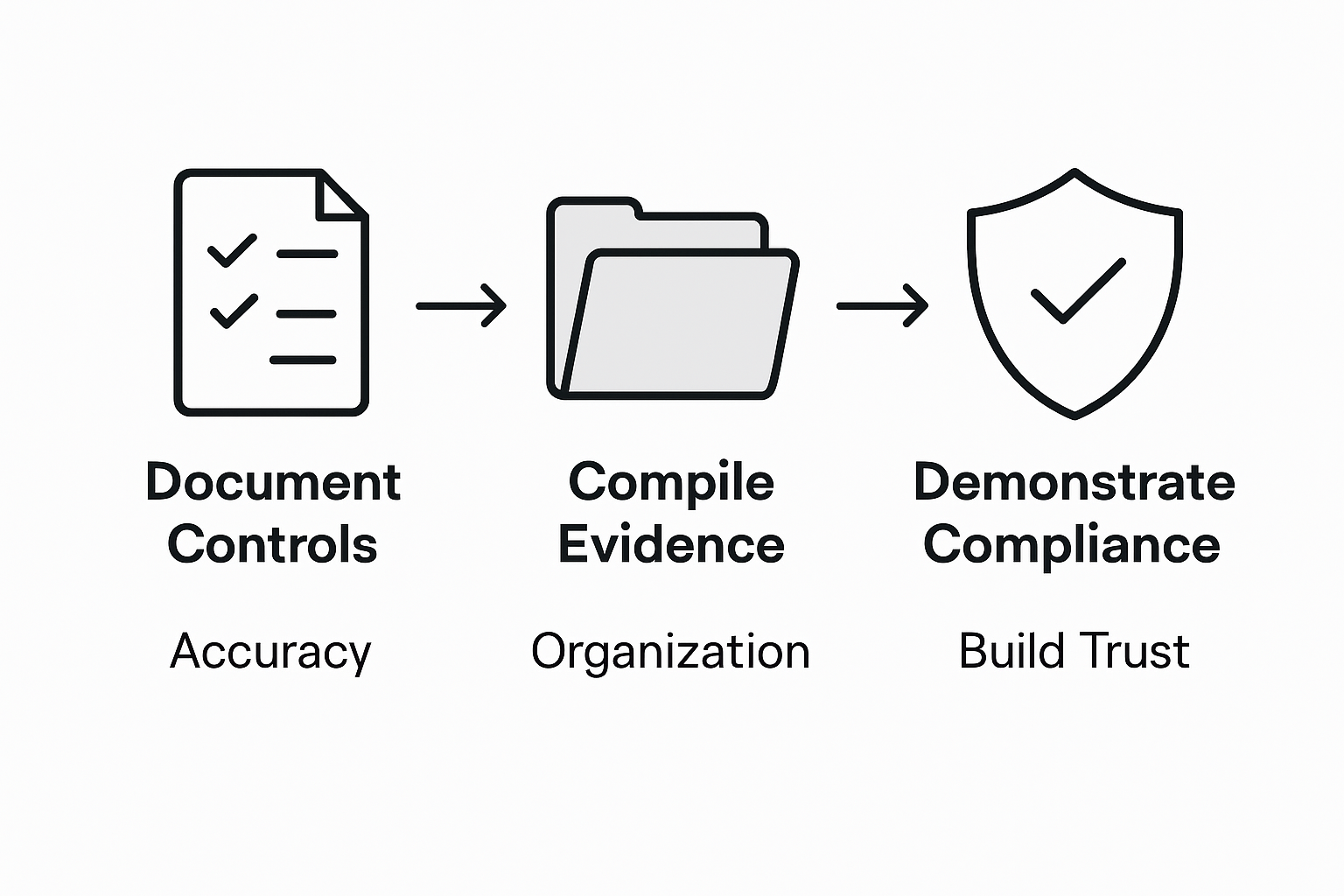
Achieving SOC compliance demands meticulous preparation and comprehensive documentation. Organizations must develop extensive documentation that demonstrates the design, implementation, and operational effectiveness of their internal controls, creating a transparent and verifiable framework for security and operational processes.
Core Documentation Requirements:
- Detailed system descriptions
- Comprehensive control objectives
- Evidence of control design
- Proof of operational effectiveness
- Management's formal assertion of control suitability
The documentation process involves creating a robust narrative that explicates an organization's control environment. This narrative must go beyond simple checklists, providing deep insights into how security protocols are conceived, implemented, and maintained. Auditors will scrutinize these documents to ensure they reflect actual operational practices, requiring organizations to maintain a high standard of precision and transparency.
Key Documentation Components:
- System Description: A comprehensive overview detailing the organization's infrastructure, systems, and processes
- Control Objectives: Clearly defined goals that outline the specific security and operational standards being addressed
- Control Evidence: Tangible documentation demonstrating how controls are designed and function in real-world scenarios
- Management Assertions: Official statements affirming the accuracy and effectiveness of the documented controls
For SaaS companies, the documentation process is not merely a compliance exercise but a strategic opportunity to showcase their commitment to security and operational excellence. By developing thorough, well-structured documentation, organizations can not only meet SOC compliance requirements but also build trust with clients, investors, and stakeholders who demand rigorous security practices.
Automating SOC Response Processes for SaaS Teams
In the complex landscape of cybersecurity compliance, SaaS teams are increasingly turning to automation to streamline their SOC response processes. Transforming security questionnaire management through strategic automation represents a critical evolution in operational efficiency and risk management.
Key Automation Strategies:
- Intelligent document parsing
- Real-time collaboration tools
- AI-powered response generation
- Centralized knowledge repositories
- Automated evidence collection
Automation technologies enable SaaS teams to dramatically reduce the time and resources traditionally consumed by manual compliance workflows. By implementing sophisticated AI-driven tools, organizations can accelerate response times, minimize human error, and create a more consistent approach to security documentation. These systems leverage advanced machine learning algorithms to understand context, extract relevant information, and generate precise, tailored responses across multiple security questionnaires.
Benefits of SOC Response Automation:
- Rapid Response Generation: Reducing questionnaire completion time from weeks to hours
- Consistency: Ensuring uniform communication across multiple stakeholders
- Comprehensive Tracking: Maintaining detailed audit trails of all interactions
- Knowledge Optimization: Continuously improving response accuracy through machine learning
For forward-thinking SaaS organizations, automation is not just a technological upgrade but a strategic imperative. By embracing intelligent automation tools, teams can transform compliance from a resource-intensive burden into a streamlined, strategic advantage that demonstrates their commitment to robust security practices and operational excellence.
Common SOC Compliance Pitfalls to Avoid
Navigating SOC compliance requires a strategic approach to avoid critical missteps that can compromise an organization's security posture. Organizations frequently encounter significant challenges during their compliance journey that can derail their audit preparation and undermine their credibility.
Key Compliance Pitfalls:
- Incomplete documentation
- Inconsistent control implementation
- Lack of continuous monitoring
- Inadequate evidence collection
- Superficial risk assessment
One of the most prevalent mistakes is underestimating the complexity of compliance requirements. Many organizations approach SOC compliance as a one-time event rather than an ongoing process. This mindset leads to fragmented control implementations, sporadic documentation, and a reactive instead of proactive approach to security management. Successful compliance demands a comprehensive, systematic strategy that integrates security practices into the organization's core operational framework.
Critical Areas of Vulnerability:
- Documentation Gaps: Failing to maintain comprehensive, up-to-date records of security controls
- Inconsistent Control Testing: Neglecting regular and systematic evaluation of control effectiveness
- Reactive Problem Resolution: Addressing security issues only after they become critical
- Limited Scope Understanding: Overlooking the full breadth of compliance requirements
Smart SaaS teams recognize that SOC compliance is more than a checkbox exercise. It represents an opportunity to build robust security infrastructure, demonstrate organizational maturity, and establish trust with clients and stakeholders. By proactively identifying and addressing potential compliance pitfalls, organizations can transform regulatory requirements into a strategic advantage that sets them apart in an increasingly security-conscious marketplace.
Simplify Your SOC Compliance with Skypher's AI Automation
SOC compliance demands precise documentation and rapid, consistent responses to complex security questionnaires. This process can overwhelm SaaS teams managing multiple controls, evidence collection, and ongoing risk assessments. Skypher directly addresses these challenges by automating questionnaire workflows with powerful AI tools. Our platform supports diverse formats, integrates with over 30 third-party risk management systems, and accelerates response times for even the most demanding SOC audits.
With Skypher, you gain a custom Trust Center, real-time collaboration, and seamless API connections to tools like ServiceNow and Slack to keep your teams aligned and efficient. This level of automation not only prevents common compliance pitfalls like incomplete documentation and reactive risk resolution but also transforms SOC adherence into a strategic advantage.
Accelerate your security reviews and build stronger client trust today.

Experience how Skypher’s AI-driven platform can streamline your SOC compliance journey. Visit Skypher now to learn how to reduce questionnaire completion time, ensure consistent control evidence, and automate your response process with intelligent integrations and 24/7 enterprise support. Start turning complex SOC requirements into clear operational excellence.
Frequently Asked Questions
What is SOC compliance?
SOC compliance refers to the adherence to the System and Organization Controls framework, which evaluates an organization's internal controls related to security, availability, processing integrity, confidentiality, and privacy to protect sensitive information.
Why is SOC compliance important for SaaS companies?
SOC compliance is crucial for SaaS companies as it demonstrates their commitment to robust security practices, effective risk management, and operational integrity, helping to build trust with clients and stakeholders.
What are the different types of SOC reports?
The three main types of SOC reports are SOC 1, which focuses on financial reporting controls; SOC 2, which covers a broader range of operational controls; and SOC 3, a public summary of SOC 2 findings.
How can automation help streamline SOC compliance processes?
Automation can enhance SOC compliance by reducing manual efforts in security questionnaire management, facilitating rapid response generation, ensuring consistent communication, and optimizing the accuracy of responses through machine learning.