
The world of compliance is often veiled in confusion, but understanding SOC1 is crucial—this standard governs audits for service organizations that affect clients' financial reporting. Yet, here’s the kicker: many see SOC1 as just another bureaucratic hurdle. In reality, it’s a golden opportunity to build trust and not just meet regulations. Embracing SOC1 compliance can transform your organization’s operational strength and set you apart in a competitive market.
What Does SOC1 Mean?
SOC1, which stands for Service Organization Control 1, is a critical audit standard designed specifically for service organizations that impact their clients' financial reporting. If you're navigating the complex world of compliance requirements, understanding SOC1 meaning is essential for your organization's regulatory strategy.
The Formal Definition and Purpose
At its core, a SOC1 report examines controls at a service organization that are relevant to user entities' internal control over financial reporting (ICFR). According to the AICPA, these reports are specifically designed to help user entities and their auditors evaluate how a service organization's controls might affect the user entities' financial statements.
Think of SOC1 compliance as a bridge of trust between your organization and your clients. When you process financial data for other companies, those companies need assurance that your systems won't compromise their financial reporting integrity. The SOC1 audit provides that assurance through independent verification.
Types of SOC1 Reports: Type 1 vs. Type 2
SOC1 reports come in two distinct varieties, each serving different assessment needs:
-
Type 1 Reports: These examine the suitability of control design at a specific point in time. They answer the question: "Are the controls appropriately designed to achieve stated objectives?"
-
Type 2 Reports: These more comprehensive assessments evaluate both the design and operational effectiveness of controls over a period (typically 6-12 months). For organizations seeking SOX compliance, a Type 2 report is generally recommended as it demonstrates sustained control effectiveness.
The distinction is crucial – while a Type 1 report provides a snapshot assessment, a Type 2 report offers a more holistic view of how your controls perform over time.
Who Needs SOC1 Compliance?
You likely need a SOC1 audit if your organization provides services that impact other companies' financial statements. Common examples include:
- Payroll processors
- Payment processors
- Loan servicing providers
- Healthcare claims processors
- Data center providers handling financial information
- Financial software-as-a-service (SaaS) providers
From a business perspective, SOC1 compliance offers more than just regulatory adherence. It demonstrates your commitment to maintaining robust controls, builds client trust, and often provides a competitive advantage in industries where security and compliance are paramount.
While the SOC1 audit process may seem daunting, it ultimately strengthens your organization by ensuring your controls are appropriately designed and functioning effectively. This not only protects your clients' financial reporting integrity but also enhances your own risk management framework.
Key Takeaways
| Takeaway | Explanation |
|---|---|
| Understanding SOC1 is Essential | SOC1 reports provide crucial assurance regarding controls that affect clients' financial reporting, establishing trust between service organizations and their clients. |
| Types of SOC1 Reports Matter | The distinction between Type 1 and Type 2 reports is significant; Type 1 evaluates control design at a specific point, while Type 2 assesses operational effectiveness over time, making Type 2 preferred for ongoing compliance. |
| Preparation is Key | Effective audit preparation involves selecting the right auditor, determining audit scope, conducting readiness assessments, and clearly documenting existing controls to streamline the audit process. |
| Leverage the SOC1 Report | Beyond compliance, SOC1 reports can reduce audit fatigue for clients, identify control gaps, and enhance organizational reputation—serving as powerful tools for business improvement. |
| Focus on Continuous Improvement | Post-audit, organizations should address any identified control exceptions, continuously monitor their control environment, and maintain the momentum built during the audit for ongoing operational resilience. |
Understanding SOC1 Report Basics
Navigating the world of SOC1 reports can seem overwhelming at first, but breaking down the fundamentals makes this crucial compliance document more approachable. Understanding the basic structure, content, and purpose of a SOC1 report will help you better implement, interpret, and leverage these important audit findings.
Key Components of a SOC1 Report
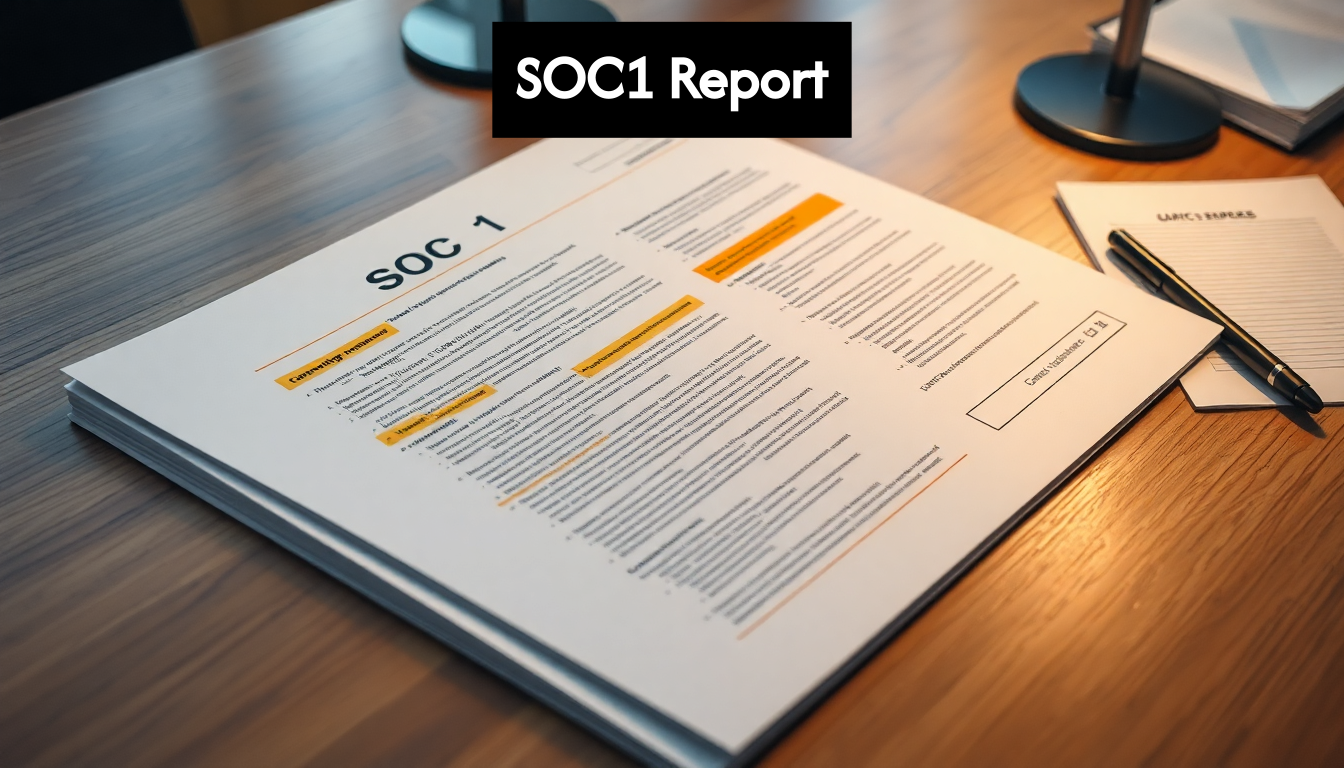
A comprehensive SOC1 report contains several standard sections that work together to provide a complete picture of a service organization's controls. According to compliance experts, a typical SOC1 report includes these five essential components:
-
Independent Service Auditor's Report - This opening section contains the auditor's professional opinion on the service organization's controls. It acts as the formal letter from the auditing firm stating whether the controls are suitably designed (Type 1) or both suitably designed and operating effectively (Type 2).
-
Management's Assertion - Here, the service organization's management formally declares that the system description is accurate and that controls have been implemented as described. This section establishes management's responsibility for the control environment.
-
System Description - This detailed section outlines the service organization's system, including the services provided, infrastructure, software, procedures, and personnel involved in delivering those services. It provides essential context for understanding how the organization's controls relate to financial reporting.
-
Control Objectives and Activities - The heart of the report, this section details the specific control objectives related to financial reporting and the activities implemented to achieve those objectives. For Type 2 reports, this section also includes test procedures and results.
-
Complementary User Entity Controls (CUECs) - These are controls that the service organization expects its clients (the user entities) to implement to achieve the stated control objectives. CUECs recognize that effective control environments require cooperation between service providers and their clients.
Reading and Interpreting SOC1 Reports
When reviewing a SOC1 report, focus first on the auditor's opinion to determine if any exceptions were noted. An unqualified (clean) opinion indicates that the controls are operating as designed, while a qualified opinion suggests areas of concern that require attention.
Next, carefully review the system description to ensure it accurately represents the services your organization provides or uses. This understanding creates the foundation for interpreting the rest of the report.
Pay special attention to control objectives and activities, particularly any exceptions noted in Type 2 reports. These exceptions highlight areas where controls may not be functioning as intended, potentially creating risk exposure.
Practical Applications of SOC1 Reports
SOC1 reports serve multiple practical purposes beyond basic compliance. For service organizations, these reports can:
- Reduce audit fatigue by providing a standardized report for multiple clients
- Identify control gaps before they become significant problems
- Demonstrate a commitment to financial reporting integrity
- Support sales and marketing efforts with prospective clients
For user entities (clients of service organizations), SOC1 reports provide:
- Documentation needed for their own financial audits and SOX compliance
- Insight into the reliability of service providers handling financial data
- Information about complementary controls they should implement
- Risk assessment data for vendor management programs
By understanding these fundamentals, you'll be better positioned to leverage SOC1 reports as powerful tools for both compliance and business improvement, rather than viewing them as merely regulatory checkboxes.
SOC1 Audit Process Guide
Navigating the SOC1 audit process can seem daunting, especially if your organization is pursuing compliance for the first time. This guide breaks down the key phases and steps you'll encounter during a typical SOC1 audit, helping you prepare effectively and maximize the value from this important compliance initiative.
Pre-Audit Preparation: Setting Yourself Up for Success
The groundwork you lay before the formal audit begins often determines how smoothly the process will run. Effective preparation includes:
-
Selecting the right auditor - Choose a CPA firm with substantial experience in SOC1 audits within your industry. Their familiarity with your sector's specific challenges can significantly streamline the process.
-
Determining audit scope - Work with stakeholders to clearly define which services, systems, and processes will be included in the audit scope. This critical step prevents scope creep and helps focus control evaluation on what matters most.
-
Conducting a readiness assessment - Before the formal audit begins, perform an internal review or engage your auditor for a readiness assessment. This identifies potential gaps in your control environment that you can address proactively.
-
Documenting existing controls - Create comprehensive documentation of your current controls related to financial reporting. This includes policies, procedures, risk assessments, and evidence of control execution.
-
Assigning responsibilities - Establish a clear SOC1 compliance team with defined roles and responsibilities. Designate primary contacts for different control areas and ensure they understand their duties during the audit.
The Core Audit Phase: What to Expect
Once preparation is complete, the formal audit process begins. A typical SOC1 audit follows these key stages:
Initial Planning and Scoping
The audit firm will work with you to finalize the audit scope, establish timelines, and develop a detailed audit plan. They'll identify which control objectives apply to your services and which specific controls should be evaluated.
System Description Review
Your audit team will develop or review your system description document, which outlines your services, systems, and control environment. This critical document forms the foundation of the SOC1 report and must accurately represent your organization's operations.
Control Testing
For Type 1 reports, auditors will evaluate the design of your controls at a point in time. For Type 2 reports, they'll test both design and operating effectiveness over a period (typically 6-12 months). Testing methods may include:
- Reviewing documentation and records
- Observing control activities
- Interviewing personnel
- Re-performing control procedures
- Testing system configurations
Results Analysis and Reporting
The audit firm will analyze test results, identify any exceptions, and prepare the draft SOC1 report. You'll have an opportunity to review findings and provide management responses to any exceptions noted before the report is finalized.
Post-Audit Activities: Maximizing Value from Your SOC1 Report
After receiving your SOC1 report, these follow-up activities help you leverage the full value of the audit process:
Addressing Exceptions
If the audit revealed control exceptions, develop and implement remediation plans promptly. Document these improvements for your next audit cycle.
Distributing the Report
Establish a process for securely sharing your SOC1 report with current and prospective clients who require it for their compliance efforts. Many organizations implement confidentiality agreements before releasing these reports.
Continuous Monitoring
Implement ongoing monitoring of your control environment rather than treating compliance as a one-time exercise. This helps maintain effectiveness between audit cycles and identifies issues before they become exceptions.
Planning for the Next Cycle
For Type 2 reports, which are typically renewed annually, begin preparing for your next audit well in advance. Use lessons learned to improve your next audit experience.
By understanding this end-to-end process, you can approach your SOC1 audit strategically rather than reactively. Remember that while achieving compliance is important, the real value comes from the improved control environment and risk management practices that result from the audit process. A well-executed SOC1 audit doesn't just satisfy client requirements—it strengthens your organization's operational foundation.
SOC1 Compliance and Benefits
Achieving SOC1 compliance represents more than just checking a regulatory box. For service organizations, becoming SOC1 compliant delivers substantial strategic advantages while providing crucial assurances to clients about your control environment. Let's explore the comprehensive benefits of SOC1 compliance and why it's worth the investment.
Business Advantages of SOC1 Compliance
While the primary purpose of SOC1 reports is to address internal controls over financial reporting, the business benefits extend far beyond regulatory compliance:
Competitive Differentiation
In competitive markets, SOC1 compliance creates a meaningful distinction between your organization and non-compliant competitors. Many clients, particularly in regulated industries or publicly traded companies, require SOC1 reports from their service providers. By proactively obtaining and maintaining compliance, you position your organization as a trusted partner that takes financial control responsibilities seriously.
Streamlined Client Audits
Without a SOC1 report, your organization may face multiple client-specific audits, each with different scopes and requirements. This can create significant operational disruption and audit fatigue. A comprehensive SOC1 report consolidates these disparate audit requirements into a single examination, reducing the time your team spends supporting client audit requests and allowing them to focus on core business activities.
Enhanced Internal Controls
The SOC1 audit process provides an objective, third-party assessment of your control environment. This external perspective often identifies opportunities for improvement that might otherwise go unnoticed. Organizations frequently discover that the process of preparing for and undergoing a SOC1 audit strengthens their overall control framework, reducing operational risk even beyond financial reporting impacts.
Client Trust and Retention
Providing a clean SOC1 report demonstrates your commitment to maintaining effective controls that protect your clients' financial reporting integrity. This tangible evidence of your control consciousness builds deeper trust with existing clients and can improve client retention rates. In industries where security and compliance are paramount concerns, this trust becomes a crucial component of client relationships.
Regulatory and Compliance Benefits
Beyond the business advantages, SOC1 compliance delivers several specific regulatory and compliance benefits:
SOX Compliance Support
For publicly traded companies subject to Sarbanes-Oxley (SOX) requirements, proper vendor management includes ensuring that service organizations have appropriate controls. By obtaining a SOC1 report, you help your clients fulfill their SOX compliance obligations without additional custom audits or assessments.
Risk Management Framework
The structured approach required by SOC1 audits helps organizations establish and maintain a robust risk management framework. This framework extends beyond financial reporting controls to influence broader operational risk management practices, creating a more resilient organization overall.
Scalable Compliance Foundation
A mature SOC1 compliance program establishes control foundations that can be leveraged for other compliance frameworks, such as SOC2, ISO 27001, or industry-specific regulations. This creates efficiency in your compliance program and allows your organization to adapt more quickly to new regulatory requirements as they emerge.
Measuring ROI on SOC1 Compliance
While the costs of SOC1 compliance—including auditor fees, internal resource allocation, and potential control improvements—are relatively straightforward to calculate, the returns often come in both tangible and intangible forms:
-
Tangible ROI factors include reduced audit costs through consolidation, new business opportunities enabled by compliance, and the operational improvements identified through the audit process.
-
Intangible benefits include enhanced reputation, improved client trust, better risk management, and greater organizational discipline around control processes.
When evaluating the full value of your SOC1 compliance program, consider both categories of benefits to understand the complete return on your investment.
By viewing SOC1 compliance as a strategic business enabler rather than merely a compliance requirement, your organization can extract maximum value from the audit process. The most successful organizations integrate SOC1 compliance into their broader business strategy, using it as a foundation for operational excellence and client trust rather than treating it as an isolated compliance exercise.
Frequently Asked Questions
What is SOC1?
SOC1 stands for Service Organization Control 1 and is an audit standard that assesses controls at service organizations impacting clients' financial reporting.
Why is SOC1 compliance important?
SOC1 compliance builds trust between service organizations and their clients by ensuring that controls are in place to protect financial reporting integrity.
What are the differences between SOC1 Type 1 and Type 2 reports?
Type 1 reports evaluate the design of controls at a specific point in time, while Type 2 reports assess both design and operational effectiveness over a period of time (typically 6-12 months).
Who needs a SOC1 audit?
Organizations that provide services affecting the financial statements of other companies, such as payroll processors and financial SaaS providers, typically require a SOC1 audit.
Elevate Your SOC1 Compliance Experience with Skypher
Navigating the complexities of SOC1 compliance can be challenging—especially when you're expected to manage extensive security questionnaires and ensure your controls are in place. The article highlights how fulfilling these requirements is not just about adherence but building trust with your clients. You understand the stakes: the integrity of financial reporting and operational security hangs in the balance.
With Skypher, you can transform your SOC1 audit preparation into a seamless, efficient process. Our AI Questionnaire Automation Tool streamlines the entire response process, reducing the time spent on tedious security reviews while enhancing accuracy. Imagine completing lengthy questionnaires significantly faster—no more operational disruptions or audit fatigue. Instead, you gain more time to focus on what truly matters: strengthening your client relationships and ensuring they trust your ability to maintain effective controls.
Don't let compliance challenges hinder your operational efficiency! Join the many organizations in tech and finance who have revolutionized their approach with Skypher. Start your FREE trial today at https://skypher.co and experience the freedom of hassle-free SOC1 compliance. Your path to smoother audits and elevated client trust starts now!