

Software compliance has become a front-page challenge for every tech-driven team. Here is the curveball. A staggering 62 percent of organizations faced a software audit last year and nearly a third paid out over $1 million in penalties. Most leaders are bracing for sticky regulations or hidden costs, but the real surprise is how compliance is shifting from a legal headache to a route for building smarter organizations that thrive under scrutiny.
Table of Contents
- Understanding Software Compliance and Its Importance
- Top Software Compliance Risks and How to Avoid Them
- Best Practices For Managing Software Compliance
- Preparing for New Software Compliance Trends in 2025
Quick Summary
| Takeaway | Explanation |
|---|---|
| Increased Audit Scrutiny | 62% of organizations faced audits in the past year, highlighting the need for proactive compliance strategies to avoid substantial penalties. |
| Technological Integration | Effective compliance management increasingly relies on automation and AI tools to streamline monitoring, documentation, and risk assessment. |
| Proactive Compliance Frameworks | Organizations must transition from reactive compliance to proactive models that integrate continuous risk identification and effective communication to mitigate vulnerabilities. |
| AI Governance is Crucial | 67% of compliance leaders are prioritizing AI governance, reflecting the importance of adapting compliance strategies to evolving regulations surrounding AI technologies. |
| Dynamic Regulatory Adaptation | In 2025, companies must develop flexible compliance frameworks capable of adapting to rapid regulatory changes, especially in relation to technologies like AI, IoT, and cloud computing. |
Understanding Software Compliance and Its Importance
Software compliance represents a critical operational framework that organizations must navigate to protect their technological investments and maintain legal and regulatory standards. At its core, software compliance involves adhering to specific rules, regulations, and licensing requirements that govern the acquisition, implementation, and management of software assets.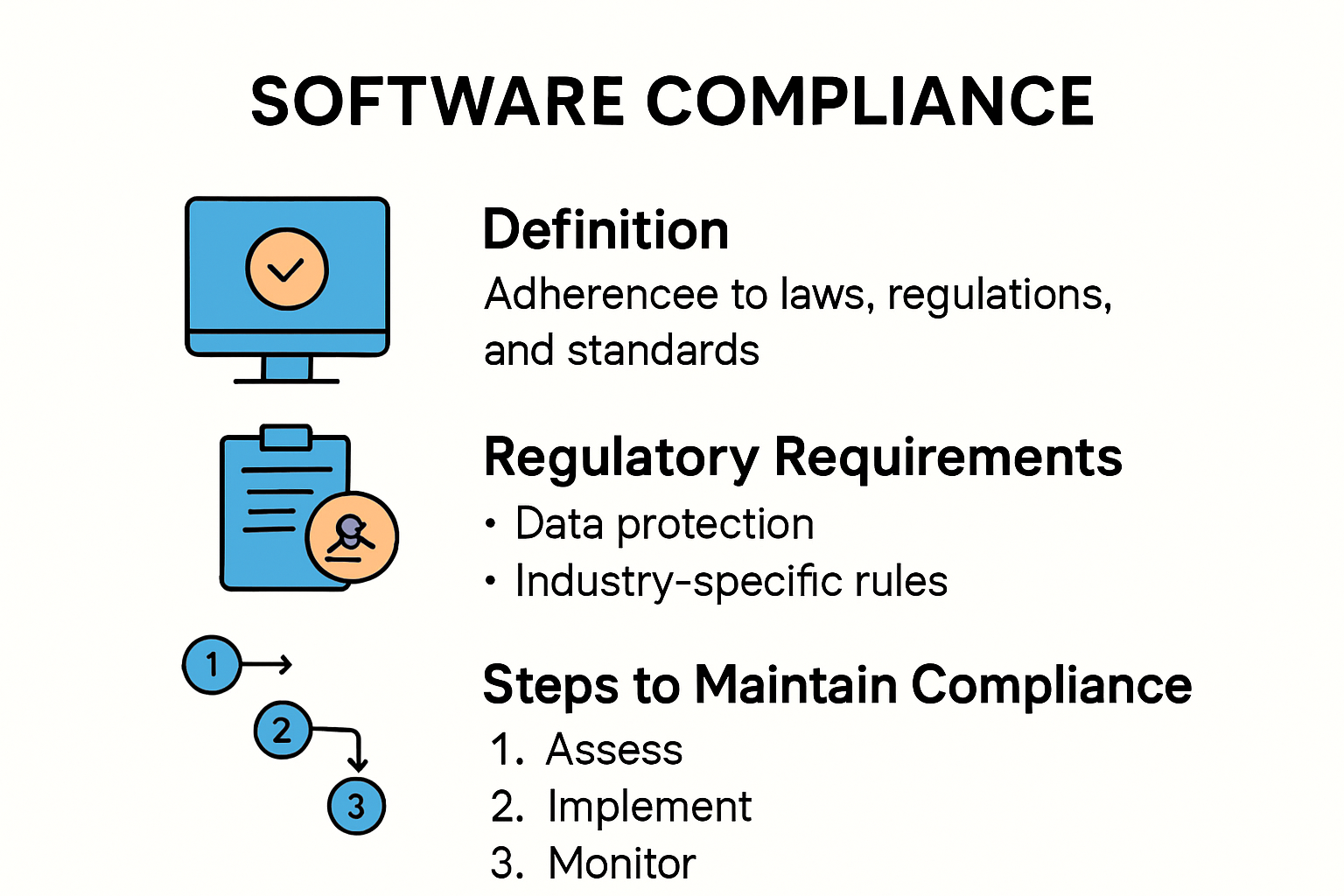
The Growing Complexity of Software Compliance
The landscape of software compliance has transformed dramatically in recent years. Research from Business Wire reveals a startling trend: 62% of organizations reported being audited by a major software vendor in the past year, representing a significant increase from previous years. This surge highlights the increasing scrutiny businesses face regarding their software usage and licensing.
Moreover, the financial stakes have never been higher. Organizations are discovering that non-compliance can result in substantial financial penalties. According to the same research, nearly 32% of companies incurred financial liabilities exceeding $1 million from software audits. These numbers underscore the critical importance of developing robust compliance strategies.
Strategic Approaches to Software Compliance
Effective software compliance is no longer a passive administrative task but a strategic imperative. Cyber Arrow research indicates that 91% of companies plan to implement continuous compliance mechanisms in the next five years. This proactive approach reflects a fundamental shift in how organizations view software management.
The migration to cloud and hybrid environments has further complicated compliance efforts. Business Wire reports that 53% of organizations acknowledge increased compliance complexity due to cloud adoption. This statistic emphasizes the need for sophisticated, adaptable compliance strategies that can navigate intricate technological ecosystems.
Key Considerations for Robust Compliance
Successful software compliance requires a multifaceted approach. Organizations must develop comprehensive inventories of their software assets, understand intricate licensing agreements, and implement continuous monitoring systems. This involves not just tracking software installations but also managing usage rights, renewal dates, and potential contractual obligations.
Teams must invest in training and develop internal processes that promote awareness and accountability. Automated compliance management tools can provide real-time insights, helping organizations stay ahead of potential violations and streamline audit preparedness. By treating software compliance as a strategic function rather than an administrative burden, companies can transform potential risks into opportunities for operational excellence.
Ultimately, software compliance is about more than avoiding penalties. It represents a commitment to responsible technology management, organizational integrity, and sustainable business practices in an increasingly complex digital environment.
Top Software Compliance Risks and How to Avoid Them
Software compliance risks represent a complex ecosystem of potential vulnerabilities that can significantly impact organizational performance, financial stability, and reputation. Understanding these risks and implementing strategic mitigation approaches becomes paramount in the rapidly evolving technological environment.
Technological Vulnerability and Regulatory Complexity
Scytale research highlights that cybersecurity vulnerabilities and data privacy risks are emerging as critical challenges in 2025. The proliferation of technologies such as artificial intelligence, Internet of Things (IoT), and cloud computing has dramatically expanded the potential attack surface for organizations. Companies must now integrate compliance directly into their digital transformation strategies to prevent legal and reputational consequences.
The dynamic regulatory environment adds another layer of complexity. Audit Board analysis indicates that IT compliance teams face unprecedented pressure to stay current with rapidly changing regulations. This requires not just technical expertise but also continuous learning and adaptive strategies.
Risk Management and Technological Solutions
PwC's global compliance survey reveals a significant trend: nearly 49% of global organizations now utilize technology for 11 or more compliance activities. This shift demonstrates the growing reliance on automated tools to manage complex compliance risks including training, risk assessment, and continuous monitoring.
Effective risk management strategies should include:
- Comprehensive Auditing: Regular and thorough software asset inventories
- Automated Monitoring: Real-time tracking of software usage and potential violations
- Continuous Training: Regular educational programs for teams about compliance requirements
Proactive Compliance Strategies
Organizations must transition from reactive to proactive compliance models. This means developing robust internal frameworks that anticipate potential risks before they materialize. Key elements include implementing advanced technological solutions that provide real-time insights, creating clear communication channels about compliance expectations, and fostering a culture of accountability.
Technical solutions such as software asset management (SAM) platforms, automated compliance tracking tools, and integrated risk management systems can significantly reduce potential vulnerabilities. These technologies enable organizations to maintain comprehensive visibility into their software ecosystems, track licensing agreements, and quickly identify potential compliance gaps.
The most successful organizations will be those that view software compliance not as a burden but as a strategic opportunity to enhance operational efficiency, reduce financial risks, and maintain competitive advantage in an increasingly complex technological environment.
Best Practices For Managing Software Compliance

Effective software compliance management requires a strategic, proactive approach that integrates technological solutions, organizational culture, and continuous learning. Modern organizations must develop comprehensive frameworks that anticipate challenges and mitigate risks before they escalate.
Technological Integration and Automation
TrustCloud research emphasizes the critical role of automation and AI-driven tools in managing software compliance. These advanced technologies enable organizations to streamline routine tasks, conduct predictive risk assessments, and ensure real-time adherence to evolving standards. Automation transforms compliance from a reactive administrative function to a strategic, intelligence-driven process.
Implementing intelligent compliance management systems allows teams to:
- Automatic Documentation: Generate and maintain comprehensive compliance records
- Real-Time Monitoring: Track software usage and potential violations instantly
- Predictive Analytics: Identify potential compliance risks before they emerge
Comprehensive Risk Assessment and Vendor Management
360 Advanced insights recommend shifting from traditional annual audits to more frequent, dynamic evaluation models. Organizations should conduct quarterly or even real-time assessments of their compliance frameworks and third-party vendor relationships. This approach provides more granular visibility into potential risks and allows for faster intervention.
Vendor management has become increasingly complex. Companies must develop robust vendor assessment protocols that include:
- Detailed contractual reviews
- Continuous performance monitoring
- Regular compliance verification processes
Global Regulatory Navigation
TrustCloud's global compliance analysis highlights the importance of developing flexible compliance frameworks that can accommodate diverse international requirements. Organizations operating across multiple jurisdictions must design adaptable strategies that can quickly respond to regional regulatory variations.
Key strategies for navigating global compliance include:
- Maintaining comprehensive understanding of international regulations
- Developing adaptable compliance frameworks
- Creating cross-functional teams with diverse regulatory expertise
Successful software compliance management is not about rigid adherence to rules but about creating dynamic, intelligent systems that protect organizational interests while enabling technological innovation. By embracing advanced technologies, maintaining rigorous assessment processes, and staying informed about global regulatory trends, organizations can transform compliance from a potential liability into a strategic advantage.
The most resilient organizations will be those that view software compliance as an ongoing journey of continuous improvement, technological integration, and strategic foresight.
Preparing for New Software Compliance Trends in 2025
The software compliance landscape in 2025 is experiencing unprecedented transformation, driven by rapid technological advancements and increasingly complex regulatory environments. Organizations must develop adaptive strategies to navigate these dynamic challenges effectively.
Regulatory Complexity and Technological Evolution
Audit Board research reveals a staggering trend: more than 45 U.S. states and territories introduced AI-related legislation in 2024, signaling a massive shift in regulatory approaches. This proliferation of regulations demands that organizations create more sophisticated, flexible compliance frameworks capable of adapting to rapidly changing legal landscapes.
The regulatory environment is no longer static. Companies must develop cross-functional teams that can interpret, implement, and monitor evolving compliance requirements across multiple technological domains. This approach requires breaking down traditional organizational silos and creating more integrated, collaborative compliance strategies.
AI Governance and Risk Management
Valamis research indicates that 67% of compliance leaders now prioritize developing comprehensive AI governance mechanisms. The emergence of regulations like the EU's Artificial Intelligence Act introduces stringent requirements for high-risk AI systems, mandating detailed risk assessments, data transparency, and extensive documentation.
Key considerations for AI compliance include:
- Risk Assessment: Comprehensive evaluation of AI system potential impacts
- Transparency Protocols: Clear documentation of AI decision-making processes
- Ethical Framework: Establishing guidelines for responsible AI deployment
Technological Integration and Future-Proofing
Scytale's compliance analysis highlights the critical intersection between emerging technologies and compliance strategies. Organizations must now integrate compliance directly into their digital transformation initiatives, addressing potential vulnerabilities across artificial intelligence, Internet of Things (IoT), blockchain, and cloud computing platforms.
Successful compliance strategies in 2025 will require:
- Continuous learning and adaptation
- Investment in advanced compliance management technologies
- Proactive risk identification and mitigation
The most resilient organizations will view compliance not as a restrictive requirement but as a strategic opportunity to demonstrate technological responsibility, build stakeholder trust, and differentiate themselves in an increasingly complex digital environment. By embracing flexibility, investing in advanced technologies, and maintaining a forward-thinking approach, companies can transform compliance from a potential burden into a competitive advantage.
Ultimately, preparing for software compliance trends in 2025 is about creating intelligent, adaptive systems that can anticipate and respond to technological and regulatory shifts with unprecedented speed and precision.
Frequently Asked Questions
What is software compliance?
Software compliance refers to adhering to specific rules, regulations, and licensing requirements governing the acquisition, implementation, and management of software assets within an organization.
Why is software compliance important for organizations?
Software compliance is crucial for avoiding legal penalties, maintaining operational integrity, and protecting technological investments in an increasingly complex regulatory landscape.
What are the main risks associated with software compliance?
Key risks include technological vulnerabilities, evolving regulations, financial penalties due to non-compliance, and functional inefficiencies stemming from improper software asset management.
How can organizations improve their compliance management strategies?
Organizations can enhance compliance management by implementing automated tools, conducting continuous risk assessments, fostering a culture of compliance awareness, and developing flexible frameworks that adapt to changing regulations.
Ready to Make Software Compliance Effortless in 2025?
Facing frequent audits and juggling complex software requirements can leave your team stressed and at risk for costly mistakes. As highlighted in our guide above, many organizations in tech and finance are overwhelmed by ever-changing compliance needs, time-consuming processes, and the fear of painful penalties.
It is time to turn compliance from a headache into your competitive advantage. Discover how Skypher's AI-driven platform automates and simplifies your security questionnaire responses, helping your organization stay audit-ready and boost collaboration. Stop losing valuable hours and start building trust with clients faster. Visit Skypher.co now to see how you can protect your business and prepare for every compliance challenge in 2025.