
Managing third party risk is quickly turning into a boardroom priority. Nearly 59 percent of organizations experienced a data breach caused by one of their vendors last year. That number might make you think technology is the only answer. Look closer though. The real power comes from a simple shift—continuous monitoring and smarter frameworks are outpacing the old once-a-year checkbox routines. What’s fueling this evolution goes far beyond software, and it is changing how companies everywhere protect themselves in 2025.
Table of Contents
- Core Components of a Third Party Risk Management Framework
- Assessing and Categorizing Third Party Risks Effectively
- Steps to Implement a Robust Framework in 2025
- Best Practices and Tools for Ongoing Risk Monitoring
Quick Summary
| Takeaway | Explanation |
|---|---|
| Comprehensive Risk Assessment is Essential | Organizations should establish systematic risk assessment processes to evaluate vendors based on criticality, potential risk exposure, and compliance requirements, ensuring focused allocation of resources to high-risk areas. |
| Continuous Monitoring Transforms Risk Management | Ongoing vendor performance assessments and dynamic risk management strategies are crucial for adapting to shifting risks in the vendor landscape, making risk management a responsive rather than static effort. |
| Technology Integration Enhances Efficiency | Leveraging automation and advanced risk monitoring technologies, such as AI and machine learning, significantly improves real-time risk tracking and data management, allowing for swift adaptation to emerging threats. |
| Establishing Clear Governance Protocols is Key | Developing standardized risk assessment methodologies and defined roles enhances accountability and consistency in managing third party risks across the organization. |
| Regulatory Compliance Must Be a Priority | Aligning risk monitoring practices with evolving regulatory requirements, such as those introduced by the Digital Operational Resilience Act (DORA), is critical for safeguarding organizational interests against compliance breaches. |
Core Components of a Third Party Risk Management Framework
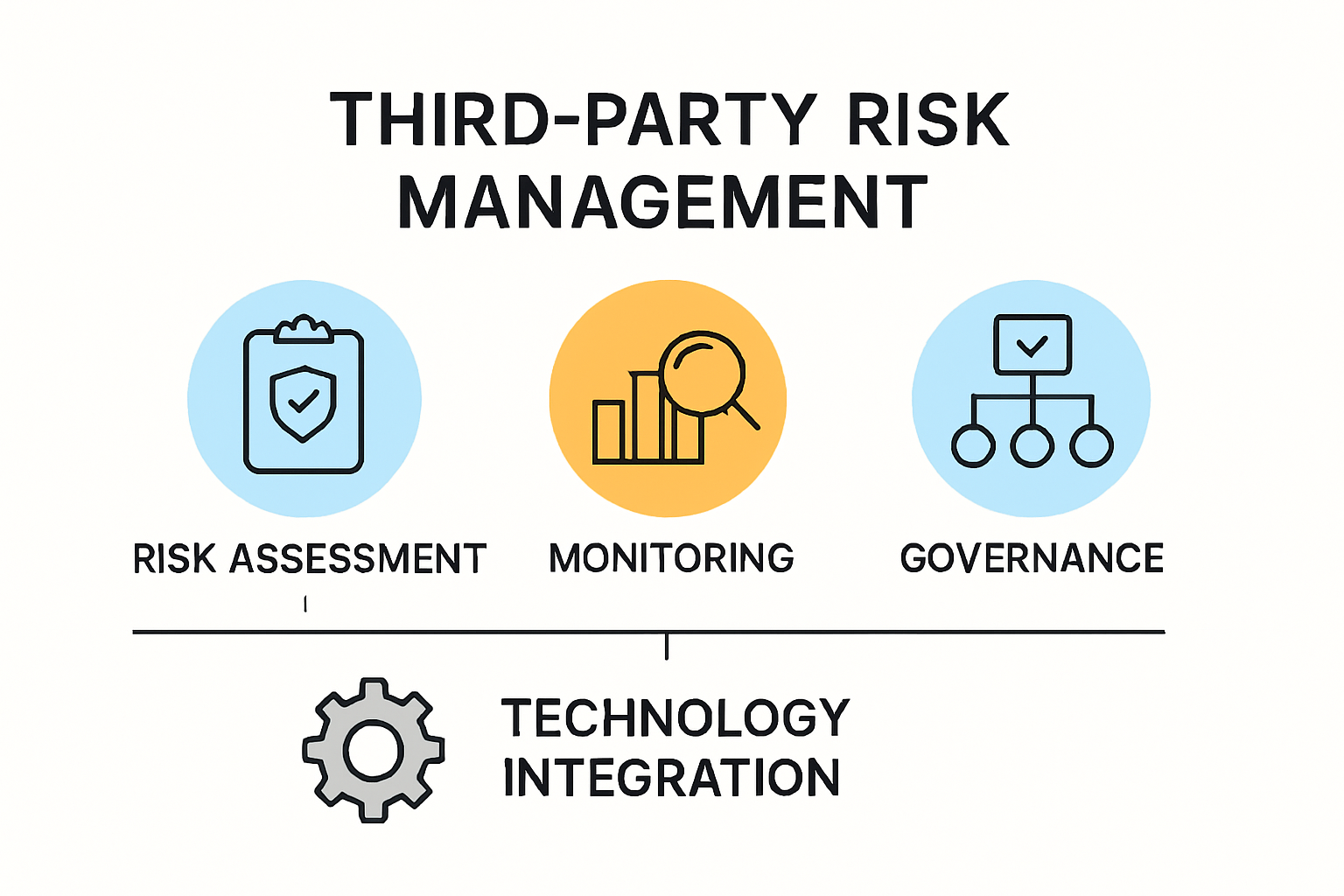
Building a robust third party risk management framework requires a strategic approach that addresses multiple critical dimensions of vendor interactions and potential organizational vulnerabilities. The framework serves as a comprehensive blueprint for identifying, assessing, and mitigating risks associated with external partnerships.
Risk Assessment and Categorization
Effective third party risk management begins with a systematic risk assessment process. Organizations must develop a comprehensive risk categorization methodology that evaluates potential vendors across multiple dimensions. SecurityScorecard highlights that this process involves analyzing vendor capabilities, security practices, financial stability, and potential impact on organizational operations.
The risk categorization typically involves:
- Criticality Assessment: Determining the strategic importance of each third party relationship
- Potential Risk Exposure: Evaluating financial, operational, and cybersecurity risks
- Compliance Requirements: Assessing vendor alignment with industry regulations and internal standards
By implementing a nuanced risk assessment approach, businesses can prioritize their risk management efforts and allocate resources more effectively.
Continuous Monitoring and Governance
A dynamic third party risk management framework requires ongoing monitoring and robust governance mechanisms. Whistic emphasizes the importance of establishing clear roles, responsibilities, and risk tolerance levels within the organization.
Key governance components include:
- Regular Vendor Reassessments: Periodic reviews of vendor performance and risk profile
- Risk Mitigation Protocols: Documented processes for addressing identified vulnerabilities
- Contractual Risk Controls: Implementing specific service level agreements (SLAs) that mandate security and performance standards
Continuous monitoring enables organizations to adapt quickly to changing vendor landscapes and emerging potential risks. This proactive approach transforms third party risk management from a static process to a dynamic, responsive strategy.
Integration and Automation
Modern third party risk management frameworks leverage technology to enhance efficiency and accuracy. Salty Cloud suggests that automation can significantly improve risk monitoring capabilities, allowing organizations to track vendor risks in real time.
Advanced integration strategies involve:
- Automated Risk Scoring: Using AI and machine learning to continuously evaluate vendor risks
- Centralized Risk Management Platforms: Consolidating vendor information and risk data
- Real Time Alerting: Immediate notifications about potential vendor risk changes
By combining comprehensive risk assessment, robust governance, and technological integration, organizations can develop a third party risk management framework that protects their operational integrity and minimizes potential vulnerabilities. The key is to create a flexible, responsive system that evolves with changing business environments and emerging technological challenges.
Assessing and Categorizing Third Party Risks Effectively
Navigating the complex landscape of third party risks requires a strategic and methodical approach that goes beyond surface level evaluations. Organizations must develop a sophisticated risk assessment framework that enables precise identification, measurement, and mitigation of potential vulnerabilities associated with external partnerships.
Risk Classification and Prioritization
Neotas emphasizes that effective third party risk assessment demands a comprehensive due diligence process that systematically evaluates vendor capabilities and potential organizational impact. This involves creating a robust risk classification system that assigns specific risk levels based on multiple critical factors.
Key dimensions of risk classification include:
- Data Access Level: Evaluating the vendor's potential exposure to sensitive organizational information
- Operational Criticality: Determining the vendor's strategic importance to core business functions
- Regulatory Compliance: Assessing the vendor's adherence to industry specific regulatory requirements
By implementing a nuanced risk classification methodology, organizations can develop a more targeted and efficient risk management strategy that allocates resources proportionally to potential threat levels.
Risk Scoring and Quantification
SaltyCloud recommends a risk based approach that prioritizes vendors based on their inherent risk potential. This approach involves developing a sophisticated risk scoring mechanism that transforms qualitative assessments into quantifiable metrics.
Effective risk quantification strategies include:
- Standardized Risk Scoring Models: Creating consistent evaluation frameworks
- Weighted Risk Factors: Assigning different importance levels to various risk dimensions
- Comparative Risk Analysis: Benchmarking vendors against industry standards and peer performance
Risk scoring enables organizations to make data driven decisions about vendor relationships, focusing limited resources on high risk areas that demand immediate attention.
Continuous Monitoring and Dynamic Risk Assessment
BitSight highlights the importance of viewing third party risk management as a continuous lifecycle rather than a one time evaluation. This approach requires implementing dynamic monitoring mechanisms that can quickly detect and respond to emerging risks.
Continuous monitoring techniques involve:
- Real Time Risk Tracking: Implementing automated systems that provide instant risk updates
- Periodic Reassessment Protocols: Scheduling regular comprehensive vendor risk reviews
- Adaptive Risk Thresholds: Developing flexible risk management frameworks that can evolve with changing business environments
The goal of comprehensive third party risk assessment is not just to identify risks but to create a proactive, adaptive system that anticipates potential vulnerabilities before they can manifest into significant organizational challenges. By combining rigorous classification, quantitative scoring, and continuous monitoring, businesses can transform third party risk management from a reactive process to a strategic organizational capability.
Steps to Implement a Robust Framework in 2025
Implementing a comprehensive third party risk management framework requires a strategic, multifaceted approach that addresses the complex challenges of modern business ecosystems. As organizations navigate increasingly intricate vendor relationships, a structured methodology becomes critical for maintaining operational security and organizational resilience.
Establishing Comprehensive Vendor Mapping
Whistic recommends beginning with a meticulous vendor inventory that provides complete visibility into organizational partnerships. This foundational step involves creating a detailed repository that captures every third party interaction, including granular details about their role, access levels, and potential risk exposure.
Key components of effective vendor mapping include:
- Complete Vendor Identification: Documenting all current and potential vendor relationships
- Access Level Documentation: Mapping precise system and data access permissions
- Relationship Categorization: Classifying vendors by strategic importance and potential risk
A comprehensive vendor inventory transforms risk management from a reactive process to a proactive strategic capability, enabling organizations to understand their entire external ecosystem.
Developing Risk Assessment and Governance Protocols
SaltyCloud emphasizes the importance of creating standardized assessment methodologies that provide consistent evaluation criteria across different vendor types. This involves developing a robust governance framework that defines clear roles, responsibilities, and risk tolerance levels.
Critical governance elements include:
- Standardized Risk Assessment Rubrics: Creating uniform evaluation criteria
- Clear Organizational Roles: Defining specific responsibilities for risk management
- Risk Tolerance Thresholds: Establishing explicit boundaries for acceptable vendor risk
By implementing structured governance protocols, organizations can ensure a systematic approach to third party risk management that reduces potential vulnerabilities.
Implementing Continuous Monitoring and Technology Integration
SecurityScorecard highlights the critical role of technology in modern third party risk management. Advanced technological solutions enable real time risk tracking, automated assessments, and rapid response mechanisms.
Advanced monitoring strategies involve:
- Automated Risk Tracking: Implementing systems that provide instant risk updates
- AI Powered Risk Analysis: Utilizing machine learning for predictive risk assessment
- Integrated Reporting Mechanisms: Creating comprehensive dashboards for risk visualization
Technology integration transforms third party risk management from a manual, time consuming process into a dynamic, responsive system that can quickly adapt to emerging threats.
Successful implementation of a third party risk management framework in 2025 requires a holistic approach that combines comprehensive vendor mapping, robust governance protocols, and advanced technological capabilities. Organizations must view this process as an ongoing strategic initiative that evolves with changing business landscapes and emerging technological challenges.
Best Practices and Tools for Ongoing Risk Monitoring
Effective ongoing risk monitoring represents a critical component of a comprehensive third party risk management strategy. Organizations must develop sophisticated approaches that enable continuous assessment and rapid response to emerging vendor related vulnerabilities.
Continuous Assessment and Evaluation Frameworks
SecurityScorecard emphasizes the importance of implementing systematic risk assessment methodologies that go beyond periodic evaluations. This approach requires developing dynamic monitoring frameworks that provide real time insights into vendor performance and potential risk exposures.
Key continuous assessment strategies include:
- Regular Risk Reassessments: Scheduling periodic comprehensive vendor reviews
- Performance Tracking: Monitoring vendor compliance and operational effectiveness
- Dynamic Risk Scoring: Implementing adaptive risk evaluation mechanisms
By creating a continuous assessment framework, organizations can proactively identify and mitigate potential risks before they escalate into significant challenges.
Regulatory Compliance and Operational Resilience
EY highlights the critical importance of aligning risk monitoring practices with emerging regulatory requirements. The Digital Operational Resilience Act (DORA), effective in January 2025, introduces stringent requirements for financial entities regarding third party risk management.
Critical compliance monitoring components include:
- Contractual Risk Controls: Developing comprehensive agreements that mandate specific risk management standards
- Regulatory Alignment: Ensuring vendor practices meet industry specific compliance requirements
- Incident Response Protocols: Creating clear mechanisms for addressing potential regulatory breaches
Effective compliance monitoring transforms risk management from a reactive process to a proactive strategic capability that protects organizational interests.
Advanced Technological Tools and Monitoring Solutions
Modern risk monitoring demands sophisticated technological solutions that provide comprehensive visibility and rapid risk detection. Advanced tools leverage artificial intelligence and machine learning to create more intelligent, adaptive risk management approaches.
Cutting edge monitoring technologies involve:
- AI Powered Risk Analysis: Utilizing machine learning algorithms for predictive risk assessment
- Integrated Monitoring Platforms: Consolidating vendor risk data into comprehensive dashboards
- Automated Alerting Systems: Creating real time notification mechanisms for potential risk events
Technological integration enables organizations to transform risk monitoring from a manual, time consuming process into a dynamic, responsive system that can quickly adapt to emerging threats and changing vendor landscapes.
Successful ongoing risk monitoring requires a holistic approach that combines continuous assessment, regulatory compliance, and advanced technological capabilities. Organizations must view this process as a strategic imperative that evolves with changing business environments and emerging technological challenges, ensuring robust protection against potential vendor related risks.
Frequently Asked Questions
What is a Third Party Risk Management Framework?
A Third Party Risk Management Framework is a structured approach that organizations use to identify, assess, and mitigate risks associated with external vendors and partners, ensuring operational security and compliance with regulations.
Why is continuous monitoring important in third party risk management?
Continuous monitoring is vital because it allows organizations to track vendor performance and risk exposure in real-time, adapting quickly to any changes or emerging threats, rather than relying on static, periodic assessments.
How can businesses categorize third party risks effectively?
Businesses can categorize third party risks by developing a risk classification system that evaluates factors such as data access level, operational criticality, and regulatory compliance, helping to prioritize resources and efforts accordingly.
What role does technology play in third party risk management?
Technology plays a crucial role by enabling automation, real-time risk tracking, and advanced risk analysis through AI and machine learning, which enhances the efficiency and effectiveness of third party risk management processes.
Ready to Modernize Third Party Risk Management?
Still manually chasing down answers for every third party risk assessment? If you are feeling the pressure of increasing regulatory demands and the constant struggle to stay ahead of vendor risks, you are not alone. As highlighted in this guide, continuous monitoring and real-time adaptation have become non-negotiable for any organization that values both security and operational speed. The challenge is real: outdated, manual risk processes can put your business at risk and slow down growth.
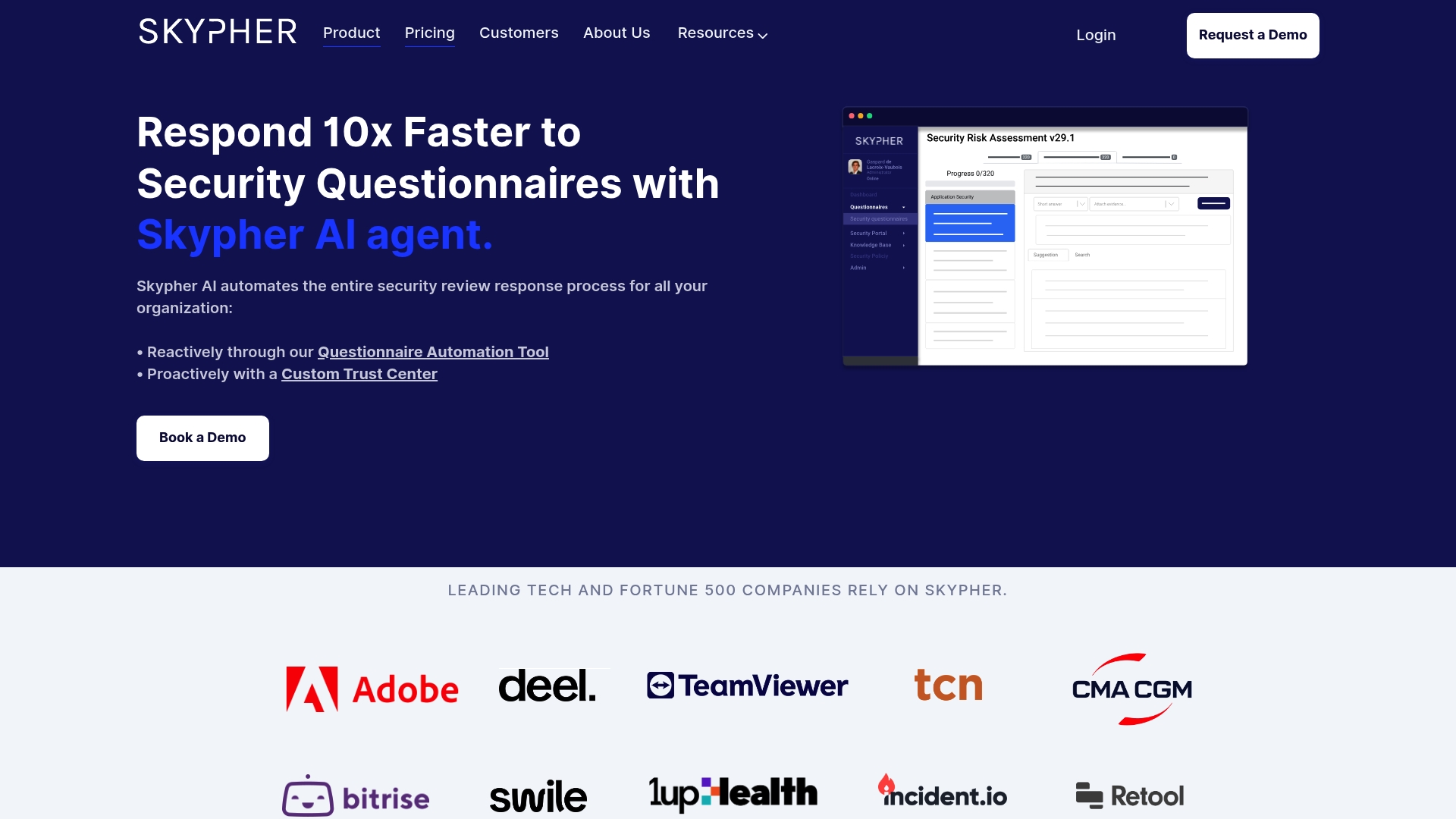
Step up your risk management game with Skypher.
- Slash your security questionnaire turnaround from days to hours
- Integrate seamlessly with over 40 TPRM platforms and boost your team's efficiency at every step
- Give your next client or regulator the trust they need on demand
Experience how our AI-driven automation tools and customizable Trust Center help medium to large tech and finance teams build a stronger risk posture in 2025. Explore Skypher now and see firsthand how easy third party risk management can be when your processes finally catch up with your ambitions.