

Cybersecurity threats are shifting fast in 2025. You might expect the main buzz to center around headline-grabbing hacks or state-backed attacks. Not quite. The real surprise is that 45 percent of global cybersecurity leaders say ransomware is their top concern this year, making it the single biggest threat to organizations worldwide. What most people miss is how this priority reshapes training, technology, and even day-to-day operations in ways you may not see coming.
Table of Contents
- Common Questions on Security and Their Answers
- Best Practices for Addressing Security Concerns
- Security Questions for Vendor and Employee Assessments
- Expert Tips for Staying Secure in a Changing World
Quick Summary
| Takeaway | Explanation |
|---|---|
| Ransomware is the top threat | Organizations should prioritize defenses against ransomware attacks, which are a major concern for 45% of global cybersecurity leaders. |
| Generative AI complicates data security | The focus is shifting to protecting unstructured data from vulnerabilities associated with AI technologies, requiring new security strategies. |
| Continuous training is essential | Ongoing cybersecurity awareness programs for employees are crucial for reducing risks and enhancing organizational security culture. |
| Comprehensive vendor assessments are necessary | Utilizing Vendor Risk Assessment Questionnaires helps organizations identify potential risks and evaluate third-party security practices before engagement. |
| Proactive threat detection enhances security | Organizations must implement automated threat intelligence and continuous monitoring systems to effectively detect and respond to emerging threats. |
Common Questions on Security and Their Answers
Cybersecurity continues to evolve rapidly, creating new challenges and questions for organizations worldwide. As threats become more sophisticated, understanding key security concerns becomes critical for protecting digital assets and maintaining operational integrity.
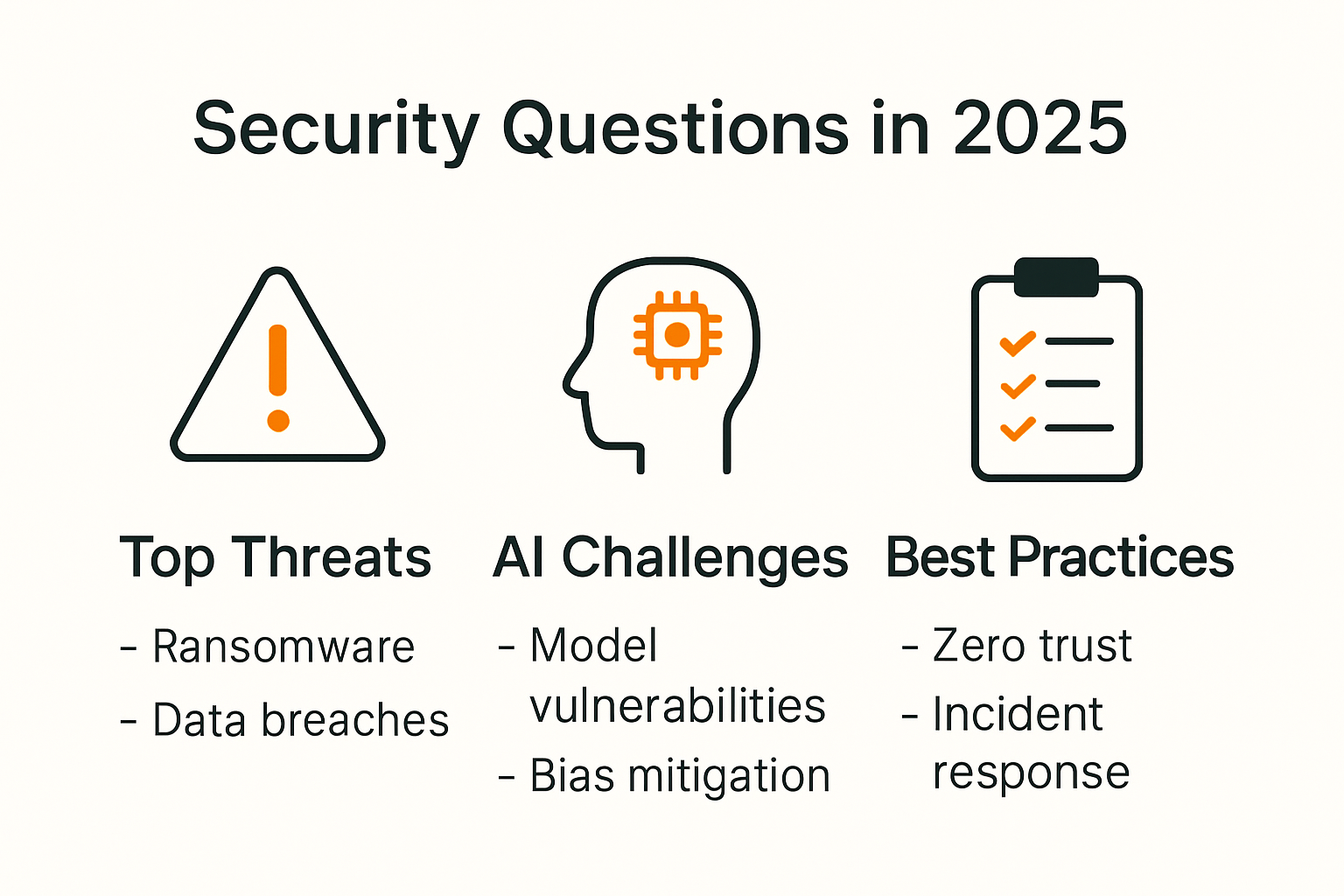
Top Organizational Security Concerns in 2025
In the current threat landscape, ransomware emerges as the most significant risk for organizations. Global cybersecurity leaders report that 45% of their primary concerns center around ransomware attacks, followed by cyber-enabled fraud and supply chain disruptions.
The dramatic increase in vulnerability disclosures highlights the complexity of modern cybersecurity. Cybersecurity research indicates over 30,000 new vulnerabilities were identified in the past year, representing a 17% increase from previous periods. This surge underscores the critical need for proactive security strategies and continuous monitoring.
Emerging Security Challenges with Generative AI
The rise of generative AI has fundamentally transformed data security priorities. Organizations are now shifting focus from traditional structured database protection to safeguarding unstructured data like text, images, and videos. Gartner research reveals that this transition requires innovative investment strategies and entirely new security approaches.
Key questions organizations are asking include: How do we protect against AI-generated phishing attempts? What new vulnerabilities emerge with generative AI technologies? How can we maintain data privacy while leveraging advanced AI capabilities?

Practical Security Strategies for Mitigation
Addressing these complex security questions requires a multifaceted approach. Successful organizations are implementing comprehensive strategies that include:
- Continuous Training: Regular cybersecurity awareness programs for employees
- Advanced Monitoring: Real-time threat detection and response systems
- Adaptive Security Frameworks: Flexible protocols that can quickly adjust to emerging threats
Understanding that security is not a one-time implementation but an ongoing process is crucial. Organizations must remain agile, continuously updating their knowledge, tools, and strategies to stay ahead of potential security risks.
By asking the right questions and maintaining a proactive stance, businesses can significantly reduce their vulnerability and build robust, resilient security infrastructures that protect against the most sophisticated modern threats.
Best Practices for Addressing Security Concerns
Navigating the complex world of cybersecurity requires strategic approaches that blend technology, human expertise, and adaptive methodologies. Organizations must develop comprehensive frameworks that anticipate and mitigate potential risks while maintaining operational efficiency.
Integrating Advanced AI Technologies
The World Economic Forum highlights that artificial intelligence represents a transformative tool in cybersecurity management. AI technologies can dramatically enhance threat detection capabilities by providing real-time anomaly identification and automated response mechanisms.
Key AI integration strategies include implementing machine learning algorithms for predictive threat analysis, developing intelligent monitoring systems that can recognize subtle pattern variations, and creating adaptive security protocols that evolve with emerging cyber risks. These technologies enable organizations to move from reactive to proactive security models.
Regulatory Compliance and Collaborative Security
Global cybersecurity regulations are intensifying, with governmental bodies mandating more rigorous security frameworks. The European Union's NIS2 Directive exemplifies this trend, requiring organizations to adopt collaborative and comprehensive security management approaches.
Successful compliance involves:
- Comprehensive Documentation: Maintaining detailed security policies and incident response plans
- Regular Audits: Conducting systematic evaluations of security infrastructure
- Cross-Departmental Collaboration: Ensuring security strategies align across different organizational units
Human-Centric Security Strategies
Technology alone cannot guarantee complete protection. Human factors remain critical in maintaining robust security environments. Organizations must invest in continuous employee training programs that build security awareness and develop a culture of vigilance.
Effective human-centric security strategies include:
- Simulated phishing exercises to test and improve employee awareness
- Interactive cybersecurity training modules that use real-world scenario based learning
- Creating clear communication channels for reporting potential security incidents
By combining advanced technological solutions with comprehensive human-focused approaches, organizations can create resilient security ecosystems that adapt to the ever-changing threat landscape. The key lies in maintaining flexibility, promoting continuous learning, and treating security as an ongoing collaborative process rather than a static checklist.
Security Questions for Vendor and Employee Assessments
Effective security assessments are critical for protecting organizational integrity and minimizing potential vulnerabilities. Organizations must develop comprehensive evaluation strategies that systematically examine both vendor capabilities and employee readiness.
Vendor Risk Assessment Framework
Vendor Risk Assessment Questionnaires (VRAQs) have become essential tools for evaluating third-party security practices and operational reliability. These assessments help organizations identify potential risks before establishing contractual relationships.
Key evaluation areas include:
- Regulatory Compliance: Verification of adherence to standards like GDPR, HIPAA, ISO 27001, and PCI DSS
- Security Infrastructure: Assessment of technological capabilities and protective measures
- Incident Response Preparedness: Evaluation of potential breach management strategies
Critical Security Interrogation Points
Comprehensive security questions should systematically probe multiple dimensions of organizational security. These interrogation points typically cover three primary domains:
- Incident Response Capabilities
- Existence of formal incident response plans
- Breach notification processes and timelines
- Historical record of security incident management
- Infrastructure Security
- Network monitoring protocols
- Access control mechanisms
- Data encryption standards
- Human Resources Security Practices
- Background verification processes
- Mandatory cybersecurity training programs
- Insider threat management strategies
Risk Scoring and Continuous Monitoring
Advanced vendor risk assessment processes extend beyond initial questionnaires. Organizations now implement sophisticated risk scoring methodologies that enable:
- Generation of standardized risk evaluation metrics
- Prioritization of high-risk vendors for intensive monitoring
- Ongoing assessment of vendor security postures
Successful security assessments require a holistic approach that combines technological evaluation, human factor analysis, and continuous monitoring. By implementing rigorous questioning frameworks and maintaining adaptive assessment strategies, organizations can significantly reduce potential security risks associated with vendors and internal personnel.
The ultimate goal remains creating a proactive security ecosystem where potential vulnerabilities are identified, evaluated, and mitigated before they can compromise organizational integrity.
Expert Tips for Staying Secure in a Changing World
The cybersecurity landscape continues to evolve at an unprecedented pace, demanding adaptive strategies and continuous learning from organizations and individuals alike. Staying secure requires a proactive, multifaceted approach that combines technological innovation, human expertise, and strategic thinking.
Proactive Threat Detection and Automation
Cybersecurity experts emphasize that proactive detection is crucial in combating increasingly sophisticated cyber threats. With adversaries leveraging advanced AI-driven infiltration techniques, organizations must move beyond reactive security models.
Key strategies for proactive threat management include:
- Automated Threat Intelligence: Implementing platforms that can rapidly identify and respond to emerging threats
- Continuous Monitoring: Establishing real-time security surveillance systems
- Predictive Analysis: Using machine learning algorithms to anticipate potential security vulnerabilities
Building a Robust Cybersecurity Culture
Research indicates that human error remains a significant factor in data breaches. Creating a strong organizational culture of cybersecurity awareness is paramount for minimizing risks.
Effective cultural development strategies include:
- Comprehensive Training Programs: Regular, interactive cybersecurity education for all employees
- Simulation Exercises: Conducting realistic phishing and social engineering tests
- Clear Communication Channels: Establishing straightforward reporting mechanisms for potential security incidents
Advanced Collaborative Security Approaches
Modern cybersecurity demands unprecedented levels of collaboration and integration. Organizations must break down traditional silos and develop cross-functional security strategies that leverage collective expertise and technological capabilities.
Critical collaborative approaches involve:
- Developing integrated security response teams
- Creating cross-departmental communication protocols
- Implementing shared threat intelligence platforms
- Establishing external partnerships with cybersecurity experts and industry peers
Staying secure in a rapidly changing world requires more than just technological solutions. It demands a holistic approach that combines cutting-edge technologies, continuous learning, and a proactive mindset. Organizations must remain agile, continuously updating their knowledge, tools, and strategies to effectively navigate the complex and ever-evolving cybersecurity landscape.
The most successful security strategies will be those that view cybersecurity not as a static defense mechanism, but as a dynamic, adaptive process that evolves in real-time to address emerging challenges and protect critical digital assets.
Frequently Asked Questions
What is the biggest cybersecurity threat in 2025?
Ransomware is identified as the top threat in 2025, with 45% of global cybersecurity leaders prioritizing defenses against these types of attacks.
How does generative AI impact data security?
Generative AI shifts the focus of data security from traditional structured data to protecting unstructured data, such as text and images, raising new vulnerabilities that organizations need to address.
What are effective strategies for mitigating security risks?
Organizations should implement continuous employee training, advanced monitoring systems, and adaptive security frameworks to proactively manage and mitigate security risks.
How should companies assess vendor security?
Companies can use Vendor Risk Assessment Questionnaires to evaluate third-party security practices, focusing on regulatory compliance, security infrastructure, and incident response preparedness.
Ready to Turn Security Anxiety into Action?
You are not alone if your team feels overwhelmed by the rapid rise in cybersecurity threats like ransomware. This article highlights a harsh truth—security questionnaires are getting tougher, AI risks are multiplying, and the time spent reviewing vendors is stealing focus from what matters. If you are tasked with handling endless security reviews or worried about keeping up with evolving standards around incident response, collaboration, and vendor risk assessments, there is a better way.
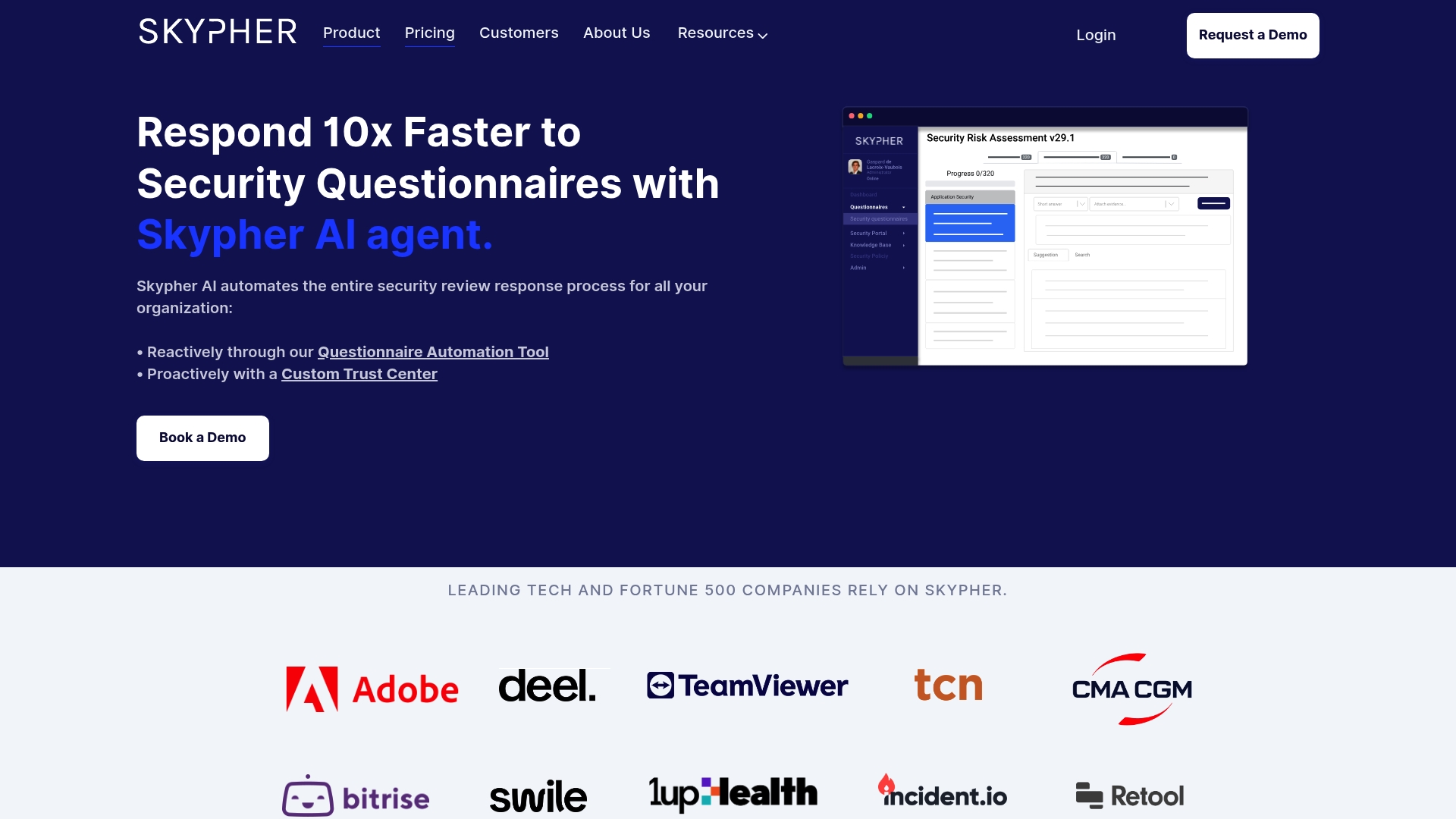
Imagine transforming your security questionnaire workflow from a time-consuming headache to a streamlined, automated process powered by AI. Skypher gives you instant access to leading-edge security questionnaire automation, live collaboration, and a customizable Trust Center for real-time peace of mind. Forget manual copy and paste. Reduce contract cycles, wow your vendors, and increase trust with every RFP. Visit Skypher today to request a demo and see how you can turn 2025's toughest security challenges into your competitive edge. Act now—futureproof your security operations before your next big review.