

Risk assessments are the backbone of effective risk management strategies in today's complex business landscape. While many see these assessments as merely technical evaluations of threats, what may surprise you is that over 65% of companies are now leveraging both qualitative and quantitative methods for a more comprehensive view of their vulnerabilities. This might lead you to think that the intricate details of data analysis are the most critical aspect of risk management. However, the truth is that the way organizations adapt these risk assessments to their specific context and continuously evolve their strategies is what truly defines success. Get ready to explore how the right risk assessment approach can transform your organization’s resilience.
Table of Contents
- Overview: Types of Risks Assessments
- Qualitative vs Quantitative Methods
- Choosing the Right Risk Assessment
- Effective Risk Strategies in 2025
Quick Summary
| Takeaway | Explanation |
|---|---|
| Qualitative and Quantitative Methods are Complementary | Organizations should use both qualitative assessments for quick prioritization and quantitative assessments for detailed analysis, as both methods offer unique advantages. |
| Tailored Risk Assessment Strategies | Selecting the right assessment approach requires consideration of organizational context, resources, decision-making needs, and data availability. |
| Emphasis on Technology Integration | Leverage technology such as AI, automated monitoring, and digital simulations for more effective and real-time risk assessments. |
| Dynamic and Adaptive Approaches are Essential | Implement dynamic risk assessments that can adapt to changing conditions, especially in fast-paced industries. |
| Prioritize Emerging Risks | Incorporate evaluations of climate, cyber, and supply chain risks into risk assessment frameworks, reflecting their growing significance in today's landscape. |
Overview: Types of Risks Assessments
Risk assessments serve as the foundation of effective risk management strategies across industries. These systematic approaches to identifying, analyzing, and evaluating potential threats allow organizations to make informed decisions about how to mitigate or accept risks. Understanding the various types of risk assessments is crucial for selecting the right approach for your specific needs.

Qualitative vs. Quantitative Assessments
At the most fundamental level, risk assessments fall into two primary categories:
-
Qualitative risk assessment - Relies on expert judgment and subjective measures, using descriptive classifications like High, Medium, and Low to evaluate risks without numerical data. This approach provides fast, cost-effective evaluations when rapid analysis is needed or when comprehensive data isn't available.
-
Quantitative risk assessment - Uses mathematical models and numerical data to analyze risks, often resulting in monetary values or statistical probabilities. According to research from the University of Oxford, "Risk assessments, both qualitative and quantitative, are indispensable tools for informed decision-making. The judicious use of each type can mean the difference between effective mitigation and costly oversight."
Interestingly, over 65% of companies use both qualitative and quantitative risk assessment methods for cybersecurity threats, demonstrating the value of an integrated approach.
Classification by Purpose and Scope
Risk assessments can also be classified based on their purpose and scope:
-
Generic risk assessments - Address common tasks or hazards that occur regularly in an organization.
-
Site-specific risk assessments - Tailored to evaluate risks in unique workplace environments or locations.
-
Dynamic risk assessments - Performed in real-time as conditions change and new risks emerge. As Dr. Gwen O'Sullivan from Mount Royal University explains, "Dynamic risk assessments empower frontline workers to re-evaluate hazards in real time, an approach that's critical for high-velocity industries like healthcare and construction."
Classification by Analysis Method
Organizations also employ specialized methodologies for risk assessment:
-
Failure Mode and Effects Analysis (FMEA) - A structured quantitative method to identify and prioritize potential failures within systems, processes, or products.
-
Business Impact Analysis (BIA) - Focuses on assessing potential disruptions from disasters or other events to guide business continuity planning. An estimated 80% of Fortune 500 companies use business impact analyses as a core part of their continuity planning.
-
Root Cause Analysis - Aimed at identifying the fundamental causes of incidents to prevent recurrence.
A common misconception is that quantitative risk assessments are always superior to qualitative assessments. In reality, as noted by EvoTix, while quantitative assessments provide valuable data, their effectiveness depends on data quality. Qualitative assessments are often more practical when reliable data is limited or rapid analysis is necessary.
Understanding these different types of risk assessments allows organizations to select the most appropriate methods for their specific contexts, industries, and regulatory requirements.
Qualitative vs Quantitative Methods
When it comes to evaluating risks within an organization, the choice between qualitative and quantitative methods is foundational. Each approach offers distinct advantages and limitations, making them suitable for different scenarios and objectives. Understanding these differences helps in selecting the most appropriate risk assessment strategy.
Qualitative Risk Assessment Methods
Qualitative risk assessments rely primarily on judgment, experience, and subjective evaluation. Rather than using numerical data, these assessments categorize risks using descriptive scales.
A typical qualitative risk assessment might employ a simple matrix that evaluates risks based on two key factors:
- Likelihood - How probable is it that the risk will occur? (Rare, Unlikely, Possible, Likely, Almost Certain)
- Impact - How severe would the consequences be? (Negligible, Minor, Moderate, Major, Catastrophic)
These assessments often use color-coded matrices where red indicates high-risk areas requiring immediate attention, while green represents lower-risk areas that may need only minimal monitoring.
According to the European Financial Authority, "Quantitative risk models, while powerful, are only as good as the data that drives them. Combining quantitative analysis with experienced human judgment is the gold standard." This highlights the enduring value of qualitative approaches even as quantitative methods advance.
Quantitative Risk Assessment Methods
Quantitative risk assessments use numerical and statistical analysis to evaluate risks in objective, measurable terms. These methods typically express risk in terms of monetary values or probabilities.
Key components of quantitative risk assessments include:
- Single Loss Expectancy (SLE) - The monetary value expected from a single occurrence of a risk
- Annual Rate of Occurrence (ARO) - The estimated frequency of a risk occurring in a year
- Annual Loss Expectancy (ALE) - Calculated as SLE × ARO, representing the expected yearly financial loss from a specific risk
Global spending on risk assessment and compliance technologies reached $41 billion USD in 2023, reflecting the growing importance of sophisticated quantitative risk tools and methodologies.
Comparing Approaches: When to Use Each Method
| Aspect | Qualitative Method | Quantitative Method |
|---|---|---|
| Resource Requirements | Lower (less time, expertise, and data needed) | Higher (requires extensive data and analytical expertise) |
| Accuracy | Less precise but faster | More precise but time-intensive |
| Best Used For | Initial risk screening, communication with stakeholders, scenarios with limited data | Financial decision-making, regulatory compliance, portfolio risk management |
| Limitations | Subjective bias, difficult to compare dissimilar risks | Data quality dependencies, false precision, complexity |
A common misconception is that organizations must choose between these methods. In practice, Safety and Health Magazine notes that effective risk management often involves combining both approaches. Qualitative methods can quickly identify priority areas, while quantitative methods can then be applied to these high-priority risks for deeper analysis.
Hybrid Approaches
Many organizations now employ hybrid approaches that leverage the strengths of both methodologies. For example:
- Using qualitative assessments for initial risk identification and prioritization
- Applying quantitative methods to high-priority risks identified through qualitative screening
- Incorporating expert judgment to validate and contextualize quantitative results
The most effective risk assessment strategies recognize that qualitative and quantitative methods are complementary rather than competitive. By strategically combining these approaches, organizations can develop a comprehensive understanding of their risk landscape and make better-informed decisions about risk mitigation and management.
Choosing the Right Risk Assessment
Selecting the appropriate risk assessment method can make the difference between effectively managing threats and leaving your organization vulnerable. The decision isn't one-size-fits-all but should be tailored to your specific context, resources, and objectives. Here's how to navigate this crucial choice.
Factors to Consider When Selecting a Risk Assessment Method
When determining which type of risk assessment to use, several key factors should guide your decision:
-
Organizational Context - Consider your industry, size, and regulatory environment. Healthcare organizations may require different approaches than manufacturing companies due to unique compliance requirements and risk profiles.
-
Available Resources - Assess your team's expertise, available time, and budget. Quantitative assessments typically require more specialized skills and data infrastructure than qualitative approaches.
-
Decision-Making Needs - Determine what kind of information will best support your decision-makers. Some stakeholders respond better to numerical probabilities, while others find descriptive scenarios more actionable.
-
Data Availability - Evaluate the quality and quantity of relevant data. Without sufficient historical data, quantitative methods may produce misleading results, making qualitative approaches more appropriate.
-
Risk Complexity - Consider the nature and complexity of the risks you're assessing. Interconnected or emerging risks often benefit from multiple assessment approaches.
A recent global survey found that 74% of organizations increased the frequency of risk assessments following pandemic-related disruptions, highlighting how external factors can influence assessment needs.
Matching Assessment Types to Specific Scenarios
Different situations call for different assessment approaches:
Generic Risk Assessments work well for:
- Routine operations with well-understood hazards
- Standard compliance requirements
- Initial screening of common risks
Site-Specific Assessments are ideal for:
- Unique physical locations with distinct hazard profiles
- Special projects or temporary operations
- Facilities with varying equipment or environmental conditions
Dynamic Risk Assessments excel in:
- Rapidly changing environments
- Emergency response situations
- Operations where conditions frequently shift
According to Mount Royal University's Centre for Environmental Health and Safety, dynamic risk assessments have become increasingly crucial in high-velocity industries like healthcare and construction, where conditions can change rapidly and unexpected hazards may emerge.
Implementing a Balanced Risk Assessment Strategy
Rather than relying on a single approach, many successful organizations implement a balanced risk assessment strategy that integrates multiple methods:
-
Tiered Approach: Start with simple qualitative assessments for all risks, then apply more resource-intensive quantitative methods only to those identified as high-priority.
-
Complementary Methods: Use qualitative methods to identify and contextualize risks, then apply quantitative methods to analyze specific aspects that benefit from numerical precision.
-
Regular Review Cycle: Establish a schedule for reviewing and updating risk assessments, with frequency determined by the volatility of your risk environment.
One significant misconception is that risk assessments are merely compliance exercises. In reality, as Safety and Health Magazine points out, effective risk assessments are crucial for strategic decision-making and protecting business continuity, not just fulfilling legal requirements.
Evolving Your Approach Over Time
As your organization matures in risk management capabilities, your assessment approaches should evolve accordingly. Begin with simpler methods and gradually incorporate more sophisticated techniques as your team develops expertise and your data systems improve.
Consider investing in risk assessment technology that can grow with your needs. With global spending on risk assessment and compliance technologies reaching significant levels, organizations have more options than ever for solutions that can adapt to changing requirements.
Choosing the right risk assessment isn't a one-time decision but an ongoing process of refinement and adaptation. By thoughtfully matching assessment methods to your specific needs and continuously improving your approach, you can build a risk assessment framework that provides valuable insights and strengthens your organization's resilience.
Effective Risk Strategies in 2025

The risk landscape is evolving rapidly as we move through 2025, with organizations facing increasingly complex threats across multiple domains. Today's most effective risk assessment strategies leverage emerging technologies, integrate multiple assessment types, and adapt to shifting regulatory environments. Here's what successful risk management looks like in 2025.
Technology-Enhanced Risk Assessments
Technology has transformed how organizations approach risk assessment, enabling more sophisticated analysis and real-time monitoring:
AI and Machine Learning Integration - Predictive algorithms now identify patterns and correlations in risk data that would be impossible for human analysts to detect. These systems continuously learn from new data, improving their accuracy over time and enabling organizations to spot emerging risks earlier.
Automated Continuous Monitoring - Rather than conducting periodic assessments, leading organizations have implemented systems that continuously evaluate risk indicators. These systems automatically flag significant changes in risk profiles, allowing for immediate response rather than waiting for scheduled reviews.
Digital Twin Simulation - Complex organizations use digital replicas of their operations to simulate potential risk scenarios and test mitigation strategies before implementation. This approach provides quantitative insights into how different variables might affect risk outcomes without real-world consequences.
Integration of Multiple Assessment Types
The most resilient organizations in 2025 don't rely on a single risk assessment methodology but blend approaches strategically:
Layered Assessment Frameworks - Organizations implement tiered approaches where simpler assessments identify areas requiring deeper analysis. For example, a qualitative screening might flag high-risk areas that then undergo rigorous quantitative assessment.
Cross-Functional Risk Teams - Effective risk management now involves diverse expertise across departments. These cross-functional teams bring multiple perspectives to risk assessment, combining financial, operational, technical, and strategic viewpoints to create more comprehensive analyses.
Scenario Planning and Stress Testing - Organizations regularly develop multiple risk scenarios to test their resilience against various threats. These exercises help identify vulnerabilities that might not be apparent through traditional risk assessments and prepare teams to respond effectively when real crises emerge.
Adapting to Regulatory Evolution
The regulatory landscape continues to evolve, with organizations adapting their risk assessment approaches accordingly:
Regulatory Technology (RegTech) - Organizations increasingly use specialized software to track regulatory changes, assess compliance risks, and automate reporting. These tools ensure that risk assessments remain aligned with current regulatory requirements.
Global Harmonization Approaches - Multinational organizations have developed frameworks that satisfy multiple regulatory regimes simultaneously, reducing duplication and inconsistency in risk assessments across different jurisdictions.
Proactive Engagement - Rather than waiting for regulatory changes, forward-thinking organizations actively engage with regulators during the development of new requirements. This dialogue helps shape regulations while giving organizations more time to adapt their risk assessment frameworks.
Prioritizing Emerging Risk Categories
Effective risk strategies in 2025 address several key risk categories that have grown in prominence:
Climate and Environmental Risks - Organizations now integrate climate-related threats into their standard risk assessment frameworks, evaluating both physical risks (extreme weather, resource scarcity) and transition risks (regulatory changes, market shifts toward sustainability).
Cyber and Digital Risks - As digital transformation continues, sophisticated cyber risk assessments go beyond technical vulnerabilities to consider business impacts, third-party exposures, and emerging threats from advanced persistent threats and ransomware.
Supply Chain Resilience - The pandemic's lessons have led to more robust supply chain risk assessments that evaluate concentration risks, geopolitical factors, and alternative sourcing options to ensure business continuity.
The most successful risk strategies in 2025 combine technological innovation with human judgment, integrate multiple assessment methodologies, and remain flexible enough to adapt to an increasingly unpredictable world. By embracing these approaches, organizations can transform risk assessment from a compliance exercise into a strategic advantage.
Frequently Asked Questions
What are the main types of risk assessments?
Risk assessments can be primarily categorized into qualitative and quantitative methods, as well as classified by purpose and analysis methods, such as generic, site-specific, and dynamic assessments.
How do qualitative and quantitative risk assessments differ?
Qualitative assessments rely on expert judgment and descriptive categories to evaluate risks, while quantitative assessments utilize numerical data and mathematical models to express risks in measurable terms, often in monetary values.
When should I use a qualitative risk assessment?
Qualitative risk assessments are best used for initial risk screenings, when data is limited, or for quick prioritization of risks, making them suitable for routine operations and common hazards.
How can technology improve risk assessments in 2025?
Technology enhances risk assessments through AI for predictive analysis, automated continuous monitoring for real-time updates, and digital twin simulations to test potential risk scenarios without real-world consequences.
Elevate Your Risk Assessments with Skypher's Solutions
Navigating the complexities of risk assessments can be overwhelming, especially when you're trying to balance qualitative insights with quantitative data. As the article highlights, over 65% of companies are leveraging integrated approaches to understand their vulnerabilities, but the challenge lies in ensuring accurate, timely responses to security questionnaires. Are you part of the organizations grappling with this challenge?
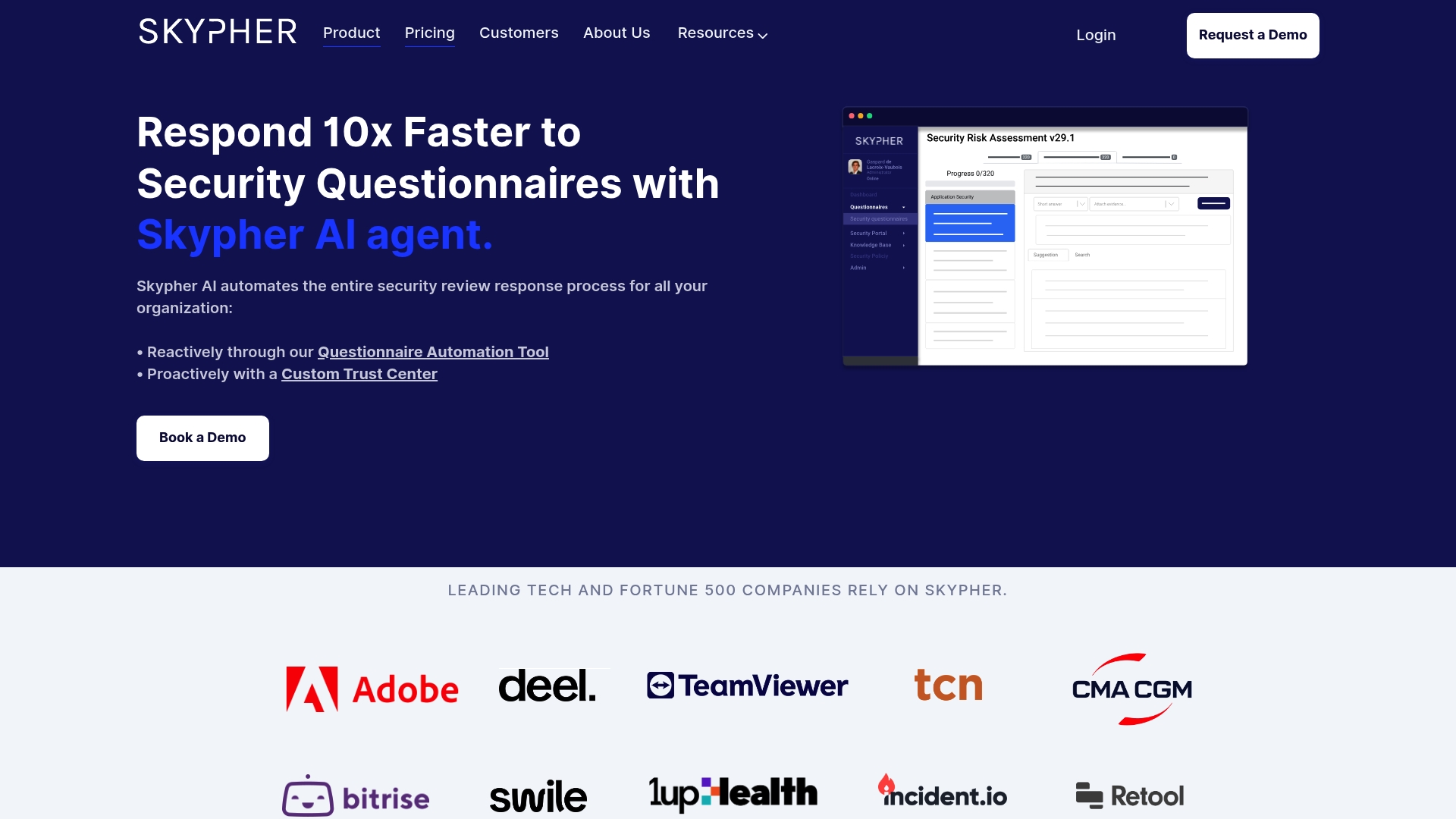
At Skypher, we provide AI-driven tools that streamline your security review process, enabling you to respond to security questionnaires faster and with precision. Our Questionnaire Automation Tool ties seamlessly into your existing risk management processes, integrating with over 40 third-party platforms while enhancing team collaboration in real time. Say goodbye to tedious paperwork and hello to an efficient, technology-empowered approach that allows you to focus on strategic risk management. Transform your risk assessment strategy today and elevate your cybersecurity posture! Discover how at Skypher and take your first step towards smarter risk management!