

Defining Vendor Roles: What Are Types of Vendor?
In business operations, a vendor is any individual or organization that provides goods or services to another business or directly to consumers. These business partners form crucial links in your supply chain and can significantly impact your operational efficiency, cost structure, and overall market competitiveness.
According to Ramp, vendors play multiple roles in delivering value through quality products, competitive pricing, and reliable service. Understanding the different types of vendors is essential for making strategic procurement decisions.
Vendor types typically fall into these major categories:
- Manufacturers: Create finished products from raw materials
- Wholesalers: Supply products in bulk to retailers or businesses
- Retailers: Sell finished goods directly to end consumers
- Service Providers: Deliver specialized services rather than physical products
- Distributors: Act as intermediaries between manufacturers and retailers
Each vendor type serves a distinct purpose in the market ecosystem. For example, a manufacturing vendor like Intel produces computer chips, while a retailer vendor like Amazon sells products directly to consumers while also providing web services to businesses. The distinction between vendor categories becomes important when establishing procurement strategies that align with your specific business needs and objectives.
Key Takeaways
| Takeaway | Explanation |
|---|---|
| Understanding Vendor Types is Crucial | Recognizing the specific types of vendors—manufacturers, wholesalers, retailers, service providers, and distributors—helps to tailor procurement strategies effectively. |
| Direct vs. Indirect Vendors | Differentiating between direct vendors, which contribute directly to production, and indirect vendors, which support overall operations, is essential for resource allocation. |
| Industry-Specific Categories | Vendor classifications vary by industry. Familiarity with industry-specific vendor types enhances procurement efficiency and response times. |
| Strategic Procurement Decisions | A structured approach to evaluating and selecting vendors based on defined criteria is essential for building reliable vendor relationships and ensuring long-term success. |
Exploring Vendor Categories Across Industries

Vendor types vary significantly across different industries, with each sector developing specialized categories that address their unique operational needs. Understanding these industry-specific vendor classifications can help organizations develop more effective procurement strategies that align with their business objectives.
In procurement practice, vendors are typically classified into two broad categories based on their impact on the business:
- Direct Vendors: Provide materials, components, or services that directly contribute to the production of goods or delivery of services
- Indirect Vendors: Supply products or services that support general operations rather than production
According to Ivalua, organizations that strategically manage their vendor categories achieve significant efficiency gains, with median supplier lead times of 6 days compared to 14 days for those without such structured approaches.
Industry-specific vendor types include:
| Industry | Common Vendor Types |
|---|---|
| Manufacturing | Raw material suppliers, equipment providers, component manufacturers |
| Healthcare | Medical device vendors, pharmaceutical suppliers, service contractors |
| Retail | Product manufacturers, wholesalers, logistics providers |
| Technology | Software providers, hardware suppliers, IT consultants |
The classification of vendors goes beyond simple categorization—it forms the foundation for strategic vendor relationship management. By understanding which types of vendors are critical to your operations versus those providing supplementary services, businesses can allocate resources appropriately and develop tailored engagement strategies for each vendor category.
Evaluating Vendors: Key Criteria for Selection

Selecting the right types of vendors for your business requires a structured evaluation process based on specific criteria. Successful vendor partnerships depend on thorough assessment rather than price considerations alone.
According to Ivalua, only 13% of business leaders have formal supplier management processes in place, highlighting a significant gap in how organizations approach vendor selection.
When evaluating different types of vendors, consider these essential criteria:
- Financial Stability: Assess the vendor's financial health to ensure long-term reliability
- Quality of Products/Services: Evaluate consistency and standards adherence
- Technical Capabilities: Determine if their technology aligns with your needs
- Operational Capacity: Verify they can handle your volume requirements
- Compliance & Risk Management: Ensure they meet regulatory requirements
- Cultural Alignment: Consider compatibility with your organizational values
The importance of each criterion will vary based on vendor type. For example, when evaluating manufacturing vendors, quality control processes and production capacity might take precedence. In contrast, when assessing service providers, expertise and responsiveness might be more critical.
Create a weighted scoring system tailored to each vendor category to objectively compare potential partners. This approach enables data-driven decisions that balance immediate needs with long-term strategic objectives, ensuring the selected vendors contribute positively to your business ecosystem.
Strategies for Building Successful Vendor Partnerships
Once you've identified the appropriate types of vendors for your business needs, developing strong partnerships becomes essential for long-term success. Effective vendor relationships go beyond transactional exchanges to create mutually beneficial collaborations that drive value for both parties.
According to Information Week, organizations that maintain at least weekly communication with their vendors experience improved performance and prompter issue resolution. This regular engagement helps establish clear expectations and builds trust.
Implement these strategic approaches to strengthen vendor partnerships:
- Establish Clear Service Level Agreements (SLAs): Document performance expectations, response times, and quality standards
- Develop Joint Business Plans: Create shared objectives and growth strategies with key vendors
- Implement Performance Metrics: Use data-driven evaluation to provide constructive feedback
- Share Information Proactively: Keep vendors informed about business changes that may affect them
- Involve Vendors in Planning: Include strategic vendors in relevant business planning discussions
The depth of partnership should align with vendor classification. Strategic vendors supplying critical components or services warrant deeper integration and collaboration, while transactional vendors may require less intensive relationship management.
For example, a manufacturing company might develop an integrated supply chain solution with its primary raw material vendors, sharing production forecasts and collaborating on inventory management. Meanwhile, with office supply vendors, a streamlined ordering process with periodic performance reviews might be sufficient.
By tailoring your approach to different vendor categories, you can maximize the value from each relationship while efficiently allocating your management resources.
Emerging Trends and Innovations in Vendor Relationships
The landscape of vendor relationships continues to evolve, driven by technological advancements and changing business priorities. Understanding these trends helps organizations stay competitive when selecting and managing different types of vendors.
According to Veridion, over 75% of procurement leaders now prioritize closer supplier relationships, recognizing their strategic importance. This shift reflects a broader transformation in how businesses view their vendor ecosystems.
Key trends reshaping vendor relationships include:
- AI and Automation in Vendor Selection: Advanced algorithms now help match businesses with optimal vendor types based on specific requirements and historical performance data
- Blockchain for Contract Management: Distributed ledger technology creates immutable records of agreements and transactions, increasing transparency
- Sustainability-Focused Partnerships: More than 70% of Chief Procurement Officers consider sustainability a top priority when selecting vendors
- Collaborative Innovation Programs: Joint development initiatives between businesses and strategic vendors to create new products or solutions
- Integrated Digital Ecosystems: Seamless technology integration between vendor and client systems for real-time data sharing and process automation
Vendor management systems (VMS) are evolving to incorporate these innovations, transforming from simple databases to sophisticated platforms that facilitate strategic relationship management across different vendor categories.
These trends particularly impact how organizations relate to their strategic vendors. For example, manufacturer-supplier relationships now frequently include shared technology platforms, collaborative product development, and joint sustainability initiatives—a stark contrast to the transactional relationships that characterized past decades.
Business leaders should evaluate which of these innovations align with their vendor strategy to gain competitive advantages while strengthening their supply chain resilience.
Frequently Asked Questions
What are the different types of vendors?
Vendors can be categorized into five main types: manufacturers, wholesalers, retailers, service providers, and distributors. Each type serves a unique role in the supply chain, impacting procurement strategies and overall business operations.
How do I choose the right vendor for my business?
To choose the right vendor, evaluate them based on criteria like financial stability, quality of products/services, technical capabilities, operational capacity, compliance, and cultural alignment. Creating a weighted scoring system can aid in making data-driven decisions.
What is the difference between direct and indirect vendors?
Direct vendors provide materials or services that contribute directly to the production of goods, while indirect vendors supply products or services that support general operations. Understanding this distinction is vital for resource allocation and efficiency.
Why are vendor relationships important?
Strong vendor relationships are crucial as they go beyond simple transactions. Effective partnerships can lead to improved performance, cost savings, and better adaptability in a changing market, ultimately driving value for both parties.
Transform Vendor Relationships with Seamless Automation
Choosing the right vendor is just the beginning; building lasting partnerships is where true value lies. As emphasized in "The Ultimate Guide to Types of Vendor: Strategies for Choosing the Right Business Partner," understanding the nuances of vendor categories can enhance procurement efficiency and lead to strategic success. But what happens when you find yourself overwhelmed by the tedious task of managing security questionnaires that can make or break your vendor relationships?
Skypher offers a game-changing solution tailored to organizations like yours, especially in the tech and finance sectors, where security diligence is paramount. With our AI-driven Questionnaire Automation Tool, you can:
- Streamline security reviews and save precious time
- Enhance collaboration across your teams with real-time integration
- Integrate effortlessly with over 40 third-party risk management platforms, ensuring you focus your efforts on building stronger partnerships instead of getting bogged down in paperwork.
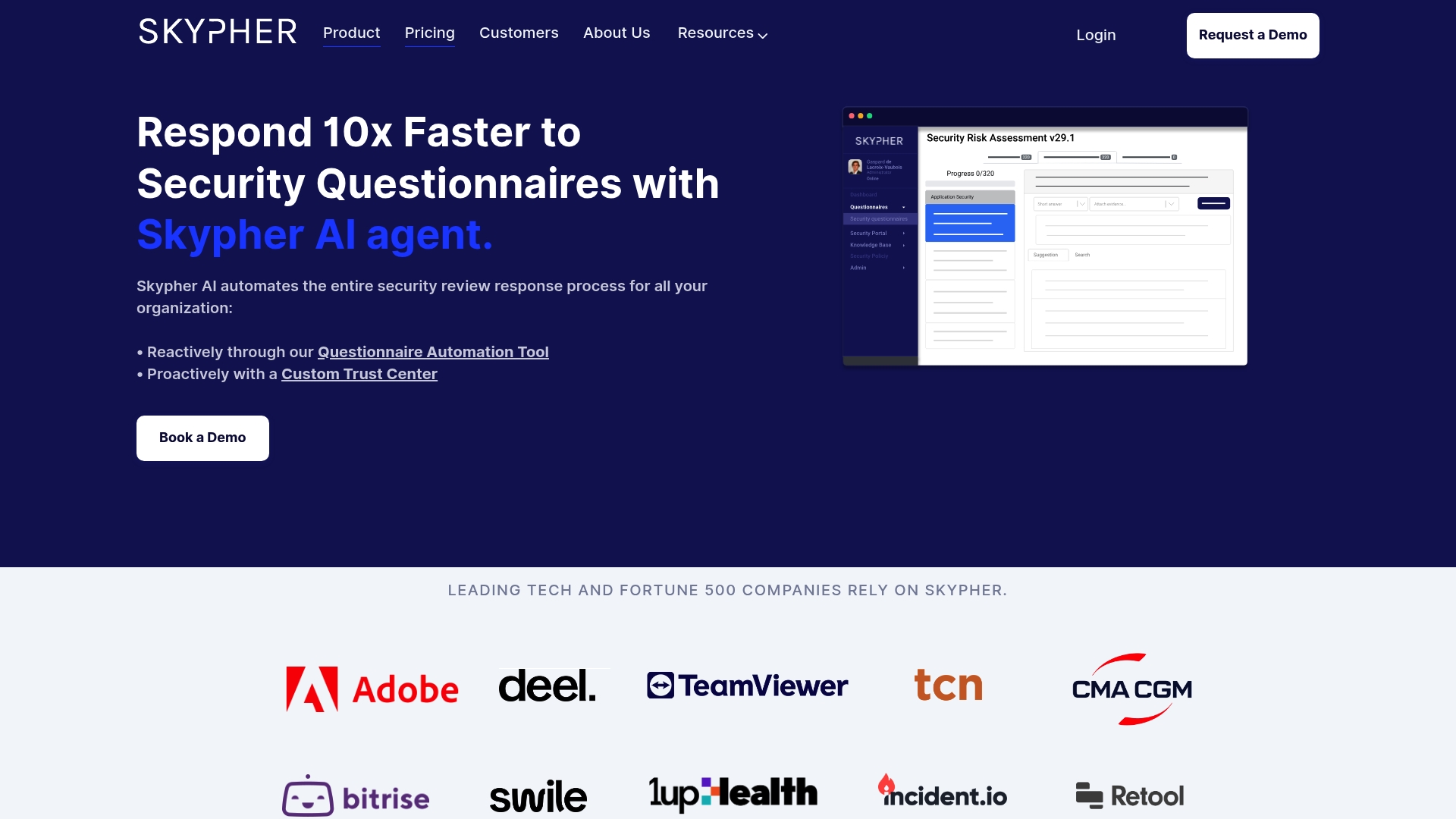
Don't let cumbersome security processes undermine your vendor potential! Experience the shift from frustrating manual tasks to efficient, automated solutions. Visit Skypher NOW to boost your cybersecurity posture while enhancing operational productivity. Your future-proof vendor relationships are just a click away!