

Artificial intelligence and cybersecurity are joining forces to reshape how we defend our digital world. Most people expect complicated software and endless updates to carry the fight, but the real game changer is speed. Machine learning algorithms can scan millions of network events in just seconds, catching threats faster than any human team ever could. This leap leaves old-school defenses in the dust and opens up an entirely new era of intelligent protection.
Table of Contents
- What is Artificial Intelligence and Cybersecurity?
- Why Artificial Intelligence is Crucial for Cybersecurity?
- How Artificial Intelligence Enhances Cybersecurity Measures?
- Key Concepts at the Intersection of Artificial Intelligence and Cybersecurity
- Real-World Applications and Implications of AI in Cybersecurity
Quick Summary
| Takeaway | Explanation |
|---|---|
| AI enables proactive cybersecurity measures | By anticipating threats, AI shifts security from reactive to predictive strategies, enhancing defense capabilities. |
| Machine learning improves threat detection accuracy | AI algorithms analyze vast data quickly, identifying complex patterns that traditional methods may overlook. |
| Automated incident response enhances efficiency | AI can autonomously neutralize threats in real time, reducing reliance on human intervention for security breaches. |
| AI systems evolve with emerging cyber threats | Continuous learning allows AI to adapt, improving detection and mitigation strategies against new security risks. |
| Ethical considerations are crucial in AI | The integration of AI into cybersecurity presents challenges that require ethical oversight to ensure reliable and transparent operations. |
What is Artificial Intelligence and Cybersecurity?
Artificial intelligence (AI) and cybersecurity represent a powerful convergence of technologies designed to protect digital systems from increasingly sophisticated threats. At its core, this integration combines advanced machine learning algorithms with proactive security strategies to detect, analyze, and respond to potential cyber risks in real time.
Understanding AI's Role in Cybersecurity
AI transforms traditional cybersecurity approaches by introducing intelligent threat detection mechanisms that go beyond static rule-based systems. Unlike conventional security tools that rely on predefined patterns, AI-powered systems can learn from data, recognize anomalies, and predict potential security breaches before they occur.
Key capabilities of AI in cybersecurity include:
- Rapid threat identification and classification
- Predictive risk analysis based on complex data patterns
- Automated response mechanisms for potential security incidents
By leveraging machine learning algorithms, AI can analyze massive volumes of network traffic and system logs, identifying subtle indicators of potential cyber attacks that human analysts might miss. These intelligent systems continuously adapt and improve their detection capabilities, creating a dynamic defense mechanism against evolving digital threats.
The Emerging Cybersecurity Landscape
As cyber threats become increasingly complex and frequent, traditional security approaches are proving inadequate. According to NIST, AI provides a critical technological advancement in addressing these emerging challenges by enabling more proactive and intelligent security strategies.
The integration of AI into cybersecurity represents more than just a technological upgrade. It signifies a fundamental shift in how organizations approach digital protection, moving from reactive defense to predictive and preventative security models. By understanding and anticipating potential threats, AI empowers cybersecurity professionals to stay one step ahead of malicious actors in an increasingly interconnected digital world.
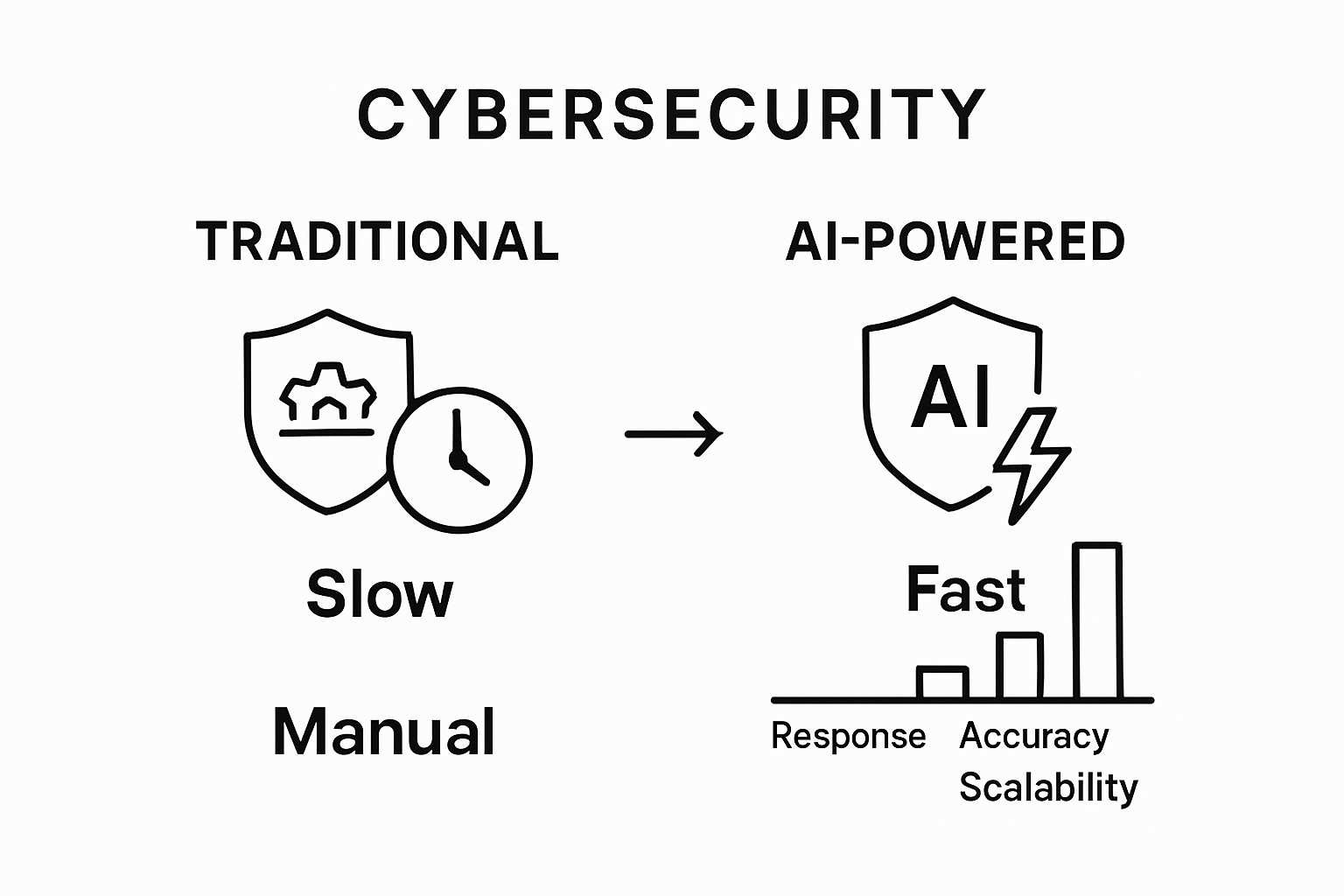
Below is a table summarizing traditional cybersecurity methods compared to AI-powered cybersecurity approaches, highlighting how AI is transforming defense strategies.
| Approach | Data Analysis Speed | Threat Detection Method | Adaptability to New Threats | Level of Automation |
|---|---|---|---|---|
| Traditional Cybersecurity | Slow, manual | Rule-based, static patterns | Low – requires manual updates | Limited - mostly manual |
| AI-Powered Cybersecurity | Rapid, real-time | Machine learning, anomaly | High – continuously learns | High – automated response |
Why Artificial Intelligence is Crucial for Cybersecurity?
Artificial intelligence has become an indispensable tool in modern cybersecurity, transforming how organizations defend against increasingly sophisticated digital threats. The exponential growth of cyber attacks and the complexity of modern digital infrastructure demand intelligent, adaptive security solutions that traditional methods cannot effectively provide.
The Speed and Scale of Threat Detection
One of the most compelling reasons AI is crucial for cybersecurity is its unparalleled ability to process and analyze massive amounts of data at incredible speeds. Machine learning algorithms can examine millions of network events in seconds, identifying potential security vulnerabilities and anomalies that would take human analysts weeks or even months to detect.
Key advantages of AI-driven threat detection include:
- Real-time monitoring of complex network environments
- Instant identification of unusual network behaviors
- Predictive analysis of potential security risks before they escalate
Traditional security approaches rely on predefined rules and manual intervention, which creates significant vulnerabilities. AI systems continuously learn and adapt, creating dynamic defense mechanisms that evolve alongside emerging cyber threats.
Proactive Defense and Predictive Security
According to research from MIT's Cybersecurity and Internet Policy Research Initiative, AI techniques provide revolutionary capabilities in identifying and mitigating cyber threats. These intelligent systems go beyond reactive security models, enabling organizations to anticipate and prevent potential attacks before they occur.
By leveraging advanced pattern recognition and predictive modeling, AI empowers cybersecurity professionals to develop more robust, intelligent defense strategies. This approach transforms cybersecurity from a reactive discipline to a proactive, strategic function that can effectively protect increasingly complex digital ecosystems.
How Artificial Intelligence Enhances Cybersecurity Measures?
Artificial intelligence represents a transformative technology that significantly amplifies cybersecurity capabilities through intelligent, adaptive, and predictive mechanisms. By leveraging advanced algorithms and machine learning techniques, AI introduces sophisticated defense strategies that fundamentally reimagine how organizations protect their digital assets.
Advanced Threat Detection and Analysis
AI dramatically improves threat detection by processing and analyzing vast amounts of network data with unprecedented speed and accuracy. Machine learning models can instantly recognize complex patterns that indicate potential security breaches, distinguishing between normal network behavior and suspicious activities with remarkable precision.
Key AI-powered threat detection capabilities include:
- Automatic identification of zero-day vulnerabilities
- Real-time anomaly detection across multiple network segments
- Intelligent correlation of seemingly unrelated security events
Traditional security systems operate on static, predefined rules, creating significant blind spots. In contrast, AI-driven systems continuously learn and adapt, developing increasingly sophisticated threat recognition capabilities that evolve alongside emerging cyber risks.
Automated Incident Response and Mitigation
According to research from the National Center for Biotechnology Information, AI enables rapid, intelligent incident response mechanisms that can automatically neutralize potential threats before they cause significant damage. These systems can instantaneously isolate compromised network segments, block malicious traffic, and implement protective measures without human intervention.

By integrating machine learning algorithms with cybersecurity protocols, organizations can create dynamic, self-healing security infrastructures that proactively defend against increasingly sophisticated digital threats. This approach transforms cybersecurity from a reactive discipline to a predictive, intelligent defense strategy that anticipates and neutralizes potential risks in real time.
Key Concepts at the Intersection of Artificial Intelligence and Cybersecurity
The convergence of artificial intelligence and cybersecurity represents a complex, dynamic landscape where intelligent technologies transform traditional security paradigms. This intersection creates a sophisticated ecosystem of defensive strategies, threat detection mechanisms, and adaptive security frameworks that continuously evolve to address emerging digital challenges.
Machine Learning and Predictive Security Models
Machine learning algorithms form the cornerstone of intelligent cybersecurity systems, enabling unprecedented capabilities in threat prediction and risk management. These advanced computational models can analyze historical data, recognize intricate patterns, and generate probabilistic assessments of potential security vulnerabilities with remarkable accuracy.
Critical machine learning approaches in cybersecurity include:
- Supervised learning for classification of known threat signatures
- Unsupervised learning to detect anomalous network behaviors
- Reinforcement learning for adaptive security response strategies
By processing complex datasets exponentially faster than human analysts, machine learning techniques provide organizations with proactive defense mechanisms that can anticipate and neutralize potential cyber threats before they materialize.
Algorithmic Intelligence and Cybersecurity Challenges
According to research from MIT's Cybersecurity and Internet Policy Initiative, the integration of AI into cybersecurity introduces both transformative capabilities and nuanced challenges. While AI empowers organizations to develop more intelligent, responsive security infrastructure, it simultaneously creates new potential vulnerabilities that malicious actors could potentially exploit.
The dynamic nature of algorithmic intelligence requires continuous refinement and vigilant monitoring, ensuring that AI-driven security systems remain robust, adaptable, and resilient against increasingly sophisticated cyber threats. This ongoing evolution represents a critical frontier in the ongoing battle to protect digital ecosystems from emerging risks.
This table outlines the key machine learning methods used within cybersecurity and their respective roles in defending digital ecosystems.
| Machine Learning Method | Cybersecurity Role | Example Application |
|---|---|---|
| Supervised Learning | Classification of known threat signatures | Email spam filtering |
| Unsupervised Learning | Detection of anomalies and unknown threats | Unusual network traffic analysis |
| Reinforcement Learning | Adaptive security strategies and responses | Automated intrusion mitigation |
Real-World Applications and Implications of AI in Cybersecurity
Artificial intelligence has transitioned from a theoretical concept to a practical tool reshaping cybersecurity strategies across multiple industries. As digital threats become increasingly sophisticated, organizations are leveraging AI technologies to create more robust, adaptive, and intelligent security infrastructures that can anticipate and neutralize potential risks in real time.
Practical AI Cybersecurity Implementations
Enterprise-level security systems now integrate AI-driven technologies to enhance threat detection and response capabilities. These advanced systems can analyze millions of network events simultaneously, identifying subtle patterns and anomalies that traditional security approaches might overlook.
Key practical applications of AI in cybersecurity include:
- Automated threat intelligence gathering
- Predictive vulnerability assessment
- Intelligent network traffic monitoring
- Instant incident response and mitigation
By processing complex datasets exponentially faster than human analysts, AI enables organizations to develop proactive defense mechanisms that can identify and neutralize potential cyber threats before they cause significant damage.
Broader Technological and Ethical Implications
According to research from the RAND Corporation, AI technologies are fundamentally transforming cybersecurity operations by introducing unprecedented levels of adaptive intelligence. However, this technological evolution also presents complex challenges, including potential vulnerabilities inherent in AI systems themselves and the ethical considerations surrounding automated decision-making processes.
The integration of AI into cybersecurity represents a double-edged sword, offering powerful defensive capabilities while simultaneously introducing new dimensions of technological complexity. Organizations must carefully balance the transformative potential of AI with rigorous security protocols and continuous evaluation to ensure these intelligent systems remain reliable, transparent, and fundamentally secure.
Strengthen Your Security Processes with AI-Powered Automation
As you have learned, staying ahead of cyber threats today means more than relying on traditional tools. Organizations must adopt intelligent automation to keep pace with complex risks and the overwhelming volume of security reviews. Manual responses to security questionnaires not only slow teams down but also increase the chances for human errors, putting sensitive data and reputation at risk. The combination of artificial intelligence and cybersecurity principles you explored in this article is the foundation of a smarter, stronger defense.

See how Skypher's AI-Driven Questionnaire Automation Tool brings the speed, precision, and confidence your team needs. Experience real-time collaboration, seamless integrations with over 40 platforms, and a customizable Trust Center. Secure your processes and reduce bottlenecks in proof of concept and contract stages. Act now to leverage the power of automation and protect your organization at every touchpoint. Visit Skypher and start transforming your cybersecurity operations today.
Frequently Asked Questions
What is the role of artificial intelligence in cybersecurity?
Artificial intelligence plays a crucial role in cybersecurity by providing advanced threat detection and analysis capabilities. It leverages machine learning algorithms to identify anomalies and predict potential security breaches, enabling proactive defense strategies.
How does AI enhance threat detection in cybersecurity?
AI enhances threat detection by rapidly analyzing vast amounts of data, identifying unusual patterns, and recognizing security vulnerabilities in real-time. This allows organizations to respond to threats more quickly and effectively than traditional methods.
What are the benefits of using machine learning in cybersecurity?
Machine learning provides several benefits in cybersecurity, including real-time threat monitoring, predictive risk analysis, and the ability to automatically adapt security measures. This leads to a more dynamic and efficient defense system against cyber threats.
What are the challenges of integrating AI into cybersecurity?
Integrating AI into cybersecurity presents challenges such as developing robust algorithms that can handle emerging threats, ensuring continuous system updates, and addressing potential vulnerabilities that malicious actors might exploit. Organizations need to balance AI's capabilities with ethical considerations and secure practices.