

Companies are chasing automation solutions that promise to overhaul the way they work. Some organizations now use RFPs to identify software partners and the impact is anything but small. In fact, intelligent automation initiatives have cut repetitive task time by 40 percent and dropped administrative errors by 20 percent. It sounds like RFPs are just another paper-pushing formality but the real surprise is how these documents set the stage for smarter decisions and big cost savings.
Table of Contents
- What is Automation RFP and Why It Matters
- The Importance of Automation RFP in B2B Software
- Key Components of an Automation RFP: What to Include
- How Automation RFPs Shape Vendor Selection and Evaluation
- Exploring Real-World Examples of Successful Automation RFPs
Quick Summary
| Takeaway | Explanation |
|---|---|
| Automation RFPs streamline procurement | Automation RFPs focus specifically on technology solutions that optimize workflow efficiency and operational transformation. |
| Clear documentation is essential | A comprehensive RFP outlines specific requirements, budget, and performance criteria, facilitating better vendor responses. |
| Rigorous evaluation improves decision-making | Systematic assessments of vendors go beyond price, considering compatibility, scalability, and strategic alignment. |
| Success stories show transformative results | Organizations using effective automation RFPs have achieved significant operational improvements and cost reductions. |
| Alignment with strategic objectives is crucial | Ensuring selected technologies meet long-term goals maximizes the value of automation investments. |
What is Automation RFP and Why It Matters
An Automation RFP (Request for Proposal) represents a strategic procurement document that organizations use to solicit comprehensive proposals from potential technology vendors for implementing automation solutions. Unlike traditional procurement processes, an automation RFP specifically focuses on technology solutions designed to streamline, optimize, and transform operational workflows through advanced technological capabilities.
The Strategic Importance of Automation RFPs
Automation RFPs serve as critical communication tools that enable organizations to articulate their specific technological requirements, operational challenges, and desired outcomes. By creating a structured framework for vendor evaluation, these documents help businesses make informed decisions about selecting automation technologies that align with their strategic objectives.
Key aspects that make automation RFPs significant include:
- Establishing clear technological expectations and performance benchmarks
- Facilitating transparent vendor comparison and selection processes
- Reducing potential risks associated with technological investments
- Ensuring comprehensive documentation of technological requirements
Comprehensive Evaluation Through Automation RFPs
The automation RFP process goes beyond simple vendor selection. It represents a comprehensive approach to technological transformation that requires detailed analysis of potential solutions. Organizations must carefully outline their current technological landscape, identify specific pain points, and articulate precise requirements that potential automation solutions must address.
According to the National Conference of State Legislatures, the RFP process protects organizational interests by promoting competition and ensuring transparent decision-making. By creating a rigorous evaluation framework, businesses can systematically assess vendor capabilities, technological compatibility, and potential return on investment.
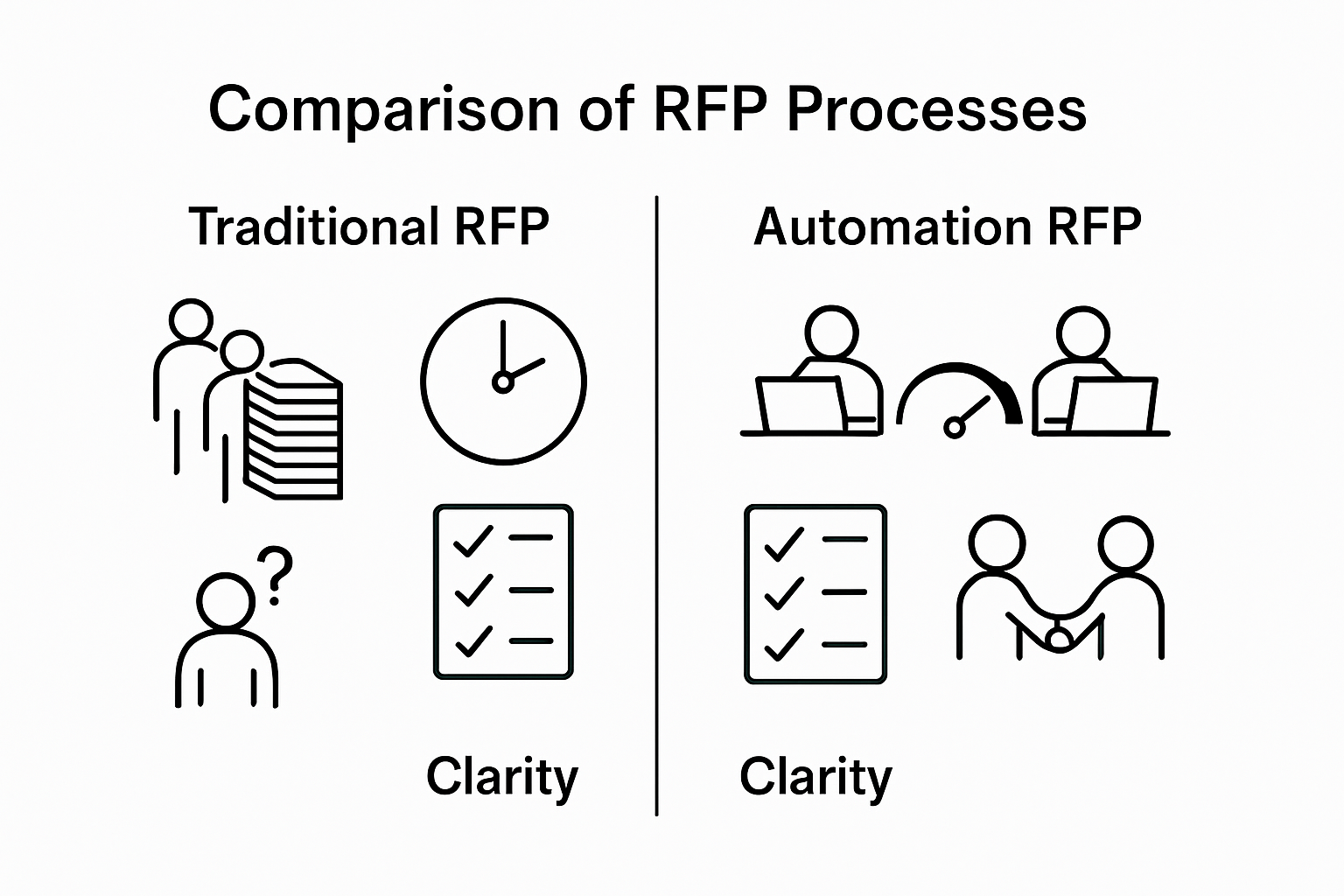
Learn more about strategic technology selection to understand how comprehensive RFP processes can transform organizational efficiency and technological innovation.
The Importance of Automation RFP in B2B Software
In the rapidly evolving B2B software landscape, automation RFPs have emerged as critical tools for organizations seeking sophisticated technological solutions. These comprehensive documents transform the traditional procurement process by enabling businesses to systematically evaluate, select, and implement cutting-edge automation technologies that drive operational excellence.
Strategic Technology Acquisition
Automation RFPs represent more than mere procurement documents. They are strategic instruments that help organizations navigate complex technological ecosystems, ensuring that selected solutions precisely match their unique operational requirements. By creating detailed, structured proposals, companies can effectively communicate their technological needs, performance expectations, and desired business outcomes.
Key strategic advantages of automation RFPs include:
- Enabling precise technological requirements specification
- Facilitating comprehensive vendor capability assessment
- Reducing potential implementation risks
- Supporting data-driven technology investment decisions
Technological Transformation Through Rigorous Evaluation
The B2B software sector demands meticulous technological selection processes. Automation RFPs provide a robust framework for organizations to conduct thorough evaluations, comparing potential solutions against multiple critical parameters. This approach goes beyond price comparisons, focusing on technological compatibility, scalability, integration capabilities, and long-term strategic alignment.
According to International Journal of Engineering Research & Technology, RFP management software now centralizes documents, automates workflows, and integrates with other tools, significantly streamlining the procurement process and reducing manual errors.
Explore advanced security questionnaire strategies to understand how comprehensive RFP processes can enhance technological decision-making and organizational efficiency.
Key Components of an Automation RFP: What to Include
Crafting a comprehensive automation RFP requires strategic planning and meticulous attention to detail. The document serves as a critical communication bridge between an organization seeking technological solutions and potential vendors who can address complex operational challenges.
Structural Framework of an Effective Automation RFP
A well-constructed automation RFP must provide a clear, detailed roadmap that enables vendors to understand the organization's specific technological requirements, performance expectations, and strategic objectives. The structural integrity of the RFP directly impacts the quality and relevance of proposed solutions.
Key structural components that must be included are:
- Precise project background and organizational context
- Detailed technical requirements and performance specifications
- Clear evaluation criteria and selection methodology
- Comprehensive budget and implementation timeline guidelines
Essential Documentation and Technical Specifications
The technical section of an automation RFP represents its most critical component. Organizations must articulate their technological landscape, existing infrastructure, integration requirements, and specific automation goals with exceptional clarity. This section should provide vendors with a comprehensive understanding of the technological ecosystem and the specific challenges the organization aims to address.
According to the Administration for Children and Families, a well-prepared Statement of Work is crucial for selecting the right technological resources. This document should outline project requirements, specific functions requiring automation, and precise performance standards developed under the direction of program staff.
To clarify the essential elements that should be included in an Automation RFP, the following table breaks down the key components and their primary purposes.
| Component | Purpose |
|---|---|
| Project background and context | Provides vendors with understanding of the organization and the overarching automation goals |
| Technical requirements | Specifies the detailed features, functionalities, and performance standards expected |
| Evaluation criteria | Outlines how proposals will be assessed, supporting objective and transparent vendor selection |
| Selection methodology | Explains the process by which vendors will be chosen |
| Budget guidelines | Establishes financial parameters and resource allocation for the project |
| Implementation timeline guidelines | Sets expectations for project milestones and delivery deadlines |
Discover strategies for effective security questionnaire management to enhance your understanding of comprehensive technological procurement processes.
How Automation RFPs Shape Vendor Selection and Evaluation
Automation RFPs transform the vendor selection process from a traditional procurement exercise into a strategic technological decision-making framework. By establishing comprehensive evaluation criteria, organizations can systematically assess potential solutions that align with their specific operational requirements and long-term technological goals.
Comprehensive Vendor Assessment Methodology
The automation RFP process introduces a rigorous, multidimensional approach to vendor evaluation. Rather than relying solely on price or superficial feature comparisons, organizations develop intricate assessment frameworks that analyze technological capabilities, implementation potential, scalability, and strategic compatibility.
To help visualize the differences between traditional procurement and automation RFPs in the vendor selection process, the table below provides a comparison of key evaluation factors highlighted in the article.
| Evaluation Factor | Traditional Procurement | Automation RFP Approach |
|---|---|---|
| Primary focus | Price and basic requirements | Strategic alignment and innovation |
| Assessment depth | Surface-level | Multidimensional, comprehensive |
| Vendor capability analysis | Limited | In-depth, includes scalability |
| Integration and compatibility review | Often minimal | Rigorous and prioritized |
| Support for long-term strategy | Seldom considered | Central to evaluation |
| Risk mitigation | Basic | Systematic and robust |
| Documentation requirements | General | Detailed and explicit |
Key dimensions of vendor evaluation include:
- Technical competency and solution sophistication
- Alignment with organizational strategic objectives
- Implementation complexity and integration capabilities
- Long-term support and evolutionary potential of the proposed solution
Structured Evaluation and Selection Criteria
Successful automation RFPs establish clear, objective evaluation mechanisms that enable organizations to make data-driven vendor selection decisions. This approach minimizes subjective interpretations and ensures that technological investments are thoroughly validated against predefined performance metrics and organizational requirements.

According to George Mason University's procurement research, effective RFP evaluation involves creating response matrices, systematically eliminating non-compliant proposals, and conducting detailed reviews of features and life-cycle costs to justify purchase decisions.
Explore advanced security questionnaire strategies to understand how comprehensive evaluation processes can enhance technological procurement efficiency.
Exploring Real-World Examples of Successful Automation RFPs
Real-world automation RFP implementations demonstrate the transformative potential of strategic technological procurement. These practical examples illustrate how organizations can leverage comprehensive RFP processes to drive significant operational improvements and technological innovation across various sectors.
Government Sector Automation Achievements
Government agencies have been at the forefront of implementing sophisticated automation RFPs to enhance operational efficiency and reduce administrative burdens. By developing targeted, detailed procurement strategies, these organizations have successfully transformed complex administrative processes through intelligent technological solutions.
Key government automation RFP success stories highlight:
- Significant reduction in manual processing time
- Enhanced accuracy and operational reliability
- Substantial cost savings through strategic technological investments
- Improved interdepartmental collaboration and information management
Strategic Technological Transformation
Successful automation RFPs go beyond simple technological procurement. They represent holistic approaches to organizational transformation that carefully align technological capabilities with strategic objectives. Organizations that excel in this process create comprehensive evaluation frameworks that consider not just immediate technological needs, but long-term evolutionary potential.
According to the Department of Health and Human Services, intelligent automation initiatives have led to remarkable outcomes, including a 40% reduction in time spent on repetitive tasks and a 20% decrease in administrative errors.
Discover advanced security questionnaire strategies to understand how strategic technological procurement can revolutionize organizational efficiency.
Transform How You Approach Automation RFPs With Skypher
Is your organization tangled in the complex process of building Automation RFPs, trying to ensure accurate requirements, efficient evaluation, and smooth collaboration across teams? The article highlighted just how easy it is for crucial details in automation projects to get lost in manual back-and-forth, leading to delays and costly mistakes. With growing pressure to manage security questionnaire responses quickly and precisely, missing the mark on vendor communication slows down digital transformation and leaves your company vulnerable.
Experience a smarter way to handle security reviews and automation RFPs. Let Skypher eliminate the manual pain points. Our AI-powered Questionnaire Automation Tool gives you instant clarity, real-time team collaboration, and seamless integration with your third-party risk platforms. Reduce your response time, improve accuracy, and win client trust faster. Ready to drive operational efficiency and accelerate your sales cycles? Get started with Skypher now and see what true automation feels like.
Frequently Asked Questions
What is an Automation RFP?
An Automation RFP (Request for Proposal) is a procurement document used by organizations to solicit proposals from technology vendors for implementing automation solutions that streamline and optimize operational workflows.
Why are Automation RFPs important for organizations?
Automation RFPs are crucial as they establish clear technological expectations, facilitate transparent vendor comparisons, reduce risks associated with investments, and ensure a thorough documentation of requirements for technological solutions.
What are the key components of an effective Automation RFP?
An effective Automation RFP should include a project background, detailed technical requirements, evaluation criteria, and budget and timeline guidelines to ensure vendors understand the organization's needs clearly.
How do Automation RFPs impact vendor selection processes?
Automation RFPs transform vendor selection into a systematic technological decision-making process, allowing organizations to assess vendor capabilities based on technical competency, alignment with strategic objectives, and implementation potential.
Recommended
- The Case for Security Questionnaire Automation
- Best Practices for Automating Your Security Questionnaires Response Process (1/3)
- The ever growing number of security questionnaires and what you and your company can do to face it
- Lalita Hardier
- The Impact Of Automation On Forklift Training
- Automatización de tareas repetitivas