

AWS SOC 2 sounds like just another compliance buzzword, but the reality is much bigger. Most people think of dry audits and paperwork, yet over 80 percent of enterprise buyers now require SOC 2 for vendor deals before signing any contracts. Still, the true surprise is that chasing this certification can actually shrink your sales cycles and give your software company a concrete edge over the competition.
Table of Contents
- What is AWS SOC 2? An Overview of Its Purpose
- Why AWS SOC 2 Matters for B2B Software Companies
- How AWS SOC 2 Works: Key Principles Explained
- Understanding the Criteria and Trust Services Categories
- Real-World Impact of AWS SOC 2 on Businesses
Quick Summary
| Takeaway | Explanation |
|---|---|
| AWS SOC 2 ensures data protection | SOC 2 compliance validates that organizations implement strong security measures for customer data management. |
| Certification boosts client trust | Achieving SOC 2 certification signals to potential clients that an organization is committed to data security and privacy practices. |
| Two audit types assess security | Type I evaluates security control design, while Type II reviews the effectiveness of those controls over time. |
| SOC 2 enhances competitive advantage | Organizations with SOC 2 certification can stand out in the market, attracting clients looking for secure technology partners. |
| Compliance aids in risk management | SOC 2 directs companies to enhance their internal controls, helping to mitigate potential vulnerabilities in their systems. |
What is AWS SOC 2? An Overview of Its Purpose
AWS SOC 2 represents a critical framework for evaluating and ensuring the security, privacy, and reliability of cloud service providers. AWS SOC 2 compliance is a rigorous assessment process developed by the American Institute of Certified Public Accountants (AICPA) that validates how organizations manage and protect customer data.
Understanding the Core Purpose
At its fundamental level, AWS SOC 2 serves as a comprehensive trust and security evaluation mechanism. The framework focuses on five primary trust service criteria that organizations must demonstrate:
- Security: Protecting against unauthorized system access
- Availability: Ensuring systems are operational and accessible
- Processing Integrity: Maintaining accurate data processing
- Confidentiality: Safeguarding sensitive information
- Privacy: Managing personal data collection and usage
This multifaceted approach goes beyond traditional compliance checklists by requiring organizations to implement robust internal controls and demonstrate consistent data management practices. Read more about our comprehensive security approaches.
Technical and Operational Significance
For cloud service providers like Amazon Web Services, SOC 2 compliance is not merely a certification but a comprehensive commitment to maintaining the highest standards of data protection. The audit process involves independent certified public accountants thoroughly examining an organization's systems, policies, and procedures.
The report typically comes in two formats: Type I, which assesses the design of security controls at a specific point in time, and Type II, which evaluates the operational effectiveness of these controls over an extended period.
The following table compares the two AWS SOC 2 audit types, highlighting the main differences between Type I and Type II reports.
| Audit Type | What It Evaluates | Time Frame | Report Focus |
|---|---|---|---|
| Type I | Design of security controls | Specific point in time | Controls are properly designed |
| Type II | Operational effectiveness of security controls | Extended period | Controls operate effectively |
By pursuing AWS SOC 2 compliance, companies demonstrate their dedication to protecting client data, building trust, and establishing themselves as responsible technology partners in an increasingly complex digital ecosystem.
Why AWS SOC 2 Matters for B2B Software Companies
In the competitive landscape of enterprise technology, AWS SOC 2 compliance has become a critical differentiator for B2B software companies seeking to establish credibility and trust. Vendor risk management guidelines increasingly emphasize the importance of robust security frameworks for technology providers.
Building Customer Confidence
B2B software companies operate in an environment where potential clients demand comprehensive evidence of data protection and security practices. SOC 2 certification serves as a powerful validation of an organization's commitment to maintaining rigorous security standards. The certification demonstrates several key attributes that customers prioritize:
- Trust: Proves systematic approach to data protection
- Transparency: Provides independent verification of security practices
- Risk Mitigation: Reduces potential vulnerabilities in software infrastructure
- Competitive Advantage: Distinguishes the company from non-certified competitors
Learn more about security questionnaire best practices to complement your SOC 2 strategy.
Strategic Business Impact
Beyond mere compliance, AWS SOC 2 certification represents a strategic business investment. Many enterprise clients now consider SOC 2 compliance a mandatory requirement during vendor selection processes. This means that software companies without proper certification may find themselves systematically excluded from significant business opportunities.
The certification process compels organizations to develop sophisticated internal controls, implement robust security protocols, and create a culture of continuous improvement. By undergoing the rigorous SOC 2 audit, companies not only validate their existing security mechanisms but also identify potential areas of enhancement in their technological infrastructure.
For B2B software companies, AWS SOC 2 is more than a checkbox exercise. It is a comprehensive demonstration of organizational maturity, technical excellence, and unwavering commitment to protecting client data in an increasingly complex digital ecosystem.
How AWS SOC 2 Works: Key Principles Explained
The AWS SOC 2 framework operates as a comprehensive methodology for evaluating and validating an organization's data management and security practices. SOC 2 compliance framework provides a structured approach to demonstrating an organization's commitment to protecting sensitive information.
Audit Types and Assessment Process
SOC 2 audits are conducted through two distinct report types that provide progressively detailed insights into an organization's security controls:
- Type I Report: Evaluates the design of security controls at a specific point in time
- Type II Report: Assesses the operational effectiveness of these controls over an extended period
Auditors from independent certified public accounting firms meticulously examine an organization's systems, policies, and procedures. Learn more about governance and compliance strategies to complement your SOC 2 preparation.
Comprehensive Control Evaluation
The audit process centers on five critical Trust Services Criteria that organizations must demonstrate. Each criterion represents a specific dimension of data protection and system management:
Security Controls: Auditors scrutinize mechanisms designed to prevent unauthorized system access, including authentication protocols, network security configurations, and incident response capabilities.
System Availability: The evaluation explores an organization's ability to maintain consistent system performance, including redundancy measures, disaster recovery plans, and operational continuity strategies.
Processing Integrity: This criterion examines how accurately and completely data is processed, ensuring that system outputs are timely, valid, and align with organizational objectives.
Confidentiality Management: Auditors assess the protective measures implemented to safeguard sensitive information, including encryption protocols, access controls, and data handling procedures.
Privacy Practices: The audit reviews how personal information is collected, used, retained, and disclosed, ensuring compliance with relevant privacy regulations and industry standards.
By comprehensively addressing these criteria, organizations demonstrate their systematic approach to managing and protecting critical digital assets in an increasingly complex technological landscape.
Understanding the Criteria and Trust Services Categories
The Trust Services Criteria represent a sophisticated framework developed by the American Institute of Certified Public Accountants (AICPA) to evaluate an organization's information systems and data management practices. AICPA Trust Services Framework provides a comprehensive approach to assessing organizational security and operational integrity.
Core Trust Services Criteria
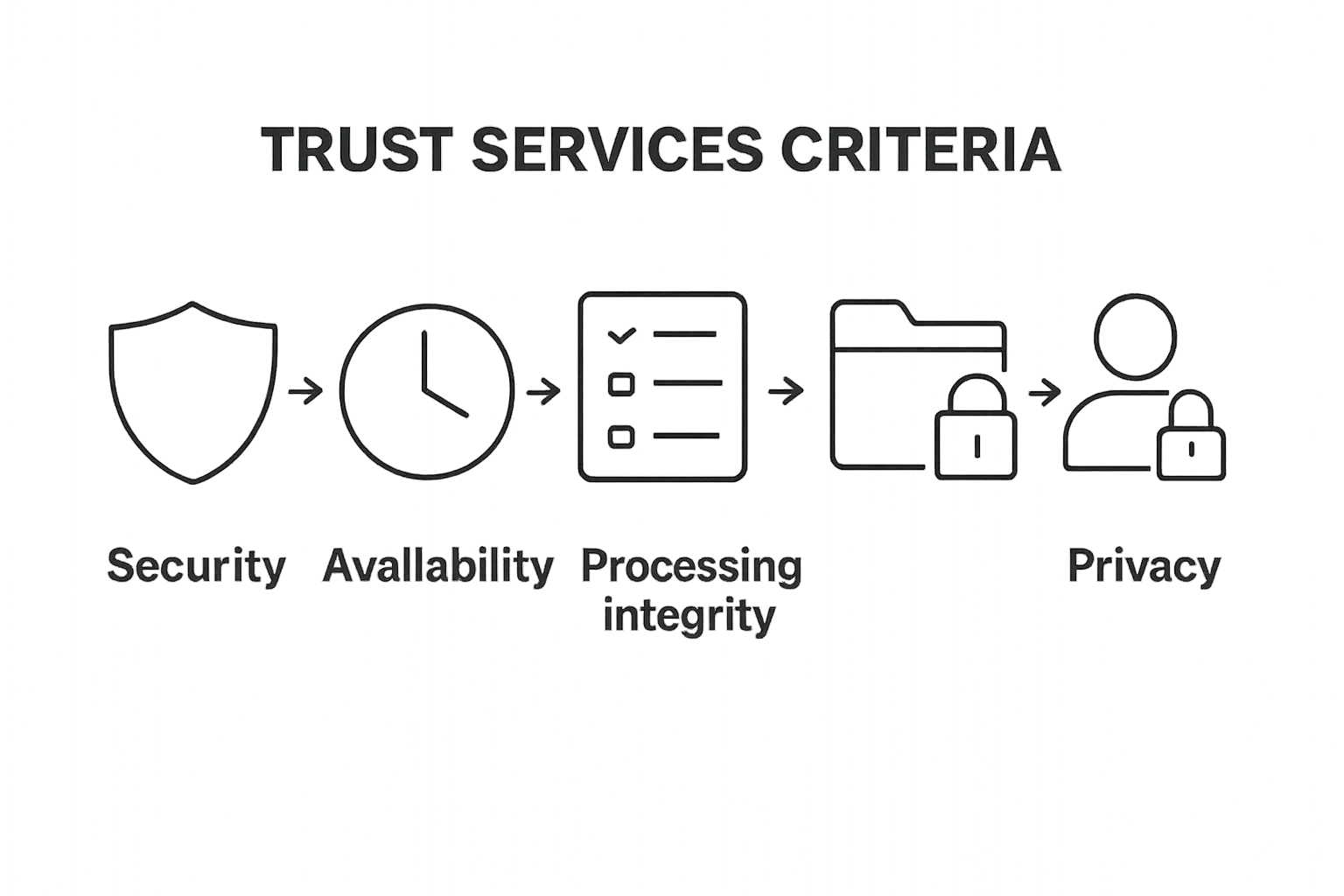
The framework encompasses five distinct categories that collectively provide a holistic assessment of an organization's technological and operational capabilities
This table summarizes the five core Trust Services Criteria that form the foundation of AWS SOC 2 compliance, with a brief description of each category.
| Trust Services Criterion | Description |
|---|---|
| Security | Protects systems against unauthorized access and breaches |
| Availability | Ensures systems remain operational and accessible |
| Processing Integrity | Maintains data processing accuracy and completeness |
| Confidentiality | Safeguards sensitive information from disclosure |
| Privacy | Manages personal information collection and usage |
 :
:
- Security: Protecting systems against unauthorized access and potential breaches
- Availability: Ensuring systems remain operational and accessible
- Processing Integrity: Maintaining accurate and complete data processing
- Confidentiality: Safeguarding sensitive information from unauthorized disclosure
- Privacy: Managing personal information collection, usage, and retention
Explore our comprehensive guide on compliance frameworks to deepen your understanding of regulatory requirements.
Detailed Criteria Breakdown
Security Criterion: This fundamental category evaluates an organization's defensive mechanisms. Auditors examine authentication protocols, network security configurations, and incident response strategies. The assessment includes reviewing access controls, encryption methods, and system monitoring practices that prevent unauthorized system intrusions.
Availability Criterion: Beyond basic system uptime, this criterion assesses an organization's ability to maintain consistent operational performance. Key considerations include redundancy infrastructure, disaster recovery plans, capacity management, and network performance monitoring. The goal is to demonstrate a systematic approach to ensuring continuous system accessibility.
Processing Integrity Criterion: This sophisticated category validates the accuracy and completeness of system data processing. Auditors scrutinize how organizations ensure data transactions are valid, timely, and align with predefined business objectives. The evaluation covers error detection mechanisms, data validation processes, and system output verification protocols.
Confidentiality and Privacy Criteria: These interconnected categories focus on protecting sensitive information. While confidentiality addresses data protection mechanisms, privacy specifically examines personal information handling practices. The assessment includes reviewing data collection, usage, retention, and disclosure policies to ensure compliance with regulatory standards and ethical data management principles.
Real-World Impact of AWS SOC 2 on Businesses
AWS SOC 2 compliance represents a transformative mechanism for businesses seeking to establish robust cybersecurity credentials and build trust with potential clients and partners. AWS Compliance Programs demonstrate how systematic security frameworks translate into tangible business advantages.
Strategic Business Advantages
Organizations implementing AWS SOC 2 standards experience significant operational and competitive benefits that extend far beyond traditional compliance checkboxes:
- Accelerated Sales Cycles: Reduces time spent on security reviews and vendor assessments
- Enhanced Market Credibility: Signals organizational commitment to data protection
- Risk Mitigation: Proactively addresses potential security vulnerabilities
- Competitive Differentiation: Positions company as a security-conscious technology partner
Explore business strategies for security automation to complement your compliance efforts.
Practical Implementation Impacts
The real-world implications of AWS SOC 2 compliance manifest across multiple organizational dimensions. For technology companies and cloud service providers, the certification serves as a critical validation of their security infrastructure. Enterprise clients increasingly view SOC 2 compliance as a minimum requirement for vendor selection, effectively making it a de facto standard in technology procurement.
Financial services, healthcare, and technology sectors particularly benefit from SOC 2 certification. The rigorous assessment process compels organizations to develop sophisticated internal controls, implement comprehensive security protocols, and cultivate a culture of continuous improvement. By standardizing security practices, businesses can demonstrate their commitment to protecting sensitive data and maintaining operational resilience.
Moreover, AWS SOC 2 compliance facilitates smoother international business interactions. The standardized framework provides a universally recognized benchmark for evaluating an organization's security capabilities, reducing friction in cross-border technology partnerships and simplifying complex vendor management processes.
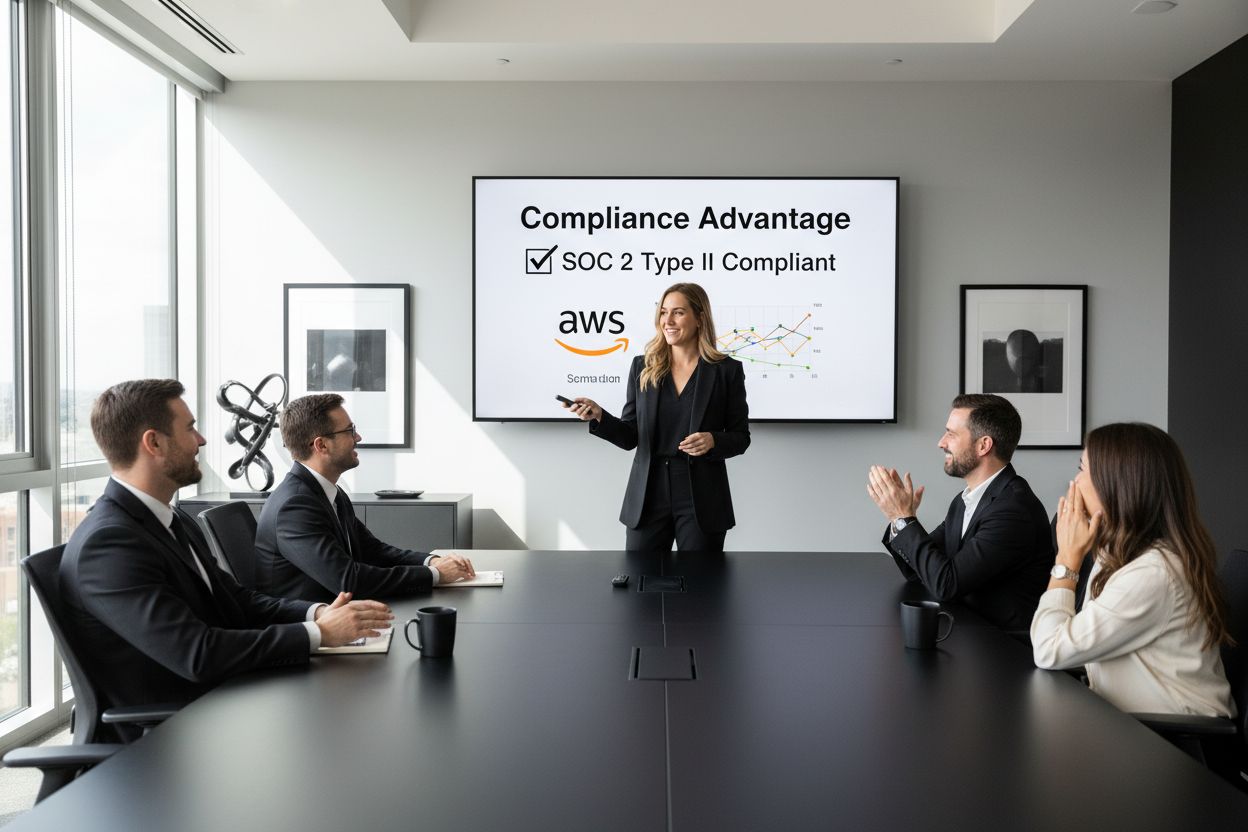
Fast-Track Your SOC 2 Security Reviews with Skypher’s AI-Powered Automation
Struggling to keep up with the growing pressure of AWS SOC 2 compliance? The article highlighted how trust and rigorous, up-to-date controls are now non-negotiable in tech and finance. But manual questionnaire responses drain your team and delay sales, putting client confidence at risk. With Skypher, you can move from audit readiness to business acceleration by automating complex security questionnaire tasks in minutes, not days.
Let Skypher save you hours and help your organization shine during every security review. Our platform uses proprietary AI to parse any format, answer hundreds of questions almost instantly, and streamline collaboration across teams using integrations with Slack, ServiceNow, and more. If you need to consistently demonstrate your AWS SOC 2 controls and build trust with enterprise buyers, discover how Skypher’s automation tools can transform your compliance process. Ready to simplify compliance and win more deals? Get started now with Skypher and see how effortless security reviews can be.
Frequently Asked Questions
What is AWS SOC 2?
AWS SOC 2 is a compliance framework developed by the American Institute of Certified Public Accountants (AICPA) to evaluate and ensure the security, privacy, and reliability of cloud service providers' data management practices.
Why is AWS SOC 2 compliance important for businesses?
AWS SOC 2 compliance is essential for businesses as it builds customer trust, demonstrates a commitment to data protection, and serves as a competitive differentiator in the technology sector.
What are the key criteria evaluated in an AWS SOC 2 audit?
The key criteria evaluated in an AWS SOC 2 audit include Security, Availability, Processing Integrity, Confidentiality, and Privacy, each addressing different aspects of data protection and system management.
How do Type I and Type II SOC 2 reports differ?
Type I reports assess the design of security controls at a specific point in time, while Type II reports evaluate the operational effectiveness of these controls over an extended period, providing a more comprehensive view of compliance.