

GRC compliance might sound like corporate jargon, but it is reshaping how organizations protect themselves and achieve long-term success. Many leaders still treat it as just another box to tick for auditors. Yet, companies with mature GRC programs report up to 30 percent fewer compliance violations and operational losses. The biggest surprise is that GRC is less about paperwork and more about unlocking new competitive advantages most businesses overlook.
Table of Contents
- What is GRC compliance and why is it important?
- Key Components of GRC Compliance Framework
- The Role of GRC in Risk Management
- Challenges in Achieving Effective GRC Compliance
- Real-World Implications of GRC Compliance
Quick Summary
| Takeaway | Explanation |
|---|---|
| GRC integrates governance, risk, and compliance. | This framework helps organizations manage their strategy, mitigate risks, and adhere to regulatory standards systematically. |
| Effective GRC enhances transparency and accountability. | Implementing robust GRC practices leads to clearer operations and more trust from stakeholders through documented processes. |
| Technology streamlines GRC processes. | Utilizing advanced technologies automates compliance tasks, enabling real-time monitoring and reducing manual errors. |
| Proactive risk management is crucial. | GRC frameworks facilitate early identification and mitigation of potential risks, empowering organizations to turn threats into opportunities. |
| GRC compliance builds organizational resilience. | A strong GRC framework enhances financial stability and strengthens market reputation, contributing to long-term success and competitive advantage. |
What is GRC Compliance and Why is it Important?
GRC compliance represents a strategic framework that organizations use to effectively manage governance, risk, and compliance requirements across their entire operational landscape. According to ISACA, GRC is a comprehensive approach that helps businesses align their technology infrastructure with core business objectives while simultaneously managing potential risks and meeting regulatory standards.
Understanding the Core Components
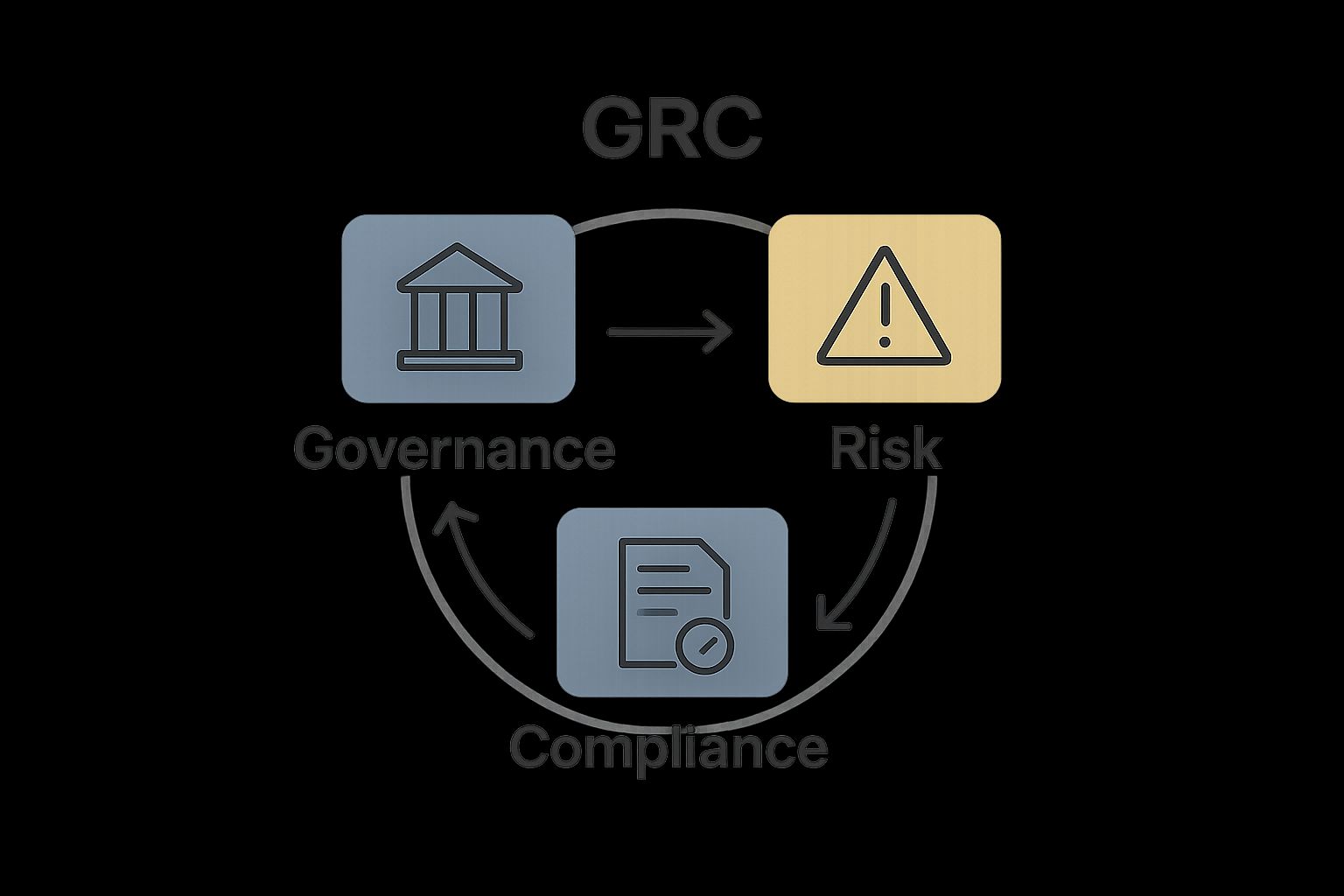
At its foundation, GRC compliance integrates three critical organizational domains:
- Governance: Establishes strategic direction, decision making processes, and accountability mechanisms
- Risk Management: Identifies, assesses, and mitigates potential threats to organizational goals
- Compliance: Ensures adherence to internal policies and external regulatory requirements
These interconnected elements work together to create a holistic management strategy that enables organizations to operate more transparently, efficiently, and securely.
The table below summarizes the core domains that make up GRC compliance, along with their primary focus and organizational benefits.
| Domain | Primary Focus | Key Benefit |
|---|---|---|
| Governance | Strategic direction, decision making, accountability | Aligns organizational objectives and leadership |
| Risk Management | Identification, assessment, mitigation of threats | Reduces uncertainty and protects business goals |
| Compliance | Adherence to policies and external regulations | Meets legal/industry requirements and reduces risks |
 Our guide on understanding the GRC framework provides deeper insights into these fundamental components.
The Strategic Importance of GRC Compliance
For modern enterprises, GRC compliance is not merely a checkbox exercise but a critical strategic imperative. By implementing robust GRC practices, organizations can:
- Proactively identify and mitigate potential business risks
- Streamline regulatory reporting and documentation processes
- Enhance overall organizational transparency and accountability
- Protect the organization from potential financial and reputational damages
- Foster a culture of continuous improvement and strategic risk management
Ultimately, GRC compliance transforms complex regulatory challenges into strategic opportunities for organizational growth and resilience.
Key Components of GRC Compliance Framework
The GRC compliance framework encompasses a comprehensive system of interconnected elements designed to help organizations manage their strategic objectives, mitigate risks, and maintain regulatory adherence. According to Gartner, these components are not standalone processes but integrated mechanisms that work synergistically to create a robust organizational management strategy.
Structural Elements of GRC Framework
A well-designed GRC compliance framework consists of several critical structural components that provide organizations with a systematic approach to managing complex business challenges:
- Policy Management: Developing, documenting, and communicating organizational policies and standards
- Risk Assessment: Identifying, evaluating, and prioritizing potential risks across different business domains
- Compliance Monitoring: Tracking and verifying adherence to internal and external regulatory requirements
- Reporting and Documentation: Creating transparent records of governance activities and risk management processes
Our guide on cybersecurity within GRC frameworks offers additional context about how these components interact in technical environments.
Technology and Process Integration
Modern GRC compliance frameworks leverage advanced technological solutions to enhance their effectiveness. These technologies enable organizations to:
- Automate complex compliance tracking processes
- Create real-time risk monitoring dashboards
- Implement centralized data collection and analysis systems
- Facilitate cross-departmental communication and collaboration
- Generate comprehensive compliance reports with minimal manual intervention
By integrating sophisticated technology with robust processes, organizations can transform GRC compliance from a regulatory burden into a strategic business advantage that drives operational excellence and competitive differentiation.
The Role of GRC in Risk Management
GRC plays a pivotal role in transforming risk management from a reactive process to a strategic organizational capability. According to research from the National Institutes of Health, GRC frameworks facilitate a proactive approach to identifying, evaluating, and mitigating potential risks across various business domains.
Strategic Risk Identification and Assessment
In the complex landscape of modern business, risk management goes beyond traditional threat detection. GRC enables organizations to develop a comprehensive risk identification strategy that encompasses multiple dimensions
:
- Operational Risks: Potential disruptions to internal business processes
- Financial Risks: Threats to economic stability and financial performance
- Regulatory Risks: Potential violations of legal and industry compliance standards
- Technological Risks: Cybersecurity threats and technological infrastructure vulnerabilities
Our guide for GRC analysts provides additional insights into effectively managing these diverse risk categories.
Integrated Risk Mitigation Strategies
The true power of GRC in risk management lies in its ability to create integrated mitigation strategies. By connecting governance, risk assessment, and compliance processes, organizations can:
- Develop predictive risk models
- Implement real-time monitoring systems
- Create adaptive response mechanisms
- Establish clear escalation protocols
- Foster a culture of continuous risk awareness
This holistic approach transforms risk management from a defensive mechanism into a strategic tool for organizational resilience and competitive advantage. By anticipating and addressing potential challenges proactively, businesses can convert uncertainty into opportunities for growth and innovation.
Challenges in Achieving Effective GRC Compliance
Navigating the complex landscape of GRC compliance presents organizations with multifaceted challenges that require strategic and adaptive approaches. According to Deloitte's global risk management survey, businesses consistently struggle with implementing comprehensive and effective GRC strategies.
Technological and Organizational Complexity
The modern business environment introduces significant barriers to seamless GRC implementation. Organizations frequently encounter challenges such as:
- Siloed Information Systems: Disparate technological platforms that prevent integrated risk management
- Legacy Infrastructure: Outdated technological ecosystems resistant to comprehensive integration
- Data Management Issues: Inconsistent data collection and interpretation across different organizational units
- Limited Technological Capabilities: Insufficient advanced analytics and monitoring tools
Our guide on cybersecurity within GRC frameworks explores how technological limitations impact comprehensive risk management.
Regulatory and Compliance Dynamics
The evolving regulatory landscape creates persistent challenges for organizations attempting to maintain robust GRC compliance. Key complications include:
- Rapidly changing regulatory requirements across multiple jurisdictions
- Increasing complexity of compliance standards
- High costs associated with continuous compliance monitoring
- Significant penalties for non-compliance or reporting errors
- Difficulty in maintaining consistent interpretation of regulatory mandates
Successful GRC implementation demands a proactive, flexible approach that anticipates regulatory shifts and creates adaptive compliance mechanisms. Organizations must invest in continuous learning, technological infrastructure, and cross-functional collaboration to effectively manage these intricate compliance challenges.
The following table provides an overview of common GRC-related challenges and their impacts on organizations trying to achieve effective compliance.
| Challenge | Description | Organizational Impact |
|---|---|---|
| Siloed Information Systems | Disconnected platforms prevent integrating risk/compliance | Incomplete risk visibility |
| Legacy Infrastructure | Outdated technology resists integration and automation | Slows adoption of modern GRC solutions |
| Data Management Issues | Inconsistent data collection and interpretation | Hinders accurate compliance reporting |
| Limited Technological Capabilities | Insufficient analytics and monitoring tools | Limits proactive risk management |
| Rapid Regulatory Changes | Evolving requirements across jurisdictions | Increases compliance complexity and costs |
Real-World Implications of GRC Compliance
Research from organizational performance studies demonstrates that GRC compliance transcends theoretical frameworks, directly influencing an organization's operational effectiveness, financial stability, and market reputation. The practical manifestations of robust GRC strategies reveal profound consequences across multiple business dimensions.
Financial and Operational Impact
Effective GRC compliance generates tangible financial benefits and operational advantages for organizations. These implications include:
- Risk Mitigation: Reducing potential financial losses through proactive threat identification
- Cost Optimization: Minimizing unnecessary expenditures related to regulatory penalties
- Resource Allocation: Streamlining organizational resources toward strategic objectives
- Operational Efficiency: Eliminating redundant processes and improving workflow productivity

Our guide for GRC analysts provides additional insights into translating compliance strategies into operational excellence.
Reputational and Stakeholder Confidence
Beyond immediate financial considerations, GRC compliance significantly influences an organization's market perception and stakeholder trust. Companies demonstrating comprehensive compliance frameworks can:
- Enhance investor confidence
- Attract top-tier talent
- Build stronger customer relationships
- Differentiate themselves in competitive markets
- Establish credibility with regulatory bodies
The strategic implementation of GRC compliance transforms potential regulatory constraints into opportunities for organizational growth, positioning businesses as responsible, forward-thinking entities in an increasingly complex global marketplace.
Transform GRC Compliance Challenges into Fast Wins with Skypher
Have you ever felt overwhelmed by the complexity of managing governance, risk, and compliance requirements, especially when security questionnaires keep piling up? If your team is struggling with siloed systems, manual data entry, or slow response times highlighted in our article on effective GRC compliance, you are not alone. The constant pressure to keep up with regulatory changes and prove compliance can halt workflow and impact trust with clients and partners.
Let Skypher help turn this challenge into your greatest advantage. Our AI-driven Questionnaire Automation Tool lets you process hundreds of questions in under a minute, seamlessly integrates with ServiceNow and over 30 other tools, and accelerates every security review for your organization. Reduce risk, improve accuracy, and empower your team to meet compliance goals faster. It is time to shift from reactive to proactive GRC success. Visit Skypher and see why leading companies trust us to make security reviews effortless.
Frequently Asked Questions
What is GRC compliance and why is it important?
GRC compliance refers to the framework organizations use to manage governance, risk, and compliance. It is essential for aligning business objectives with regulatory requirements and risk management, ultimately improving operational transparency and resilience.
How can I implement a GRC compliance framework in my organization?
Start by assessing your current governance practices and risk management processes. Then, develop a structured plan that includes policy management, risk assessment, and compliance monitoring to integrate these components effectively within 60 days.
What are the key components of a GRC compliance framework?
A GRC compliance framework typically includes policy management, risk assessment, compliance monitoring, and reporting. Focus on establishing clear policies and a consistent process for evaluating risks and ensuring compliance to enhance organizational effectiveness.
How does GRC compliance impact risk management?
GRC compliance enhances risk management by fostering a proactive approach to identifying and mitigating risks. To effectively leverage GRC, ensure your risk assessment strategies are integrated with governance and compliance processes within your organization.
What challenges might I face in achieving effective GRC compliance?
Common challenges include siloed information systems, outdated technology, and evolving regulatory requirements. To address these issues, conduct a comprehensive review of your technological capabilities and ensure continuous training for employees on compliance updates to reduce friction in implementation.
How can I measure the effectiveness of my GRC compliance efforts?
Evaluate effectiveness by monitoring compliance adherence rates, conducting regular audits, and analyzing the reduction of regulatory penalties. Set clear benchmarks and aim to improve these metrics by a measurable percentage within each reporting period.
Recommended
- Understanding the GRC Framework: Key Concepts Explained
- 7 Essential Tips for Every GRC Analyst to Succeed
- Understanding GRC Cyber Security: Concepts and Importance
- Cybersecurity GRC: Essential Strategies for 2025 Success
- Understanding IRC 471: A Comprehensive Guide
- Understanding International Trade Compliance Basics - Worldwide Express, Inc.