

GRC programs are shaking up how businesses handle risk and compliance. Research shows that organizations with mature GRC programs see much higher operational resilience and strategic adaptability. Surprised? Most people think GRC is all about tedious rule-following and red tape. The reality is, these programs are secret weapons that help companies stay agile and turn regulatory headaches into real opportunities.
Table of Contents
- What are GRC Programs and Their Purpose?
- The Importance of GRC Programs in Business Strategy
- How GRC Programs Function: Core Components and Processes
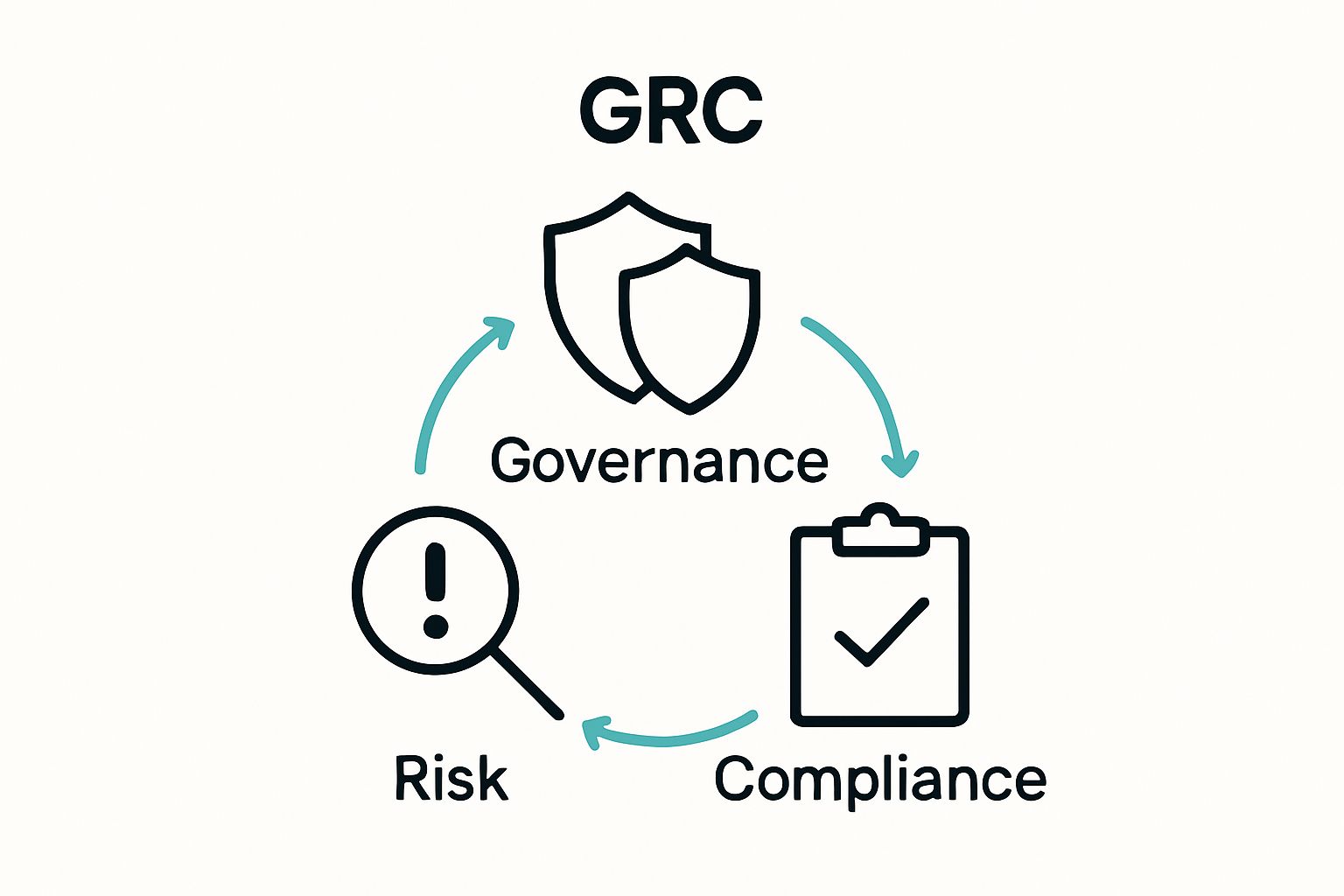
- Key Concepts in GRC: Risk, Compliance, and Governance
- Real-World Applications and Benefits of GRC Programs
Quick Summary
| Takeaway | Explanation |
|---|---|
| GRC programs integrate governance, risk, and compliance. | These frameworks streamline complex processes, enhancing organizational efficiency and accountability. |
| Proactive risk management leads to strategic advantages. | By anticipating risks, organizations can navigate challenges and seize opportunities effectively. |
| Technology enhances GRC program effectiveness. | Advanced tools facilitate data management, compliance tracking, and risk analysis, reducing errors and response times. |
| Clear governance structures build stakeholder trust. | Ethical guidelines and accountability mechanisms help ensure transparency and alignment with regulations. |
| Implementing GRC programs cuts operational costs. | Comprehensive strategies lead to better resource allocation and lower compliance-related expenses. |
What are GRC Programs and Their Purpose?
Governance, Risk, and Compliance (GRC) programs represent strategic organizational frameworks designed to integrate critical business processes across multiple operational domains. Research from the National Institute of Standards and Technology reveals these comprehensive programs help organizations systematically manage their governance structures, mitigate potential risks, and ensure regulatory adherence.
Core Components of GRC Programs
GRC programs are sophisticated management systems that interconnect three fundamental pillars:
- Governance: Establishing organizational policies, decision making frameworks, and leadership accountability
- Risk Management: Identifying, assessing, and strategically addressing potential threats to organizational objectives
- Compliance: Ensuring adherence to internal policies and external regulatory requirements
These integrated approaches transform complex regulatory landscapes into structured, manageable processes that protect organizational interests while promoting strategic alignment.
Below is a table summarizing the core components of GRC programs, highlighting each pillar and its specific focus within an organization.
| Component | Focus Area | Description |
|---|---|---|
| Governance | Leadership & Policy | Establishes organizational policies, decision frameworks, and leadership accountability |
| Risk Mgmt | Threat Assessment & Mitigation | Identifies, assesses, and addresses threats to organizational objectives |
| Compliance | Regulatory & Policy Adherence | Ensures adherence to internal policies and external legal or regulatory requirements |
Strategic Importance of GRC Programs
Modern enterprises face increasingly complex regulatory environments and rapidly evolving technological risks. GRC programs serve as critical strategic tools that enable organizations to:
- Proactively identify and mitigate potential operational vulnerabilities
- Streamline reporting and documentation processes
- Enhance transparency and accountability across organizational levels
- Reduce potential financial and reputational risks associated with non compliance
By implementing robust GRC programs, organizations can transform regulatory challenges from potential obstacles into strategic opportunities for improved operational efficiency and risk management.
The Importance of GRC Programs in Business Strategy
In an increasingly complex business landscape, GRC programs have emerged as critical strategic frameworks that transcend traditional risk management approaches. Global consulting research from McKinsey demonstrates that organizations with mature GRC programs experience significantly higher operational resilience and strategic adaptability.
Strategic Risk Mitigation and Competitive Advantage
GRC programs provide organizations with a systematic approach to understanding and managing potential risks before they transform into substantial challenges. By integrating governance, risk assessment, and compliance mechanisms, businesses can develop proactive strategies that:
- Anticipate potential regulatory changes
- Identify emerging technological and market risks
- Create flexible response mechanisms
- Protect organizational reputation and financial stability
These strategic capabilities enable companies to move beyond reactive risk management towards a more dynamic and forward thinking approach. Learn more about cybersecurity implications in GRC frameworks to comprehend the broader strategic landscape.
Financial and Operational Performance Enhancement
Effective GRC programs directly contribute to improved organizational performance. By establishing clear governance structures and compliance protocols, businesses can:
- Reduce operational inefficiencies
- Minimize potential financial penalties
- Streamline decision making processes
- Enhance investor and stakeholder confidence
Research indicates that organizations with robust GRC programs experience lower operational costs and higher strategic agility. The integration of comprehensive risk management strategies allows businesses to allocate resources more effectively and respond rapidly to changing market conditions.
Ultimately, GRC programs represent more than just a regulatory requirement they are strategic assets that enable organizations to navigate complex business environments with greater confidence and precision.
How GRC Programs Function: Core Components and Processes
GRC programs operate as sophisticated organizational frameworks that integrate complex processes through systematic methodologies and technological infrastructure. Research from Gartner indicates that successful implementation requires a holistic approach combining technology, people, and strategic processes.
Operational Workflow and Process Integration
The functional mechanics of GRC programs revolve around three interconnected stages that create a comprehensive risk management ecosystem:
- Information Collection: Gathering data from multiple organizational sources
- Risk Assessment: Analyzing collected information for potential vulnerabilities
- Strategic Response: Developing targeted mitigation strategies based on comprehensive analysis
This cyclical process enables organizations to transform raw data into actionable insights, creating a dynamic and responsive risk management environment. Our guide for GRC professionals provides deeper insights into effective implementation strategies.
Technology and Automation in GRC Programs
Modern GRC programs leverage advanced technological solutions to enhance efficiency and accuracy. Key technological components include:
- Integrated software platforms
- Real time monitoring systems
- Advanced data analytics tools
- Automated compliance tracking mechanisms
These technological solutions enable organizations to move beyond manual, time consuming processes towards more agile, data driven risk management approaches. Automation reduces human error, provides comprehensive visibility, and allows for rapid response to emerging risks, transforming GRC from a compliance requirement into a strategic organizational capability.
Key Concepts in GRC: Risk, Compliance, and Governance
GRC represents a sophisticated framework where three critical organizational components intersect to create comprehensive management strategies. Academic research from Harvard Business Review highlights how these interconnected elements drive organizational effectiveness and strategic resilience.
Understanding Organizational Risk Management
Risk management within GRC programs involves systematically identifying, assessing, and mitigating potential threats that could impact organizational objectives. Organizations must develop nuanced approaches that address multiple risk categories:
- Operational Risks: Potential disruptions to business processes
- Financial Risks: Threats to monetary stability and economic performance
- Strategic Risks: Challenges that could derail long term organizational goals
- Compliance Risks: Potential violations of regulatory requirements
Effective risk management transforms uncertainty from a potential liability into a strategic opportunity for organizational learning and adaptation. Our comprehensive guide on cybersecurity implications provides deeper insights into modern risk assessment strategies.
Governance and Compliance Frameworks
Governance and compliance represent the structural backbone of GRC programs, establishing clear guidelines and accountability mechanisms. These frameworks ensure that organizations operate with transparency, ethical standards, and alignment with both internal policies and external regulatory requirements.
Key principles include creating:
- Clear decision making hierarchies
- Transparent reporting mechanisms
- Robust accountability systems
- Ethical conduct standards
By integrating governance and compliance, organizations can build trust with stakeholders, minimize legal risks, and create a culture of responsible and strategic organizational management.
Real-World Applications and Benefits of GRC Programs
GRC programs have transformed from theoretical frameworks into practical strategic tools across diverse industries, enabling organizations to navigate complex regulatory landscapes with precision and agility.
This table provides an overview of how GRC programs are applied in different industries, along with their unique use cases and challenges addressed.
| Industry | Primary Application | Key GRC Focus Area |
|---|---|---|
| Financial Services | Regulatory compliance, fraud prevention | Managing transaction risks |
| Healthcare | Patient data protection | Privacy regulation adherence |
| Technology | Cybersecurity risk and IP protection | Managing emerging cyber threats |
| Manufacturing | Supply chain integrity, quality management | Maintaining quality and compliance |
Industry Specific GRC Applications
Different industries leverage GRC programs to address unique operational challenges and regulatory requirements:
- Financial Services: Ensuring regulatory compliance, preventing fraud, managing complex transaction risks
- Healthcare: Protecting patient data, maintaining regulatory adherence to privacy standards
- Technology: Managing cybersecurity risks, protecting intellectual property
- Manufacturing: Ensuring supply chain integrity, maintaining quality control standards
Our comprehensive cybersecurity guide offers deeper insights into sector specific risk management strategies.
Quantifiable Benefits of Robust GRC Programs
Organizations implementing comprehensive GRC programs experience measurable operational improvements:
- Reduced compliance related expenses
- Enhanced organizational transparency
- Improved risk prediction capabilities
- Faster response to emerging regulatory challenges
- Increased stakeholder confidence
These benefits extend beyond traditional risk management, positioning GRC as a strategic enabler of organizational resilience and competitive advantage. By integrating advanced technological solutions with systematic process management, businesses can transform regulatory requirements from potential obstacles into opportunities for strategic growth and innovation.
Move from GRC Uncertainty to Automated Assurance with Skypher
Are you tired of manual, time-consuming processes when responding to security questionnaires? As highlighted in our article on GRC programs, organizations today face overwhelming pressure to balance rigorous compliance, reduce risk, and foster trust. Without adaptive tools, lengthy reviews can drain productivity and expose your business to unnecessary risk.
Skypher bridges the gap between GRC strategy and practical execution. Our Questionnaire Automation Tool instantly parses even the most complex questionnaires, integrates with leading third-party risk management platforms, and streamlines team workflows. With AI-driven accuracy and real-time collaboration, your team can turn regulatory requirements into competitive advantages. See how Skypher helps organizations in tech and finance deliver faster, more secure, and audit-ready responses. Visit Skypher now to discover modern automation for your GRC processes—experience the speed and efficiency your organization needs today.
Frequently Asked Questions
What are the main components of GRC programs?
GRC programs consist of three main components: governance, risk management, and compliance. To effectively implement a GRC program, organizations should establish clear policies, assess risks systematically, and ensure adherence to both internal and external regulations.
How can GRC programs help improve organizational performance?
GRC programs enhance organizational performance by streamlining processes and reducing operational inefficiencies. By implementing clear governance structures and compliance protocols, organizations can expect to see a reduction in costs and an increase in stakeholder confidence within a year.
What steps should an organization take to implement a GRC program?
To implement a GRC program, organizations should first assess their current governance and risk management frameworks. Next, gather data across all operational areas, conduct risk assessments, and develop strategic responses to identified vulnerabilities within 30-60 days.
How do GRC programs address compliance risks?
GRC programs address compliance risks by integrating compliance checks into everyday business processes and continuously monitoring for adherence to regulations. To strengthen compliance, organizations should establish transparent reporting mechanisms and conduct regular audits of their processes.
What benefits can organizations expect from a robust GRC program?
Organizations with robust GRC programs can expect benefits such as improved risk prediction capabilities and faster response to regulatory challenges. By integrating advanced risk management strategies, companies can achieve a measurable increase in operational resilience and potentially reduce compliance-related expenses by around 20%.