

HIPAA safeguards keep patient data protected in a world where healthcare breaches make the news every week. Here is something that surprises a lot of people. Healthcare data breaches impacted over 88 million patients in 2023 alone. But relying on just one type of safeguard is not enough. True protection only happens when administrative, physical, and technical strategies work together in ways most clinics never expect.
Table of Contents
- What are HIPAA Safeguards and Their Purpose?
- The Importance of HIPAA Safeguards in Healthcare
- Types of HIPAA Safeguards: Administrative, Physical, and Technical
- How HIPAA Safeguards Work Together for Compliance
- Real-World Applications and Impact of HIPAA Safeguards
Quick Summary
| Takeaway | Explanation |
|---|---|
| HIPAA safeguards ensure patient data security | They are designed to protect patients' health information from unauthorized access and misuse. |
| Three domains: Administrative, Physical, Technical | Each domain provides a unique approach to securing health information, ensuring comprehensive protection. |
| Implement continuous risk assessments | Regular evaluations help identify and mitigate potential vulnerabilities in data security. |
| Establish clear data management protocols | Effective guidelines for data access and incident response enhance patient confidentiality and security. |
| Prioritize compliance to build patient trust | Adhering to HIPAA safeguards shows commitment to privacy, fostering patient confidence in healthcare organizations. |
What are HIPAA Safeguards and Their Purpose?
HIPAA safeguards are comprehensive protective measures designed to secure patient health information across healthcare systems and organizations. These structured protections ensure the confidentiality, integrity, and availability of sensitive medical data, preventing unauthorized access and potential misuse.
Understanding the Core Purpose
The fundamental objective of HIPAA safeguards is to create a robust framework that protects patients' personal health information from potential security risks. According to the U.S. Department of Health & Human Services, these safeguards are critical in maintaining patient privacy and establishing trust within healthcare ecosystems.
HIPAA safeguards address three primary domains of protection:
- Administrative Safeguards: Policies and procedures that manage the selection, development, and implementation of security measures
- Physical Safeguards: Mechanisms to protect electronic information systems and related buildings and equipment
- Technical Safeguards: Technological controls that protect and control access to electronic protected health information
Comprehensive Protection Strategy
Healthcare organizations implement these safeguards through a multi-layered approach that encompasses risk assessment, employee training, secure technology infrastructure, and continuous monitoring. The goal is not just compliance but creating a proactive security environment that anticipates and mitigates potential vulnerabilities.
By establishing clear protocols for data handling, access control, and incident response, HIPAA safeguards help healthcare providers maintain the highest standards of patient information protection. This systematic approach ensures that sensitive medical records remain confidential, secure, and accessible only to authorized personnel.
The strategic implementation of these safeguards represents a critical commitment to patient privacy, demonstrating that protecting personal health information is a fundamental responsibility of healthcare institutions.
The Importance of HIPAA Safeguards in Healthcare
HIPAA safeguards represent a critical defense mechanism in protecting patient health information, ensuring privacy, security, and maintaining the fundamental trust between healthcare providers and patients. These comprehensive protective measures are not merely regulatory requirements but essential components of responsible healthcare management.
Protecting Patient Confidentiality
According to the U.S. Department of Health and Human Services, HIPAA safeguards play a pivotal role in preventing unauthorized disclosure of sensitive medical information. The importance of these safeguards extends beyond legal compliance, addressing critical patient rights and organizational responsibilities.
The significance of HIPAA safeguards can be understood through several key dimensions:
- Patient Trust: Demonstrating a commitment to protecting personal health information
- Legal Compliance: Avoiding substantial financial penalties and potential legal consequences
- Data Integrity: Preventing unauthorized access, modification, or destruction of medical records
Mitigating Organizational Risks
Healthcare organizations face substantial risks associated with potential data breaches. HIPAA safeguards provide a structured approach to identifying, preventing, and responding to potential security vulnerabilities. By implementing robust administrative, physical, and technical protections, healthcare providers can significantly reduce the likelihood of data compromises that could result in:
- Severe financial penalties
- Reputational damage
- Loss of patient trust
- Potential legal action
Moreover, these safeguards create a comprehensive framework that addresses the complex landscape of digital health information management. They ensure that patient data remains secure across various platforms, from electronic health records to communication systems, while maintaining the necessary flexibility for effective healthcare delivery.
Ultimately, HIPAA safeguards represent more than a regulatory requirement. They embody a fundamental commitment to patient privacy, respect, and the ethical management of sensitive personal health information. By prioritizing these protections, healthcare organizations demonstrate their dedication to maintaining the highest standards of patient care and data security.
This table summarizes the practical impacts of HIPAA safeguards on healthcare organizations, focusing on compliance, organizational benefits, and patient trust. It provides a concise overview of why these safeguards matter in real-world healthcare environments.
| Impact Area | Description |
|---|---|
| Legal Compliance | Helps avoid financial penalties and legal consequences |
| Patient Trust | Demonstrates commitment to privacy and earns confidence |
| Data Integrity | Prevents unauthorized access, modification, or destruction of records |
| Risk Mitigation | Reduces likelihood and impact of data breaches |
| Reputation | Protects against reputational damage from security incidents |
Types of HIPAA Safeguards: Administrative, Physical, and Technical
HIPAA safeguards are strategically organized into three interconnected domains that work together to create a comprehensive approach to protecting patient health information. These safeguards provide a holistic framework for ensuring the confidentiality, integrity, and accessibility of sensitive medical data across healthcare organizations.
Administrative Safeguards
According to the U.S. Department of Health & Human Services, administrative safeguards focus on the human and procedural elements of data protection. These safeguards establish critical policies and procedures that govern how organizations manage and protect electronic protected health information.
Key components of administrative safeguards include:
- Risk Management: Conducting comprehensive assessments of potential security vulnerabilities
- Workforce Training: Developing and implementing security awareness programs
- Access Management: Creating protocols for authorizing and monitoring information access
Physical and Technical Protection Mechanisms
Physical and technical safeguards complement administrative measures by providing tangible and technological protections for patient data. Physical safeguards address the concrete protection of electronic systems and equipment, while technical safeguards implement technological controls to secure electronic health information.
These safeguards encompass critical protection strategies:
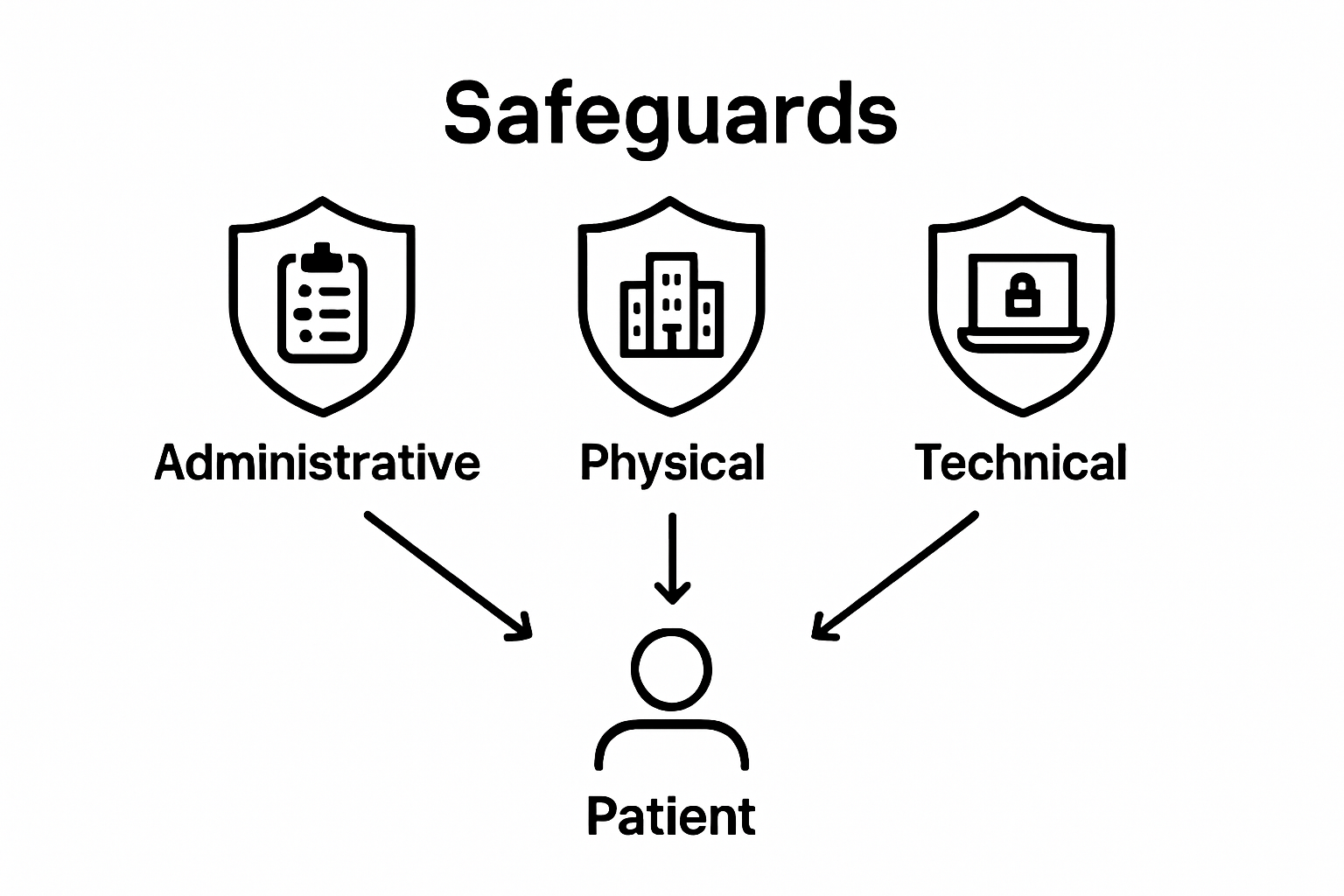
- Physical Safeguards: Controlling facility access, securing workstations, and managing physical device security
- Technical Safeguards: Implementing encryption, access controls, and audit mechanisms
- Network Security: Protecting data transmission and preventing unauthorized electronic access
By integrating administrative, physical, and technical safeguards, healthcare organizations create a robust, multi-layered defense system.

This comprehensive approach ensures that patient information remains protected across various potential points of vulnerability, from human interactions to technological infrastructures.
Ultimately, these HIPAA safeguards represent a sophisticated strategy for maintaining patient privacy, demonstrating that protecting sensitive health information requires a nuanced, holistic approach that addresses organizational, human, and technological dimensions of data security.
How HIPAA Safeguards Work Together for Compliance
HIPAA compliance represents a complex, multifaceted process where administrative, physical, and technical safeguards function as an integrated system of protection. These interconnected safeguards create a comprehensive defense mechanism that addresses potential vulnerabilities across organizational, technological, and human domains.
Integrated Risk Management Framework
According to the U.S. Department of Health and Human Services, achieving HIPAA compliance requires a synchronized approach where each safeguard type reinforces and complements the others. This holistic strategy ensures that no single aspect of patient data protection remains isolated or vulnerable.
The collaborative mechanism of HIPAA safeguards involves several critical interactions:
- Policy Development: Administrative safeguards establish foundational guidelines
- Implementation Strategies: Physical and technical safeguards execute these policies
- Continuous Monitoring: All safeguards work together to identify and mitigate potential risks
Synchronized Protection Strategies
Each HIPAA safeguard contributes unique capabilities that, when combined, create a robust protective ecosystem. Administrative safeguards provide strategic direction, physical safeguards establish tangible security barriers, and technical safeguards implement digital protection mechanisms.
The synergy between these safeguards is demonstrated through:
- Comprehensive Coverage: Addressing protection from policy to technological implementation
- Layered Security: Creating multiple defensive barriers against potential breaches
- Adaptive Response: Enabling organizations to rapidly adjust to emerging security challenges
By designing these safeguards to communicate and reinforce each other, healthcare organizations can develop a dynamic, responsive approach to protecting patient information. This integrated framework not only ensures regulatory compliance but also establishes a proactive culture of data security and privacy.
Ultimately, successful HIPAA compliance emerges from understanding that protection is not about individual mechanisms, but about creating a seamless, intelligent system that anticipates, prevents, and responds to potential security threats across all organizational levels.
Real-World Applications and Impact of HIPAA Safeguards
HIPAA safeguards extend far beyond theoretical frameworks, translating into tangible protective measures that directly impact patient privacy and organizational security in healthcare settings. These practical applications demonstrate the critical role of comprehensive data protection strategies in maintaining trust and preventing potential breaches.
Cybersecurity Defense Mechanisms
According to the U.S. Department of Health and Human Services, HIPAA safeguards provide robust defense mechanisms against evolving cyber threats. Healthcare organizations implement these safeguards to protect sensitive patient information from increasingly sophisticated digital risks.
Real-world cybersecurity applications include:
- Encryption Protocols: Securing electronic health records during transmission and storage
- Access Control Systems: Implementing multi-factor authentication for sensitive information
- Continuous Monitoring: Detecting and responding to potential security vulnerabilities
Practical Compliance and Risk Mitigation
The implementation of HIPAA safeguards goes beyond mere regulatory compliance, serving as a critical risk management strategy for healthcare organizations. These safeguards help prevent potentially devastating data breaches that could compromise patient privacy and organizational reputation.
Practical risk mitigation strategies demonstrate the profound impact of HIPAA safeguards:
- Breach Prevention: Reducing the likelihood of unauthorized data access
- Financial Protection: Avoiding substantial penalties associated with data violations
- Reputation Management: Maintaining patient trust through robust security measures
Healthcare organizations that effectively implement HIPAA safeguards create a comprehensive protective environment that addresses multiple dimensions of data security. These safeguards transform abstract regulatory requirements into concrete protective strategies that safeguard patient information across various technological and organizational contexts.
Ultimately, HIPAA safeguards represent more than a compliance checklist. They embody a fundamental commitment to patient privacy, demonstrating how strategic, well-implemented security measures can protect sensitive information in an increasingly complex digital healthcare landscape.
Ready to Strengthen Your HIPAA Safeguards with Smarter Automation?
Protecting patient data is more important than ever, and implementing effective HIPAA safeguards is essential for building trust and staying compliant. But manual security reviews, especially the complex questionnaire process, can drain your team's time and leave gaps in your data protection. The article revealed how quickly vulnerabilities can arise without robust safeguards, especially when organizations rely on outdated systems or inefficient workflows.

Take control of your HIPAA compliance journey by streamlining your security questionnaire workflow with Skypher's AI Questionnaire Automation Tool. With Skypher, you can automate your response process, improve accuracy, and maintain up-to-date documentation that aligns with administrative, technical, and physical safeguard requirements. Explore how Skypher's integrations and Trust Center can empower your team to resolve security reviews faster, boost client confidence, and keep patient data safe. Visit https://skypher.co now and make your HIPAA compliance process seamless and secure.
Frequently Asked Questions
What are HIPAA safeguards?
HIPAA safeguards are protective measures established to secure patient health information, focusing on confidentiality, integrity, and availability to prevent unauthorized access.
Why are HIPAA safeguards important for healthcare organizations?
HIPAA safeguards are essential for maintaining patient trust and ensuring legal compliance while protecting sensitive medical information from data breaches and unauthorized disclosures.
How do administrative, physical, and technical safeguards work together under HIPAA?
These safeguards function as an integrated system, where administrative measures establish policies, physical safeguards implement security barriers, and technical safeguards utilize digital controls to protect patient information.
What are some real-world applications of HIPAA safeguards?
HIPAA safeguards can be applied through cybersecurity measures such as encryption protocols, access control systems, and continuous monitoring to protect electronic health records from cyber threats.
Recommended
- The different formats & mistakes made when writing or answering security questionnaires
- Best Practices for Automating Your Security Questionnaires Response Process (2/3)
- The ever growing number of security questionnaires and what you and your company can do to face it
- Common Credentialing Hurdles: Turn Risk Into Reliability – VectorCare