

Managing technology is a make-or-break factor for modern companies and every organization faces pressure to keep its digital systems safe, compliant, and aligned with business goals. Yet despite fierce investment, over 60 percent of IT projects still fail to deliver their intended value. This seems backwards when technology is supposed to be a strategic advantage, not just another expensive gamble.
Table of Contents
- What is information technology governance?
- Why is Information Technology Governance Important?
- Key Components of Information Technology Governance
- How Information Technology Governance Works in Organizations
- Real-World Examples of Information Technology Governance
Quick Summary
| Takeaway | Explanation |
|---|---|
| IT Governance Aligns Technology with Business Goals | Effective IT governance ensures that technological investments support and advance organizational objectives, creating a direct connection between technology and strategy. |
| Risk Management is Essential for Compliance | Robust IT governance frameworks help identify technological risks, ensuring organizations can implement regulatory compliance and protect against security threats. |
| Performance Measurement Optimizes Technology Investments | Establishing metrics to evaluate technology helps organizations maximize the value of their investments while tracking return on expenditures. |
| Structured Frameworks Enhance Decision-Making | Clear organizational structures in IT governance facilitate effective decision-making and accountability, leading to improved outcomes in technology management. |
| Continuous Monitoring Adapts to Evolving Needs | Ongoing evaluation of IT performance allows organizations to remain agile and responsive to technological changes and market dynamics. |
What is Information Technology Governance?
Information technology governance represents a structured approach for organizations to strategically manage, align, and optimize their technological resources and investments. At its core, IT governance ensures that an organization's technology infrastructure directly supports and advances its core business objectives while maintaining robust risk management and compliance standards.
Defining the Core Concept
IT governance is fundamentally about creating accountability and establishing clear decision-making frameworks around technology usage. Organizations implement these frameworks to transform technology from a mere operational expense into a strategic asset. According to the Organisation for Economic Co-operation and Development, IT governance involves formal processes that align technological strategies with broader business goals, manage potential risks, and optimize resource allocation.
Key components of effective IT governance include:
- Strategic Alignment: Ensuring technology investments directly support business strategy
- Risk Management: Identifying, assessing, and mitigating potential technological risks
- Resource Optimization: Maximizing the value and efficiency of technological investments
- Performance Measurement: Establishing metrics to evaluate technological effectiveness
Importance in Modern Business
In an increasingly digital landscape, IT governance has transitioned from an optional management practice to a critical organizational necessity. As businesses become more dependent on complex technological ecosystems, the need for structured, strategic technology management becomes paramount. Effective IT governance helps organizations:
- Maintain regulatory compliance
- Protect against cybersecurity threats
- Improve operational efficiency
- Enhance decision-making processes
- Optimize technology spending
By implementing robust IT governance frameworks, organizations create a systematic approach to technology management that balances innovation, risk mitigation, and strategic value creation.
The following table summarizes the key components of information technology governance and their primary objectives for organizations.
| Key Component | Purpose/Objective |
|---|---|
| Strategic Alignment | Ensure technology investments support overall business strategy |
| Risk Management and Compliance | Identify, assess, and mitigate technological and regulatory risks |
| Performance Measurement | Establish and track metrics to evaluate technological effectiveness |
| Resource Optimization | Maximize the value and efficiency of technology investments |
| Value Delivery | Translate technological initiatives into measurable business value |
Why is Information Technology Governance Important?
Information technology governance is not just a technical requirement but a strategic imperative that fundamentally transforms how organizations manage technological resources, mitigate risks, and drive business value. The importance of IT governance extends far beyond simple compliance, touching every aspect of modern organizational performance and competitive strategy.
Strategic Business Alignment
At its core, IT governance ensures that technological investments are not isolated technical decisions but integral components of broader business strategy. Research from the National Institutes of Health highlights that effective IT governance reduces organizational inefficiencies by creating direct connections between technology implementations and strategic objectives. This alignment means that every technological investment is purposefully designed to support specific business outcomes, whether improving operational efficiency, enhancing customer experience, or driving innovation.
Key strategic benefits include:
- Transforming IT from a cost center to a value generator
- Creating clear accountability for technological decisions
- Ensuring technology investments directly support business goals
- Enabling more predictable and consistent technological performance
Risk Management and Compliance
In an era of increasing cybersecurity threats and complex regulatory environments, IT governance provides a critical framework for managing technological risks. Organizations face numerous potential vulnerabilities, from data breaches to regulatory non-compliance, which can result in significant financial and reputational damage. Comprehensive IT governance establishes robust protocols for:
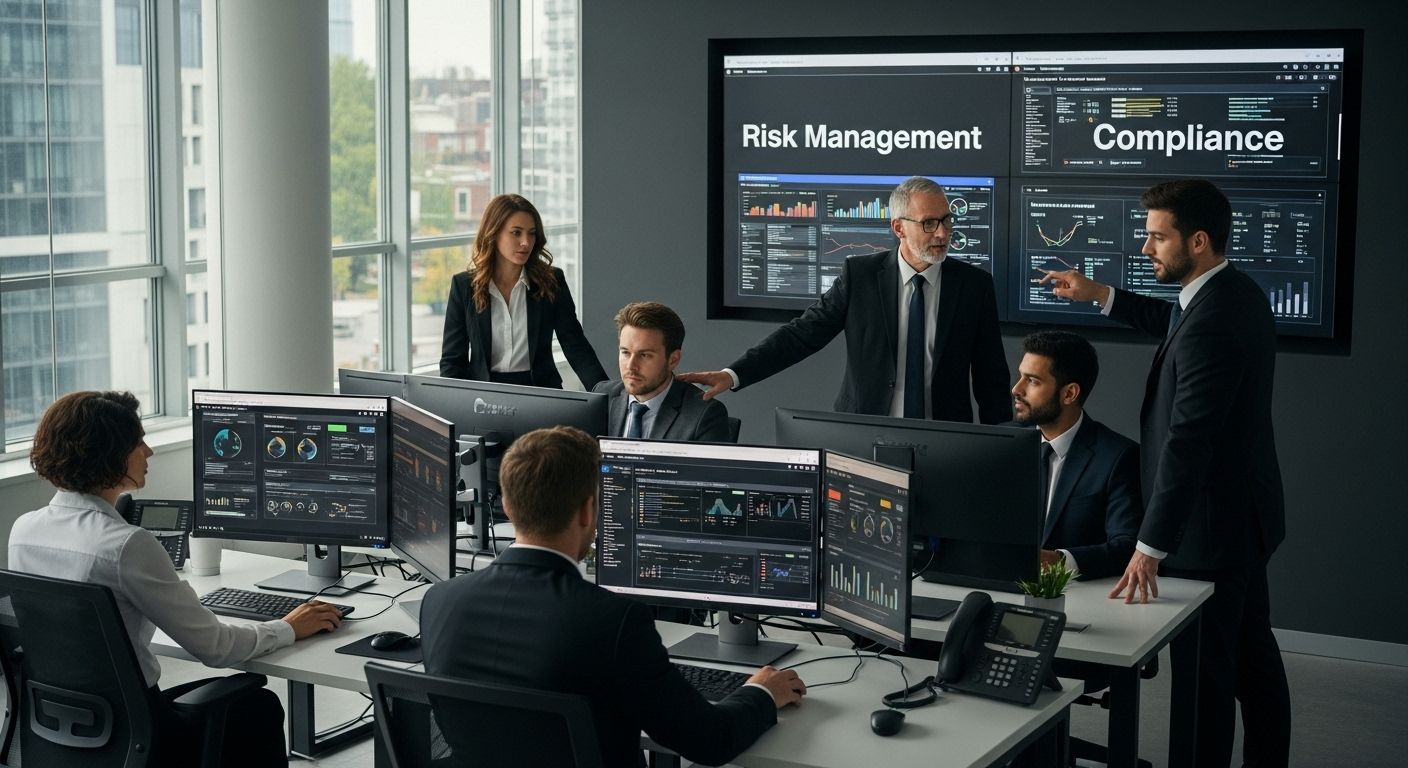
- Identifying potential technological vulnerabilities
- Implementing proactive security measures
- Ensuring regulatory compliance across different jurisdictions
- Creating transparent reporting mechanisms
- Developing rapid response strategies for potential technological incidents
Operational Efficiency and Innovation
Beyond risk management, IT governance drives operational efficiency and creates structured pathways for technological innovation. By establishing clear decision-making frameworks, organizations can accelerate technological adoption, reduce redundant systems, and create more agile technological infrastructures. This approach allows businesses to respond more quickly to market changes, integrate emerging technologies, and maintain a competitive edge in rapidly evolving digital landscapes.
The ultimate value of IT governance lies in its ability to transform technology from a complex, potentially risky investment into a strategic asset that directly contributes to organizational success and growth.
Key Components of Information Technology Governance
Information technology governance is a multifaceted discipline that requires a comprehensive approach to managing an organization's technological resources. Understanding its key components is crucial for creating a robust and effective governance framework that aligns technology with business objectives and manages potential risks.
Strategic Alignment and Value Delivery
Research from academic institutions identifies strategic alignment as a fundamental component of IT governance. This dimension ensures that technological investments and strategies are directly connected to the organization's broader business goals. Strategic alignment goes beyond simple technical implementation, focusing on:
- Translating business strategy into technological capabilities
- Ensuring IT investments generate measurable business value
- Creating a shared understanding between technology and business leadership
- Developing flexible technological infrastructures
- Prioritizing initiatives that directly support organizational objectives
Risk Management and Compliance
Risk management represents another critical component of IT governance. In an increasingly complex digital landscape, organizations must proactively identify, assess, and mitigate potential technological vulnerabilities. This component encompasses:
- Identifying potential technological and cybersecurity risks
- Developing comprehensive security protocols
- Ensuring regulatory compliance across different jurisdictions
- Creating incident response and recovery strategies
- Implementing continuous monitoring and assessment mechanisms
Performance Measurement and Resource Optimization
The final key component focuses on measuring technological performance and optimizing resource allocation. This dimension transforms IT from a cost center to a strategic value generator by:
- Establishing clear performance metrics for technological investments
- Tracking return on technology investments
- Identifying opportunities for efficiency improvements
- Aligning technological resources with strategic priorities
- Creating transparent reporting mechanisms
By integrating these components, organizations can develop a holistic approach to IT governance that balances innovation, risk management, and strategic value creation.
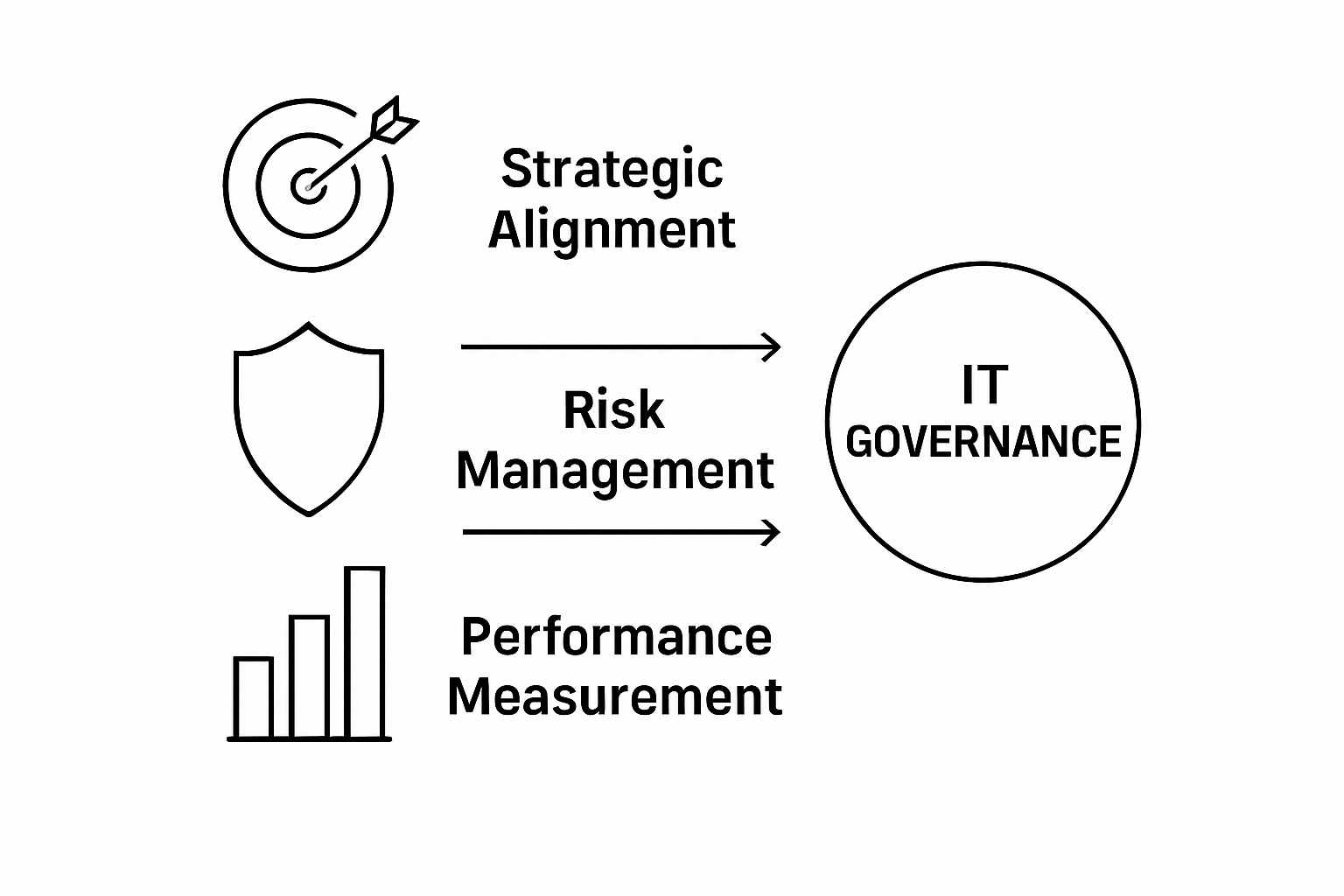 The goal is not just to manage technology but to leverage it as a powerful strategic tool that drives organizational success and competitive advantage.
How Information Technology Governance Works in Organizations
Information technology governance operates as a complex, interconnected system that integrates strategic planning, operational execution, and continuous monitoring to ensure technology effectively supports organizational objectives. Unlike traditional management approaches, IT governance creates a structured framework that systematically aligns technological capabilities with business strategy.
Organizational Structure and Decision Making
EDUCAUSE Review highlights that effective IT governance requires a well-defined organizational structure with clear roles and responsibilities. This structure typically involves multiple layers of decision-making and accountability, including:
- Executive leadership providing strategic direction
- IT steering committees establishing technological priorities
- Cross-functional teams ensuring comprehensive perspective
- Designated governance committees monitoring technological investments
- Clear escalation and reporting mechanisms
Implementation Frameworks and Processes
Successful IT governance relies on robust implementation frameworks that standardize technological decision-making and resource allocation. These frameworks provide systematic approaches to:
- Developing comprehensive IT policies
- Creating standardized evaluation criteria for technological investments
- Establishing performance measurement metrics
- Implementing risk assessment protocols
- Designing consistent technological adoption processes
Continuous Monitoring and Adaptation
IT governance is not a static process but a dynamic system of continuous assessment and improvement. Organizations must develop mechanisms for ongoing evaluation, which include:
- Regular performance reviews of technological investments
- Periodic reassessment of technological strategies
- Tracking emerging technological trends
- Identifying potential operational inefficiencies
- Creating adaptive strategies for technological evolution
The ultimate goal of IT governance is to transform technology from a reactive operational function into a proactive strategic asset that drives organizational innovation, efficiency, and competitive advantage. By establishing clear frameworks, maintaining flexible decision-making processes, and continuously monitoring technological performance, organizations can create a responsive and strategic approach to managing their technological resources.
Real-World Examples of Information Technology Governance
Real-world implementations of information technology governance demonstrate how organizations across various sectors translate theoretical frameworks into practical strategies. These examples illustrate the nuanced approaches different industries adopt to manage technological resources, mitigate risks, and drive strategic objectives.
Financial Services Sector Governance
Financial institutions represent some of the most sophisticated implementers of IT governance due to strict regulatory requirements and complex technological infrastructures. The U.S. Government Accountability Office highlights how banks and financial services companies develop comprehensive governance models that integrate:
- Multilayered risk management protocols
- Robust cybersecurity frameworks
- Strict compliance monitoring systems
- Regular technological investment audits
- Centralized decision-making processes for technological initiatives
For instance, major banks often establish dedicated technology risk committees that report directly to board-level executives, ensuring technological strategies align with broader organizational goals and regulatory standards.
Healthcare Technology Governance
Healthcare organizations demonstrate unique IT governance challenges, balancing patient privacy, regulatory compliance, and technological innovation. Effective governance in this sector requires:
- Comprehensive data protection mechanisms
- HIPAA compliance protocols
- Secure interoperability between medical systems
- Patient data management strategies
- Continuous technological security assessments
Many healthcare networks have implemented centralized IT governance frameworks that create clear accountability structures, ensuring that technological investments directly support patient care quality and operational efficiency.
Government and Public Sector Approaches
Government agencies often serve as model examples of structured IT governance, developing comprehensive frameworks that prioritize transparency, security, and efficient resource allocation. These approaches typically involve:
- Standardized technological procurement processes
- Multi-level approval mechanisms for IT investments
- Rigorous cybersecurity and data protection standards
- Performance measurement and accountability systems
- Cross-departmental technological collaboration protocols
By implementing robust governance models, organizations across different sectors transform IT from a supportive function into a strategic driver of organizational success, demonstrating that effective technology governance is not a one-size-fits-all approach but a nuanced, adaptable strategy tailored to specific organizational needs.
This table provides a comparison of how information technology governance is implemented in three different sectors, highlighting each sector's unique focus areas.
| Sector | Key Governance Focus Areas |
|---|---|
| Financial Services | Multilayered risk management, robust cybersecurity, compliance monitoring, |
| investment audits, centralized decision-making | |
| Healthcare | Data protection, HIPAA compliance, system interoperability, patient data |
| management, continuous security assessments | |
| Government/Public | Standardized procurement, multi-level approvals, rigorous cybersecurity, |
| Sector | performance measurement, cross-departmental collaboration |
Transform IT Governance Into Tangible Business Results With Skypher
Are you finding it difficult to bridge the gap between your organization's information technology governance frameworks and the real demands of compliance, security, and operational efficiency? The article highlighted the importance of strategic alignment, risk management, and performance measurement for modern IT governance. But often, managing essential processes like security questionnaires slows everything down, creates bottlenecks, and puts your compliance efforts at risk.
Imagine if your team could finally free up resources, secure your workflows, and build client trust without any manual chaos. Skypher automates your security questionnaire response process using advanced AI and real-time collaboration tools. Start empowering your governance strategies today—visit Skypher’s homepage to see how our questionnaire automation, custom Trust Center, and seamless integrations with leading third-party platforms will help your organization meet IT governance standards faster and with greater confidence.
Frequently Asked Questions
What is information technology governance?
Information technology governance is a structured approach that helps organizations manage, align, and optimize their technological resources and investments to support business objectives while maintaining risk management and compliance standards.
Why is IT governance important for organizations?
IT governance is crucial because it ensures that technology investments align with business strategies, helps manage risks, enhances operational efficiency, and transforms IT from a cost center into a value-generating asset.
What are the key components of information technology governance?
The key components include strategic alignment, risk management and compliance, performance measurement, and resource optimization, all aimed at leveraging technology for organizational success.
How does IT governance work in organizations?
IT governance works through a complex system of organizational structure, standardized processes, and continuous monitoring to align technology with business strategies and ensure effective decision-making.
Recommended
- The ever growing number of security questionnaires and what you and your company can do to face it
- The different formats & mistakes made when writing or answering security questionnaires
- Best Practices for Automating Your Security Questionnaires Response Process (1/3)
- Best Practices for Automating Your Security Questionnaires Response Process (3/3)
- La gestione dei rischi informatici