

Businesses of every size are facing relentless threats to their data and customer trust is now harder to win than ever. Yet only about 25,000 companies worldwide hold ISO 27001 certification despite its global reputation for protecting sensitive information. Most people assume getting certified is just about ticking compliance boxes. Actually, this framework is the hidden backbone for building a resilient organization that stays ready for the threats no one sees coming.
Table of Contents
- What is ISO 27001 and Its Purpose?
- The Importance of ISO 27001 Certification for Businesses
- Core Elements of ISO 27001 Certification Requirements
- How ISO 27001 Works in Risk Management and Compliance
- Real-World Benefits of Achieving ISO 27001 Certification
Quick Summary
| Takeaway | Explanation |
|---|---|
| ISO 27001 is essential for information security | It provides organizations a structured approach for protecting sensitive data and managing security risks effectively. |
| Certification boosts competitiveness and credibility | By achieving ISO 27001 certification, businesses showcase their commitment to strong security measures, enhancing trust with clients and partners. |
| Ongoing risk management is crucial | ISO 27001's focus on continuous improvement ensures that organizations regularly assess and adapt their security strategies to evolving threats. |
| Holistic management systems are required | Organizations must integrate technology, policies, and human behavior to create effective information security management systems (ISMS). |
| Compliance reduces financial risks | Implementing ISO 27001 can lead to lower cybersecurity insurance premiums and demonstrate adherence to global regulations. |
What is ISO 27001 and Its Purpose?
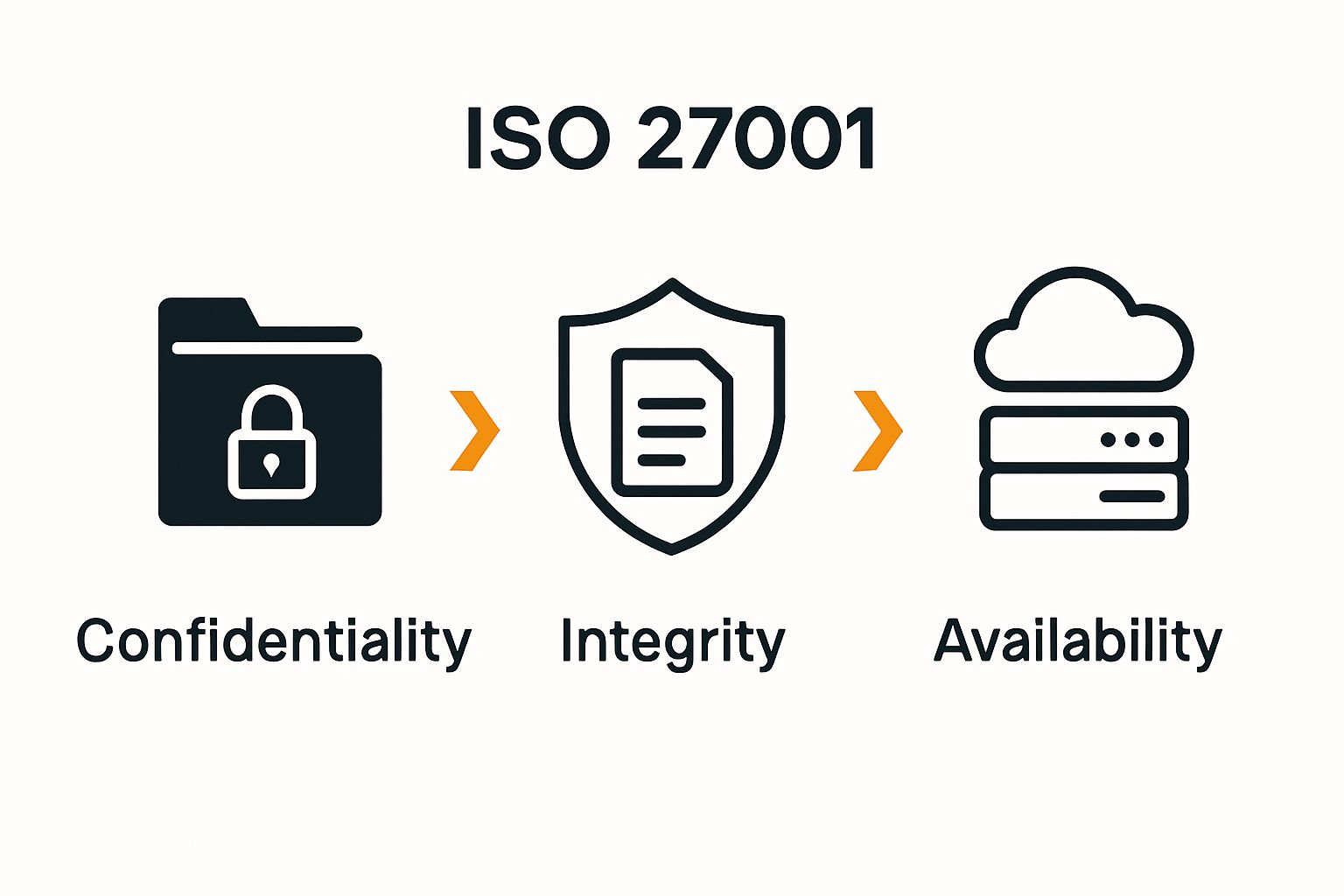
ISO 27001 represents a critical international standard for information security management, providing organizations with a systematic approach to protecting sensitive data and managing security risks. ISO/IEC developed this comprehensive framework to help businesses establish, implement, maintain, and continuously improve their information security management systems (ISMS).
Understanding the Core Purpose
At its fundamental level, ISO 27001 serves as a strategic blueprint for organizations seeking to safeguard their digital and physical information assets. The standard focuses on creating a robust risk management process that identifies potential security vulnerabilities, implements protective controls, and establishes ongoing monitoring mechanisms.
Key objectives of ISO 27001 include:
- Protecting confidential business information
- Ensuring data integrity across organizational systems
- Maintaining consistent security performance
- Demonstrating regulatory compliance to stakeholders
- Reducing potential financial and reputational risks associated with data breaches
Comprehensive Security Management
Unlike generic security guidelines, ISO 27001 provides a systematic methodology for managing information security. The standard recognizes that security is not a one-time achievement but a continuous process requiring regular assessment, adaptation, and improvement. Organizations must conduct periodic risk assessments, develop strategic control mechanisms, and maintain comprehensive documentation of their security practices.
Research from the International Organization for Standardization indicates that successful implementation requires a holistic approach, integrating technological solutions, organizational policies, and human behavior management. By adopting ISO 27001, companies can create a standardized framework that addresses complex security challenges across different operational contexts.
The Importance of ISO 27001 Certification for Businesses
ISO 27001 certification has become a critical strategic asset for modern organizations navigating increasingly complex cybersecurity landscapes. By obtaining this internationally recognized standard, businesses demonstrate a proactive commitment to protecting sensitive information and managing potential security risks effectively. Cybersecurity research indicates that organizations with robust information security frameworks significantly reduce their vulnerability to data breaches and cyber threats.
Strategic Business Benefits
Companies pursuing ISO 27001 certification gain substantial competitive advantages in today's digital marketplace. The certification serves as a powerful signal to clients, partners, and stakeholders that an organization takes information security seriously and has implemented comprehensive protective measures.
Key strategic advantages include:
- Enhanced credibility and trust among potential clients
- Improved risk management capabilities
- Systematic approach to identifying and mitigating security vulnerabilities
- Potential reduction in cybersecurity insurance premiums
- Compliance with global regulatory requirements
Competitive Differentiation and Trust Building
In an era where data breaches can cause catastrophic reputational and financial damage, ISO 27001 certification provides a measurable framework for establishing organizational trustworthiness. Organizations that invest in this certification demonstrate they understand the critical importance of information security as a core business strategy. Learn more about security compliance standards in our comprehensive guide to understand how different certifications contribute to comprehensive security management.
Moreover, the certification process compels organizations to develop robust internal processes, encouraging continuous improvement and creating a culture of security awareness. This holistic approach not only protects against potential threats but also positions businesses as responsible and forward-thinking entities in their respective industries.
Core Elements of ISO 27001 Certification Requirements
ISO 27001 certification demands a comprehensive and structured approach to information security management. International standards documentation outlines specific core elements that organizations must meticulously address to achieve and maintain certification.
Fundamental Management Framework
The certification process centers around establishing a robust Information Security Management System (ISMS). This framework requires organizations to systematically identify, analyze, and mitigate information security risks across their entire operational ecosystem. Companies must develop a holistic strategy that encompasses technological infrastructure, organizational policies, and human behavior.
Key components of the ISMS include:
- Comprehensive risk assessment methodology
- Clear security policies and objectives
- Defined organizational roles and responsibilities
- Continuous monitoring and improvement mechanisms
- Documented procedures for incident response
Risk Assessment and Control Implementation
A critical aspect of ISO 27001 requirements is the detailed risk assessment process. Organizations must conduct thorough evaluations of potential information security threats, systematically analyzing vulnerabilities across digital and physical information assets. Dive deeper into compliance strategies with our comprehensive security guide to understand how different frameworks intersect.
This assessment involves identifying potential risks, evaluating their potential impact, and developing targeted control mechanisms. The standard mandates that organizations implement a structured approach to risk management, ensuring that security measures are proportionate, effective, and aligned with specific organizational contexts.
Successful certification requires demonstrating not just the existence of these systems, but also their ongoing effectiveness through regular internal audits, management reviews, and continuous improvement processes.
Below is a breakdown of the core elements required for ISO 27001 certification, highlighting each component and its primary focus within the management system.
| Element | Description |
|---|---|
| Information Security Management System (ISMS) | Formal framework for managing and protecting information assets |
| Risk Assessment | Process for identifying, analyzing, and prioritizing potential security risks |
| Security Policies and Objectives | Clear guidance and goals for organizational security practices |
| Defined Roles and Responsibilities | Allocation of security duties and accountability across the organization |
| Continuous Monitoring & Improvement | Ongoing evaluation and enhancement of security measures |
| Incident Response Procedures | Documented steps for addressing security events and breaches |
Organizations must prove they have established a dynamic, responsive approach to information security that can adapt to evolving technological and threat landscapes.

How ISO 27001 Works in Risk Management and Compliance
ISO 27001 provides a systematic methodology for organizations to manage information security risks through a structured, comprehensive approach. Global risk management research highlights the critical importance of establishing robust frameworks that can anticipate, identify, and mitigate potential security vulnerabilities.
Risk Identification and Assessment Process
The risk management framework within ISO 27001 emphasizes a proactive and dynamic approach to security challenges. Organizations must systematically analyze their entire information ecosystem, identifying potential threats across technological infrastructure, human interactions, and organizational processes. This comprehensive evaluation goes beyond traditional security measures by requiring a holistic understanding of potential vulnerabilities.
Key steps in the risk identification process include:
- Cataloging all information assets
- Analyzing potential internal and external threats
- Evaluating the potential impact of security breaches
- Determining the likelihood of specific risk scenarios
- Prioritizing risks based on their potential organizational consequences
Compliance and Control Implementation
Implementing ISO 27001 requires organizations to develop a detailed control framework that addresses identified risks. This involves creating specific, measurable security protocols that can be consistently applied across the organization. Learn more about comprehensive governance strategies to enhance your understanding of integrated risk management approaches.
The standard mandates a continuous improvement cycle, where organizations must regularly review and update their risk management strategies. This approach recognizes that security is not a static concept but a dynamic process that must evolve with changing technological landscapes and emerging threat environments. Successful implementation demonstrates an organization's commitment to maintaining the highest standards of information security and regulatory compliance.
Real-World Benefits of Achieving ISO 27001 Certification
ISO 27001 certification transcends theoretical security frameworks, delivering tangible, strategic advantages for organizations across diverse industries. International cybersecurity analysis underscores the critical importance of robust information security strategies in mitigating potential financial and reputational risks.
Competitive Market Advantages
Achieving ISO 27001 certification provides organizations with a significant competitive differentiation in increasingly demanding markets. Businesses demonstrate their commitment to rigorous information security practices, which becomes a powerful trust signal for potential clients, partners, and stakeholders. This certification serves as an independent validation of an organization's systematic approach to managing sensitive information and protecting critical assets.
Key competitive advantages include:
- Enhanced credibility in tender processes
- Increased customer confidence
- Potential reduction in cybersecurity insurance premiums
- Improved ability to secure high-value contracts
- Demonstrated compliance with international security standards
Operational and Financial Resilience
Beyond market perception, ISO 27001 certification delivers substantive operational benefits. Learn more about comprehensive compliance strategies to understand how standardized frameworks contribute to organizational resilience.
The certification process compels organizations to develop structured risk management protocols, systematic incident response mechanisms, and continuous improvement processes. These improvements translate into reduced vulnerability to cyber incidents, minimized potential financial losses, and enhanced organizational agility in responding to emerging security challenges. Companies that successfully implement ISO 27001 standards typically experience improved internal communication, more transparent security governance, and a culture of proactive risk management.
The following table summarizes the key strategic benefits businesses gain from achieving ISO 27001 certification as discussed in the article.
| Strategic Benefit | Explanation |
|---|---|
| Enhanced Credibility and Trust | Boosts company reputation with clients and partners by showcasing strong security practices |
| Improved Risk Management | Provides a systematic approach to identifying and addressing security vulnerabilities |
| Competitive Market Differentiation | Helps win high-value contracts and gain a market edge through third-party validation |
| Regulatory Compliance | Demonstrates conformance to international standards and global regulations |
| Reduced Financial Risk | May lower cyber insurance premiums and mitigate risks of expensive data breaches |
| Cultural Shift Toward Security | Fosters ongoing security awareness and continuous improvement within the organization |
Bridge the Gap Between ISO 27001 Compliance and Effortless Security Reviews
You have learned how ISO 27001 certification demands a structured approach to risk management, detailed documentation, and constant improvement. But when it comes to security questionnaires, many organizations face slow processes, human error, and overwhelming complexity. The stakes are high. Responding to security reviews is crucial for demonstrating trust, winning client contracts, and maintaining regulatory compliance—all points highlighted throughout this article.
Why let manual tasks or scattered tools make this process harder? With Skypher, you streamline the entire security questionnaire workflow. Our AI-driven automation helps you address hundreds of information security requirements in minutes, ensuring your ISO 27001 controls are accurately showcased with every response. Connect instantly to platforms like OneTrust or ServiceNow, enable real-time collaboration, and build a custom Trust Center to strengthen your client trust—all in one platform. Discover how AI-powered automation makes ISO 27001 compliance seamless and fast. Take the next step now and let Skypher turn your compliance into a competitive advantage.
Frequently Asked Questions
What is ISO 27001 certification?
ISO 27001 certification is an internationally recognized standard for establishing, implementing, maintaining, and continuously improving an Information Security Management System (ISMS) to protect sensitive information and manage security risks.
Why is ISO 27001 certification important for businesses?
ISO 27001 certification demonstrates a proactive commitment to information security, enhances credibility with clients, and provides competitive advantages while helping organizations comply with regulatory requirements and reduce vulnerabilities to data breaches.
What are the core requirements for achieving ISO 27001 certification?
Core requirements for ISO 27001 certification include establishing an ISMS, conducting thorough risk assessments, implementing effective security controls, defining security policies and objectives, and ensuring continuous monitoring and improvement of security practices.
How can organizations ensure ongoing compliance with ISO 27001?
Organizations can ensure ongoing compliance with ISO 27001 by conducting regular internal audits, management reviews, updating risk management strategies, and fostering a culture of security awareness and continuous improvement within the organization.