
Every business with critical data faces a silent threat. ISO 27001 controls are at the heart of how smart companies guard their information and stay a step ahead of cybercriminals. Even so, most people do not realize that implementing these controls can reduce your risk of a data breach by up to 60 percent according to Gartner. It is not just about following the rules. These controls turn security into a real advantage that can reshape your entire approach to risk.
Table of Contents
- What are ISO 27001 Controls and Their Purpose?
- The Importance of ISO 27001 Controls in Risk Management
- Key Concepts of ISO 27001 Controls and Their Implementation
- Real-World Applications of ISO 27001 Controls in B2B Companies
Quick Summary
| Takeaway | Explanation |
|---|---|
| ISO 27001 controls reduce data breach risks | Implementing these controls can lower the chances of data breaches by up to 60%. |
| Focus on comprehensive risk management | A structured methodology identifies and mitigates vulnerabilities, enhancing overall information security. |
| Adaptable across various industries | The framework can be tailored to suit businesses of all sizes and sectors, making it flexible. |
| Continuous improvement is crucial | Regularly assessing security protocols ensures effective protection against evolving cyber threats. |
| Builds client trust and competitive edge | Demonstrating commitment to information security can attract clients and partners by enhancing reputation. |
What are ISO 27001 Controls and Their Purpose?
ISO 27001 controls represent a comprehensive framework for managing information security risks within organizations. These standardized guidelines provide a systematic approach to protecting sensitive data, ensuring confidentiality, integrity, and availability of critical business information.
Understanding the Core Concept
At its fundamental level, ISO 27001 controls are a set of specific security requirements and protective measures designed to mitigate potential cybersecurity threats. Gartner Research indicates that organizations implementing robust information security controls can reduce their risk of data breaches by up to 60%. These controls span multiple domains, addressing technological, operational, and human elements of information security.
The primary purpose of these controls is to establish a structured methodology for identifying, assessing, and managing information security risks. They help organizations develop a proactive approach to cybersecurity, moving beyond reactive strategies and creating a comprehensive security ecosystem.
Key Characteristics of ISO 27001 Controls
ISO 27001 controls are characterized by several critical attributes that distinguish them from generic security guidelines:
- Comprehensive Risk Management: Systematic identification and mitigation of potential security vulnerabilities
- Adaptability: Flexible framework applicable across various industries and organizational sizes
- Continuous Improvement: Emphasis on ongoing assessment and refinement of security protocols
International Organization for Standardization defines these controls as more than just technical safeguards. They represent a holistic approach to information security that integrates people, processes, and technology. By implementing these controls, organizations can create a resilient security infrastructure that protects against evolving cyber threats while maintaining operational efficiency.
The framework encompasses 114 specific controls organized into 14 distinct categories, ranging from access control and cryptography to human resource security and incident management.
The following table summarizes the 14 categories of ISO 27001 controls, offering a quick reference for understanding the breadth of security domains addressed by the standard.
| Category | Focus Area Description |
|---|---|
| Access Control | Restricting unauthorized access to information and systems |
| Cryptography | Applying encryption to protect information assets |
| Physical and Environmental Security | Safeguarding physical locations and equipment |
| Operations Security | Ensuring secure operations and management of IT systems |
| Communications Security | Protecting data in networks and information transfer |
| System Acquisition, Development, and Maintenance | Securing new systems throughout their lifecycle |
| Supplier Relationships | Managing security risks related to third-party vendors |
| Information Security Incident Management | Responding to and managing security incidents |
| Information Security Aspects of Business Continuity | Ensuring operations during and after disruptions |
| Human Resource Security | Managing security risks involving employees and contractors |
| Asset Management | Inventorying and controlling company information assets |
| Compliance | Adhering to laws, regulations, and contractual obligations |
| Organization of Information Security | Defining internal structure and roles for information security |
| Information Security Policy | Defining overarching objectives and rules for security |
The Importance of ISO 27001 Controls in Risk Management
ISO 27001 controls play a pivotal role in transforming organizational risk management from a reactive approach to a strategic, proactive framework. By providing a structured methodology for identifying, assessing, and mitigating information security risks, these controls enable businesses to build robust defensive strategies.
Strategic Risk Identification
Risk management through ISO 27001 controls involves a systematic process of understanding potential vulnerabilities within an organization's information ecosystem. PwC's Global Risk Survey reveals that organizations implementing comprehensive risk identification frameworks can reduce potential financial losses by up to 45%. This approach goes beyond traditional security measures by creating a holistic view of potential threats across technological, human, and procedural domains.
Comprehensive Protection Mechanisms
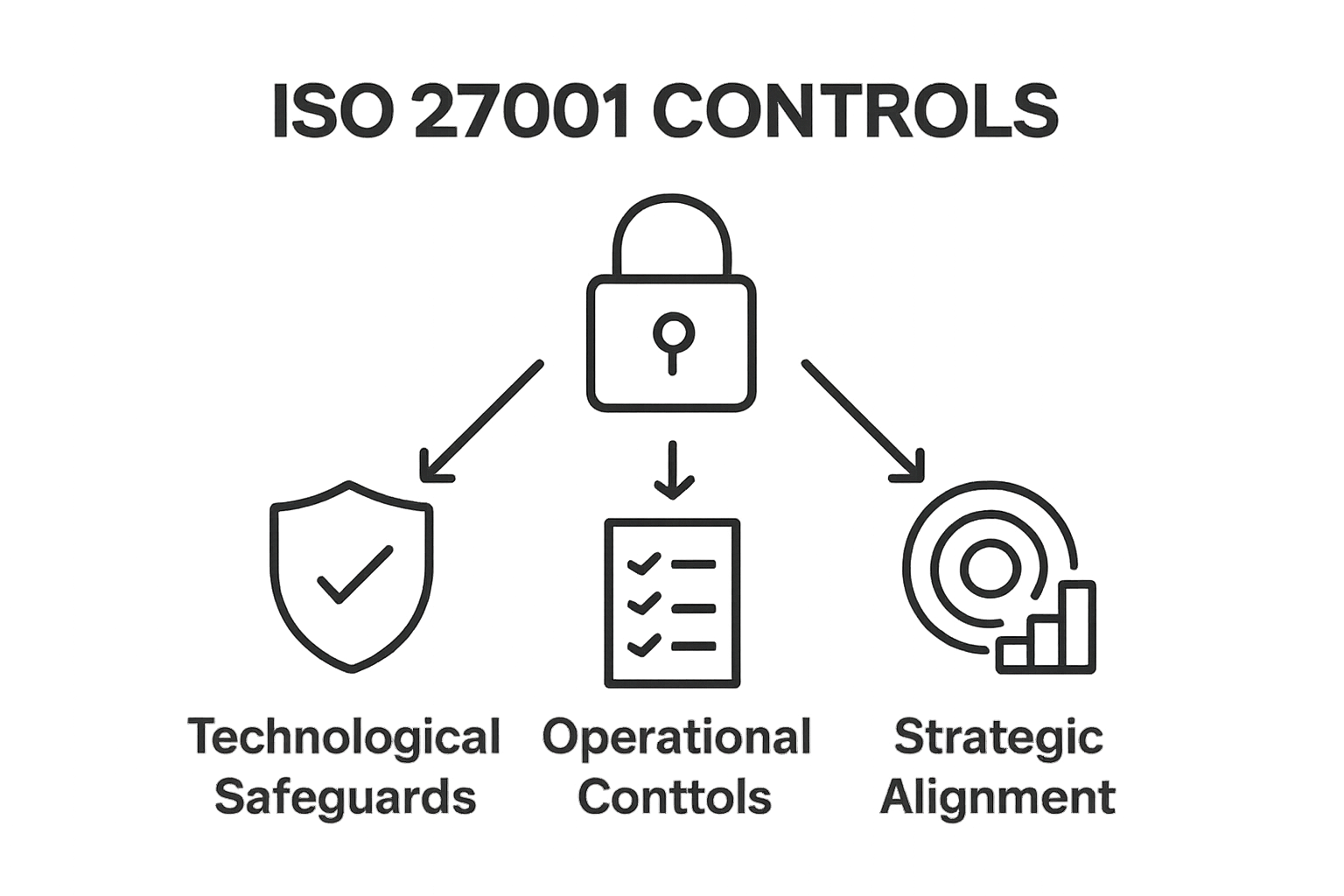
ISO 27001 controls offer multifaceted protection mechanisms that address various risk dimensions:
- Technological Safeguards: Advanced security protocols for digital infrastructure
- Operational Controls: Processes that minimize human error and potential security breaches
- Strategic Alignment: Ensuring information security strategies match business objectives
The framework's strength lies in its ability to create a dynamic and adaptive risk management environment.
 Organizations can continuously assess and update their security strategies, ensuring they remain resilient against evolving cyber threats.
Financial and Reputational Risk Mitigation
Cybersecurity Ventures estimates that global cybercrime damages could reach astronomical figures annually. ISO 27001 controls provide a critical defense mechanism that not only protects against potential financial losses but also safeguards an organization's reputation. By demonstrating a commitment to rigorous information security standards, businesses can build trust with stakeholders, clients, and partners, transforming risk management from a compliance requirement into a strategic competitive advantage.
This table highlights key statistical findings cited in the article related to the effectiveness and impact of ISO 27001 controls, providing a clear view of their measurable business value.
| Statistic/Study Source | Security Outcome or Impact | Percentage/Result |
|---|---|---|
| Gartner Research | Reduction in risk of data breach | Up to 60% |
| PwC Global Risk Survey | Reduction in potential financial losses | Up to 45% |
| Gartner Research (Software Sector) | Reduction of security incidents in software firms | Up to 55% |
| Cybersecurity Ventures | Projected annual damage due to cybercrime globally | Trillions USD |
Key Concepts of ISO 27001 Controls and Their Implementation
ISO 27001 controls represent a sophisticated framework for information security management, designed to provide organizations with a structured approach to protecting their critical digital assets. Understanding these key concepts is crucial for developing an effective and comprehensive security strategy.
Risk Assessment and Management
The foundation of ISO 27001 controls lies in a systematic risk assessment process. Organizations must comprehensively identify potential security vulnerabilities, evaluate their potential impact, and develop targeted mitigation strategies. NIST Cybersecurity Framework emphasizes that this approach transforms risk management from a reactive to a proactive discipline, enabling businesses to anticipate and neutralize potential threats before they materialize.
Core Implementation Principles
Successful implementation of ISO 27001 controls requires adherence to several critical principles:
- Continuous Evaluation: Regular assessment of security controls and their effectiveness
- Context Specificity: Tailoring controls to the unique organizational environment
- Comprehensive Coverage: Addressing technological, human, and procedural security dimensions
These principles ensure that information security is not a static concept but a dynamic, evolving strategy that adapts to changing technological landscapes and emerging threat vectors.
Organizational Governance and Documentation
Effective implementation of ISO 27001 controls demands robust organizational governance. This involves creating clear documentation that outlines security policies, defines roles and responsibilities, and establishes a framework for ongoing monitoring and improvement. By establishing a structured approach to information security, organizations can create a culture of security awareness that permeates every level of the enterprise, transforming security from a technical requirement to a strategic organizational capability.
Real-World Applications of ISO 27001 Controls in B2B Companies
ISO 27001 controls have become an essential framework for B2B companies seeking to establish robust information security strategies. By translating theoretical security principles into practical, actionable measures, organizations can effectively protect their digital assets and build trust with clients and partners.
Technology and Software Sector Implementation
In the technology sector, ISO 27001 controls provide a critical mechanism for managing complex information security challenges. Gartner Research indicates that software companies implementing comprehensive ISO 27001 frameworks can reduce security incidents by up to 55%. These controls enable software firms to create secure development environments, protect intellectual property, and demonstrate a commitment to rigorous cybersecurity standards.
Client Trust and Competitive Advantage
B2B companies leverage ISO 27001 controls as a strategic tool for building client confidence. These controls offer tangible evidence of an organization's dedication to protecting sensitive information. By understanding security questionnaire challenges, businesses can streamline their compliance processes and differentiate themselves in competitive markets.
Key applications across B2B sectors include:
- Cloud Service Providers: Ensuring data privacy and infrastructure security
- Financial Technology: Protecting sensitive financial transactions and customer data
- Healthcare Technology: Maintaining compliance with stringent data protection regulations
Risk Mitigation in Collaborative Environments
ISO 27001 controls are particularly crucial in collaborative B2B ecosystems where multiple organizations share digital platforms and sensitive information. By establishing standardized security protocols, companies can create secure communication channels, manage vendor risks, and ensure consistent protection across complex technological networks. This approach transforms information security from a defensive mechanism into a strategic business enabler, allowing organizations to pursue innovative partnerships with greater confidence and reduced potential for security breaches.
Transform Your ISO 27001 Controls into Real Business Advantage with Skypher
Many companies understand the need for ISO 27001 controls, yet struggle to automate, document, and communicate their security practices at scale. If your organization wants to stay ahead of cybersecurity risks, but feels bogged down by lengthy security questionnaires or inefficient collaboration, you are not alone. The article explained how effective implementation and governance are essential for both confidence and compliance. Now, you can bridge the gap between ISO 27001 best practices and real-world operations with Skypher’s specialized platform.
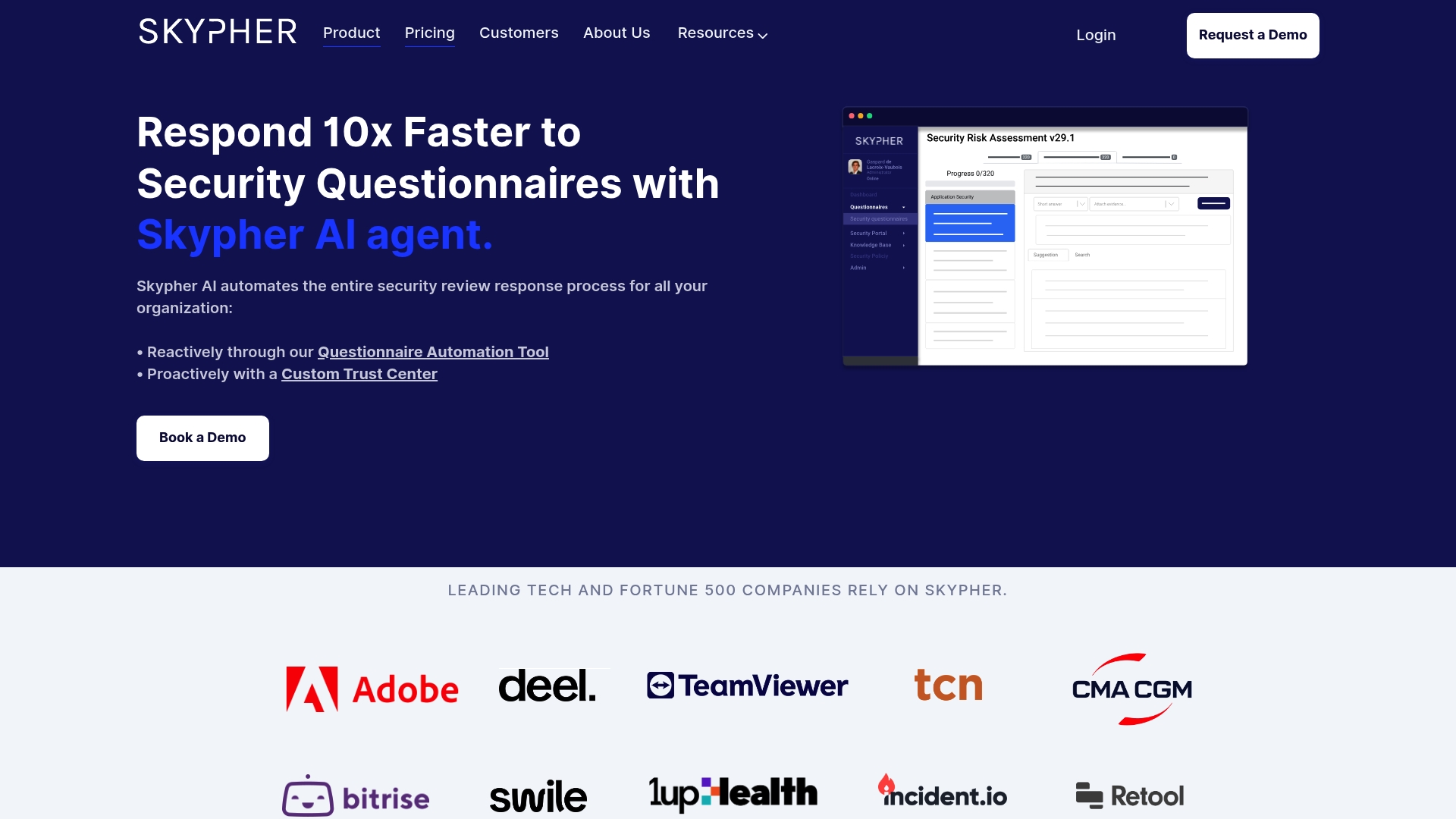
Experience firsthand how Skypher’s AI Questionnaire Automation Tool allows your team to answer complex questionnaires in under a minute, centralize documentation, and maintain a seamless workflow with integrations for major tools like Slack, ServiceNow, and more. Let our solution support your journey in proactive risk management, while you build trust with partners and clients. Take your next step toward efficient security compliance and discover what Skypher can do for your business today.
Frequently Asked Questions
What are ISO 27001 controls?
ISO 27001 controls are a set of standardized guidelines designed to manage information security risks within organizations. They help ensure the confidentiality, integrity, and availability of sensitive business data.
Why are ISO 27001 controls important for risk management?
ISO 27001 controls provide a structured methodology for identifying, assessing, and mitigating information security risks, enabling organizations to adopt a proactive approach to cybersecurity and protect against potential threats.
How many specific controls are included in the ISO 27001 framework?
The ISO 27001 framework encompasses 114 specific controls organized into 14 distinct categories, addressing various aspects of information security such as access control, incident management, and cryptography.
How can organizations implement ISO 27001 controls effectively?
Effective implementation requires continuous evaluation of security measures, tailoring controls to the unique organizational context, and maintaining robust governance through clear documentation that outlines security policies and responsibilities.
Recommended
- Understanding SOC 2 AICPA: Your Guide to Compliance
- The different formats & mistakes made when writing or answering security questionnaires
- Smart Security Knowledge Base - Saasy - Webflow HTML Website Template
- Business - Saasy - Webflow HTML Website Template
- What is Access Control? Understanding Its Importance for Businesses - IT Start
- Confidential Waste Risk Management: Essential Guide for UK Businesses 2025 - Venture Waste