

SOC 1 Reports are often treated like paperwork, yet these documents sit at the heart of financial trust for service organizations. Shockingly, companies with thorough SOC 1 documentation are significantly more likely to secure major contracts and attract investors, according to Deloitte's research. Most people miss that a SOC 1 Report is not just a checkbox for compliance but a powerful tool that can transform how your business is perceived by partners and clients.
Table of Contents
- What is a SOC 1 Report and Its Purpose?
- The Importance of SOC 1 Reports in Business Operations
- Key Components of a SOC 1 Report Explained
- How SOC 1 Reports Support Risk and Compliance Efforts
Quick Summary
| Takeaway | Explanation |
|---|---|
| SOC 1 Reports ensure financial compliance. | They evaluate the internal controls of service organizations, especially those affecting financial reporting accuracy and integrity. |
| Type I and Type II serve different needs. | Type I assesses control design at a specific time, while Type II evaluates design and effectiveness over a set period. |
| They enhance stakeholder confidence and trust. | By demonstrating strong internal controls, SOC 1 Reports offer evidence of an organization’s commitment to effective financial management. |
| These reports support proactive risk management. | Organizations can identify vulnerabilities in financial processes and improve controls to mitigate risks effectively. |
| SOC 1 Reports are competitive differentiators. | They help organizations win contracts and attract investments by showcasing a commitment to compliance and operational excellence. |
What is a SOC 1 Report and Its Purpose?
A SOC 1 Report represents a critical financial compliance document that evaluates the internal controls of service organizations, specifically those impacting financial reporting. Learn more about our comprehensive compliance guide to deepen your understanding of these essential assessments.
Financial Control Evaluation
At its core, a SOC 1 Report provides an independent assessment of a service organization's control environment. Designed primarily for financial auditors and stakeholders, this report examines how a company manages and protects financial data, ensuring accuracy, confidentiality, and integrity of financial information processed through their systems.
Types of SOC 1 Reports
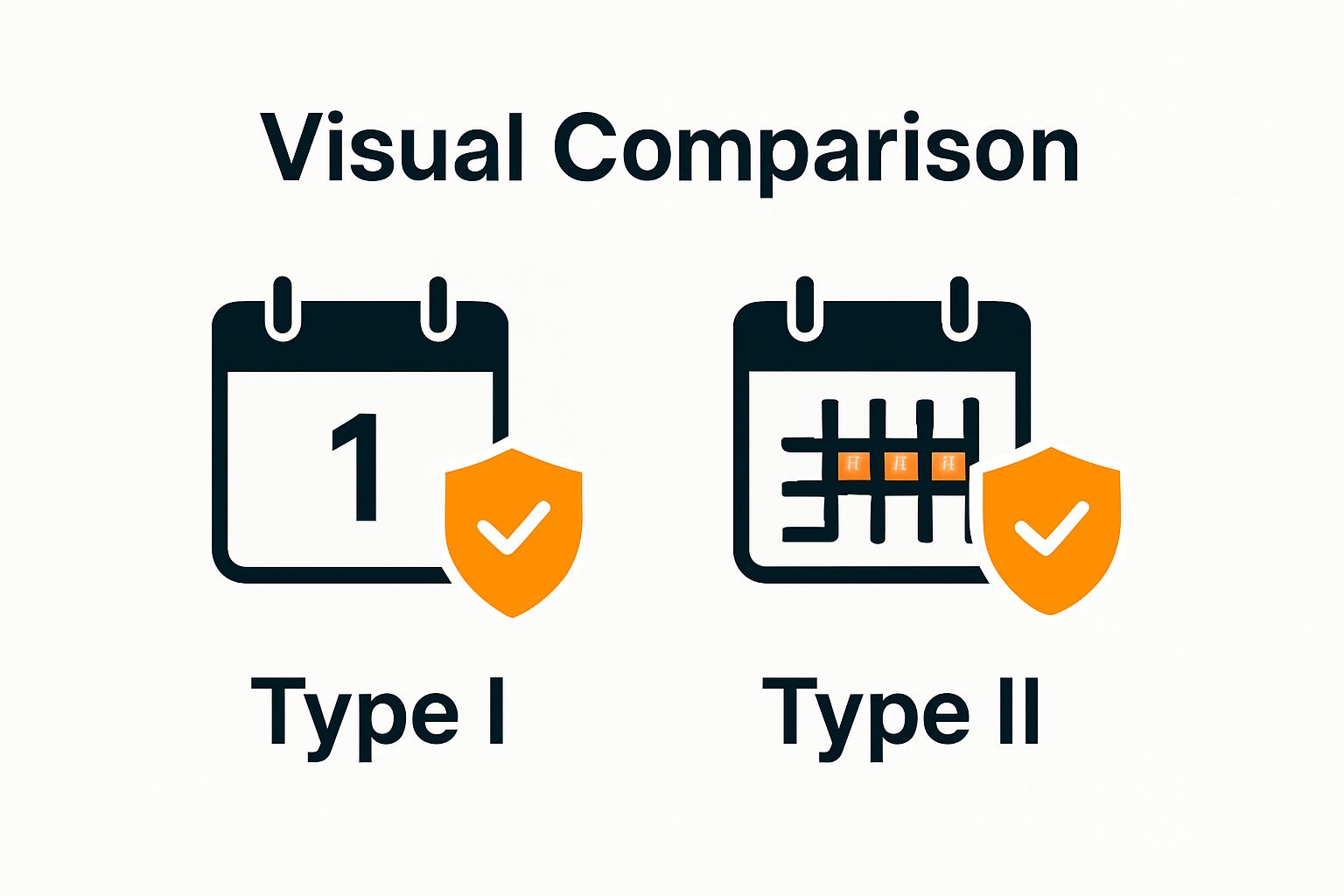
SOC 1 Reports are divided into two distinct types, each serving a specific purpose
 :
:
- Type I Report: Evaluates the design of internal controls at a specific point in time
- Type II Report: Assesses both the design and operational effectiveness of controls over a defined period, typically 6-12 months
Purpose and Importance
The primary purpose of a SOC 1 Report is to provide assurance to stakeholders that a service organization maintains robust financial reporting controls. According to AICPA guidelines, these reports are critical for demonstrating organizational reliability, particularly for companies providing financial services, cloud computing, or data processing solutions.
For businesses that rely on third-party service providers, a SOC 1 Report offers transparency into the potential risks and control mechanisms that might impact their financial statements. This comprehensive evaluation helps organizations make informed decisions about vendor selection and ongoing risk management.
The Importance of SOC 1 Reports in Business Operations
SOC 1 Reports play a pivotal role in establishing trust, transparency, and operational reliability across modern business ecosystems. Learn more about security compliance strategies to comprehend the broader implications of these critical assessments.
Building Stakeholder Confidence
For organizations operating in complex financial and technological environments, SOC 1 Reports serve as a critical mechanism for demonstrating robust internal control frameworks. These reports provide external stakeholders concrete evidence of an organization's commitment to maintaining high standards of financial reporting integrity. By undergoing a rigorous independent evaluation, companies signal their dedication to transparency and accountability.
Risk Management and Compliance
The strategic importance of SOC 1 Reports extends far beyond simple documentation. These assessments help organizations identify potential vulnerabilities in their financial reporting processes, enabling proactive risk mitigation. Key risk management benefits include:
- Enhanced Internal Controls: Identifying and addressing potential weaknesses in financial systems
- Regulatory Compliance: Demonstrating adherence to industry standards and regulatory requirements
- Vendor Assessment: Providing a standardized framework for evaluating third-party service providers
Competitive Advantage and Business Relationships
In an increasingly interconnected business landscape, SOC 1 Reports have become a critical differentiator. According to Deloitte's compliance research, organizations with comprehensive control documentation are more likely to win contracts, attract investors, and establish trust with potential business partners. By proactively pursuing these assessments, companies can transform compliance from a routine requirement into a strategic business asset that opens doors to new opportunities and strengthens existing relationships.
Key Components of a SOC 1 Report Explained
A SOC 1 Report comprises several critical elements that provide a comprehensive view of an organization's internal financial control mechanisms. Explore our guide on security compliance strategies to gain deeper insights into these intricate reporting frameworks.
Detailed Report Structure
The SOC 1 Report is meticulously organized to offer transparent and comprehensive insights into an organization's control environment. According to NIST guidelines, these reports typically include several key sections that provide a holistic assessment of financial control systems.
Critical Report Components
Each SOC 1 Report is composed of essential elements that collectively demonstrate an organization's commitment to financial integrity and operational excellence:
- Management's System Description: A detailed narrative explaining the organization's control objectives and the systems designed to achieve them
- Auditor's Independent Opinion: A professional assessment of the effectiveness and design of internal controls
- Control Objectives: Specific, measurable goals that outline the intended purpose of each control mechanism
- Detailed Control Descriptions: Comprehensive explanations of how each control is implemented and maintained
Interpreting the Technical Narrative
Understanding a SOC 1 Report requires careful analysis of its technical narrative.
Financial professionals and stakeholders use these reports to evaluate an organization's risk management capabilities, identify potential vulnerabilities, and assess the reliability of financial reporting processes. The report serves as a critical tool for due diligence, enabling businesses to make informed decisions about potential partnerships, investments, and operational strategies.
This table outlines the critical components typically included in a SOC 1 Report, summarizing the role and focus of each section.
| Component | Description |
|---|---|
| Management's System Description | Narrative outlining control objectives and related systems |
| Auditor's Independent Opinion | Professional evaluation of control design and operating effectiveness |
| Control Objectives | Measurable goals for each internal control |
| Detailed Control Descriptions | Comprehensive explanations of how each control is implemented and maintained |
| Technical Narrative | Analysis enabling stakeholders to assess risk and reliability of financial reporting |
How SOC 1 Reports Support Risk and Compliance Efforts
SOC 1 Reports are instrumental in establishing a comprehensive framework for organizational risk management and regulatory compliance. Learn more about advanced compliance strategies to gain comprehensive insights into these critical assessment processes.
Regulatory Alignment and Risk Mitigation
In an increasingly complex regulatory landscape, SOC 1 Reports provide organizations with a structured approach to demonstrating compliance and managing financial reporting risks. These reports offer a systematic method for identifying, assessing, and addressing potential vulnerabilities within financial control systems. According to PwC's compliance research, organizations that implement robust internal control frameworks can significantly reduce their exposure to financial and operational risks.
Key Risk Management Strategies
SOC 1 Reports support comprehensive risk management through several critical approaches:
- Proactive Vulnerability Detection: Identifying potential weaknesses in financial reporting processes before they become critical issues
- Comprehensive Control Assessment: Providing a detailed evaluation of existing control mechanisms and their effectiveness
- Standardized Risk Evaluation: Creating a consistent framework for assessing and monitoring organizational risk
Compliance and Organizational Resilience
Beyond risk identification, SOC 1 Reports play a crucial role in building organizational resilience. By providing a transparent and comprehensive view of internal control systems, these reports enable businesses to demonstrate their commitment to financial integrity, regulatory compliance, and best practices.
 This approach not only helps organizations meet regulatory requirements but also builds trust with stakeholders, investors, and potential business partners by showcasing a mature and responsible approach to financial management and risk control.
Transform Your SOC 1 Preparation with Skypher’s AI Automation
Are you struggling to gather detailed SOC 1 documentation or worried about gaps in your internal controls? As discussed in our comprehensive guide, ensuring the accuracy and completeness of a SOC 1 Report is essential for winning trust and meeting compliance standards. But manually responding to security questionnaires and assembling the right evidence can drain your team’s energy and delay critical business relationships.
Imagine handling even the most complex security questionnaires with ease and accuracy. Skypher's SaaS platform uses advanced AI to automate your entire questionnaire process, so you can provide rock-solid proof of your control environment in minutes. Instantly generate accurate responses, collaborate with your team in real time, and streamline compliance efforts for your next SOC 1 audit. Take the next step towards efficient compliance. Book your Skypher demo today and power up your security response with the tool trusted by leading tech and finance teams.
Frequently Asked Questions
What is the purpose of a SOC 1 Report?
A SOC 1 Report evaluates a service organization's internal controls related to financial reporting. To gain assurance regarding financial data integrity and compliance, consider obtaining a SOC 1 Report from your service providers.
How do I interpret the results of a SOC 1 Report?
Interpreting a SOC 1 Report involves analyzing sections such as the auditor's opinion and control objectives. Focus on identifying the effectiveness of controls and any noted weaknesses to assess the reliability of financial reporting processes.
What are the differences between a Type I and Type II SOC 1 Report?
A Type I SOC 1 Report evaluates the design of internal controls at a specific point in time, while a Type II Report assesses both design and operational effectiveness over a defined period, typically 6-12 months. Choose a Type II Report for a more comprehensive evaluation of ongoing control effectiveness.
The following table compares the two types of SOC 1 Reports, highlighting their major differences and appropriate use cases.
| Report Type | Scope of Assessment | Period Covered | Primary Purpose |
|---|---|---|---|
| Type I | Evaluates design of internal controls | Specific date | Provides a snapshot of control design |
| Type II | Assesses design and operational effectiveness of controls | 6–12 months | Demonstrates ongoing control effectiveness |
How can I use a SOC 1 Report for vendor assessment?
A SOC 1 Report can help you assess third-party vendors by providing detailed insights into their financial control systems. Review the report’s control descriptions and management's system description to evaluate the risks associated with partnering with these vendors.
What steps should I take if my SOC 1 Report identifies control deficiencies?
If your SOC 1 Report highlights control deficiencies, develop a remediation plan to address these issues promptly. Act quickly by implementing necessary control modifications to mitigate risks, and consider a follow-up assessment within 3-6 months to ensure improvements are effective.
How does a SOC 1 Report contribute to regulatory compliance?
A SOC 1 Report helps demonstrate adherence to financial reporting standards and assists in identifying potential vulnerabilities. Ensure your organization regularly obtains and reviews these reports to maintain compliance across financial operations.