

Software BOM might sound like just another technical checklist. Yet companies that track their software components using a BOM gain a big edge. A single software application can contain hundreds of open source and third party modules, each with potential hidden risks. Most people worry about flashy hacks or cyber attacks, but the real danger often starts with something as ordinary as an outdated library. Knowing exactly what is running under the hood can make or break your strategy.
Table of Contents
- What is Software BOM and Its Components?
- Why Software BOM Matters for B2B Companies
- How Software BOM Enhances Compliance and Risk Management
- Key Concepts and Terminology Related to Software BOM
Quick Summary
| Takeaway | Explanation |
|---|---|
| Software BOM is essential for risk management. | It transforms opaque software supply chains into transparent systems, facilitating proactive vulnerability detection and compliance tracking. |
| Detailed documentation improves software compliance. | Maintaining comprehensive records of components helps organizations meet industry standards and demonstrate due diligence in vendor management. |
| Software BOM enhances strategic decision-making. | Insights from a BOM enable informed technology investments, vendor selection, and overall resilience against potential risks. |
| Granular visibility aids in early risk identification. | By documenting software dependencies, organizations can recognize vulnerabilities quickly and implement effective remediation strategies. |
| Mastering BOM terminology fosters clearer communication. | Understanding key terms allows professionals to navigate software ecosystems with precision and enhances collaborative risk management efforts. |
What is Software BOM and Its Components?
A Software Bill of Materials (software BOM) represents a comprehensive inventory of all software components and dependencies within a technology ecosystem. CISA describes it as a nested inventory that provides critical insights into software composition, enabling organizations to understand the intricate details of their software supply chain.
Understanding Software BOM Fundamentals
At its core, a software BOM functions like an ingredient list for software applications. Similar to how food packaging lists every ingredient and its origin, a software BOM catalogs every software component, including open source libraries, third party modules, and internal code dependencies. These components are meticulously documented with specific details such as version numbers, licensing information, and potential vulnerability markers.
Key characteristics of a comprehensive software BOM include:
- Detailed component identification
- Version tracking
- Origin and provenance documentation
- Licensing information
- Potential security vulnerability references
Technical Components and Structure
A robust software BOM typically includes multiple layers of technical metadata. NIST emphasizes that these documents go beyond simple listings, serving as formal records of software supply chain relationships. The structure often encompasses hierarchical data about software components, including:
- Base software application
- Embedded libraries and frameworks
- External dependencies
- Proprietary and open source modules
- Runtime environment specifications
By creating a transparent and detailed software BOM, organizations can rapidly identify potential security risks, manage software licenses more effectively, and maintain a comprehensive understanding of their technological infrastructure. The systematic documentation provides critical insights for cybersecurity professionals, software developers, and risk management teams seeking to maintain robust and secure software ecosystems.
The following table summarizes the key characteristics and components typically included in a comprehensive Software BOM, providing a quick overview for readers seeking to understand its structure.
| Characteristic/Component | Description |
|---|---|
| Detailed Component Identification | Catalogs every software element within an application |
| Version Tracking | Records version numbers for each component |
| Origin and Provenance Documentation | Documents the source and history of components |
| Licensing Information | Includes details about licensing for compliance |
| Security Vulnerability References | Highlights known vulnerabilities for each component |
| Embedded Libraries and Frameworks | Lists both internal and third-party code libraries |
| Runtime Environment Specifications | Outlines operational environment details to ensure full transparency |
Why Software BOM Matters for B2B Companies
Software Bill of Materials (software BOM) has become a strategic imperative for B2B companies navigating increasingly complex technological ecosystems. OWASP emphasizes that understanding software composition is no longer optional but a critical business requirement for risk management and cybersecurity.
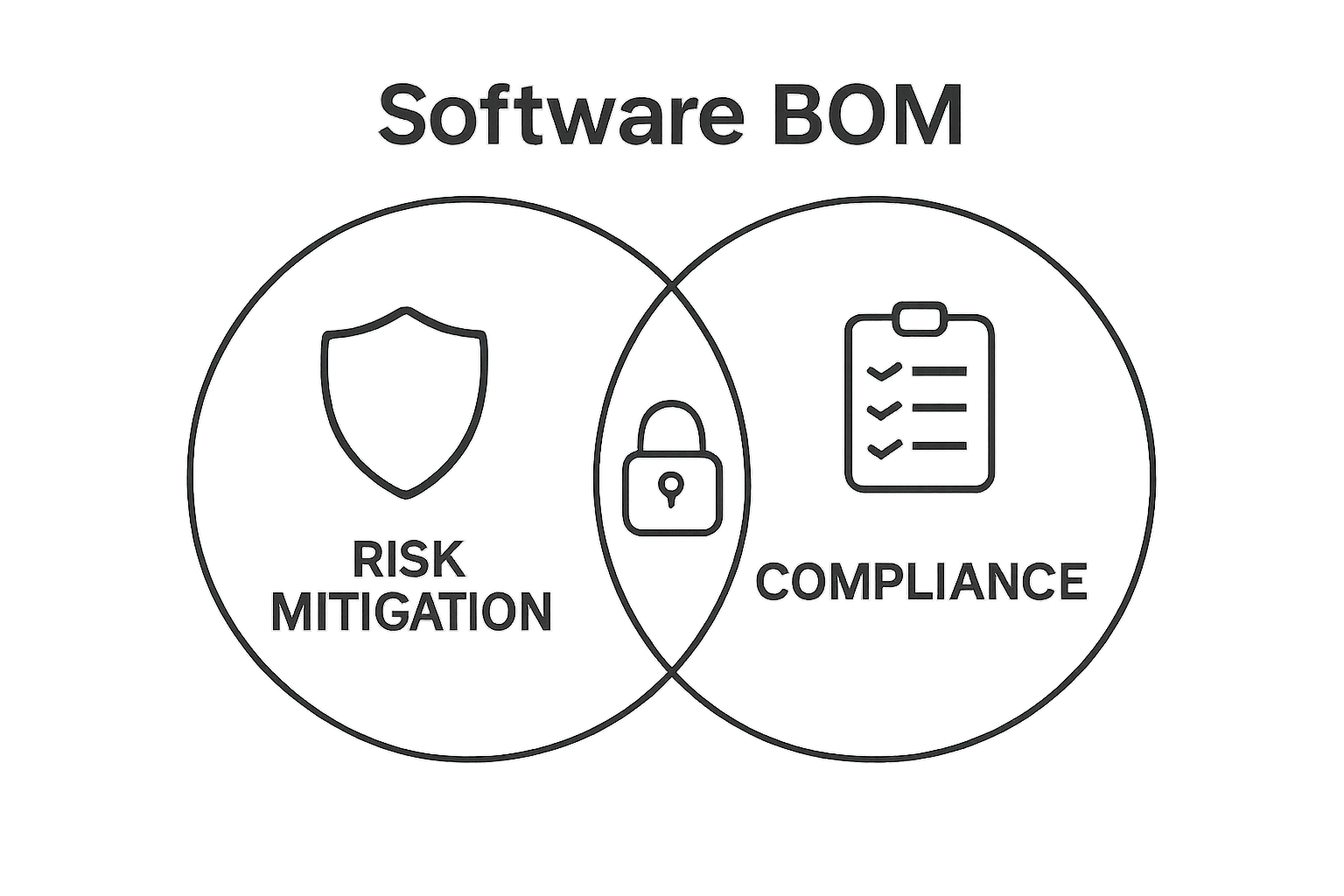
Risk Mitigation and Compliance
For B2B organizations, a software BOM serves as a comprehensive risk management tool. It transforms opaque software supply chains into transparent, manageable environments. By documenting every software component, companies can proactively identify potential vulnerabilities, track licensing requirements, and ensure regulatory compliance. This systematic approach enables businesses to:
- Rapidly detect potential security threats
- Maintain precise software inventory records
- Demonstrate due diligence in vendor risk management
- Streamline software procurement processes
- Validate software component authenticity
Strategic Business Intelligence
NIST highlights that software BOMs provide strategic intelligence beyond traditional security monitoring. They offer insights into software dependencies, version tracking, and potential performance bottlenecks. For B2B companies, this translates into more informed technology investment decisions, improved vendor selection processes, and enhanced overall technological resilience.
By implementing robust software BOM practices, organizations can transform potential software supply chain risks into strategic advantages. The comprehensive documentation enables technology leaders to make data driven decisions, maintain competitive edge, and build trust with clients and partners through transparent and secure software ecosystems.
How Software BOM Enhances Compliance and Risk Management
CISA defines Software Bill of Materials as a critical mechanism for transforming complex software environments into transparent, manageable systems that directly address compliance and risk management challenges. By creating a comprehensive inventory of software components, organizations can systematically approach technological governance and security.
Regulatory Compliance Framework
Software BOMs serve as comprehensive documentation tools that align with increasingly strict regulatory requirements. Organizations can demonstrate due diligence by maintaining detailed records of software components, their origins, versions, and potential vulnerabilities. This systematic approach enables businesses to:
- Meet industry specific compliance standards
- Provide verifiable software component documentation
- Track and manage software licenses effectively
- Establish clear audit trails for software ecosystems
- Validate software supply chain integrity
Proactive Risk Mitigation Strategies
NIST emphasizes that software BOMs are not just documentation tools but strategic risk management instruments. By offering granular visibility into software dependencies, organizations can identify potential security vulnerabilities before they escalate. This proactive approach allows businesses to:
- Quickly identify and address potential security risks
- Understand complex software interdependencies
- Evaluate third party software components
- Implement rapid vulnerability remediation
- Develop comprehensive risk assessment protocols
Through meticulous software BOM implementation, organizations can transform potential security risks into strategic opportunities. The detailed documentation provides technology leaders with actionable insights, enabling them to build more resilient, transparent, and secure technological ecosystems that meet the most rigorous compliance and risk management standards.
Key Concepts and Terminology Related to Software BOM
NTIA provides a comprehensive framework for understanding the complex terminology surrounding Software Bills of Materials. Software BOM terminology encompasses a range of technical and operational definitions that are critical for understanding modern software supply chain management.
Core Software BOM Definitions
Software BOM terminology represents a specialized language that enables precise communication about software components and their relationships. Understanding these key terms allows technology professionals to navigate complex software ecosystems with greater clarity and precision. Critical core definitions include:
- Component Identifier: Unique markers that distinguish specific software elements
- Dependency Mapping: Tracking interconnections between different software modules
- Version Metadata: Detailed information about software component versions
- Provenance Tracking: Documenting the origin and historical development of software components
- Vulnerability Annotation: Marking potential security risks associated with specific software elements
Advanced Taxonomic Concepts
Beyond basic definitions, software BOM terminology encompasses more sophisticated conceptual frameworks. These advanced concepts provide deeper insights into software composition and supply chain dynamics. Key advanced terminology includes:
- Software Composition Analysis (SCA): Systematic examination of software component interactions
- Recursive Dependency Resolution: Identifying nested and indirect software dependencies
- Transitive Dependency Evaluation: Assessing indirect software component relationships
- Supply Chain Integrity Markers: Indicators of software component authenticity and reliability
- Semantic Versioning: Standardized approach to representing software version relationships
By mastering these terminological nuances, organizations can develop more sophisticated approaches to software inventory management, risk assessment, and technological governance.
The table below clarifies essential Software BOM terms and their definitions, helping readers quickly reference core terminology introduced throughout the guide.
| Term | Definition |
|---|---|
| Component Identifier | Unique markers that distinguish specific software elements |
| Dependency Mapping | Tracking interconnections between different software modules |
| Version Metadata | Detailed information about software component versions |
| Provenance Tracking | Documenting the origin and historical development of software components |
| Vulnerability Annotation | Marking potential security risks associated with specific software elements |
| Software Composition Analysis | Systematic examination of software component interactions |
| Semantic Versioning | Standardized approach to representing software version relationships |

Transform Your Software BOM Insights Into Action
Struggling to manage the overwhelming complexity and risk highlighted in your software BOM? Skypher understands the stress of tracking every software component, dependency, and potential vulnerability. Keeping your inventory accurate and up-to-date, while aligning with regulatory demands, can feel impossible—especially when you need speed and precision for every security questionnaire and client review.
Let Skypher turn your challenges into advantages. Our AI Questionnaire Automation Tool connects directly with your software BOM processes, helping you respond to security questionnaires quickly and accurately. Automate documentation, boost communication across teams, and gain trust with clients by showcasing transparency and compliance. Visit Skypher's main site now to see how you can streamline risk management and win new business. Do not let BOM complexity slow you down—discover a smarter way to safeguard your ecosystem today.
Frequently Asked Questions
What is a Software Bill of Materials (Software BOM)?
A Software Bill of Materials (Software BOM) is a detailed inventory of all software components and dependencies within a technology ecosystem, providing insights into software composition and the software supply chain.
Why is a Software BOM important for B2B companies?
A Software BOM is crucial for B2B companies as it helps in risk mitigation, compliance, and managing software supply chains. It enables businesses to identify potential vulnerabilities and ensures regulatory compliance.
What components are typically included in a Software BOM?
A Software BOM typically includes detailed information about software components such as open source libraries, third-party modules, internal code dependencies, version numbers, licensing information, and potential vulnerability markers.
How does a Software BOM enhance compliance and risk management?
A Software BOM enhances compliance and risk management by providing comprehensive documentation of software components, helping organizations meet regulatory standards, maintain audit trails, and proactively identify and mitigate security risks.