

Most advice about vendor management overlooks a crucial reality—nearly 60 percent of American companies experience costly vendor-related risks each year. With business environments becoming more complex, identifying the right vendors and aligning them with organizational goals is more important than ever. This guide cuts through uncertainty to show you exactly how to assess needs, streamline selection, and effectively manage vendor relationships for stronger, safer outcomes.
Table of Contents
- Step 1: Assess organizational requirements and vendor needs
- Step 2: Establish clear vendor selection and onboarding criteria
- Step 3: Implement automated workflows for vendor evaluation
- Step 4: Monitor vendor performance and compliance regularly
- Step 5: Verify and review vendor risk mitigation strategies
Quick Summary
| Key Insight | Explanation |
|---|---|
| 1. Conduct a thorough internal audit | Evaluate all departmental vendor requirements to identify specific management needs. |
| 2. Create a comprehensive vendor assessment framework | Use qualitative and quantitative criteria for a structured vendor evaluation process. |
| 3. Implement automated workflows for efficiency | Automate vendor evaluation to enhance speed, accuracy, and effectiveness in selection. |
| 4. Monitor vendor performance continuously | Establish ongoing evaluations to ensure compliance and performance meet standards. |
| 5. Establish clear risk mitigation strategies | Review and verify vendor risk management processes to protect against potential threats. |
Step 1: Assess organizational requirements and vendor needs
Successfully assessing organizational requirements and vendor needs begins with understanding your company's strategic objectives and risk profile. This critical first step determines how effectively you will manage vendor relationships and mitigate potential vulnerabilities.
Start by conducting a comprehensive internal audit that maps out your organization's specific vendor management requirements. This involves identifying all departments that interact with external vendors and gathering input on their unique needs. Requirements analysis is a critical process that helps determine precise conditions for vendor selection and management. Your audit should examine factors like budget constraints, technological compatibility, security protocols, performance expectations, and compliance standards specific to your industry.
Next, develop a detailed vendor assessment framework that includes quantitative and qualitative evaluation criteria. This framework should cover technical capabilities, financial stability, security practices, and alignment with your organizational goals. Consider creating a scoring matrix that weights different vendor attributes based on their strategic importance. A robust Vendor Management System can help streamline this process by providing centralized tracking and management of vendor data.
Pro tip: Create a cross functional team with representatives from IT, legal, finance, and operations to ensure a holistic approach to vendor requirements assessment that captures diverse organizational perspectives.
Here's a summary of key evaluation criteria essential for vendor management:
| Evaluation Area | Example Considerations | Business Impact |
|---|---|---|
| Technical Compatibility | Integration with existing systems | Reduces operational disruptions |
| Financial Stability | Credit ratings, cash flow analysis | Minimizes financial risk |
| Security Practices | Data protection, cybersecurity audits | Protects against data breaches |
| Compliance Standards | Regulatory certifications, contracts | Prevents legal and reputational risk |
| Performance Metrics | Delivery timelines, quality | Ensures reliable vendor delivery |
Step 2: Establish clear vendor selection and onboarding criteria
Establishing clear vendor selection and onboarding criteria is crucial for creating a robust and secure vendor management process. This step ensures that your organization selects vendors who meet your specific operational and security requirements while maintaining a streamlined integration approach.

Vendor selection involves a structured approach that begins with defining comprehensive requirements that go beyond basic operational needs. Your selection criteria should include technical capabilities, financial stability, security practices, compliance history, and cultural alignment with your organization. Develop a detailed evaluation matrix that assigns weighted scores to different vendor attributes, allowing for objective and systematic assessment. This approach helps you move beyond superficial comparisons and identify vendors who genuinely match your strategic objectives.
The onboarding process requires meticulous planning and documentation. A comprehensive vendor onboarding guide should outline clear expectations, required documentation, system integration protocols, and compliance verification steps. Create standardized onboarding checklists that cover legal agreements, security assessments, performance benchmarks, and communication protocols. These structured processes will help minimize risks and ensure smooth vendor integration into your organizational ecosystem.
Pro tip: Implement a probationary period for new vendors during which you closely monitor their performance, adherence to agreed standards, and alignment with your organizational requirements before finalizing long term partnerships.
Step 3: Implement automated workflows for vendor evaluation
Implementing automated workflows for vendor evaluation transforms your vendor management process from a manual administrative task to a strategic organizational capability. This critical step enables your team to assess potential vendors more efficiently, consistently, and comprehensively.
The vendor selection process comprises several critical phases that can be significantly enhanced through automation. Begin by designing workflow templates that standardize each evaluation stage, from initial vendor research to final selection. These automated workflows should incorporate predefined scoring mechanisms, compliance checks, and risk assessment protocols that can systematically evaluate vendors against your organizational requirements. Create intelligent data collection forms that automatically aggregate vendor information, cross reference credentials, and generate comparative reports that highlight critical strengths and potential vulnerabilities.
Utilize advanced technology platforms that support seamless workflow integration and real time collaboration. Develop automated triggers that prompt specific actions during the vendor evaluation process such as requesting additional documentation, scheduling compliance reviews, or flagging potential security risks. Integrate machine learning algorithms that can continuously improve evaluation criteria based on historical vendor performance data and emerging industry standards. This approach ensures your vendor selection process remains dynamic, adaptive, and aligned with your organization's evolving strategic objectives.
Pro tip: Implement a continuous monitoring feature within your automated workflow that tracks vendor performance metrics in real time, allowing for proactive risk management and immediate intervention if vendor standards deviate from agreed expectations.
The table below compares manual versus automated vendor evaluation workflows:
| Factor | Manual Workflow | Automated Workflow |
|---|---|---|
| Efficiency | Time-consuming, error-prone | Fast, consistent processing |
| Data Accuracy | Prone to manual errors | Automated validation |
| Performance Tracking | Sporadic and subjective | Real-time, objective metrics |
| Adaptability | Hard to update processes | Easily reconfigurable |
Step 4: Monitor vendor performance and compliance regularly
Monitoring vendor performance and compliance is a critical ongoing process that ensures your organization maintains high standards of operational excellence and risk management. This step transforms vendor relationships from transactional interactions to strategic partnerships built on continuous evaluation and mutual accountability.
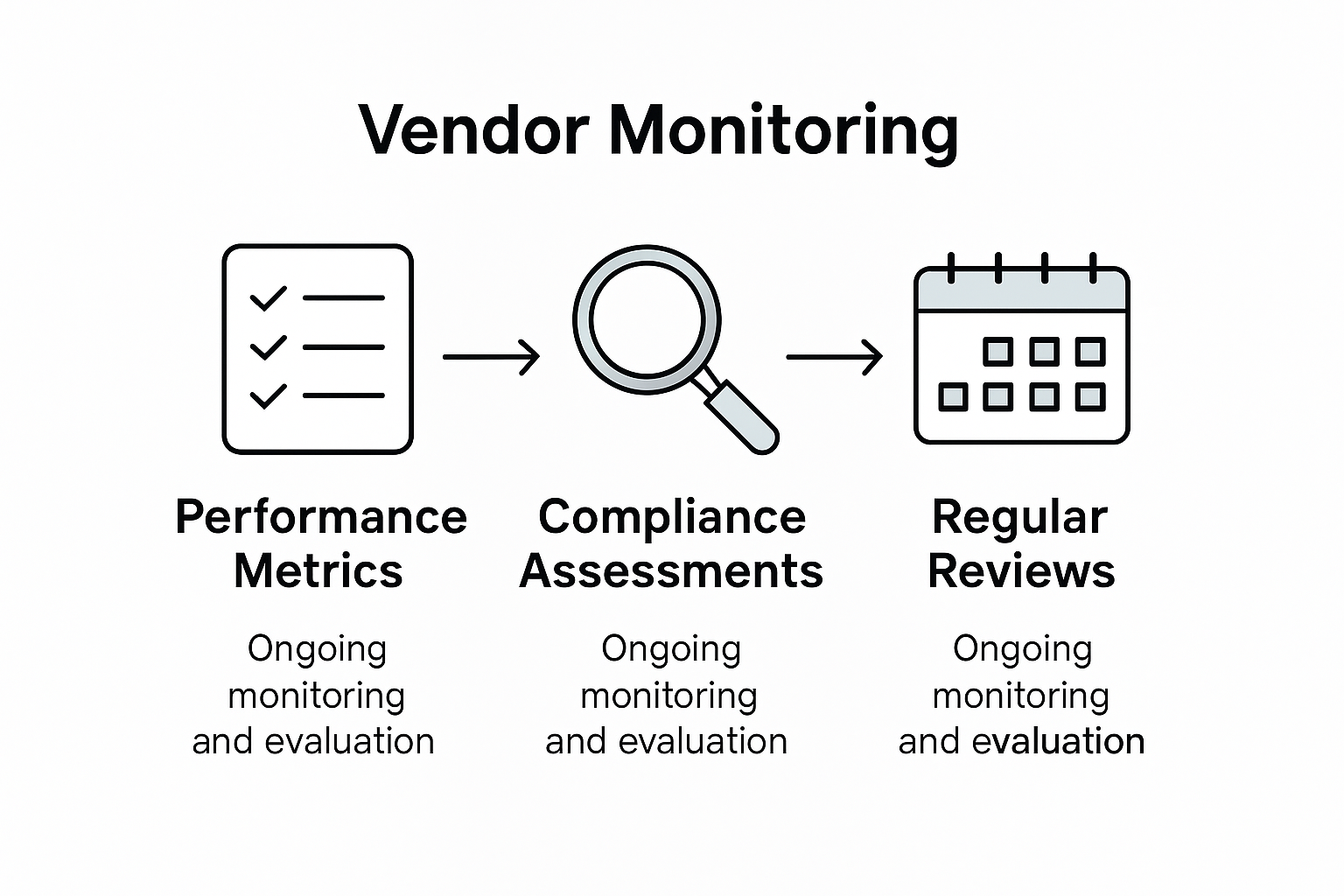
Regular vendor portfolio assessments are essential for identifying potential risks, tracking performance metrics, and ensuring vendors consistently meet contractual obligations. Develop a comprehensive monitoring framework that includes quantitative and qualitative evaluation metrics such as delivery timelines, quality standards, security compliance, financial stability, and responsiveness. Implement a standardized scoring system that allows for objective comparison across different vendors and provides clear visibility into their performance trends.
Effective vendor management requires proactive performance monitoring that goes beyond traditional compliance checks. Create dynamic dashboards that provide real time insights into vendor performance, integrating data from multiple sources including contract management systems, security assessment tools, and operational feedback channels. Establish clear escalation protocols that define specific actions and interventions when vendors fail to meet predefined performance benchmarks, ensuring your organization can quickly address potential issues before they become significant risks.
Pro tip: Schedule quarterly comprehensive vendor reviews that combine quantitative performance data with qualitative feedback from stakeholders, creating a holistic assessment that captures both numerical metrics and nuanced organizational perspectives.
Step 5: Verify and review vendor risk mitigation strategies
Verifying and reviewing vendor risk mitigation strategies is a critical process that protects your organization from potential operational, financial, and reputational risks. This step ensures that your vendors have robust mechanisms in place to address and neutralize potential threats before they escalate.
Third party management involves comprehensive risk oversight that goes beyond surface level assessments. Develop a rigorous evaluation framework that systematically examines each vendor's risk mitigation capabilities across multiple dimensions. This includes analyzing their cybersecurity protocols, data protection measures, business continuity plans, financial stability, regulatory compliance mechanisms, and incident response strategies. Create a detailed risk assessment matrix that assigns weighted scores to different risk categories, allowing for nuanced and objective vendor risk evaluation.
An effective vendor management framework requires continuous risk assessment, integrating proactive identification and mitigation of potential vulnerabilities. Implement a dynamic risk monitoring system that combines automated risk detection technologies with periodic manual reviews. This approach should include regular security audits, compliance checks, financial health assessments, and comprehensive documentation reviews. Establish clear escalation protocols that define specific actions to be taken when potential risks are identified, ensuring your organization can quickly respond to and mitigate emerging vendor related threats.
Pro tip: Develop a vendor risk scoring model that incorporates both quantitative metrics and qualitative assessments, enabling a more holistic and predictive approach to identifying potential vendor risks.
Elevate Your Vendor Management with Smart Automation
Mastering the vendor management lifecycle requires sharp attention to detail, seamless collaboration, and ongoing risk assessments. If you seek to streamline complex vendor evaluations, enforce compliance, and reduce manual errors, Skypher offers a SaaS platform tailored to tackle these exact challenges. With AI-driven automation, your teams can accelerate responses to security questionnaires and maintain up-to-date vendor risk profiles effortlessly.
Skypher's AI Questionnaire Automation Tool supports diverse formats and connects with over 40 third-party risk management platforms. This ensures your workflows for vendor selection, onboarding, and performance monitoring stay efficient and reliable, just as emphasized in the article. Enhance your team’s communication with real-time collaboration through Slack, MS Teams, and other integrations. Secure your organization by building a customizable Trust Center that centralizes vendor compliance and risk data.

Ready to transform your vendor management process? Take control of security reviews and risk mitigation today with Skypher. Visit our platform now to discover powerful automation tools that align perfectly with your organizational needs for secure operations and vendor lifecycle mastery. Start reducing vendor-related delays and boost your operational productivity immediately.
Frequently Asked Questions
What are the key steps in the vendor management lifecycle?
The vendor management lifecycle consists of assessing organizational requirements, establishing selection criteria, implementing automated workflows, monitoring performance, and reviewing risk mitigation strategies. Follow each step systematically to ensure secure operations and maximize vendor relationships.
How can I ensure my vendor selection aligns with organizational goals?
Establish clear criteria that evaluate technical capabilities, financial stability, security practices, and cultural alignment with your organization. Develop an evaluation matrix with weighted scores to facilitate an objective comparison of vendors during the selection process.
What should I monitor during ongoing vendor performance reviews?
Regularly track delivery timelines, quality standards, security compliance, and financial stability of your vendors. Utilize a standardized scoring system to maintain consistency and identify trends in performance over time, ensuring you adjust strategies as needed.
How often should I review vendor risk mitigation strategies?
Implement a schedule for verifying and reviewing vendor risk mitigation strategies at least twice a year. Regular assessments will help identify potential vulnerabilities and ensure that your vendors are prepared to handle risks effectively.
What tools can streamline vendor management processes?
Consider utilizing automated workflow tools that can standardize evaluations, track compliance, and manage documentation. Automation helps improve efficiency, reduces errors, and enables real-time collaboration among team members.
How can I involve different departments in vendor assessments?
Create a cross-functional team that includes representatives from IT, legal, finance, and operations. This diverse input will capture holistic perspectives and address the varied needs of your organization when assessing vendor requirements.
Recommended
- What is Vendor Risk Management? Understanding Its Importance and Implementation
- Complete Guide to Vendor Management Policies
- Implement Vendor Management Programs for Optimal Risk Control
- Mitigate Vendor Management Risks Effectively in 2025
- 7 Essential Family Office Risk Management Tips Explained - Future Family Office