

Vendor security assessments are grabbing serious attention as organizations realize just how much risk third-party partners introduce into their ecosystems. Here is what stands out: over 59 percent of data breaches in 2024 traced back to a vendor or third-party vulnerability. Most leaders expect piles of paperwork and checklists, but that old approach hardly catches the real threats. The latest research shows it is the ongoing, behind-the-scenes monitoring and advanced risk analysis that really make or break your defense. What actually makes these assessments effective may surprise you.
Table of Contents
- Understanding the Goals of Vendor Security Assessments
- Step-by-Step Process for Assessing Vendor Security
- Key Risks and Red Flags in Vendor Security Reviews
- Best Practices to Improve Vendor Security Assessments
Quick Summary
| Takeaway | Explanation |
|---|---|
| Establish a Comprehensive Vendor Inventory | Create a detailed inventory capturing vendor contact details, service scope, data access levels, and historical security performance to categorize them into risk tiers for focused assessment. |
| Implement Continuous Monitoring | Establish a dynamic assessment framework with regular reviews, automated security ratings, and immediate reassessments to adapt to evolving vendor risk profiles. |
| Utilize Advanced Risk Analysis Models | Apply quantitative risk frameworks, such as FAIR, to prioritize vendor risks by assessing technical controls, operational stability, financial health, compliance, and potential reputational damage. |
| Enhance Communication and Transparency | Foster open dialogue with vendors regarding security risks by establishing clear communication channels and reporting protocols to create a collaborative environment. |
| Integrate Security Early in Vendor Selection | Involve security, procurement, and legal teams from the outset to define security evaluation criteria and set minimum requirements before finalizing contracts. |
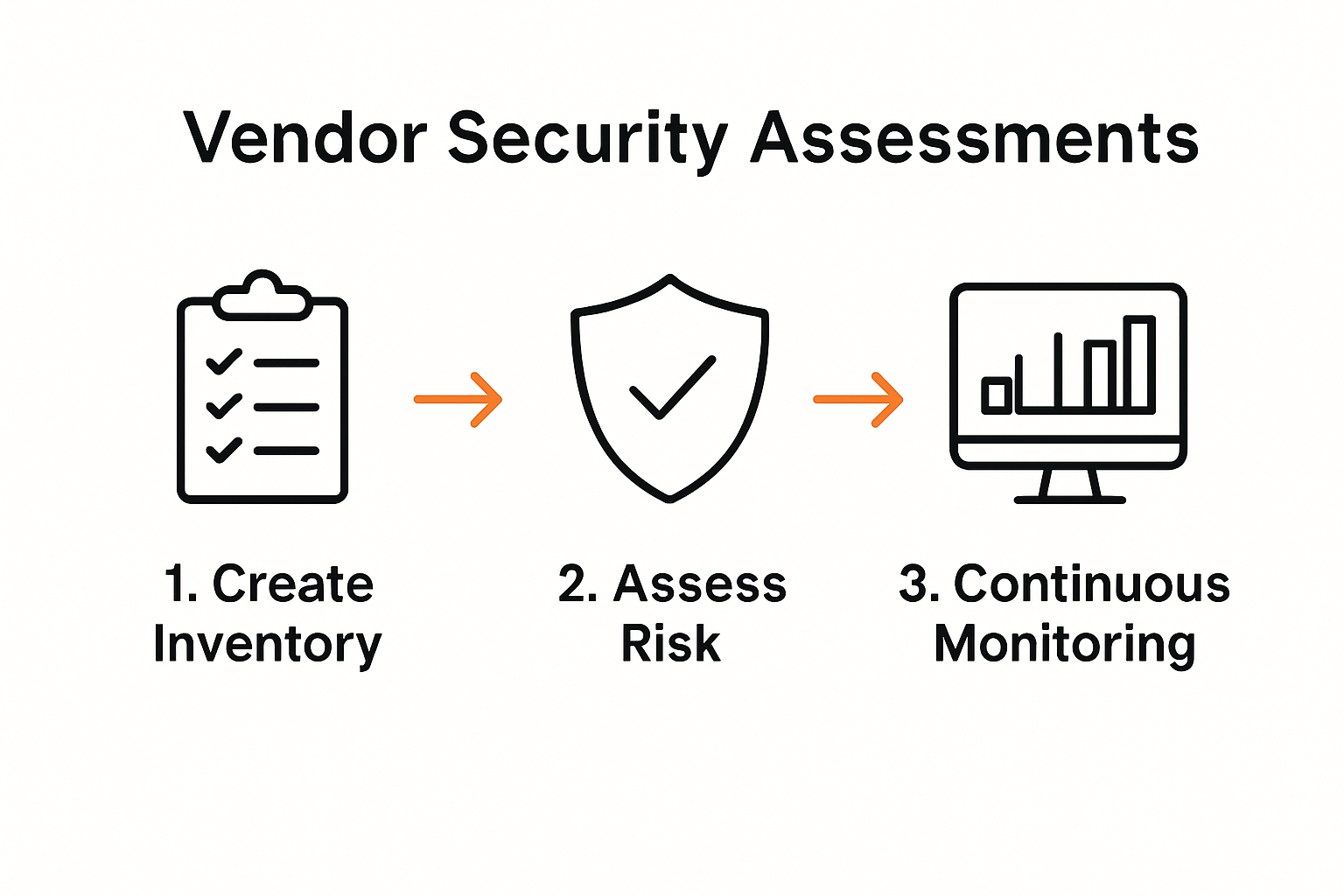
Understanding the Goals of Vendor Security Assessments
Vendor security assessments are strategic processes designed to evaluate and mitigate potential cybersecurity risks introduced by third-party relationships. Unlike simplistic checkbox exercises, these comprehensive evaluations represent critical defense mechanisms for organizations protecting their digital infrastructure and sensitive data.
Establishing Risk Visibility and Control
The primary objective of vendor security assessments is creating total visibility into potential vulnerabilities that external partners might introduce. Organizations must map their entire vendor ecosystem, understanding each connection's potential risk profile. According to Safe Security, this involves creating a detailed inventory that encompasses not just immediate vendors, but extends to fourth and subsequent party connections deep within the supply chain.
Effective assessments categorize vendors into risk tiers based on their potential impact. This stratification allows security teams to allocate resources proportionally, focusing intensive scrutiny on critical vendors with high-risk potential while maintaining appropriate monitoring for lower-risk partners. Scoring models consider multiple dimensions including data access levels, system integration depth, and historical security performance.
Proactive Risk Mitigation Strategies
Beyond initial assessment, vendor security evaluations aim to establish continuous monitoring frameworks. Security Scorecard highlights the importance of ongoing risk assessment across multiple cybersecurity indicators such as IP reputation, network security, DNS health, web application security, and endpoint protection.
This approach transforms vendor security assessments from static, point-in-time snapshots into dynamic, real-time risk management processes. Organizations can detect emerging threats, track vendor security postures, and quickly respond to potential compromise signals before they escalate into significant security incidents.
Comprehensive Compliance and Governance
Vendor security assessments serve critical governance functions, ensuring external partners adhere to organizational security standards and regulatory requirements. These evaluations validate that vendors maintain appropriate security controls, implement robust data protection mechanisms, and demonstrate commitment to maintaining a strong security posture.
By systematically documenting vendor security capabilities, organizations create audit trails that demonstrate due diligence. This documentation becomes crucial during regulatory inspections, potential breach investigations, and when establishing trust with stakeholders who depend on rigorous third-party risk management.
Understanding vendor security is no longer optional—it's a fundamental aspect of modern cybersecurity strategy. As digital ecosystems become increasingly interconnected, the ability to comprehensively assess and manage vendor-related risks becomes a core competency for forward-thinking organizations.
Step-by-Step Process for Assessing Vendor Security
Navigating vendor security assessments requires a structured and methodical approach that transforms complex risk evaluation into a manageable, systematic process. Organizations must develop a comprehensive strategy that goes beyond surface-level evaluations to create meaningful insights into potential vendor-related security risks.
Defining Assessment Criteria and Vendor Inventory
The foundation of an effective vendor security assessment begins with precise criteria definition and comprehensive vendor mapping. According to Sprinto, this initial stage involves critically examining which vendors have access to sensitive information and determining potential business disruption risks.
Organizations should develop a detailed vendor inventory that captures critical information including:
- Vendor contact details
- Service scope and contract specifications
- Data access levels
- Integration points with organizational systems
- Historical security performance
Safe Security recommends categorizing vendors into risk tiers - high, medium, and low - based on their potential impact and criticality to business operations. This stratification allows security teams to allocate assessment resources proportionally and focus intensive scrutiny where risks are most significant.
Comprehensive Control Assessment Methodology
Effective vendor security assessments require a multi-dimensional evaluation of technical, process, and human factors. Security Scorecard outlines a comprehensive approach that examines four critical control domains:
- Technical Controls: Evaluating network security, IP reputation, DNS health, and endpoint protection
- Process Controls: Analyzing vendor security workflows, incident response capabilities, and compliance frameworks
- People Controls: Assessing vendor staff training, security awareness, and organizational culture
- Regulatory Compliance: Verifying adherence to industry-specific security standards and legal requirements
This holistic methodology ensures a thorough understanding of vendor security capabilities beyond traditional checkbox approaches. By examining multiple dimensions simultaneously, organizations can develop a nuanced risk profile that captures potential vulnerabilities more accurately.
Continuous Monitoring and Reassessment
Vendor security is not a one-time event but an ongoing process requiring continuous monitoring and periodic reassessment. Security landscapes evolve rapidly, and vendor risk profiles can change dramatically within short timeframes.
Implementing a dynamic assessment framework involves:
- Regularly scheduled comprehensive reviews
- Automated security rating monitoring
- Incident-triggered immediate reassessments
- Maintaining updated vendor risk documentation
Organizations must treat vendor security assessments as living processes that adapt to changing technological and threat environments. This approach transforms risk management from a reactive compliance exercise into a proactive, strategic defense mechanism.
The step-by-step process for vendor security assessments demands precision, thoroughness, and adaptability. By implementing a structured methodology that combines detailed initial assessment with continuous monitoring, organizations can effectively manage third-party security risks and protect their digital ecosystem.
Key Risks and Red Flags in Vendor Security Reviews
Vendor security reviews demand a critical eye for potential vulnerabilities that could compromise an organization's entire digital ecosystem. Understanding and identifying key risks is not just a defensive strategy but a proactive approach to protecting sensitive information and maintaining robust cybersecurity infrastructure.
Comprehensive Risk Classification
Panorays identifies five critical risk domains that security professionals must meticulously evaluate during vendor assessments:
- Cybersecurity Risk: Assessing the vendor's fundamental security controls and compliance with recognized standards
- Operational Disruption Potential: Evaluating the vendor's ability to maintain continuous service
- Financial Instability: Analyzing the vendor's economic health and potential for sudden business interruption
- Legal and Regulatory Compliance: Checking for past or potential violations of industry regulations
- Reputational Damage Exposure: Understanding how a vendor's security failures could impact organizational reputation
These risk domains provide a structured framework for identifying potential vulnerabilities that extend far beyond simple technical assessments. Organizations must develop a nuanced approach that considers multiple dimensions of vendor risk.
Critical Security Control Red Flags
Safe Security recommends using quantitative risk analysis models like FAIR (Factor Analysis of Information Risk) to prioritize and score potential vendor risks. Key red flags that warrant immediate attention include:
- Lack of multi-factor authentication protocols
- Outdated or unpatched software systems
- Inadequate encryption for sensitive data
- Poor incident response capabilities
- Limited or non-existent security training for vendor employees
- Absence of comprehensive data protection mechanisms
These red flags signal potential systemic weaknesses that could expose an organization to significant security vulnerabilities. Identifying them early allows for targeted interventions and risk mitigation strategies.
Communication and Transparency Challenges
Gartner research highlights a critical challenge in vendor security reviews: the reluctance of risk managers to share comprehensive vendor red flags. This communication barrier can significantly undermine the effectiveness of security assessments.
Effective vendor security reviews require:
- Transparent communication channels
- Standardized reporting mechanisms
- Clear escalation protocols for identified risks
- Collaborative approach to addressing security concerns
Organizations must create an environment that encourages open dialogue about potential security risks. This approach transforms vendor security reviews from bureaucratic exercises into dynamic, collaborative risk management processes.
The landscape of vendor security is complex and constantly evolving. Successful organizations recognize that identifying risks is not about finding fault but about building stronger, more resilient partnerships that prioritize comprehensive security measures. By developing a sophisticated, multi-dimensional approach to risk assessment, organizations can protect their digital assets while maintaining productive vendor relationships.
Best Practices to Improve Vendor Security Assessments
Vendor security assessments require strategic approaches that go beyond traditional compliance checkboxes. Organizations must develop sophisticated methodologies that integrate comprehensive risk management with proactive security strategies.
Early Integration and Strategic Alignment
Safe Security emphasizes the critical importance of integrating security considerations early in the vendor selection process. This means engaging procurement, legal, and security teams simultaneously to ensure comprehensive risk evaluation before contract finalization.
Key strategic alignment practices include:
- Developing standardized security evaluation criteria
- Creating vendor questionnaires that capture detailed security capabilities
- Establishing minimum security requirements as contract prerequisites
- Implementing clear security performance metrics
By establishing these frameworks early, organizations can prevent potential security vulnerabilities from entering their ecosystem and set clear expectations for vendor performance.
Comprehensive Assessment and Monitoring Framework
CyberUpgrade recommends a structured process that encompasses the entire vendor lifecycle:
- Pre-Contract Risk Assessment: Thorough initial security evaluation
- Contractual Security Requirements: Explicit security obligations
- Continuous Monitoring: Regular performance and risk tracking
- Incident Response Coordination: Clear communication protocols
- Vendor Offboarding: Secure data and access management
This holistic approach transforms vendor security assessments from static evaluations into dynamic, ongoing risk management processes. Organizations can systematically track vendor security postures, detect emerging risks, and respond proactively to potential vulnerabilities.
Advanced Risk Analysis and Standardization
Implementing sophisticated risk analysis methodologies is crucial for effective vendor security assessments. Best practices involve:
- Utilizing quantitative risk frameworks like FAIR (Factor Analysis of Information Risk)
- Mapping vendor controls against recognized standards such as NIST Cybersecurity Framework
- Developing risk scoring mechanisms that provide nuanced vendor risk perspectives
- Creating tiered risk classification systems
Standardization ensures consistent, objective vendor security evaluations. By applying structured methodologies, organizations can compare vendors systematically, prioritize high-risk relationships, and allocate security resources more effectively.
Successful vendor security assessments require a proactive, comprehensive approach that balances technological evaluation with strategic risk management. Organizations must view these assessments as collaborative partnerships focused on maintaining robust security ecosystems, not mere compliance exercises.
The most effective vendor security strategies recognize that security is a shared responsibility requiring continuous communication, mutual commitment, and adaptive risk management techniques. By implementing these best practices, organizations can build resilient vendor relationships that protect against emerging cybersecurity threats.
Frequently Asked Questions
What is a vendor security assessment?
Vendor security assessments are strategic evaluations designed to identify and mitigate cybersecurity risks introduced by third-party partnerships, ensuring that organizations have visibility and control over potential vulnerabilities.
Why are vendor security assessments important for businesses?
These assessments are crucial because over 59 percent of data breaches in 2024 were traced back to vendor vulnerabilities. They help organizations establish proactive risk management practices to protect sensitive data and maintain compliance.
How can organizations implement continuous monitoring of vendor security?
Organizations can implement continuous monitoring by creating a dynamic assessment framework that includes regular evaluations, automated security rating systems, and immediate reassessments triggered by significant security events.
What are key red flags to look for during vendor security reviews?
Important red flags include the absence of multi-factor authentication, outdated software systems, poor incident response capabilities, and inadequate employee security training. Identifying these can help organizations proactively address potential vulnerabilities.
Take Your Vendor Security Assessments to the Next Level with Skypher
Still relying on manual checklists and endless email threads for security questionnaires? The article highlighted how critical continuous monitoring and risk visibility are for effective vendor security assessments. If your team struggles to keep up with growing demands, scattered documentation, or slow response times, you are not alone. Missed red flags and delayed reviews can lead to lost trust and real business risk—especially when every vendor connection matters.
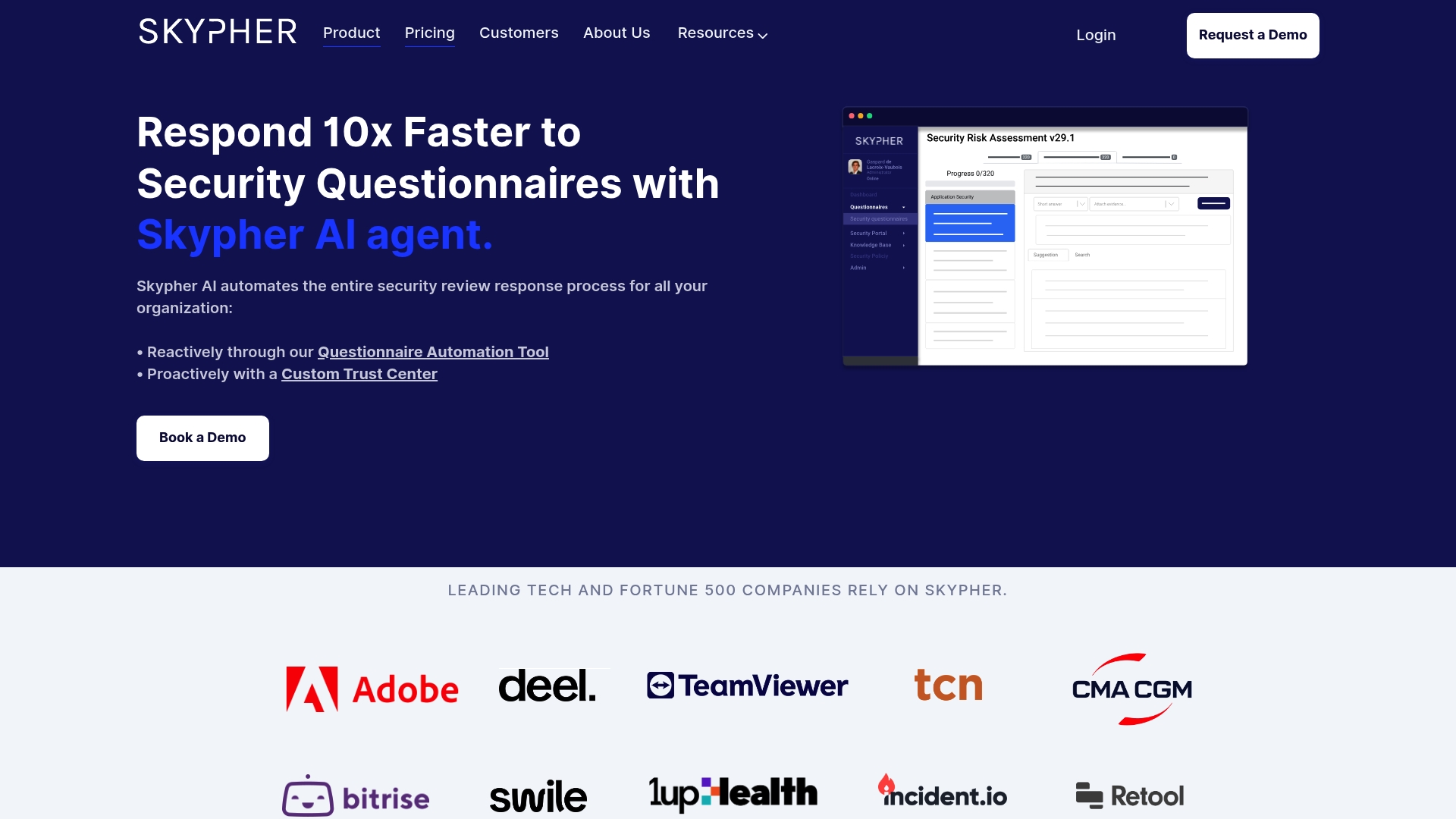
Upgrade your approach now with Skypher’s AI-powered Questionnaire Automation Tool. Our platform lets you streamline assessments, automate repetitive tasks, and accelerate reviews without sacrificing accuracy. Experience faster security evaluations, effortless collaboration, and seamless integrations with over 40 leading risk management solutions. Protect your business, win trust, and get ahead of the next audit by discovering how Skypher can simplify your vendor security program.