

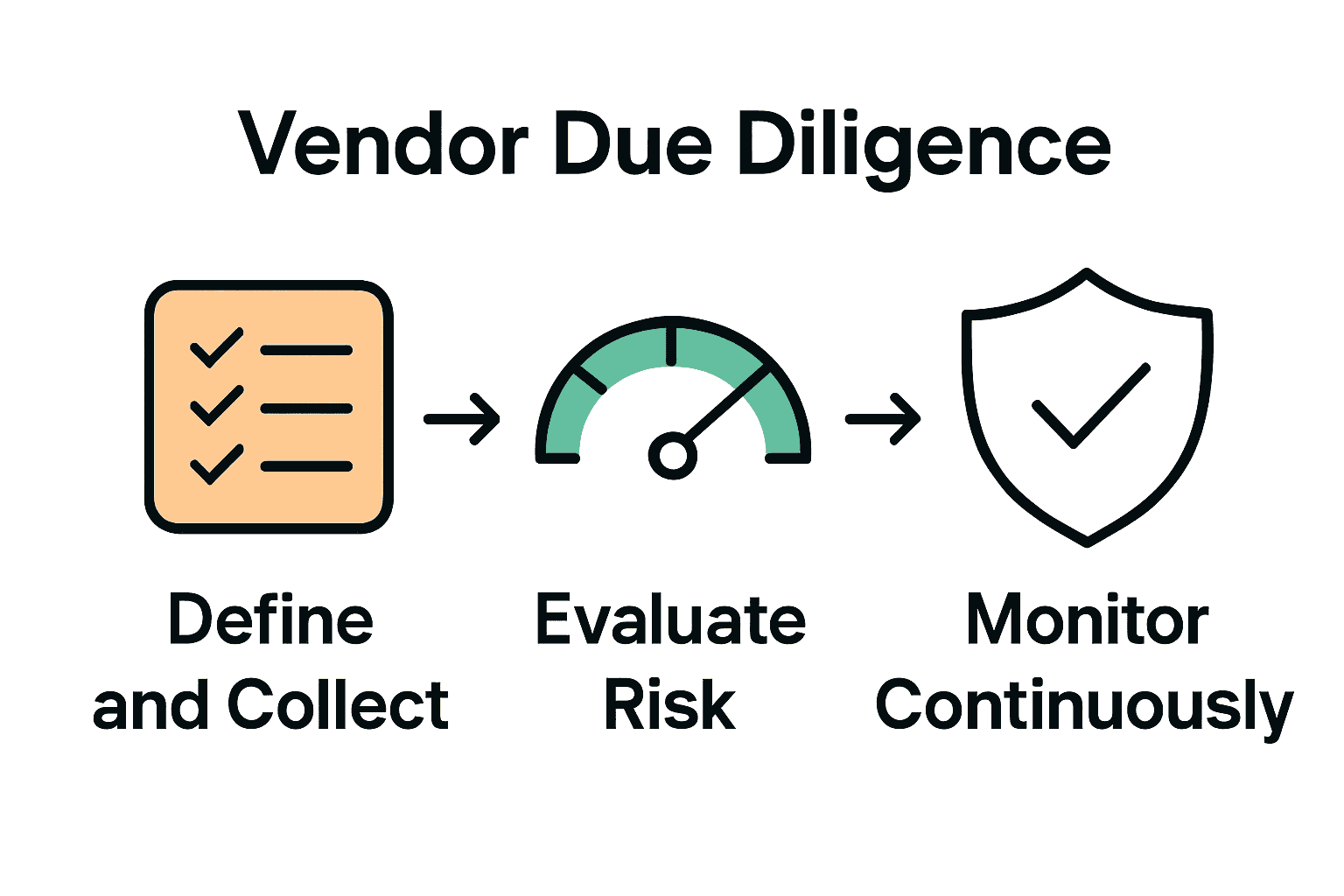
Did you know that nearly 60 percent of organizations have experienced vendor-related disruptions in the past two years? Choosing the right partners goes far beyond signing a contract. Your approach to vendor due diligence drives your company’s ability to avoid costly setbacks and safeguard sensitive data. This guide reveals simple yet powerful steps to help you assess risk, verify vendor credibility, and protect your business with confidence.
Quick Summary
| Key Point | Explanation |
|---|---|
| 1. Define vendor tiers for risk assessment | Categorize vendors based on criticality to streamline due diligence efforts and risk evaluation. |
| 2. Use diverse verification tools | Employ a range of verification sources to ensure thorough risk assessment across all vendor tiers. |
| 3. Implement automated evaluation tools | Leverage technology for efficient vendor risk assessments, generating accurate profiles quickly. |
| 4. Validate vendor claims independently | Cross-reference vendor information with external sources to uncover hidden vulnerabilities and ensure compliance. |
| 5. Establish continuous monitoring system | Develop an ongoing risk management framework that adapts to changes and tracks vendor performance dynamically. |
Table of Contents
- Step 1: Define vendors due diligence requirements and scope
- Step 2: Collect vendor information and supporting documentation
- Step 3: Evaluate risk using automated questionnaire tools
- Step 4: Verify compliance and validate vendor responses
- Step 5: Implement monitoring and ongoing vendor reassessment
Step 1: Define vendors due diligence requirements and scope
Defining your vendor due diligence requirements sets the foundation for a robust risk management strategy. In this step, you will create a comprehensive framework that identifies potential risks and establishes clear assessment parameters for potential business partners.
Start by categorizing your vendors into tiers based on their criticality and potential risk exposure. According to research from Mitratech, this involves evaluating factors like data sensitivity, regulatory requirements, and potential business impact. Not all vendors are created equal some will require deeper scrutiny than others.
To build an effective due diligence scope, engage multiple stakeholders from IT, legal, and finance departments. As insights from Responsive suggest, these cross functional teams can help determine precise vendor access levels and potential risk scenarios.
Your assessment toolkit should include multiple verification sources:
Here's a summary of vendor due diligence verification tools and their purposes:
| Verification Tool | Primary Purpose | When to Use |
|---|---|---|
| Risk questionnaires | Assess general risk awareness | All vendor tiers |
| Security certifications | Validate security standards | High-risk vendors |
| Financial reports | Check financial stability | Critical vendors |
| Public registry checks | Confirm legal status | All vendor tiers |
| Independent audits | Ensure objective assessment | High-risk vendors |
| Dark web monitoring | Detect hidden threats | High-risk vendors |
| Optional site visits | Inspect operations | Strategic vendors |
- Risk questionnaires
- Security certifications (ISO 27001, SOC 2)
- Financial reports
- Public registry checks
- Independent audits
- Dark web monitoring
- Optional site visits
Pro Tip: Create a standardized scoring matrix that objectively ranks vendors across consistent risk parameters to ensure fair and comprehensive evaluation.
By meticulously defining your vendor due diligence requirements, you transform risk assessment from a reactive process into a strategic business protection mechanism. The next step involves executing detailed risk assessments based on the framework you have just developed.
Step 2: Collect vendor information and supporting documentation
Collecting comprehensive vendor information transforms your due diligence from a checkbox exercise into a strategic risk management process. Your goal is to gather a holistic view of potential vendors through multiple verification channels.
Start by developing a tiered approach to information gathering. According to research from CSI Web, different vendor types require different levels of documentation. For general vendors, focus on collecting business structure documents, insurance certificates, and standard contracts. When dealing with vendors handling sensitive data, you will need deeper documentation like SOC reports, cybersecurity insurance proof, and detailed security policies.
Build an exhaustive information collection toolkit that spans multiple sources. As insights from Mitratech suggest, your documentation gathering should include:
- Public database and registry checks
- Comprehensive vendor questionnaires
- Financial performance reports
- Third party audit certifications
- Online reputation and complaint monitoring
- Dark web risk assessments
- Optional on site evaluations
Pro Tip: Create a standardized document request template that adapts based on vendor tier to streamline your information collection process.
Remember that documentation is not just about collecting papers. You are building a comprehensive risk profile that reveals a vendors true operational capability and potential vulnerabilities. The information you gather now will directly inform your risk assessment and decision making in subsequent steps.

With your vendor documentation assembled, you are ready to move into detailed risk analysis and evaluation.
Step 3: Evaluate risk using automated questionnaire tools
Automated questionnaire tools transform vendor risk evaluation from a time consuming manual process into a strategic fast track assessment. Your objective is to leverage technology that can rapidly analyze vendor responses and generate comprehensive risk profiles.
Research from AutoRFP.ai reveals multiple advanced platforms designed to streamline security questionnaire assessments. These AI powered tools can process complex frameworks like CAIQ and SIG with remarkable efficiency and accuracy.
When selecting an automated risk assessment platform, consider tools that offer multidimensional evaluation capabilities. ATL Systems suggests looking for platforms that can score risks across multiple domains including:
- Cybersecurity preparedness
- Financial stability
- Operational resilience
- Regulatory compliance
- Global standard alignment
Pro Tip: Choose platforms that provide real time monitoring and can integrate with your existing risk management infrastructure for seamless data flow.
Key features to prioritize include automated response generation, AI powered risk scoring, compatibility with industry frameworks like HIPAA, NIST, ISO 27K, and robust reporting capabilities. Some leading platforms like UpGuard and Vanta combine external security ratings with automated questionnaire responses creating a comprehensive vendor risk assessment ecosystem.
By implementing sophisticated automated questionnaire tools, you transform vendor risk evaluation from a reactive checklist into a proactive strategic process.
Your next step involves interpreting these automated assessment results and making informed vendor selection decisions.
Step 4: Verify compliance and validate vendor responses
Validating vendor responses moves your due diligence from theoretical assessment to concrete risk understanding. Your primary objective is to independently verify every claim and uncover potential hidden vulnerabilities that might not be immediately apparent.
According to Mitratech, effective validation requires looking beyond self reported information. This means cross referencing vendor statements with multiple independent sources such as:
- Official compliance databases
- Third party certification records
- Independent security audits
- Legal and regulatory registries
- Public litigation databases
- Professional reputation monitoring platforms
Research from Responsive emphasizes the importance of involving internal stakeholders during this verification process. Bring together experts from IT, legal, finance, and risk management to collectively evaluate the likelihood and potential business impact of any discovered risks.
Pro Tip: Create a standardized risk scoring matrix that allows objective comparison and consistent evaluation across different vendor responses.
During validation, focus on assessing both the technical compliance and the broader reputational landscape. Look for patterns that might indicate systemic issues rather than isolated incidents. Pay special attention to how vendors have historically handled security challenges and their transparency in reporting potential problems.
The goal is not to find perfection but to understand the complete risk profile. Catalog your findings meticulously to build an institutional knowledge base that will inform future vendor selection and management strategies.
With verified and validated vendor information in hand, you are now prepared to make an informed risk based decision about potential partnerships.
Step 5: Implement monitoring and ongoing vendor reassessment
Vendor risk management does not end after initial assessment. Your final step involves creating a dynamic monitoring system that continuously tracks vendor performance and emerging risks.
According to Mitratech, effective vendor monitoring requires transforming due diligence from a static event into an ongoing process. This means developing a proactive approach that anticipates potential risks before they become critical problems.
Establish a comprehensive monitoring framework that includes:
- Automated risk alert systems
- Periodic comprehensive vendor reviews
- Triggers for immediate reassessment based on significant organizational changes
- Fourth party risk tracking
- Performance metric evaluations
- Cybersecurity posture monitoring
Pro Tip: Configure your monitoring tools to provide real time notifications and set clear thresholds that prompt immediate investigation.
Your monitoring strategy should be adaptive and responsive. This means creating a system that can quickly adjust to new information, regulatory changes, or shifts in the vendor landscape. Pay special attention to fourth party risks those potential vulnerabilities introduced through your vendors relationships with their own suppliers.
Consider implementing a tiered monitoring approach where critical vendors receive more frequent and intense scrutiny compared to lower risk partners. Develop a standardized scorecard that allows consistent comparison and tracking of vendor performance over time.
Remember that ongoing monitoring is not about catching vendors doing something wrong. Instead, it is about maintaining a collaborative relationship that promotes transparency and continuous improvement in risk management.
Streamline Vendor Due Diligence with Skypher’s Automated Solutions
Tired of manually juggling endless risk questionnaires, compiling vendor documentation, and worrying if your due diligence process truly covers every risk? As covered in your step-by-step guide, defining requirements, collecting data, evaluating risks, and ongoing monitoring are mission critical—but traditional methods create bottlenecks and hurt your team’s efficiency.
With Skypher, you can remove the pain of slow, error-prone processes. Skypher’s AI Questionnaire Automation Tool handles risk assessments in minutes and ensures strict, accurate compliance with frameworks mentioned in your article like ISO 27001, SOC 2, and more. Collaborate in real time across legal, IT, and finance teams so every stakeholder is heard—no email chaos required. Instantly validate vendor responses, generate smart documentation, and keep your due diligence proactive instead of reactive.
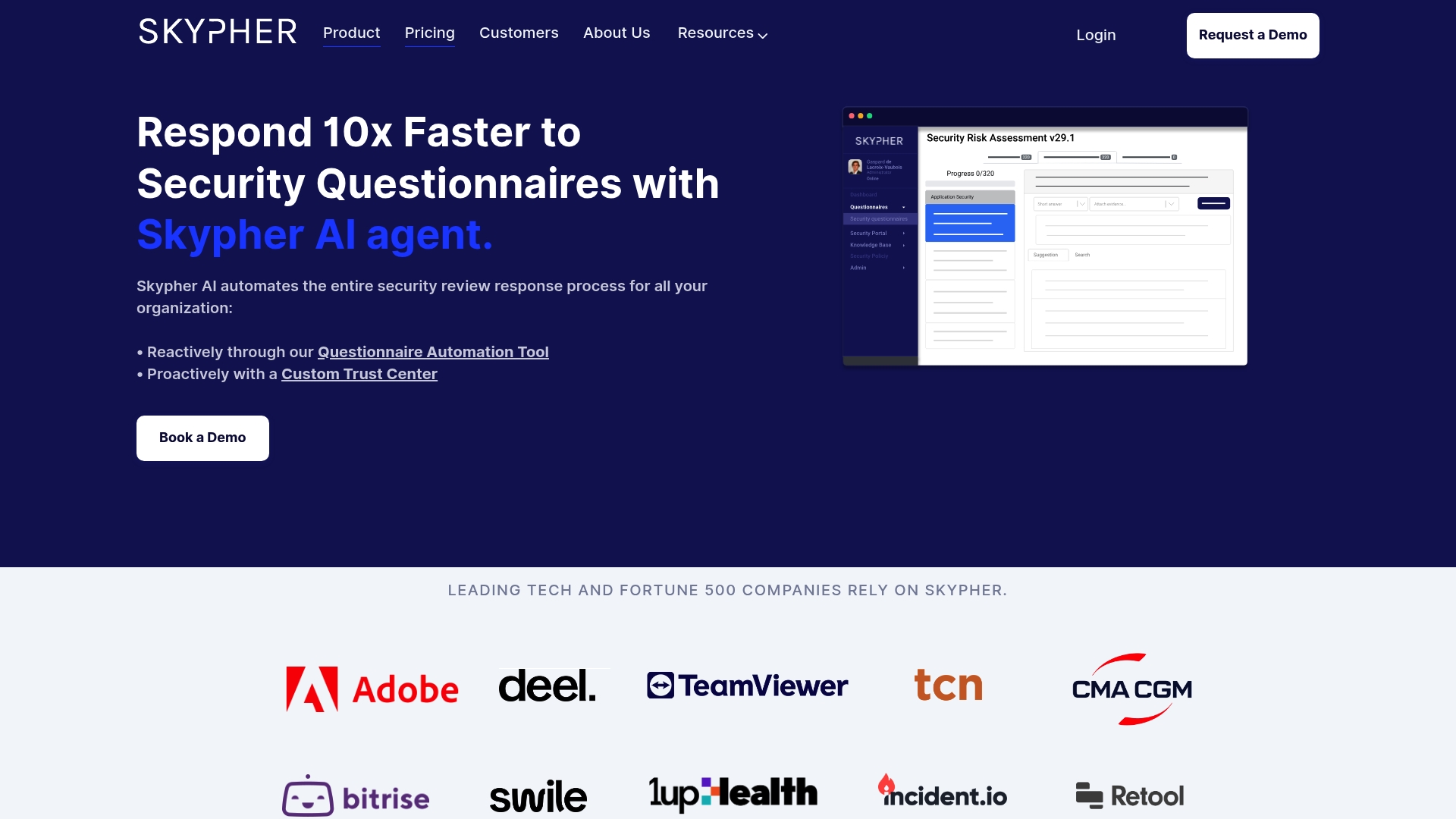
Ready to transform the way you manage vendor risk? Experience how Skypher can cut assessment time, boost accuracy, and power smarter business relationships. See the platform in action at https://skypher.co and discover why leading businesses trust Skypher to secure their vendor landscape now.
Frequently Asked Questions
What are the key steps in the vendor due diligence process?
The vendor due diligence process consists of five key steps: defining requirements and scope, collecting vendor information, evaluating risk using automated tools, verifying compliance, and implementing ongoing monitoring. Start by categorizing your vendors based on risk levels and then proceed through each step methodically to ensure comprehensive assessment.
How can I effectively collect vendor information for due diligence?
To effectively collect vendor information, develop a tiered approach based on vendor risk categories. Gather key documents like business licenses, insurance certificates, and security policies for high-risk vendors to build a comprehensive assessment profile.
What verification tools should I use in vendor due diligence?
Use verification tools like risk questionnaires, security certifications, financial reports, and independent audits to assess vendors comprehensively. Begin by deploying risk questionnaires for all vendor tiers, then utilize specific tools based on the tier and assessed risk exposure.
How can I verify a vendor's compliance with security standards?
To verify a vendor's compliance, cross-reference their claims with independent sources such as official compliance databases and third-party security audit reports. Establish a structured validation process that focuses on both technical compliance and vendor reputation to ensure thorough evaluation.
What should I include in an ongoing vendor monitoring strategy?
An effective ongoing vendor monitoring strategy should include automated risk alert systems, periodic comprehensive reviews, and tracking of fourth-party risks. Set up regular performance evaluations and individual thresholds to prompt immediate reassessment as needed.
How often should I reassess my vendors after the initial due diligence?
Reassess vendors based on their risk level, with critical vendors requiring more frequent reviews than lower-risk partners. Aim to conduct a comprehensive review every 6 to 12 months, adjusting the frequency based on changes in vendor operations or risk exposure.
Recommended
- What is Vendor Risk Management? Understanding Its Importance and Implementation
- Comprehensive Guide to Third Party Vendor Risk Assessment
- Mitigate Vendor Management Risks Effectively in 2025
- What Is a Due Diligence Questionnaire? A Comprehensive Guide to Informed Investment Decisions
- Transform42 New