

Vendor risk is getting tougher every year. Over 60 percent of businesses now use detailed questionnaires to vet their suppliers before signing any deal. Think old-fashioned paperwork is enough to spot hidden problems? Not anymore. The real power comes from asking smarter, deeper questions that uncover risks other companies miss.
Table of Contents
- What Is a Vendors Questionnaire and Why Use One?
- Essential Questions to Include in Your Vendors Questionnaire
- Best Practices for Customizing Vendors Questionnaires
- How to Evaluate and Act on Vendor Responses
Quick Summary
| Takeaway | Explanation |
|---|---|
| Comprehensive Vendor Assessments Are Crucial | Vendor questionnaires are essential tools for evaluating potential business partners, helping identify risks, ensure compliance, and assess performance before establishing relationships. |
| Essential Questions for Security and Compliance | Prioritize security controls, compliance certifications, and data protection protocols to comprehensively assess a vendor's risk and adherence to standards. |
| Customization Enhances Effectiveness | Tailor questionnaires to account for vendor-specific risks based on industry, service type, and organization size, ensuring relevant and meaningful assessments. |
| Use Dynamic Evaluation Strategies | Implement risk scoring and advanced verification techniques to analyze vendor responses effectively, fostering continuous improvement in vendor management. |
| View Assessments as Strategic Partnerships | Approach vendor evaluations not as compliance checks but as opportunities for collaboration and mutual growth, emphasizing communication and transparency. |
What Is a Vendors Questionnaire and Why Use One?
Vendors questionnaires are comprehensive assessment tools organizations use to evaluate potential business partners systematically. These documents help companies thoroughly investigate and understand the capabilities, risks, and operational standards of vendors before establishing a business relationship.
The Core Purpose of Vendor Questionnaires
A vendors questionnaire serves as a strategic screening mechanism designed to collect critical information about potential business partners. According to PDFFiller, these questionnaires typically gather detailed insights across multiple dimensions including financial stability, quality control measures, production capacity, environmental standards, and ethical practices.
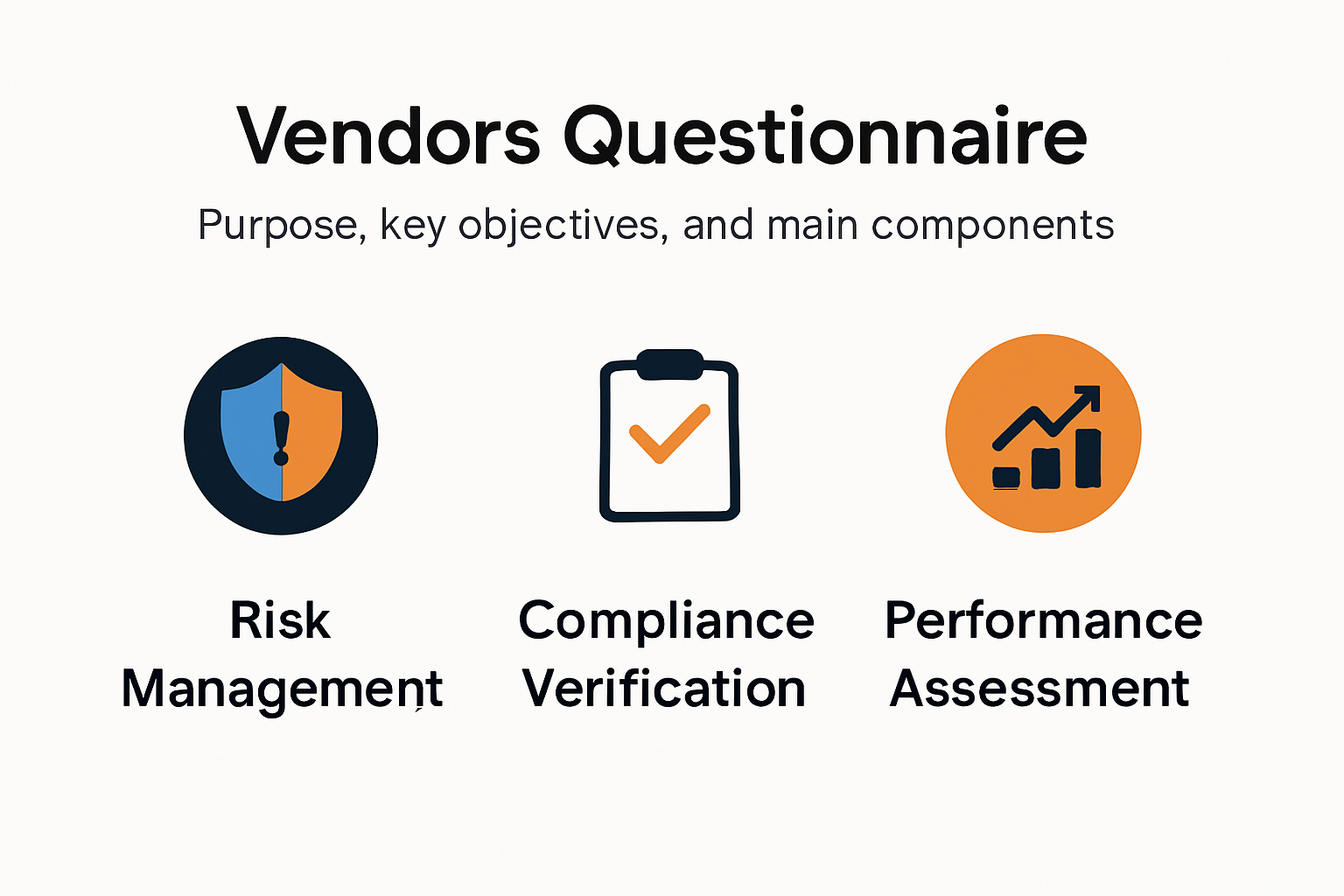
The primary objectives of a vendor questionnaire include:
- Risk Management: Identifying potential operational and compliance risks before they impact your organization
- Compliance Verification: Ensuring vendors meet regulatory and industry-specific requirements
- Performance Assessment: Evaluating vendor capabilities and alignment with organizational standards
Comprehensive Information Gathering
A well-constructed vendors questionnaire goes beyond surface-level inquiries. University of Louisville's Security Resources highlights that these documents systematically collect data on critical aspects such as:
- Vendor financial health and stability
- Cybersecurity protocols and data protection measures
- Operational capabilities and infrastructure
- Quality assurance processes
- Compliance with industry regulations
By conducting a thorough vendor assessment through a comprehensive questionnaire, organizations can make informed decisions that minimize potential risks and establish reliable partnerships. The questionnaire acts as a due diligence tool that provides a structured approach to evaluating potential business relationships.
Effective vendor questionnaires are not just checklist exercises but strategic instruments that enable organizations to build robust, transparent, and secure supply chains. They represent a proactive approach to risk management, helping businesses identify potential vulnerabilities before they become significant problems.
The complexity and depth of a vendors questionnaire can vary depending on the industry, regulatory environment, and specific organizational requirements. However, the fundamental goal remains consistent: to gather comprehensive information that supports strategic decision-making and protects the organization's interests.
As business environments become increasingly interconnected and complex, the role of vendor questionnaires in risk management and strategic partnership selection continues to grow in importance. Organizations that invest time and resources in developing robust vendor assessment processes are better positioned to navigate the challenges of modern business ecosystems.
To help clarify the different purposes a vendor questionnaire serves, the following table summarizes the core objectives alongside the types of information typically gathered.
| Purpose | Description | Example Information Collected |
|---|---|---|
| Risk Management | Identify potential operational and compliance risks | Financial health, cybersecurity, disaster recovery |
| Compliance Verification | Ensure vendors meet regulatory and industry-specific requirements | Certifications, regulatory adherence |
| Performance Assessment | Evaluate vendor capabilities and alignment with organizational standards | Operational capacity, quality assurance |
Essential Questions to Include in Your Vendors Questionnaire
Constructing a comprehensive vendors questionnaire requires strategic planning and a holistic approach to capturing critical information about potential business partners. The right set of questions can provide deep insights into a vendor's capabilities, risks, and alignment with your organizational standards.Security and Compliance Fundamentals
According to AuditBoard, organizations must prioritize specific security and compliance questions in their vendor assessment process. NIST guidelines recommend focusing on several key areas:
- Security Controls: Detailed inquiries about existing cybersecurity infrastructure and protective mechanisms
- Compliance Certifications: Verification of industry-standard certifications like ISO 27001, SOC 2
- Data Protection Protocols: Comprehensive questions about data handling, encryption, and privacy standards
Operational and Financial Risk Assessment
Beyond security, Mitratech emphasizes the importance of evaluating broader operational and financial dimensions. Critical questions should explore:
- Business continuity and disaster recovery capabilities
- Financial stability and long-term viability
- Governance structures and organizational accountability
- Supply chain management practices
- Fourth-party risk exposure
Comprehensive Vendor Performance Evaluation
Sprinto's vendor risk assessment framework suggests developing a multifaceted questionnaire that covers:
- Detailed vendor background and reference checks
- Information security infrastructure assessment
- Incident response and management protocols
- Physical security measures
- Cloud configuration and technological capabilities
A meticulously designed vendors questionnaire transforms from a simple checklist into a strategic tool for risk mitigation. By crafting questions that dig deep into a vendor's operational, financial, and security landscape, organizations can make informed decisions that protect their interests and minimize potential vulnerabilities.
The most effective questionnaires are not static documents but dynamic instruments that evolve with changing business environments. They should be regularly updated to reflect emerging technological trends, regulatory changes, and shifting risk profiles. Organizations must view these questionnaires as living documents that provide ongoing insights into vendor performance and potential risks.
Remember that the goal is not just to collect information but to gain meaningful insights that support strategic decision-making. Each question should serve a specific purpose: revealing capabilities, uncovering potential risks, and understanding the vendor's commitment to excellence and compliance.
ultimately, a well-constructed vendors questionnaire is your first line of defense in building robust, secure, and reliable business partnerships. It represents a proactive approach to vendor management that goes far beyond traditional risk assessment methods.

Best Practices for Customizing Vendors Questionnaires
Customizing vendors questionnaires requires a strategic approach that balances thoroughness with specificity. A one-size-fits-all approach fails to capture the nuanced risks and unique characteristics of different vendors across various industries and service types.
Tailoring Questions to Vendor-Specific Risks
Medium's vendor risk assessment guide emphasizes the critical importance of customization. Organizations must develop questionnaires that reflect the specific context of each vendor. This means adapting questions based on:
- Industry Sector: Different industries have unique regulatory and operational challenges
- Service Type: Technology vendors require different assessment criteria compared to manufacturing partners
- Organizational Size: Small vendors may have different risk profiles than large enterprises
Communication and Clarity in Questionnaire Design
Centraleyes recommends using clear and concise language that eliminates ambiguity. Effective questionnaires should:
- Use straightforward, non-technical language
- Provide clear instructions for each section
- Include specific examples to guide accurate responses
- Avoid industry jargon that might confuse respondents
Leveraging Standardized Frameworks
Auditive's risk assessment framework suggests incorporating established guidelines to ensure comprehensive coverage. Organizations can enhance their vendors questionnaires by:
- Aligning with recognized standards like NIST and ISO
- Integrating multiple risk assessment perspectives
- Creating a consistent evaluation methodology
- Developing scalable assessment approaches
The art of creating an effective vendors questionnaire lies in striking a balance between comprehensive investigation and user-friendly design. Too complex, and vendors may struggle to complete the assessment. Too simplistic, and you risk missing critical risk indicators.
Additionally, organizations should view the questionnaire as a dynamic tool. Regular updates are crucial to address emerging technological risks, changing regulatory landscapes, and evolving business environments. What works today might become obsolete tomorrow.
Consider implementing a collaborative approach. Engage with vendors to understand their perspective, refine questionnaire design, and create a mutual understanding of risk assessment goals. This approach transforms the questionnaire from a mere compliance document to a strategic partnership tool.
Technology can play a significant role in modernizing vendors questionnaires. Automated platforms can help standardize responses, improve data analysis, and reduce the administrative burden on both vendors and assessment teams.
Ultimately, a well-designed vendors questionnaire is more than a risk management document. It's a communication bridge that enables organizations to build transparent, secure, and mutually beneficial business relationships.
The table below summarizes key best practices and the intended benefit for customizing vendor questionnaires, based on the article's recommendations.
| Best Practice | Intended Benefit |
|---|---|
| Tailor to Vendor-Specific Risks | More relevant and meaningful assessments |
| Use Clear, Concise Language | Greater clarity and improved response accuracy |
| Leverage Standardized Frameworks | Consistency and comprehensive risk coverage |
| Regularly Update Questionnaire | Address emerging threats and regulatory changes |
| Implement Collaborative Design Approach | Build transparency and foster strategic partnership |
How to Evaluate and Act on Vendor Responses
Evaluating vendor responses requires a systematic, data-driven approach that goes beyond surface-level analysis. Organizations must develop robust mechanisms to transform questionnaire responses into actionable insights that inform strategic decision-making.
Risk Scoring and Quantitative Assessment
AssessITS methodology recommends implementing a comprehensive risk evaluation framework that transforms vendor responses into quantifiable metrics. Key strategies include:
- Weighted Risk Scoring: Assign numerical values to different response categories
- Comparative Analysis: Benchmark vendor responses against industry standards
- Dynamic Risk Categorization: Create multi-tier risk classification systems
Advanced Response Verification Techniques
Blockchain Risk Management Research suggests implementing advanced verification mechanisms to validate vendor response integrity:
- Cross-reference responses with external data sources
- Request supplementary documentation for critical claims
- Conduct independent security audits
- Utilize technological verification tools
Actionable Response Management
Effective vendor response management involves developing clear escalation and mitigation protocols:
- Establish clear thresholds for acceptable risk levels
- Create structured remediation pathways for vendors with identified vulnerabilities
- Develop ongoing monitoring and reassessment processes
- Implement continuous improvement mechanisms
Successful vendor response evaluation is not a one-time event but a continuous process of risk assessment and management. Organizations must remain agile, adapting their evaluation strategies to emerging technological and regulatory landscapes.
Technology plays a crucial role in transforming vendor response analysis. Advanced analytics, machine learning algorithms, and automated risk assessment tools can provide deeper insights and more nuanced evaluations than traditional manual methods.
The ultimate goal of vendor response evaluation is not merely to identify risks but to foster collaborative relationships that drive mutual growth and security. By approaching vendor assessments as strategic partnerships rather than compliance exercises, organizations can build more resilient and adaptive vendor ecosystems.
Remember that transparency and clear communication are key. Vendors should understand the rationale behind assessment criteria and have opportunities to address identified vulnerabilities. This approach transforms risk management from a punitive process to a constructive dialogue.
Continuous learning and adaptation are essential. Regularly update evaluation criteria, incorporate emerging best practices, and remain open to innovative approaches in vendor risk management. The most effective organizations view vendor assessments as dynamic, evolving processes that reflect the complex, interconnected nature of modern business environments.
Frequently Asked Questions
What is a vendor questionnaire and why is it important?
A vendor questionnaire is a comprehensive assessment tool used by organizations to evaluate potential business partners. It helps identify risks, ensure compliance, and assess vendor performance before entering a business relationship.
What key questions should be included in a vendor questionnaire?
Essential questions should focus on security controls, compliance certifications, data protection protocols, operational capabilities, financial stability, and governance structures to provide a thorough risk assessment.
How can I customize a vendor questionnaire for my specific industry?
Customize your vendor questionnaire by tailoring questions to reflect the specific risks associated with your industry, service type, and vendor size. Ensure that the language is clear and relevant to the context of your organization.
What are the best practices for evaluating vendor responses?
Best practices for evaluating vendor responses include implementing risk scoring systems, using advanced verification techniques, establishing clear escalation processes, and maintaining ongoing monitoring and reassessment to manage vendor risks effectively.
Ready to Break the Cycle of Manual Vendor Questionnaires?
Spending hours struggling with complex vendor questionnaires and risk assessments can drain your team's productivity and slow down vital partnerships. As highlighted in the article, many organizations face time-consuming manual reviews, siloed communication, and the stress of meeting ever-tougher compliance needs. You saw how effective assessments demand customized questions, dynamic evaluation, and airtight collaboration.
Imagine transforming your approach from tedious and error-prone to automated and precise. With Skypher's AI Questionnaire Automation Tool, you can minimize human error, cut turnaround times, and gain complete visibility across every security questionnaire. Collaborate in real time, integrate seamlessly with 40+ risk platforms, and build instant trust with a Custom Trust Center. Do not let old methods hold you back. Visit Skypher now to accelerate your vendor risk management, delight your stakeholders, and stay ahead of risk—before your competitors do.