

The world of third-party management is rapidly evolving—90% of organizations now prioritize centralized models to streamline operations. But here's the kicker: many still approach it as just another administrative task. Because the truth is, effective third-party management isn't merely about oversight; it's a powerful strategy to enhance efficiency, mitigate risks, and drive innovation across the board.
Understanding 3rd Party Management

Third-party management (TPM) represents a comprehensive framework for overseeing relationships with external entities that provide services, products, or resources to your organization. Unlike traditional vendor management, 3rd party management encompasses a broader scope of activities and strategic considerations aimed at maximizing value while minimizing risk exposure.
Defining 3rd Party Management
At its core, what is 3rd party management? It's a systematic approach to governing relationships with any external organization that contributes to your business operations. This includes suppliers providing raw materials, vendors offering products or services, and service providers delivering specialized technologies or capabilities.

Third-party management extends beyond simple procurement or contract management. It involves a holistic lifecycle that according to industry experts includes intake processes, risk appetite definition, inherent risk calculations, and ongoing assessments. This comprehensive approach ensures that third-party relationships align with organizational goals while mitigating potential risks.
Key Components of Effective 3rd Party Management
Successful implementation of third-party management requires several interconnected elements:
Strategic Alignment
Effective third-party management begins with aligning external partnerships to your organizational objectives. This means selecting partners whose capabilities complement your strategic direction and whose values match your corporate culture. Strategic alignment creates the foundation for productive, mutually beneficial relationships.
Risk Assessment and Mitigation
Understanding third party risk meaning is crucial for protecting your organization. Every external relationship introduces potential vulnerabilities, whether operational, financial, reputational, or compliance-related. A robust TPM framework includes mechanisms for identifying, assessing, and mitigating these risks through due diligence, performance monitoring, and contingency planning.
Contractual Governance
Clear, comprehensive contracts provide the legal structure for third-party relationships. These agreements should outline performance expectations, service levels, compliance requirements, and remediation processes. Well-crafted contracts protect both parties while establishing accountability mechanisms that drive performance.
Performance Monitoring
Regular evaluation of third-party performance against established metrics ensures value delivery and identifies issues before they escalate. Effective monitoring includes both quantitative measures (like on-time delivery rates) and qualitative assessments (such as relationship quality and innovation contributions).
Relationship Management
Beyond transactional oversight, successful third-party management includes building collaborative partnerships. Strategic suppliers deserve intentional relationship development through regular communication, joint planning, and shared objectives that benefit both organizations.
The Evolution of TPRM Meaning
Third-party risk management (TPRM) has traditionally focused on identifying and mitigating risks associated with external partners. However, the TPRM meaning has evolved significantly in recent years. Today's approach encompasses not only security and compliance concerns but also privacy considerations, ethical standards, and operational resilience capabilities.
This expansion reflects growing recognition that third parties represent extensions of your own organization in many respects. Their actions—and missteps—can directly impact your operations, reputation, and bottom line. As digital transformation accelerates and supply chains grow more complex, comprehensive third-party management becomes increasingly vital.
Technology's Role in 3rd Party Management
Modern third-party management leverages specialized technologies to streamline processes, enhance visibility, and improve decision-making. These platforms typically offer features like:
- Centralized vendor information repositories
- Automated risk assessment tools
- Contract management capabilities
- Performance dashboards and analytics
- Workflow automation for approvals and renewals
By digitizing and automating key aspects of third-party management, organizations gain efficiency while maintaining more consistent oversight of their external relationships.
Understanding what is 3rd party management provides the foundation for developing effective strategies that maximize the value of external partnerships while protecting your organization from associated risks. With this framework in mind, we can explore practical approaches for enhancing your third-party management capabilities.
Key Takeaways
| Takeaway | Explanation |
|---|---|
| Comprehensive Framework Essential | A structured approach to third-party management includes risk assessment, contractual governance, and relationship management, ensuring alignment with organizational goals and risk mitigation. |
| Centralized Programs Promote Efficiency | Establishing a centralized third-party management program fosters consistent oversight and helps eliminate silos, leading to improved resource allocation and compliance monitoring. |
| Risk-Based Approach to Oversight | Prioritizing third-party relationships based on their significance and risk profile allows organizations to allocate resources effectively and ensure adequate monitoring of critical partners. |
| Technology Enhances Management | Leveraging integrated management platforms and analytics tools provides visibility, streamlines processes, and supports informed decision-making within third-party management. |
| Collaborative Risk Mitigation | Engaging in cooperative risk management with third parties encourages shared responsibility for identifying and addressing risks, thus strengthening partnerships and enhancing resilience. |
Key Benefits of 3rd Party Management
Implementing a robust third-party management framework delivers substantial advantages that extend far beyond simple cost savings. Organizations that excel at what is 3rd party management gain competitive advantages through multiple dimensions of value creation and risk reduction.
Risk Mitigation and Compliance Assurance
Perhaps the most compelling benefit of effective third-party management is comprehensive risk mitigation. Each external relationship introduces potential vulnerabilities to your organization—from data security concerns to operational disruptions. A structured approach to third-party management identifies these risks early and implements controls to minimize their impact.
Compliance requirements continue to grow more complex across industries. Third-party management provides the documentation and oversight necessary to demonstrate regulatory compliance. This proactive stance helps organizations avoid costly penalties, remediation expenses, and reputational damage associated with compliance failures.
According to a recent Ernst & Young Global Third-Party Risk Management Survey, 90% of organizations are now moving toward centralized third-party risk management models. This shift reflects growing recognition that fragmented approaches fail to address the interconnected nature of third-party risks in today's business environment.
Enhanced Operational Performance
Strategic third-party management transforms external relationships from transactional interactions into performance-driving partnerships. By establishing clear expectations, measurement frameworks, and feedback mechanisms, organizations can:
Improve Service Delivery
Systematic monitoring of service levels ensures third parties meet or exceed performance expectations. When issues arise, established escalation procedures facilitate rapid resolution, minimizing disruptions to your operations and customer experience.
Optimize Resource Allocation
Effective third-party management provides visibility into spending patterns and service utilization. This transparency enables more informed decisions about resource allocation, helping organizations identify opportunities to consolidate vendors, leverage economies of scale, and eliminate redundant services.
Accelerate Innovation
Strategic third-party relationships can become valuable sources of innovation. When managed effectively, these partnerships allow organizations to access specialized expertise and emerging technologies without developing these capabilities internally. This approach accelerates innovation cycles while minimizing investment risks.
Cost Optimization Beyond Simple Savings
While cost reduction often drives initial interest in third-party management, mature programs deliver financial benefits that transcend basic price negotiations:
Total Cost Visibility
Comprehensive third-party management provides visibility into direct and indirect costs associated with external relationships. This transparency reveals the true economics of third-party engagements, enabling more accurate cost-benefit analyses and better-informed sourcing decisions.
Risk-Adjusted Cost Evaluation
Advanced third-party management incorporates risk factors into cost assessments. This approach recognizes that the lowest-price provider may introduce risks that generate significant costs over time. By evaluating total risk-adjusted costs, organizations make more economically sound decisions.
Opportunity Cost Reduction
Effective third-party management minimizes the opportunity costs associated with performance failures, compliance issues, and relationship breakdowns. By preventing these problems or addressing them quickly, organizations avoid lost productivity, remediation expenses, and missed market opportunities.
Strategic Relationship Development
Beyond operational and financial benefits, sophisticated third-party management nurtures strategic relationships that create lasting competitive advantages:
Value Co-Creation
Collaborative relationships with key third parties can generate innovative solutions to business challenges. By aligning goals and sharing information appropriately, both organizations can develop offerings that neither could create independently.
Supply Chain Resilience
Proactive third-party management builds resilience into supply networks. By understanding dependencies, diversifying appropriately, and implementing contingency plans, organizations can better withstand disruptions ranging from natural disasters to geopolitical tensions.
Knowledge Transfer
Strategic third-party relationships facilitate valuable knowledge transfer between organizations. This exchange of expertise enhances capabilities on both sides, creating a virtuous cycle of continuous improvement and innovation.
Reputation Protection and Enhancement
In today's interconnected business environment, third-party actions directly impact your organization's reputation. Effective third-party management helps protect and enhance this valuable intangible asset:
Brand Protection
Rigorous third-party management practices mitigate the risk of reputational damage from third-party misdeeds. By ensuring external partners adhere to ethical standards and contractual obligations, organizations protect their brand equity and stakeholder trust.
Sustainability Advancement
Extending environmental and social responsibility requirements to third parties supports organizational sustainability goals. This approach allows companies to align their entire value chain with sustainability commitments, strengthening their position with customers, investors, and regulators who prioritize responsible business practices.
Understanding the comprehensive benefits of third-party management illustrates why organizations increasingly view this discipline as a strategic imperative rather than an administrative function. When implemented effectively, third-party management creates significant value while protecting against an expanding universe of risks.
Implementing 3rd Party Management Strategies
Successful implementation of third-party management strategies requires a structured approach that balances oversight with operational efficiency. Organizations seeking to enhance what is 3rd party management within their operations can follow these proven implementation strategies to transform their external relationship management.
Developing a Comprehensive Framework
The foundation of effective third-party management lies in establishing a cohesive framework that guides all aspects of external relationship governance. This framework should reflect your organization's unique needs while incorporating industry best practices.
Creating a Centralized Program
A centralized third-party management program provides consistent oversight across all departments and functions. This approach eliminates silos that often lead to duplicated efforts, inconsistent standards, and visibility gaps. Centralization doesn't necessarily mean centralizing all activities, but rather establishing common processes, tools, and governance structures.
The centralized program should define:
- Clear roles and responsibilities for stakeholders
- Standard processes for third-party selection and onboarding
- Consistent risk assessment methodologies
- Unified performance monitoring approaches
- Integrated technology solutions for documentation and reporting
Establishing a Tiered Approach
Not all third-party relationships carry equal significance or risk. A tiered approach allocates oversight resources proportionally to the importance and risk profile of each relationship. This strategy optimizes resource utilization while ensuring appropriate coverage across your third-party ecosystem.
A typical tiering structure might include:
Tier 1: Strategic Partners
These critical relationships directly impact core operations, involve sensitive data access, or represent significant spending. They warrant comprehensive due diligence, regular executive reviews, and detailed performance monitoring.
Tier 2: Important Vendors
These relationships support important functions but with less critical impact. They require standard due diligence, regular operational reviews, and consistent performance tracking.
Tier 3: Routine Suppliers
These lower-risk relationships involve minimal sensitive data access or operational impact. They need basic screening, standard contracts, and periodic performance checks.
Implementing the Third-Party Lifecycle
Effective third-party management encompasses the entire relationship lifecycle from initial identification through eventual termination. Each phase requires specific processes and controls to maximize value and minimize risk.
Identification and Qualification
The third-party management process begins with identifying potential partners and qualifying them against predetermined criteria. This phase sets the foundation for successful relationships by ensuring alignment with organizational needs.
Key activities include:
- Defining clear business requirements and objectives
- Conducting market research to identify potential partners
- Preliminary screening against basic criteria
- Requesting and evaluating preliminary information
- Assessing strategic fit with organizational goals
Due Diligence and Risk Assessment
Comprehensive due diligence reveals potential risks before contractual commitments are made. The third party risk meaning becomes tangible during this phase as organizations evaluate specific vulnerabilities across multiple dimensions.
Effective due diligence includes:
- Financial stability analysis
- Operational capability assessment
- Security and privacy control evaluation
- Compliance verification
- Reputational research
- Business continuity review
Experts note that cybersecurity remains the top priority in third-party risk management, with business continuity following as the second leading concern. This reflects the growing threat landscape organizations face when engaging external partners.
Contracting and Onboarding
The contracting phase establishes the legal foundation for the relationship, while onboarding integrates the third party into your operational processes. Both elements are critical for setting expectations and enabling effective collaboration.
Effective contracting practices include:
- Standardized contract templates with customizable elements
- Clear performance metrics and service level agreements (SLAs)
- Specific compliance and security requirements
- Right-to-audit provisions
- Detailed termination and transition clauses
- Appropriate liability and indemnification terms
Onboarding should include:
- Stakeholder introductions and relationship kickoff
- Systems access and integration planning
- Process alignment and documentation
- Training and knowledge transfer
- Communication protocols establishment
Ongoing Monitoring and Management
Continuous oversight maintains alignment between expectations and delivery while identifying emerging risks. This phase represents the operational core of TPRM meaning in practice.
Effective monitoring encompasses:
- Regular performance reviews against established metrics
- Periodic risk reassessments based on changing conditions
- Compliance verification through documentation review
- Service delivery evaluations and user feedback collection
- Financial health monitoring for critical partners
- Security and privacy control validation
Termination and Transition
All third-party relationships eventually end, whether through planned transitions or unexpected terminations. Proper planning for this phase prevents disruptions and protects organizational assets.
Key termination considerations include:
- Data retrieval and destruction protocols
- Intellectual property protection
- Knowledge transfer processes
- Transition support requirements
- Post-relationship obligations
Technology Enablement
Modern third-party management requires sophisticated technology support to manage complexity and scale effectively. Investing in appropriate technology solutions dramatically enhances program effectiveness.
Integrated Management Platforms
Purpose-built third-party management platforms centralize information, automate workflows, and provide comprehensive visibility. These solutions typically include:
- Central third-party data repository
- Automated risk assessment tools
- Questionnaire distribution and collection
- Document management capabilities
- Performance dashboard and reporting
- Workflow automation for approvals and notifications
- Integration with enterprise systems
Data Analytics and Reporting
Advanced analytics transform third-party data into actionable insights. These capabilities enable proactive management and strategic decision-making.
Valuable analytics applications include:
- Risk trend identification across the third-party portfolio
- Performance pattern analysis to predict future issues
- Spending analysis to identify consolidation opportunities
- Compliance verification through automated control testing
- Executive reporting on key program metrics
Building a Mature Program
Third-party management maturity evolves through continuous improvement cycles. Organizations should regularly assess their capabilities and implement targeted enhancements.
Capability Assessment
Periodic evaluation of program capabilities against industry benchmarks identifies improvement opportunities. A typical assessment examines:
- Governance structures and executive engagement
- Process comprehensiveness and consistency
- Technology utilization and integration
- Staff expertise and resource adequacy
- Program performance metrics and outcomes
Continuous Improvement
Regular refinement keeps the program aligned with evolving business needs and emerging best practices. Effective improvement strategies include:
- Incorporating lessons learned from incidents and near-misses
- Adapting to regulatory changes and industry standards
- Streamlining processes to reduce friction and improve adoption
- Enhancing technology capabilities through upgrades and integration
- Developing staff skills through training and certification
Implementing effective third-party management strategies transforms external relationships from potential vulnerabilities into strategic assets. By taking a structured, risk-based approach across the entire relationship lifecycle, organizations can maximize the value of their third-party ecosystem while maintaining appropriate safeguards against associated risks.
Mitigating Risks in 3rd Party Management
Understanding what is 3rd party management also means recognizing the inherent risks these relationships introduce. The expanded reliance on external parties creates a complex risk landscape that requires strategic mitigation approaches. Recent research reveals the magnitude of this challenge, with 84% of organizations reporting operational disruptions due to third-party risk incidents in a 2022 Gartner survey.
Identifying Common Risk Categories
Effective risk mitigation begins with a comprehensive understanding of the potential vulnerabilities across various dimensions. Organizations must evaluate these risk categories systematically to develop targeted controls.
Strategic Risk
Strategic risk emerges when third-party relationships fail to deliver expected business value or align with organizational objectives. This misalignment can result from changing market conditions, shifting business priorities, or the third party's inability to adapt to evolving requirements.
Mitigation strategies include:
- Establishing clear business cases with measurable outcomes for each relationship
- Regular strategic alignment reviews with key third parties
- Developing contingency plans for critical services
- Maintaining market awareness to identify alternative providers
Operational Risk
Operational risk involves potential disruptions to business processes due to third-party performance failures. These disruptions can range from minor inconveniences to catastrophic business interruptions depending on the criticality of the affected function.
Effective operational risk controls include:
- Detailed service level agreements with performance metrics
- Regular operational reviews and performance assessments
- Redundancy planning for critical services
- Integration of third-party contingency plans with internal business continuity programs
Information Security and Privacy Risk
Third parties often require access to sensitive data and systems, creating significant security and privacy vulnerabilities. These risks have intensified with increasing regulatory requirements and sophisticated cyber threats.
Robust mitigation approaches include:
- Comprehensive security assessments before granting system access
- Data minimization principles—sharing only what's necessary
- Regular security control validation through assessments and audits
- Incident response planning that addresses third-party breaches
- Clear contractual requirements for security measures and breach notification
Compliance and Regulatory Risk
Regulatory authorities increasingly hold organizations accountable for their third parties' compliance failures. This extended liability creates significant risk exposure across various regulatory domains.
Effective compliance risk mitigation includes:
- Thorough due diligence on regulatory compliance history
- Contractual provisions requiring specific compliance measures
- Regular compliance attestations and documentation
- Monitoring regulatory changes that affect third-party requirements
- Audit rights to verify compliance when necessary
Reputational Risk
Third-party actions can directly impact your organization's reputation. Customers, investors, and other stakeholders often make little distinction between your organization and its third-party partners when problems occur.
Reputational risk controls include:
- Ethical standards assessment during due diligence
- Contractual requirements for acceptable business practices
- Social responsibility and sustainability screening
- Media monitoring for third-party issues
- Crisis communication planning for third-party incidents
Financial Risk
Financial vulnerabilities within third-party relationships include both direct risks to the third party's financial stability and indirect risks related to cost management and financial exposure.
Mitigation strategies include:
- Financial health assessments during selection and ongoing monitoring
- Contractual protections against unexpected price increases
- Diversification of critical services across multiple providers
- Financial performance bonds or escrow arrangements for critical services
- Exit cost modeling and transition funding provisions
Implementing a Risk-Based Approach
With limited resources for third-party oversight, organizations must allocate their attention and controls proportionally to risk exposure. A risk-based approach provides this necessary prioritization framework.
Risk Assessment Methodology
A structured risk assessment methodology provides consistency and comprehensiveness in evaluating third-party relationships. This approach typically includes:
- Inherent risk evaluation—assessing risk before applying controls
- Control effectiveness assessment—evaluating existing mitigations
- Residual risk calculation—determining remaining risk exposure
- Risk tolerance alignment—comparing residual risk to acceptable levels
This methodology should be documented, repeatable, and applied consistently across the third-party portfolio.
Dynamic Risk Monitoring
Risk profiles change continuously due to internal and external factors. Dynamic monitoring captures these changes through:
- Continuous scanning for negative news and regulatory actions
- Periodic reassessment based on relationship changes
- Tracking of performance indicators that suggest emerging risks
- Integration of threat intelligence relevant to key third parties
- Regular reviews of risk ratings and categorizations
Incident Response Integration
Effective incident management processes must encompass third-party-related events. This integration includes:
- Clear escalation procedures for third-party incidents
- Defined roles and responsibilities during incidents
- Regular testing of incident response plans involving third parties
- Post-incident analysis to identify preventive measures
- Feedback loops to improve risk assessment accuracy
Contractual Risk Mitigation
Contracts provide the legal framework for risk allocation and management. Well-crafted agreements establish protective measures that significantly reduce exposure.
Essential Risk Mitigation Clauses
Certain contractual provisions are particularly valuable for risk management:
- Right to Audit: Establishes the authority to verify compliance through documentation reviews and on-site assessments
- Performance Standards: Defines specific, measurable performance requirements with associated remedies for failures
- Security Requirements: Specifies required security controls, testing procedures, and breach notification processes
- Compliance Obligations: Outlines regulatory requirements the third party must satisfy, including evidence of compliance
- Subcontractor Governance: Establishes approval requirements and flow-down provisions for any subcontractors
- Business Continuity: Requires documented continuity plans, testing protocols, and recovery time objectives
- Limitation of Liability: Appropriately balances risk transfer while maintaining third-party accountability
- Termination Rights: Provides flexibility to exit relationships that present unacceptable risks
Negotiation Strategies
Effective contract negotiation balances risk mitigation with relationship value:
- Prioritize protections based on risk assessment results
- Distinguish between non-negotiable requirements and preferred terms
- Explain the business rationale behind key risk provisions
- Consider alternative approaches that achieve similar risk reduction
- Document risk acceptance decisions when optimal terms cannot be achieved
Collaborative Risk Management
The most effective risk mitigation occurs through collaboration rather than adversarial oversight. Building productive partnerships creates mutual investment in risk reduction.
Shared Risk Assessment
Collaborative risk identification improves detection and prioritization:
- Joint risk workshops to identify shared concerns
- Transparent sharing of relevant risk information
- Mutual agreement on key risk indicators
- Collaborative development of mitigation strategies
- Regular risk reviews with shared accountability
Continuous Improvement
Ongoing enhancement of risk management practices strengthens protection:
- Shared lessons learned from incidents and near-misses
- Joint development of improved control measures
- Regular updates to risk assessments based on changing conditions
- Evolutionary improvement of monitoring capabilities
- Adaptation to emerging threats and vulnerabilities
Risk mitigation in third-party management requires a multifaceted approach that combines structured assessment, contractual protection, active monitoring, and collaborative engagement. By implementing these comprehensive strategies, organizations can significantly reduce their vulnerability while maintaining productive external relationships.
Understanding the third party risk meaning in its full context allows organizations to develop proportional, effective controls that protect critical interests without creating unnecessary bureaucracy or hampering business relationships. This balanced approach is the hallmark of mature third-party risk management.
Frequently Asked Questions
What is third-party management?
Third-party management (TPM) is a comprehensive framework for overseeing relationships with external entities that provide services, products, or resources to an organization. It aims to maximize value while minimizing risk exposure, extending beyond traditional vendor management.
Why is third-party risk management important?
Third-party risk management is crucial because external partners can introduce vulnerabilities that impact an organization's operations, reputation, and compliance. Effective TPM helps identify, assess, and mitigate these risks, ensuring a stronger operational foundation.
What are the key components of effective third-party management?
Key components include strategic alignment, risk assessment and mitigation, contractual governance, performance monitoring, and relationship management. These elements work together to optimize external partnerships while minimizing potential risks.
How can technology improve third-party management?
Technology enhances third-party management by streamlining processes, providing centralized information repositories, automating risk assessments, and offering analytics tools for performance monitoring. This boosts efficiency and ensures more consistent oversight of external relationships.
Unlock Your Third-Party Management Potential with Skypher
In today's fast-paced business environment, effective third-party management is no longer just an oversight task—it's a crucial strategy to enhance operational efficiency and drive innovation. As mentioned in the article, organizations are increasingly recognizing the importance of an integrated approach to managing external relationships, balancing risk assessment with performance monitoring. But with rising complexities and time-consuming processes, how can your organization keep up?
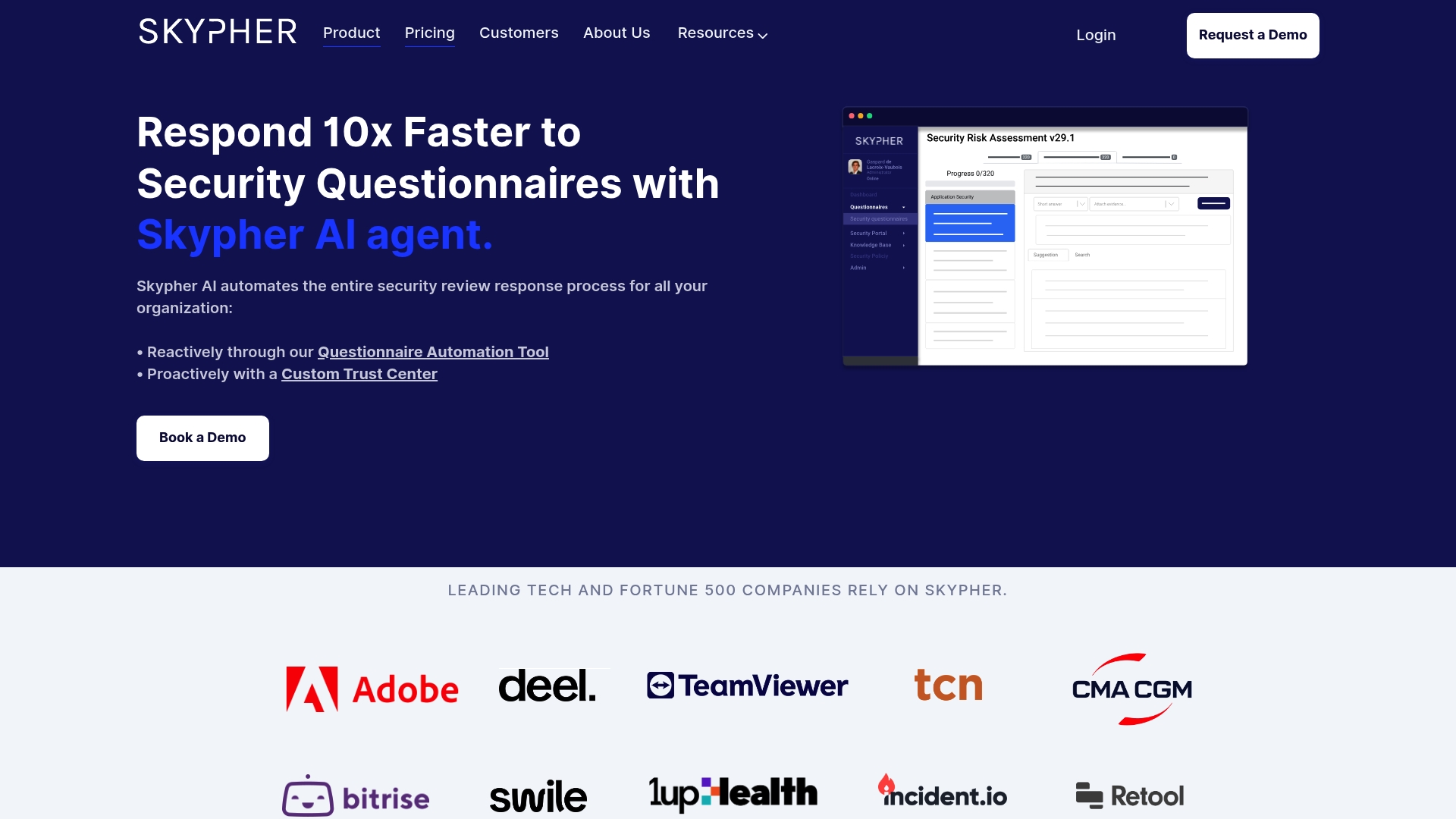
Skypher's AI Questionnaire Automation Tool is your answer. By streamlining and automating the response process for security questionnaires—a common pain point for many tech and finance organizations—Skypher empowers teams to communicate and collaborate more effectively. With features like real-time integration with over 40 third-party risk management platforms and a customizable Trust Center, our platform enhances your operational productivity while ensuring rigorous risk mitigation. Say goodbye to cumbersome paperwork and hello to faster, more accurate reviews!
Don’t let inefficient processes hold you back. Take control of your third-party management today! Visit Skypher and see how our solutions can amplify your operational excellence NOW!