
Introduction to GRC Tools: Definition and Importance
Have you ever wondered what is a GRC tool and why organizations seem to be buzzing about them lately? Let me break it down for you in simple terms.
GRC stands for Governance, Risk, and Compliance – three critical aspects that keep businesses running smoothly and safely in today's complex regulatory environment. As someone who's witnessed countless organizations struggle with spreadsheets and disconnected systems, I can tell you that a unified approach to GRC is game-changing.
A GRC tool (or GRC system) is essentially software that helps companies manage these three interconnected functions together. Rather than having separate solutions for each component, a GRC platform integrates everything into one cohesive system.
As Richard Anderson, a renowned risk management expert, puts it: "In today's business landscape, GRC isn't just nice to have—it's essential for organizational resilience and sustainable growth."
The importance of implementing proper GRC solutions cannot be overstated. From financial institutions managing compliance with banking regulations to healthcare organizations protecting patient data, GRC technology helps streamline processes, reduce costs, and minimize risks.
Whether you're exploring IT GRC tools for cybersecurity management or broader corporate governance risk and compliance solutions, understanding the fundamentals of what these systems offer is your first step toward more effective risk management and regulatory compliance.
What is GRC? Understanding the Acronym GRC and Its Full Form
Let's demystify the alphabet soup of business terminology! The acronym GRC stands for Governance, Risk, and Compliance - that's the GRC full form that you'll hear tossed around in corporate boardrooms and IT departments alike.
When someone asks you to define GRC, you can break it down into these three interconnected pillars:
Governance
This is about setting the right direction and making sure everyone's following the rules. Think of it as the corporate equivalent of parents setting household guidelines - but with way more paperwork! Governance establishes the frameworks, policies, and processes that guide how an organization operates.
Risk
Here's where we identify, analyze, and manage potential threats to the business. As I like to say, risk management isn't about avoiding all risks - it's about taking the right ones! Every business decision carries some element of risk, and this component of GRC in security and business operations helps organizations make informed choices.
Compliance
This focuses on adhering to laws, regulations, standards, and internal policies. With regulations constantly evolving (and multiplying!), staying compliant is like trying to hit a moving target while blindfolded.
As Michael Rasmussen, known as the "Father of GRC," explains: "G R C full form isn't just three separate activities - it's a capability that enables an organization to reliably achieve objectives while addressing uncertainty and acting with integrity."
Understanding what GRC stands for is your first step toward appreciating why dedicated GRC applications and tools have become essential in modern business operations.

What is a GRC Tool? Overview of GRC Systems and Platforms
So what is a GRC tool, exactly? I like to think of it as the Swiss Army knife for organizational risk and compliance professionals. A GRC tool is software designed to integrate and streamline governance, risk management, and compliance activities across an enterprise.
Imagine trying to manage all your company's policies, risks, and regulatory requirements using spreadsheets and email chains (I've been there, and trust me, it's not pretty!). A GRC system brings all these processes together in one digital ecosystem, eliminating silos and creating visibility across departments.
Key Components of GRC Platforms
When exploring what is a GRC platform, you'll find most solutions include:
- Policy management modules for creating, distributing, and tracking policies
- Risk assessment frameworks to identify, evaluate, and mitigate risks
- Compliance management features to track regulatory requirements and evidence collection
- Audit management capabilities for planning and conducting internal audits
- Reporting dashboards that provide real-time insights and documentation
As Carole Switzer, co-founder of OCEG (a nonprofit GRC think tank), puts it: "A well-designed GRC solution doesn't just automate existing processes—it transforms how organizations approach governance, risk, and compliance altogether."
The beauty of modern GRC applications is their flexibility. Whether you're in financial services navigating complex banking regulations, healthcare managing patient data privacy, or technology addressing IT GRC management concerns, there's likely a GRC tool configured for your industry's specific needs.
Think of investing in a GRC platform as buying peace of mind wrapped in software code—with a healthy ROI to boot!
Key Features of GRC Tools and Their Applications in Organizations
Now that we understand what a GRC tool is, let's dive into the juicy features that make these systems so valuable. I've implemented several GRC systems over the years, and these are the capabilities that consistently make the biggest impact:
Must-Have Features in Modern GRC Tools
-
Centralized Policy Management: Store, update, and distribute all governance documents from one location. No more hunting through shared drives wondering if you're looking at the latest version!
-
Risk Assessment and Monitoring: Identify, analyze, and track risks across the enterprise. The best GRC applications allow you to visualize risk relationships and dependencies—like seeing the entire web rather than just individual threads.
-
Automated Compliance Workflows: Map regulatory requirements to controls and automate evidence collection. As someone who used to manually gather compliance evidence, I can tell you this feature alone is worth its weight in gold!
-
Real-Time Dashboards and Reporting: Generate instant visibility into your governance, risk, and compliance posture. These dashboards transform complex data into actionable insights.
-
Third-Party Risk Management: Assess and monitor vendors and partners—because your security is only as strong as your weakest link.
-
Audit Trail and Documentation: Maintain comprehensive records of all GRC activities, creating defensible evidence for regulators and auditors.
As John Wheeler, former Gartner analyst specializing in governance risk and compliance GRC tools, notes: "The most effective GRC technology doesn't just digitize manual processes—it fundamentally changes how organizations perceive and manage risk."
I've seen IT GRC tools transform chaotic security programs into well-oiled machines, and watched GRC platforms turn regulatory compliance from a dreaded burden into a competitive advantage. The right GRC solution doesn't just help you avoid problems—it positions your organization to thrive in uncertainty.

How GRC Tools Support IT GRC Management and Security Compliance
In my years working with organizations of all sizes, I've seen firsthand how IT GRC management has evolved from an afterthought to a critical business function. The digital transformation wave has turned virtually every company into a technology company—which means everyone needs to worry about information security governance!
When it comes to GRC in security, specialized tools offer capabilities that generic GRC platforms might miss. Let me walk you through how these tools make a difference:
Bridging the IT-Business Gap
IT GRC tools excel at translating technical security controls into business language. They help security teams demonstrate how their work supports broader business objectives—something I've found crucial when justifying security budgets to executives who might not know their NIST from their ISO!
These platforms typically include:
- Control mapping across multiple frameworks (think NIST, ISO, GDPR, and HIPAA all at once)
- Automated security assessments that reduce manual testing burden
- Continuous compliance monitoring rather than point-in-time assessments
- Security incident management integrated with compliance reporting
"The most sophisticated GRC technology doesn't just identify compliance gaps—it prioritizes them based on business impact and provides actionable remediation guidance," explains Dr. Rebecca Wynn, a global CISO and privacy expert.
I remember implementing a GRC system for a healthcare provider that was struggling with HIPAA compliance. Their team was drowning in spreadsheets and security questionnaires. Within three months of deploying a proper GRC platform, they automated 70% of their evidence collection and identified control overlaps that eliminated duplicate work across departments.
The beauty of modern GRC solutions in the IT space is how they connect technical controls to business outcomes—showing exactly how that firewall configuration relates to protecting patient data or maintaining financial integrity.
Benefits of Implementing a GRC Tool in Corporate Governance
When organizations ask me what is a GRC tool worth to them, I often smile because the ROI story is so compelling. Implementing the right GRC solution for your corporate governance risk and compliance needs can transform your organization in ways that extend far beyond mere regulatory checkbox-ticking.
Let me share some tangible benefits I've witnessed firsthand:
Operational Efficiency
The days of emailing spreadsheets back and forth for risk assessments are (thankfully) becoming extinct. A proper GRC system centralizes information, automates workflows, and eliminates redundant activities. One manufacturing client of mine reduced their compliance documentation effort by 65% after implementing a GRC platform—freeing their team to focus on actual risk management rather than paperwork.
Enhanced Decision-Making
With integrated GRC technology, executives gain real-time visibility into the organization's risk posture. This transparency empowers informed decision-making based on data rather than gut feeling.
Reduced Costs
Effective GRC tools reduce costs in multiple ways:
- Fewer regulatory fines and penalties
- Reduced audit expenses
- Lower insurance premiums
- Prevention of costly security incidents
As Norman Marks, a thought leader in governance and risk management, puts it: "The value of GRC applications isn't in compliance itself—it's in how they help organizations make better business decisions while reducing waste and redundancy."
Improved Stakeholder Confidence
Investors, customers, and partners increasingly demand robust governance structures. Being able to demonstrate a mature approach to IT GRC management can strengthen your market position and open doors to new opportunities.
I once worked with a financial services company that leveraged their GRC in security capabilities to win a major government contract over competitors—their ability to demonstrate comprehensive risk management became the deciding factor in a tight bid process.
Remember, implementing a GRC tool isn't just about avoiding bad things; it's about creating a foundation for sustainable growth and resilience.
Choosing the Right GRC Solution: Factors to Consider
Having implemented numerous GRC systems across different industries, I've learned (sometimes the hard way!) that choosing the right solution requires careful consideration. Not all GRC tools are created equal, and what works brilliantly for one organization might be a square peg in a round hole for another.
When clients ask me what is a GRC platform that would work best for them, here's what I recommend evaluating:
Industry-Specific Capabilities
Different industries face unique regulatory landscapes. A GRC solution designed for financial services will have different strengths than one built for healthcare. Ask yourself: Does this tool understand the nuances of regulations specific to my industry?
Scalability and Flexibility
Your GRC tool should grow with your organization. I once watched a company outgrow their GRC system within 18 months because they didn't consider future needs—resulting in a costly and painful migration!
Integration Capabilities
No GRC platform exists in isolation. The best solutions offer robust APIs and pre-built connectors to your existing tools. As Michael Rasmussen notes, "The effectiveness of IT GRC management often hinges on how well it integrates with your existing security and business tools."
Usability and Adoption
Even the most powerful GRC applications fail if people won't use them. I always recommend bringing end users into the evaluation process early. A beautiful dashboard means nothing if your risk owners find the system too cumbersome to update regularly.
Total Cost of Ownership
Look beyond the license fee. Consider implementation costs, ongoing maintenance, and required personnel. Some governance risk and compliance GRC tools that seem affordable initially may require significant customization or consulting support.
Implementation Timeline and Support
Be realistic about how quickly you need to deploy. Some comprehensive GRC in security solutions take 12+ months to fully implement, while lighter-weight options can be operational in weeks.
Remember, selecting a GRC platform is a partnership decision. You're not just buying software; you're choosing a vendor relationship that will significantly impact your governance program for years to come.
Conclusion: The Future of GRC Technology and Its Impact on Business
As we look toward the horizon, it's clear that GRC technology is evolving at breakneck speed. Having watched the market transform over the years, I'm excited about where these tools are headed and how they'll continue reshaping business operations.
When I first started explaining what is a GRC tool to skeptical executives, these platforms were primarily seen as cost centers—necessary evils for regulatory compliance. Today, forward-thinking organizations recognize GRC systems as strategic assets that drive business value and competitive advantage.
The future of GRC solutions appears to be centered around several key trends:
AI and Machine Learning
The next generation of GRC applications will leverage artificial intelligence to predict risks before they materialize. Imagine IT GRC tools that don't just track compliance but anticipate regulatory changes and suggest optimal adaptations to your controls!
Continuous Monitoring
The days of point-in-time assessments are numbered. Modern GRC platforms are moving toward real-time, continuous monitoring of controls and risks. As one CISO recently told me, "Our GRC in security approach has evolved from quarterly reviews to daily oversight, giving us unprecedented visibility."
Democratized Risk Management
Future GRC technology will make risk management accessible throughout the organization, not just to specialists. User-friendly interfaces will enable everyone to contribute to the corporate risk posture.
As Norman Marks, former chief audit executive and risk management evangelist, puts it: "The GRC full form might be Governance, Risk, and Compliance—but its true meaning is enabling organizations to optimize outcomes while navigating uncertainty."
Ultimately, what is a GRC platform today only hints at what these systems will become tomorrow. As regulatory complexity increases and business environments grow more volatile, the value of integrated corporate governance risk and compliance tools will only become more pronounced.
Whether you're just beginning to explore what is a GRC system or looking to enhance your existing implementation, remember that the goal isn't perfect compliance—it's building a resilient organization capable of thriving amid constant change.
Frequently Asked Questions
What is a GRC tool?
A GRC tool, or Governance, Risk, and Compliance tool, is software designed to integrate and streamline governance, risk management, and compliance activities within an organization, enhancing efficiency and reducing redundancy.
Why are GRC tools important for businesses?
GRC tools are crucial for businesses as they help manage compliance with regulations, streamline risk management processes, and improve governance structures, ultimately contributing to organizational resilience and growth.
What are the key components of a GRC platform?
Key components of a GRC platform typically include policy management, risk assessment frameworks, compliance management, audit management, and reporting dashboards that provide real-time insights.
How do GRC tools improve decision-making in organizations?
GRC tools enhance decision-making by providing integrated visibility into the organization’s risk posture, allowing executives to make informed choices based on data rather than intuition.
Unlock the Full Potential of Your GRC Strategy with Skypher
Navigating the complexities of Governance, Risk, and Compliance (GRC) often feels like a daunting task—especially as regulations evolve and the risks multiply. As highlighted in our article, integrating disparate systems and managing compliance can lead to headaches and inefficiencies. Enter Skypher—your solution to transform chaos into clarity. With our AI Questionnaire Automation Tool, you can streamline the process of responding to security questionnaires, significantly reducing the time and effort involved in compliance tasks while ensuring accuracy and alignment with your governance strategies.
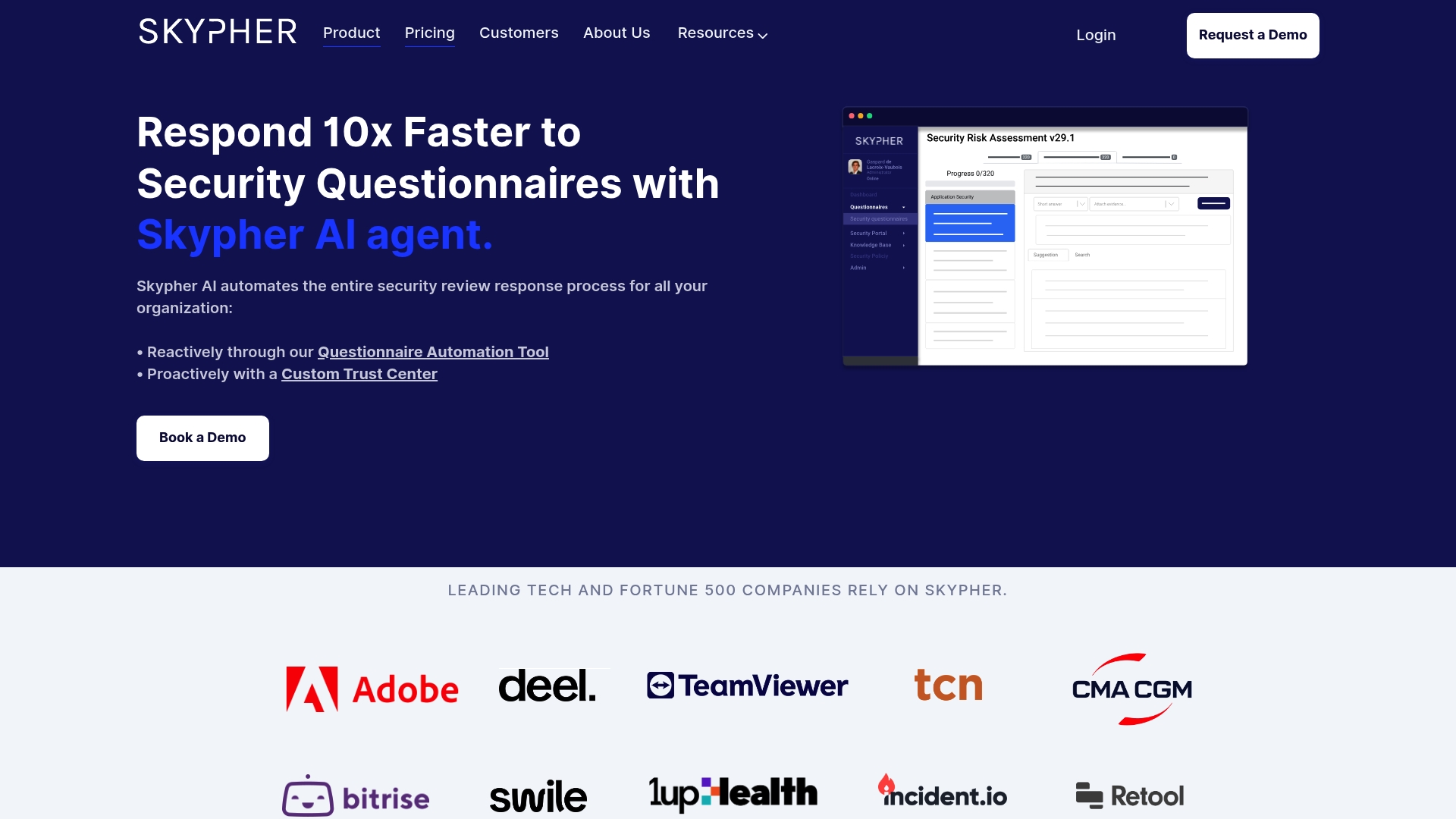
Imagine shifting from cumbersome spreadsheets and endless email chains to a centralized platform that not only automates your questionnaire responses but also integrates seamlessly with over 40 third-party risk management platforms! Feel the relief of real-time collaboration and support that empowers your teams to tackle security reviews efficiently and with confidence. Don't let outdated GRC processes hold your organization back. Explore how Skypher can augment your compliance efforts and strengthen your cybersecurity posture today. Visit us at https://skypher.co to get started and transform your approach to GRC!