

A Request for Proposal is a crucial tool for organizations seeking to partner with vendors on complex projects. It helps to communicate specific requirements and encourages competitive bidding. Research shows that organizations that use RFPs can reduce budget overruns by up to 15 percent. But here’s the surprising twist. Simply sending out an RFP doesn’t guarantee success. The way you craft it can make all the difference. A strategic approach to your RFP can unlock the best vendor partnerships and drive project success.
Understanding What Is a Request for Proposals
A Request for Proposal (RFP) is a formal business document that organizations use to announce a project, describe its requirements, and solicit bids from qualified contractors or vendors. Rather than simply accepting the lowest-priced offer, an RFP process helps organizations find the best overall solution by evaluating multiple factors including expertise, methodology, timeline, and cost-effectiveness.
Definition and Purpose of RFPs
At its core, the request for proposal meaning centers around creating a structured procurement process. An RFP defines the project's scope, deliverables, and evaluation criteria to ensure all bidders understand exactly what's required. According to Dhiren Bhatia from Inventive.ai, RFPs ensure a fair and competitive selection process, focusing on finding the best overall solution rather than just the lowest price.
RFPs serve several critical purposes:
- Standardization: They create a level playing field where all vendors respond to the same set of requirements
- Risk management: They help identify potential challenges before project commencement
- Clarity of expectations: They establish clear deliverables and success metrics
- Transparency: They document the selection process, which is particularly important for public sector organizations
The definition of RFP extends beyond just a document—it represents a strategic approach to procurement that balances cost considerations with quality, capability, and fit.
When Organizations Use RFPs
Organizations typically issue RFPs when facing complex projects that require specialized expertise or significant investment. Common scenarios include:
- Government agencies seeking contractors for public works projects
- Companies implementing enterprise-wide software systems
- Organizations outsourcing specialized services like marketing campaigns
- Institutions planning major construction or renovation projects
These situations share common elements: significant financial commitment, technical complexity, and the need for specialized knowledge that may not exist internally. The RFP process helps organizations make informed decisions while maintaining accountability to stakeholders.
The RFP in the Procurement Process
Understanding what is a request for proposals requires recognizing its place in the broader procurement cycle. RFPs typically follow preliminary research phases and precede contract negotiations.
The typical procurement sequence looks like this:
- Needs assessment and internal approval
- Market research (sometimes using Requests for Information or RFIs)
- RFP development and distribution
- Vendor questions and clarifications
- Proposal evaluation and vendor selection
- Contract negotiation and award
- Project implementation and management
What differentiates an RFP from other procurement documents like Requests for Quotations (RFQs) or Requests for Information (RFIs) is its comprehensive approach. While RFQs focus primarily on price for standardized goods or services, and RFIs gather preliminary information, RFPs solicit detailed solutions for complex projects where the approach matters as much as the outcome.
The definition request for proposal encompasses this strategic dimension—it's not just about buying something, but about finding a partner who can deliver a comprehensive solution that meets specific organizational objectives. This collaborative element distinguishes RFPs from simpler procurement methods and makes them essential tools for complex project success.
Key Takeaways
| Takeaway | Explanation |
|---|---|
| RFPs Provide Structure | A Request for Proposal creates a standardized approach to procurement, establishing clear project requirements, evaluation criteria, and expectations for all vendors involved. |
| Focus on Outcomes | Successful RFPs prioritize desired business outcomes over merely specifying technical details, allowing vendors to propose innovative and effective solutions. |
| Involve Stakeholders | Including input from various departments ensures a comprehensive understanding of project needs and fosters buy-in from all parties impacted by the project. |
| Mitigate Risks | A well-structured RFP acts as a risk management tool by clearly defining deliverables and timelines, preventing scope creep and budget overruns. |
| Streamline Evaluation | An effective RFP facilitates efficient proposal assessments by standardizing response formats and enabling quicker decision-making during the vendor selection process. |
Key RFP Components and Best Practices
A well-crafted request for proposal serves as a roadmap for both the issuing organization and potential vendors. To create an effective RFP that attracts quality proposals and sets the stage for successful project outcomes, certain components and practices are essential.
Essential Components of an Effective RFP
Every comprehensive RFP should include several core elements that provide clarity and structure to the procurement process. These components help define what is a request for proposals in practical terms:
-
Project Overview and Background: This section provides context about your organization, the project's purpose, and why you're seeking external assistance. It helps vendors understand the bigger picture behind your request for proposal.
-
Detailed Scope of Work: Clearly outline what deliverables you expect, technical specifications, and performance requirements. The more specific you are here, the more accurate the vendor responses will be.
-
Timeline and Milestones: Establish a realistic project schedule including key dates for vendor selection, project kickoff, progress reviews, and final delivery.
-
Budget Parameters: While some organizations prefer not to disclose budgets, providing at least a range helps filter out vendors whose solutions don't align with your financial constraints.
-
Evaluation Criteria: Transparently communicate how proposals will be judged and weighted (e.g., technical approach 40%, experience 25%, cost 20%, etc.).
-
Submission Guidelines: Detail exactly what format proposals should follow, what information must be included, and the deadline for submission.
-
Terms and Conditions: Outline contractual requirements, payment terms, intellectual property considerations, and other legal parameters.
According to Configura's RFP guidance, finding the right balance in RFP length is crucial—overly lengthy RFPs can stifle innovation, while excessively brief ones lack necessary detail and lead to assumptions that can derail projects.
Best Practices for RFP Development
Creating an effective request for proposal goes beyond including the right components. The following best practices enhance your RFP's effectiveness:
Involve Multiple Stakeholders
An RFP shouldn't be created in isolation. Include input from various departments that will be affected by the project. This cross-functional approach ensures comprehensive requirements and buy-in from all stakeholders who will interact with the final solution.
Be Clear But Allow Innovation
While specificity is important in defining what is a request for proposals, leaving room for vendor creativity often yields superior solutions. Clearly communicate your must-have requirements, but allow vendors to suggest innovative approaches to meet your objectives.
Prioritize Requirements
Distinguish between essential and desirable features. This helps vendors understand where they should focus their efforts and allows for more accurate cost estimates based on your true priorities.
Provide Access to Decision Makers
Allow bidders to ask questions and seek clarification during the proposal development process. Designate a single point of contact to manage communications and ensure all vendors receive the same information.
Set Realistic Timelines
Vendors need adequate time to develop thoughtful, tailored proposals. Rush jobs often result in generic responses that don't fully address your needs. Similarly, your evaluation team needs sufficient time to thoroughly assess submissions.
Focus on Outcomes, Not Just Specifications
The definition of request for proposal should emphasize the business outcomes you're seeking, not just technical specifications. Explain the problems you're trying to solve and what success looks like, allowing vendors to demonstrate how their approach delivers results.
Consider Total Cost of Ownership
When evaluating proposals, look beyond the initial price tag to consider long-term costs including maintenance, upgrades, training, and support. This more holistic view of costs often reveals that the cheapest initial bid isn't actually the most economical choice over time.
By incorporating these components and following these best practices, organizations can craft RFPs that attract high-quality vendors and set the foundation for successful project outcomes. The time invested in developing a comprehensive, well-structured RFP pays dividends throughout the project lifecycle by reducing misunderstandings, change orders, and scope creep.
Business Benefits of a Well-Written RFP
A well-crafted request for proposal does more than just solicit vendor bids—it serves as a strategic business tool that can significantly impact project outcomes and organizational success. Understanding these benefits helps explain why organizations invest considerable time and resources in developing comprehensive RFPs.
Enhanced Project Clarity and Alignment
One of the primary benefits of developing a detailed RFP is the internal clarity it creates. The process of defining what is a request for proposals forces organizations to thoroughly examine their needs, objectives, and constraints before engaging external vendors.
This internal alignment serves several purposes:
- Reduced scope creep: By clearly defining requirements upfront, organizations minimize mid-project changes that drive up costs and extend timelines
- Stakeholder consensus: The RFP development process builds agreement among different departments about project priorities and success criteria
- Resource planning: Detailed project definitions enable better forecasting of internal resources needed to support implementation
- Risk identification: The systematic analysis required for RFP creation often reveals potential obstacles that can be addressed proactively
When organizations invest in defining their requirements precisely, they create a solid foundation for project success that extends far beyond vendor selection.
Competitive Vendor Responses
A well-structured request for proposal attracts higher quality responses and encourages vendor competition, yielding several tangible benefits:
Better Value Propositions
When vendors know they're competing against others, they're motivated to sharpen their pencils on pricing and offer their most competitive terms. This competitive dynamic typically results in more favorable pricing and contract terms than organizations would receive through direct negotiation with a single vendor.
Innovation and Alternative Approaches
By focusing on outcomes rather than prescribing exact methods, effective RFPs invite vendors to propose innovative solutions. Different vendors bring diverse perspectives and expertise, often suggesting approaches that internal teams hadn't considered.
Comprehensive Solution Evaluation
Receiving multiple proposals provides organizations with a broader perspective on available solutions. What one vendor considers impossible might be another's specialty, and reviewing different approaches helps decision-makers understand the full spectrum of possibilities.
Risk Mitigation and Project Success
The definition of RFP should include its role as a risk management tool. A well-crafted RFP significantly reduces several categories of project risk:
Selection Risk
The structured evaluation process inherent in an RFP helps organizations avoid selecting vendors based on superficial criteria or personal relationships. Instead, it provides objective criteria for assessing capabilities, experience, and fit.
Legal and Compliance Protection
A thorough RFP establishes contractual protections by clearly defining deliverables, timelines, and acceptance criteria. These elements become the foundation for legally binding agreements that protect the organization's interests.
Budget Protection
Detailed requirements and evaluation criteria help prevent cost overruns by establishing clear scope boundaries and change management processes. According to research on ERP implementation, organizations with inadequate RFP processes often experience significant budget overruns and implementation challenges, particularly in complex technology projects.

Efficiency in Vendor Management
Beyond the immediate procurement process, a well-developed request for proposal meaning extends to ongoing vendor relationships:
Streamlined Evaluation and Selection
A clearly structured RFP with standardized response formats makes proposal comparison more efficient. Evaluation teams can more easily assess different solutions against consistent criteria.
Accelerated Contracting
When an RFP includes key contractual terms and conditions upfront, the negotiation phase moves more quickly. Vendors understand expectations before submitting proposals, eliminating surprises during contract discussions.
Stronger Vendor Relationships
Paradoxically, the formality of an RFP often leads to better long-term relationships. Clear expectations from the beginning prevent misunderstandings that damage working relationships later in the project.
The business benefits of a well-written RFP extend far beyond procurement efficiency. By creating clarity, fostering competition, mitigating risks, and establishing strong foundations for vendor relationships, RFPs serve as strategic tools that significantly enhance project outcomes and support broader organizational goals. The investment in developing a comprehensive RFP pays dividends throughout the project lifecycle, from vendor selection through implementation and beyond.
Step-by-Step Guide to Creating an RFP
Developing an effective request for proposal requires methodical planning and execution. This systematic approach ensures you create a document that clearly communicates your needs while attracting qualified vendors. Follow these steps to craft an RFP that achieves your procurement objectives.
Step 1: Define Your Project Requirements
Before writing a single word of your RFP, take time to thoroughly understand and document what you need. This foundation determines everything that follows in the RFP process.
Start by gathering input from key stakeholders across relevant departments. Marketing might have different priorities than IT, and operations may raise concerns finance hasn't considered. Collect these diverse perspectives to develop comprehensive requirements.
Document the following elements:
- Project objectives: What specific business goals must this project accomplish?
- Current challenges: What problems are you trying to solve?
- Technical requirements: What specific capabilities, integrations, or standards must be met?
- Budget constraints: What are your financial parameters for this project?
- Timeline requirements: When must implementation be completed?
According to HubSpot's RFP guidance, clearly defining the project's purpose and goals is essential, as is specifying the desired expertise to help vendors tailor their proposals effectively. This initial internal alignment creates a solid foundation for developing your RFP.
Step 2: Research Potential Vendors and Solutions
Before writing your RFP, conduct preliminary market research to understand what solutions exist. This research helps you set realistic expectations and ensures your RFP aligns with current market capabilities.
Consider these research approaches:
- Issue a Request for Information (RFI) to gather general information from vendors
- Attend industry conferences or webinars showcasing relevant solutions
- Review industry publications and analyst reports
- Speak with peers who have implemented similar solutions
This research helps refine your understanding of what is a request for proposals in your specific context by aligning your expectations with market realities.
Step 3: Draft the RFP Document
With requirements defined and market research complete, create a structured document that includes these essential sections:
-
Introduction and Company Background: Provide context about your organization, including size, industry, and relevant operational details that help vendors understand your business environment.
-
Project Overview: Summarize the project's purpose, scope, and objectives in clear, concise language.
-
Detailed Requirements: List functional, technical, and performance specifications, differentiating between must-have and nice-to-have features.
-
Vendor Qualifications: Specify required expertise, certifications, or experience vendors must possess.
-
Timeline and Process: Detail key dates including question submission deadline, proposal due date, evaluation period, vendor selection date, and project implementation schedule.
-
Budget Guidelines: Provide direction on budget expectations or ask vendors to propose pricing based on requirements.
-
Evaluation Criteria: Explain how proposals will be assessed and what factors will determine selection.
-
Submission Requirements: Specify format, length, components, and delivery method for proposals.
-
Terms and Conditions: Include legal requirements, contract terms, and other compliance information.
The definition request for proposal emphasizes clarity and completeness—aim for a document that's thorough enough to elicit informed responses without being unnecessarily restrictive.
Step 4: Review and Refine
Before releasing your RFP, conduct a thorough internal review. This critical step helps identify gaps, ambiguities, or unrealistic expectations.
Have the document reviewed by:
- Subject matter experts to validate technical requirements
- Legal team to verify terms and conditions
- Finance department to confirm budget parameters
- Project stakeholders to ensure business requirements are accurately represented
This multi-perspective review helps catch issues that could otherwise lead to incomplete or misaligned vendor responses.
Step 5: Distribute the RFP
Once your document is polished, determine the most effective distribution strategy. Options include:
- Direct distribution to pre-qualified vendors
- Posting on industry websites or procurement platforms
- Publication in relevant trade publications
- Sharing through your company website or social media channels
Consider how widely you want to cast your net. A broader distribution typically yields more responses but requires more evaluation resources. A targeted approach may produce fewer but more relevant proposals.
Step 6: Manage Q&A Process
After distribution, establish a structured process for vendors to ask questions. This crucial step ensures all bidders have equal access to information:
- Set a specific timeframe for question submission
- Compile all questions and answers in a single document
- Distribute the Q&A document to all potential bidders
- Consider hosting a bidders' conference for complex projects
This transparent approach to information sharing maintains the integrity of your RFP process while helping vendors develop more accurate proposals.
By following these steps, you create a request for proposal meaning business to prospective vendors—one that clearly communicates your needs, sets appropriate expectations, and establishes a level playing field for competition. This systematic approach increases your chances of receiving high-quality proposals that truly address your organization's requirements.
Frequently Asked Questions
What is a Request for Proposal (RFP)?
A Request for Proposal (RFP) is a formal document organizations use to announce a project, describe its requirements, and solicit bids from qualified vendors. It helps ensure a competitive selection process focused on finding the best overall solution rather than just the lowest price.
When should an organization issue an RFP?
Organizations typically issue RFPs for complex projects requiring specialized expertise or significant investment. Common scenarios include government contracts, software implementations, outsourced services, and major construction projects.
What are the key components of an effective RFP?
An effective RFP should include a project overview, a detailed scope of work, a timeline, budget parameters, evaluation criteria, submission guidelines, and terms and conditions. These components provide clarity and guide vendors in crafting their proposals.
How can a well-written RFP benefit an organization?
A well-crafted RFP enhances project clarity, encourages competitive vendor responses, mitigates risks, and streamlines vendor management. It serves as a strategic tool that helps organizations achieve better project outcomes and maintain strong vendor relationships.
Unlock Efficiency in Your RFP Process with Skypher
Navigating the intricacies of an RFP can be overwhelming. With the need for standardization, clarity of expectations, and risk mitigation in mind, many organizations face the challenge of efficiently managing complex security questionnaires. Are you tired of delays and misunderstandings that can derail your evaluations?
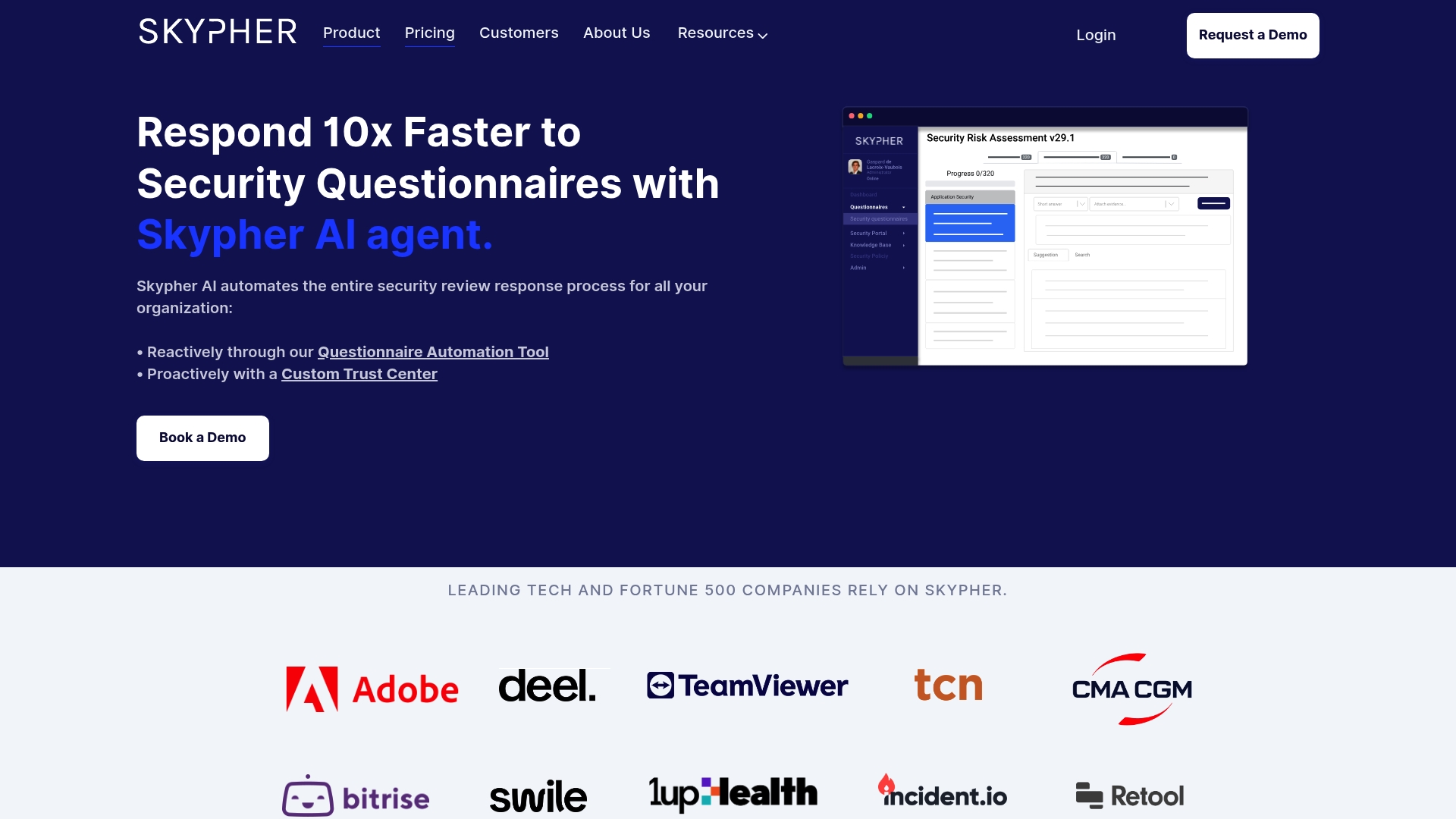
It's time to transform how you handle security reviews with Skypher. Our AI-driven Questionnaire Automation Tool streamlines and speeds up the response process, ensuring your RFPs not only focus on cost but also on quality and capability—with features like:
- Real-Time Collaboration that brings your team together
- Custom Trust Center for enhanced transparency and communication
- API Integrations with over 40 third-party platforms to ensure seamless workflow
Why wait to achieve better project outcomes? Improve your efficiency, enhance your cybersecurity posture, and build stronger vendor relationships today! Visit https://skypher.co and discover how our solutions can help you overcome RFP hurdles and succeed in your projects!