

In today's fast-paced business world, a well-defined risk framework is essential for survival—over 75% of organizations struggle with risk management due to outdated practices. But here's the kicker: the true challenge isn't just managing risks; it's about leveraging them for growth. An effective risk framework not only shields your organization from potential threats but also opens the door to strategic opportunities that drive success. Are you ready to unlock the power of proactive risk management?
Defining a Risk Framework
A risk framework is a structured approach that organizations use to identify, assess, manage, and monitor risks that could impact their ability to achieve business objectives. Think of it as your organizational blueprint for handling uncertainty. Rather than reacting to problems as they arise, a well-defined risk framework allows you to systematically anticipate potential issues and establish consistent methods for addressing them.
Core Components of a Risk Framework
Every effective risk framework contains several essential elements that work together to create a comprehensive risk management system:
- Risk identification processes - Methodologies for discovering and documenting potential risks across all areas of operation
- Assessment mechanisms - Tools and techniques for evaluating risk likelihood and potential impact
- Response strategies - Defined approaches for handling identified risks (avoid, reduce, transfer, or accept)
- Monitoring systems - Ongoing tracking of risk indicators and the effectiveness of controls
- Governance structure - Clear roles, responsibilities, and accountability for risk management
"Without clear, transparent executive backing, a risk management program will struggle to gain traction and compete with other priorities," notes risk management expert Eric Bonnell, highlighting the importance of leadership support for any risk framework.
Why Organizations Need Risk Frameworks
You might wonder why formalized risk management is necessary when organizations have been handling problems for centuries. The answer lies in today's increasingly complex business environment. Modern organizations face a multitude of interconnected risks across strategic, financial, operational, technological, and compliance domains.
A properly implemented risk framework provides:
- Consistency in how risks are evaluated and addressed across departments
- Transparency into the organization's risk profile for stakeholders
- Proactive management of threats before they materialize into crises
- Resource optimization by focusing protection efforts on the most critical areas
- Cultural alignment around risk awareness and responsibility
Without a structured approach, organizations typically default to fragmented, reactive responses that leave them vulnerable to preventable disruptions. Your risk framework transforms abstract concepts into concrete procedures that can be consistently followed throughout your organization.
The definition of a risk framework extends beyond documentation - it represents a commitment to systematic risk management that becomes embedded in your organizational DNA, influencing decisions at every level. When properly designed and implemented, it shifts your entire approach from asking "what happened?" to "what could happen, and how are we prepared?"
Key Takeaways
| Takeaway | Explanation |
|---|---|
| Establish a Structured Governance | Strong governance is essential for effective risk management, involving clear leadership commitment, defined roles, and documented risk policies to align organizational efforts. |
| Implement a Consistent Risk Assessment Methodology | Utilize scalable processes for risk identification, analysis, and prioritization to ensure consistent evaluation across all departments, enhancing the strategy's effectiveness. |
| Foster Transparent Communication | Establish structured communication channels for risk reporting and escalation to ensure that risk information flows effectively and reaches decision-makers, enabling informed actions. |
| Embrace Technology for Efficiency | Leverage technology, such as automated tools and data analytics, to streamline risk management processes and enhance the accuracy and timeliness of risk assessments. |
| Encourage a Culture of Risk Awareness | Shift organizational perception of risk management from a bureaucratic task to a value-adding process, ensuring that employees understand the benefits of proactive risk identification and response. |
Core Elements and Components

A robust risk management framework consists of several interconnected elements working together to create a comprehensive approach to handling organizational risks. Understanding these core components will help you build or strengthen your risk framework effectively.
Risk Governance
At the foundation of any effective risk framework is strong governance. This includes:
- Clear leadership commitment from executives and board members
- Established risk committees with defined charters and responsibilities
- Documented risk policies approved at appropriate organizational levels
- Well-defined roles and accountability for risk management activities
According to research from Aclaimant, "75% of organizations struggle with risk management due to outdated technology and disconnected systems." This emphasizes why proper governance structures must be in place to oversee the entire risk management process and ensure alignment across all organizational levels.
Risk Assessment Methodology
Your framework needs a consistent methodology for evaluating risks. This typically includes:
- Risk identification techniques (workshops, interviews, historical data analysis)
- Risk analysis procedures to determine likelihood and impact
- Evaluation criteria to prioritize risks based on significance
- Documentation standards for recording assessment findings
The assessment methodology should be scalable across different departments while maintaining consistency in how risks are evaluated and categorized. This enables meaningful comparison and aggregation of risks across your organization.
Control Environment
The control environment encompasses the systems, processes, and activities implemented to mitigate identified risks. A mature risk framework includes:
- Primary controls designed to prevent risk events
- Detective controls that identify when risk events occur
- Corrective controls that address consequences after events
- Monitoring mechanisms to ensure controls remain effective
Your control environment should be proportionate to the risks you face. Not every risk requires extensive control systems - your framework should guide appropriate resource allocation based on risk significance.
Communication and Reporting Structure
Effective risk management requires transparent communication about risks throughout your organization. This component includes:
- Regular risk reporting to executive leadership and the board
- Escalation procedures for emerging or changing risks
- Cross-functional communication channels about risk interdependencies
- Stakeholder reporting appropriate to different audiences
Without structured communication, even the best risk identification and assessment efforts can fail to drive appropriate action. Your framework must specify how risk information flows through your organization and reaches decision-makers who can take appropriate action.
These core elements form the backbone of any effective risk management framework. When properly integrated, they create a cohesive system that enables your organization to anticipate, evaluate, address, and monitor risks in a systematic way that protects value and supports strategic objectives.
Risk Framework Benefits & Challenges
Implementing a risk management framework is not without its challenges, but the benefits typically far outweigh the difficulties. Understanding both sides of the equation helps you prepare for a successful implementation and maximize the value of your risk management efforts.
Key Benefits of a Risk Framework
Improved Decision-Making
When you have a structured approach to identifying and assessing risks, you gain valuable insights that inform better business decisions. Instead of making choices based on incomplete information, your risk framework provides data about potential impacts and probabilities. This leads to more confident strategic planning and resource allocation.
Enhanced Operational Resilience
A well-designed risk framework helps your organization prepare for disruptions before they occur. By identifying potential vulnerabilities and establishing response plans in advance, you significantly improve your ability to maintain operations during challenging circumstances. This resilience protects revenue streams and customer relationships during times of stress.
Regulatory Compliance
Many industries face increasingly complex regulatory requirements. Your risk framework creates a systematic approach to identifying compliance obligations and monitoring adherence to regulations. This proactive stance helps prevent violations that could result in financial penalties, operational restrictions, or reputational damage.
Strategic Alignment
An effective risk framework connects risk management activities directly to your organization's strategic objectives. This alignment ensures that risk mitigation efforts support rather than hinder your business goals. As research from Splunk notes, implementing a risk management framework "allows for the systematic addressing of risks across various departments, helping organizations adapt and thrive in unpredictable environments."
Common Implementation Challenges
Cultural Resistance
One of the most significant challenges in establishing a risk framework is overcoming cultural resistance. Employees may view risk management activities as bureaucratic exercises that slow down business processes. Shifting this perception requires demonstrating how the framework adds value rather than creating obstacles.
Resource Constraints
Implementing a comprehensive risk framework requires an investment of time, personnel, and technology. Many organizations struggle to allocate sufficient resources, particularly when benefits may not be immediately apparent. This challenge can be addressed by starting with focused, high-value areas and expanding incrementally.
Data Quality Issues
Effective risk management depends on reliable data. Organizations often face challenges in collecting, validating, and analyzing the information needed to assess risks accurately. Without quality data, even the most sophisticated risk framework will produce unreliable results.
Framework Complexity
Some organizations make the mistake of creating overly complex risk frameworks that are difficult to understand and implement. When the framework becomes too unwieldy, compliance decreases and effectiveness suffers. The most successful approaches balance comprehensiveness with practicality.
Balancing Risk and Opportunity
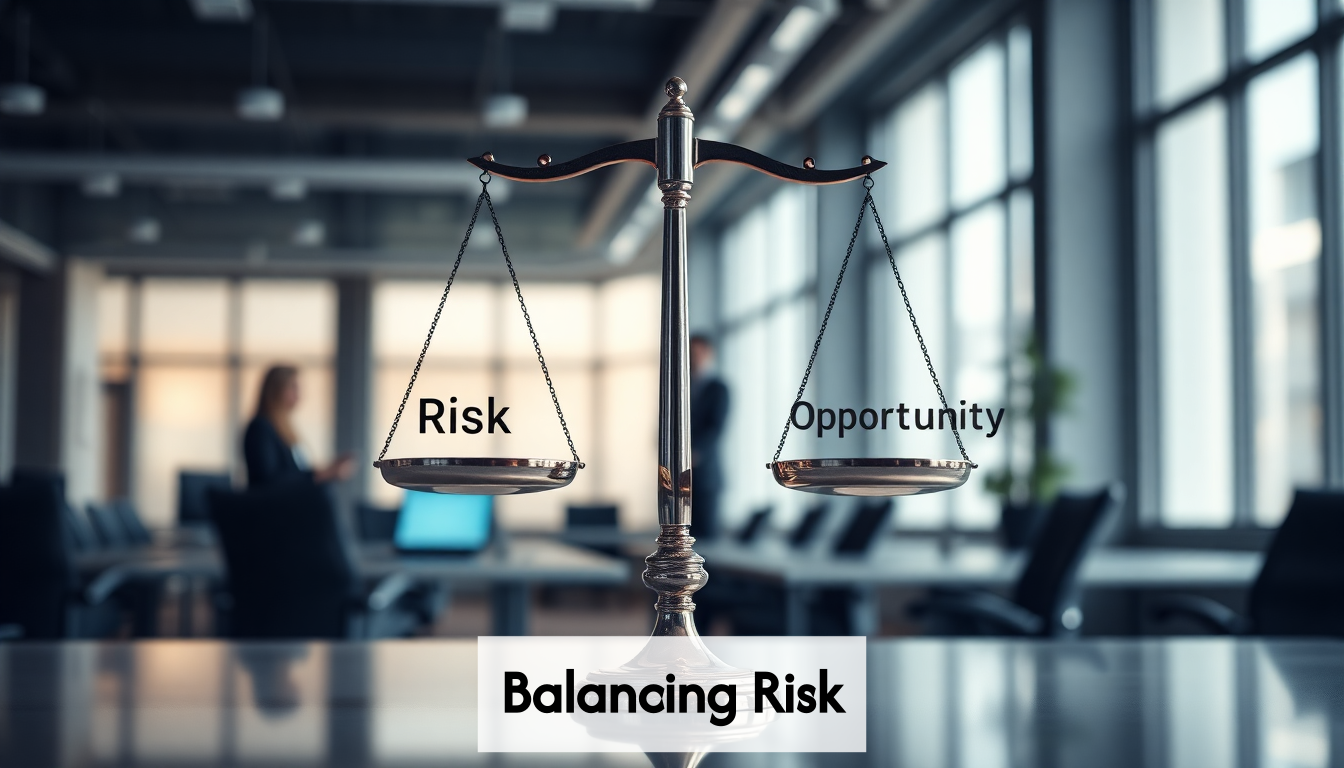
Perhaps the greatest challenge—and benefit—of a well-designed risk framework is finding the optimal balance between risk mitigation and opportunity pursuit. An excessively risk-averse approach can stifle innovation and growth, while inadequate risk management leaves your organization vulnerable to preventable losses.
The most valuable risk frameworks don't just help you avoid negative outcomes—they also support informed risk-taking when potential rewards justify it. This balanced approach enables your organization to pursue strategic opportunities with a clear understanding of associated risks and appropriate controls.
By recognizing both the benefits and challenges of implementing a risk framework, you can develop a more realistic implementation plan and set appropriate expectations with stakeholders throughout your organization.
Steps to Implement Framework
Implementing a risk management framework requires careful planning and execution. Follow these structured steps to develop and integrate a framework that works effectively for your organization's specific needs and context.
1. Assess Your Current State
Before implementing a new risk framework, take stock of your existing risk management practices. This assessment should identify:
- Current risk identification and assessment methods
- Existing controls and their effectiveness
- Documentation and reporting mechanisms
- Stakeholders involved in risk management activities
- Tools and technologies currently used
This baseline understanding helps you identify gaps and build upon strengths rather than starting completely from scratch. It also provides valuable context for communicating the need for change to stakeholders.
2. Define Framework Scope and Objectives
Clearly articulate what you want your risk framework to achieve. Your objectives should align with broader organizational goals and address specific risk management challenges. Consider:
- Which business units or functions will the framework cover?
- What types of risks will it address (strategic, operational, financial, compliance)?
- What level of maturity are you aiming for initially versus long-term?
- How will you measure the framework's success?
According to UpGuard, "Creating a project roadmap with clearly defined goals and functions, collaboratively established by all stakeholders, is crucial for success." This collaborative approach ensures your framework addresses the organization's most pressing risk concerns.
3. Secure Leadership Support
Executive sponsorship is essential for successful implementation. To gain this support:
- Present the business case highlighting both risk reduction and value creation
- Connect risk management improvements to strategic objectives
- Identify executive champions who will advocate for the framework
- Establish clear governance structures with executive oversight
Without visible leadership commitment, risk framework initiatives often falter as competing priorities emerge and resources are reallocated.
4. Design Framework Components
Develop the specific elements of your risk framework based on your objectives and organizational context:
- Risk identification methodologies and taxonomies
- Assessment criteria and evaluation processes
- Response strategies and control implementation approaches
- Monitoring and review procedures
- Documentation standards and templates
- Reporting structures and frequencies
Your design should balance comprehensiveness with practicality, creating a framework that's thorough yet implementable given your resources and organizational culture.
5. Implement in Phases
Rather than attempting a full-scale implementation immediately, consider a phased approach:
- Begin with pilot implementations in receptive business units
- Start with high-priority risk categories or processes
- Establish quick wins that demonstrate value
- Refine the framework based on pilot feedback before broader rollout
- Gradually expand to additional areas as capabilities mature
This incremental approach allows you to demonstrate success, build momentum, and make adjustments before committing significant resources to organization-wide implementation.
6. Develop Supporting Infrastructure
Implement the tools, technologies, and processes needed to support your risk framework:
- Risk assessment templates and guidelines
- Risk registers for documentation
- Reporting dashboards for monitoring and communication
- Training materials for stakeholders
- Integration points with existing business processes
The right supporting infrastructure makes risk management activities more efficient and increases adoption throughout the organization.
7. Monitor and Continuously Improve
Once implemented, your risk framework should evolve based on changing business conditions and lessons learned:
- Regularly review framework effectiveness against objectives
- Solicit feedback from users across the organization
- Update components based on emerging risks and business changes
- Benchmark against industry standards and peer practices
- Document and share lessons learned
Remember that implementing a risk framework is not a one-time project but an ongoing process of refinement and maturation. The most effective frameworks continuously evolve to meet changing business needs while maintaining consistent core principles.
Best Practices and Future Trends
As risk management continues to evolve, staying ahead of best practices and emerging trends helps ensure your framework remains effective and relevant. The following strategies and developments will shape successful risk management approaches in the coming years.
Current Best Practices
Integration with Business Strategy
The most effective risk frameworks don't operate in isolation but directly connect to your organization's strategic planning and decision-making processes. By aligning risk management activities with strategic objectives, you ensure that risk considerations inform every major business decision. This integration helps prevent the perception of risk management as a separate compliance exercise.
Quantification of Risk Impact
Leading organizations are moving beyond qualitative risk assessments (high/medium/low) toward more sophisticated quantification methods. This approach involves:
- Applying financial metrics to risk scenarios
- Using probability modeling to evaluate potential outcomes
- Calculating risk-adjusted returns for strategic initiatives
- Employing advanced analytics to identify risk correlations
Quantification provides more concrete information for decision-makers and helps prioritize risk mitigation efforts based on potential business impact.
Technology Enablement
Modern risk frameworks leverage technology to streamline processes and improve risk insights. This includes:
- Automated risk identification and monitoring tools
- Integrated risk management platforms
- Real-time risk dashboards and reporting
- Advanced analytics for pattern recognition
The right technology reduces manual effort while increasing the timeliness and accuracy of risk information.
Emerging Trends
AI and Machine Learning
Artificial intelligence and machine learning are transforming risk management by enhancing predictive capabilities and automating routine tasks. According to research from Quokka Labs, "AI and ML are automating tasks, predicting issues, and optimizing resource allocation...leading to more efficient and reliable processes." While this observation was made in the context of DevOps, the same principles apply to risk management frameworks.
AI applications in risk management include:
- Identifying emerging risks from unstructured data sources
- Predicting control failures before they occur
- Analyzing patterns to detect anomalies and potential fraud
- Automating routine risk assessment activities
Dynamic Risk Assessment
Traditional point-in-time risk assessments are giving way to more dynamic approaches that continuously monitor and reassess risks as conditions change. This shift acknowledges the rapidly evolving nature of today's business environment and seeks to provide more timely risk intelligence.
Dynamic risk assessment typically involves:
- Continuous monitoring of key risk indicators
- Regular reassessment of existing risks
- Automated alerts when risk levels change significantly
- Scenario planning for rapid response to emerging risks
Integrated Risk and Resilience
Organizations are increasingly recognizing the connection between risk management and operational resilience. Rather than treating these as separate disciplines, forward-thinking companies are developing integrated approaches that:
- Identify critical business services and processes
- Assess vulnerabilities across interconnected systems
- Establish impact tolerances for disruptions
- Design controls that both mitigate risks and enhance recovery capabilities
Preparing for Future Risk Challenges
To ensure your risk framework remains relevant in this evolving landscape:
- Build flexibility into your framework to accommodate emerging risks and changing business conditions
- Invest in upskilling your risk management team with data analytics capabilities
- Develop strong cross-functional collaboration between risk, strategy, and technology teams
- Regularly benchmark your approach against industry peers and leading practices
- Foster a culture that values proactive risk identification and transparent communication
By adopting these practices and preparing for emerging trends, you position your organization to not only manage current risks effectively but also adapt to the evolving risk landscape of tomorrow. The most successful risk frameworks balance established methodologies with innovation, ensuring they remain relevant and valuable as your business and its risk environment continue to evolve.
Frequently Asked Questions
What is a risk framework?
A risk framework is a structured approach used by organizations to identify, assess, manage, and monitor risks that could impact their business objectives. It serves as a blueprint for handling uncertainties systematically.
Why do organizations need a risk framework?
Organizations need a risk framework to manage the complex interconnected risks they face today. It ensures consistency, transparency, and proactive management of threats, ultimately aligning risk management efforts with strategic goals.
What are the core components of a risk framework?
The core components include risk identification processes, assessment mechanisms, response strategies, monitoring systems, and a governance structure that defines roles and responsibilities for risk management.
How can a risk framework contribute to better decision-making?
A risk framework improves decision-making by providing structured insights into potential risks and their impacts, allowing businesses to make informed, proactive choices rather than reactive ones.
Transform Your Risk Management Approach with Skypher
In today's complex landscape, organizations face overwhelming security questionnaires that make risk management feel like a stifling chore. With traditional processes proving to be inefficient and fragmented, you may find yourself asking, How can I gain consistency, transparency, and proactive management of my risks? This is where Skypher steps in, transforming not just the way you handle security reviews but also enhancing your overall cyber resilience.
!
Imagine streamlining your response process for security questionnaires with our AI-driven Questionnaire Automation Tool that integrates seamlessly with over 40 third-party risk management platforms. Say goodbye to scattered documents and hello to real-time collaboration with your teams—our customizable Trust Center will empower you to present your security posture with confidence.
Don't wait! Supercharge your risk management today and discover how Skypher can turn your security questionnaire headaches into seamless workflows. Visit Skypher now and witness the transformation today!