

Understanding SOC 2: Laying the Foundation for Type 2 Reports
Before diving into the specifics of a SOC 2 Type 2 report, it's essential to understand the SOC 2 framework itself. Developed by the American Institute of Certified Public Accountants (AICPA), SOC 2 is a compliance framework designed specifically for service organizations that store, process, or transmit customer data.
The framework is built upon five Trust Services Criteria:
- Security: Protection against unauthorized access (the default criterion included in all SOC 2 reports)
- Privacy: How personal information is collected, used, retained, and disclosed
- Availability: System accessibility for operation and use
- Processing Integrity: System processing that is complete, accurate, timely, and authorized
- Confidentiality: Protection of confidential information
According to a 2022 study by Coalfire, 59% of technology decision-makers consider SOC 2 compliance a critical factor when selecting vendors—showing its growing importance in the business ecosystem. Unlike other compliance standards that focus on specific industries (like HIPAA for healthcare), SOC 2 is versatile and applies to virtually any company storing customer data in the cloud. This makes it particularly relevant for SaaS providers, who comprise approximately 80% of all organizations pursuing SOC 2 certification.
Key Takeaways
| Key Point | Details |
|---|---|
| Importance of SOC 2 Compliance | SOC 2 compliance is crucial for service organizations handling customer data, influencing vendor selection among technology decision-makers. |
| Trust Services Criteria | The SOC 2 framework is based on five criteria, including Security and Privacy, which are essential for maintaining customer trust. |
| Universal Applicability | SOC 2 is applicable to a wide range of organizations, particularly SaaS providers, making it a relevant standard across various industries. |
| Type 1 vs. Type 2 | Understanding the distinction between Type 1 and Type 2 reports is vital, as Type 2 reports assess ongoing control effectiveness over time, appealing more to enterprise clients. |
What Is a SOC 2 Type 2 Report? Definition, Scope, and Key Differences
A SOC 2 Type 2 report is a comprehensive audit document that evaluates the effectiveness of a service organization's security controls over a period of time, typically 6-12 months. Unlike its counterpart, the SOC 2 Type 1 report (which provides a point-in-time assessment), the Type 2 report demonstrates how consistently an organization maintains its security policies and procedures across an extended timeframe.
The scope of a SOC 2 Type 2 report includes:
- Detailed description of the service organization's system
- Evaluation of control design appropriateness
- Testing of operational effectiveness over time
- Documentation of any exceptions or deviations found
- Independent auditor's opinion on control effectiveness
The key distinction between Type 1 and Type 2 reports lies in their temporal nature. A SOC 2 Type 1 report verifies that controls are properly designed at a specific moment, while a Type 2 report validates that these controls actually work effectively over time. This distinction matters significantly to potential clients and partners—a study by Deloitte found that 91% of enterprise customers prefer vendors with Type 2 certification over Type 1 when handling sensitive data.
Many organizations start with a Type 1 assessment before progressing to the more rigorous Type 2 audit, creating a maturity path for their compliance program. The extended observation period of a SOC 2 Type 2 audit provides substantially stronger evidence of security practices, making it the gold standard for demonstrating ongoing commitment to data protection.
Breaking Down the Components: Controls, Processes, and Audit Criteria
A SOC 2 Type 2 report meticulously examines three fundamental components that form the backbone of an organization's security posture. Understanding these elements is crucial for both preparing for and interpreting a SOC 2 Type 2 audit.
Controls represent the specific safeguards implemented to protect systems and data. These typically include technical controls (firewalls, encryption, access management), administrative controls (policies, procedures, training), and physical controls (facility security, environmental protections).
The audit evaluates these controls across several critical domains:
- Risk management and governance
- Access control and authentication
- System operations and monitoring
- Change management processes
- Vulnerability management
- Incident response procedures
- Business continuity planning
The auditor applies professional standards from the AICPA to assess whether controls are properly designed and operating effectively throughout the observation period. For example, a leading fintech company undergoing SOC 2 Type 2 certification discovered that while they had robust access controls for their production environment, their audit logs weren't being systematically reviewed—a finding that prompted implementation of automated monitoring solutions.
What distinguishes a Type 2 SOC 2 report is its longitudinal assessment approach. Rather than simply verifying a control exists, auditors examine evidence spanning months to confirm consistent execution. This typically involves examining system logs, reviewing documentation, observing procedures in action, and conducting employee interviews to verify that security practices align with documented policies.
Navigating the Audit Process: From Initial Assessment to Certification
Achieving SOC 2 Type 2 compliance involves a structured process that typically spans 12-18 months from preparation to final certification. Understanding this journey helps organizations plan resources and set realistic timelines.
The SOC 2 Type 2 audit process follows these key phases:
- Readiness assessment: Identifying gaps in existing controls and developing remediation plans
- Control implementation: Establishing or improving security policies and procedures
- Pre-audit preparation: Gathering evidence and documentation
- Observation period: The 6-12 month timeframe when controls are actively monitored
- Formal audit: Independent CPA firm's evaluation of control effectiveness
- Report issuance: Delivery of the final SOC 2 Type 2 report
A medium-sized SaaS company we worked with initially estimated six months for their SOC 2 Type 2 certification but ultimately required 14 months to address gaps in their change management and access review processes. Their experience highlights the importance of thorough preparation before beginning the observation period.
During the observation period, organizations must maintain meticulous documentation of control activities. For example, if your policy states that access reviews occur quarterly, you'll need evidence showing these reviews were conducted consistently throughout the audit period. Any exceptions or control failures during this time will be documented in the final report, potentially impacting its value to stakeholders.
Addressing Common Concerns: FAQs and Challenges of SOC 2 Type 2 Compliance
Organizations pursuing SOC 2 Type 2 compliance frequently encounter several challenges and questions throughout their journey. Addressing these concerns proactively can streamline the process and improve outcomes.
One of the most significant challenges is resource allocation. According to a survey by Coalfire, organizations spend an average of 4,000-5,200 person-hours on their first SOC 2 Type 2 audit. This substantial commitment often necessitates dedicated compliance personnel or external consultants to manage the process effectively.
Common questions and challenges include:
- Scope determination: Deciding which systems, processes, and Trust Services Criteria to include
- Evidence collection: Establishing efficient methods to gather and organize audit evidence
- Control failures: Managing the impact of control exceptions during the observation period
- Continuous monitoring: Implementing sustainable processes beyond certification
- Cost management: Controlling expenses related to technology, consulting, and audit fees
A revealing case study comes from a healthcare technology startup that failed their first Type 2 audit due to inconsistent access review documentation. Their second attempt succeeded after implementing automated access management tools that generated tamper-proof audit logs—demonstrating that technology investments often prove more economical than manual compliance processes in the long run.
It's worth noting that while 68% of organizations report challenges with their initial SOC 2 Type 2 audit, subsequent audits typically require 30-40% less effort as processes mature and become integrated into organizational workflows.
Best Practices for Implementing and Maintaining SOC 2 Type 2 Standards
Implementing and maintaining SOC 2 Type 2 compliance requires strategic planning and consistent execution. Organizations that excel in their compliance programs typically follow these proven best practices.
Automate where possible. Manual security processes are prone to human error and inconsistency—precisely what a Type 2 audit scrutinizes. Companies that implement compliance automation tools report 61% less time spent on evidence collection and a 45% reduction in audit preparation costs according to a 2022 industry benchmark study.
Additional best practices include:
- Start with a gap analysis to identify your highest-priority areas for improvement
- Implement continuous monitoring rather than point-in-time checks
- Document everything—from policies to evidence of control execution
- Establish clear ownership for each control with defined responsibilities
- Create a compliance calendar to ensure timely execution of periodic controls
- Train employees regularly on security awareness and their compliance roles
- Conduct mock audits before the official observation period begins
A cloud infrastructure provider successfully implemented these practices by integrating compliance requirements directly into their development lifecycle. They mapped SOC 2 controls to specific user stories in their development backlog, ensuring security was built into products rather than bolted on afterward. This approach reduced their audit preparation time by 70% while improving their overall security posture.
Most importantly, view SOC 2 Type 2 compliance as an ongoing program rather than a one-time project. Organizations that treat compliance as a continuous improvement process tend to achieve better audit outcomes and derive greater business value from their security investments.
Frequently Asked Questions
What is a SOC 2 Type 2 report?
A SOC 2 Type 2 report is an audit document that evaluates the effectiveness of a service organization's security controls over a period of time, typically 6-12 months, providing a comprehensive assessment of ongoing compliance.
How does a SOC 2 Type 2 report differ from a Type 1 report?
The key difference is that a Type 1 report evaluates controls at a specific point in time, while a Type 2 report assesses the operational effectiveness of those controls over time, which is crucial for establishing lasting trust with clients.
Why is SOC 2 Type 2 compliance important for businesses?
SOC 2 Type 2 compliance is vital as it helps organizations demonstrate their commitment to data security, fosters customer trust, and is preferred by many enterprise clients when selecting vendors for handling sensitive data.
What are the main steps involved in the SOC 2 Type 2 audit process?
The main steps include conducting a readiness assessment, implementing necessary controls, preparing for the audit, monitoring controls during an observation period, undergoing formal independent audits, and receiving the final SOC 2 Type 2 report.
Elevate Your Compliance Game with Skypher’s Solutions!
Navigating the rigors of SOC 2 Type 2 compliance can be daunting, especially when it comes down to managing the extensive security questionnaires that accompany the process. As highlighted in the article, effective control documentation and evidence collection are often pain points for organizations, demanding thousands of hours in personnel time. But what if you could significantly reduce that effort with a streamlined approach?
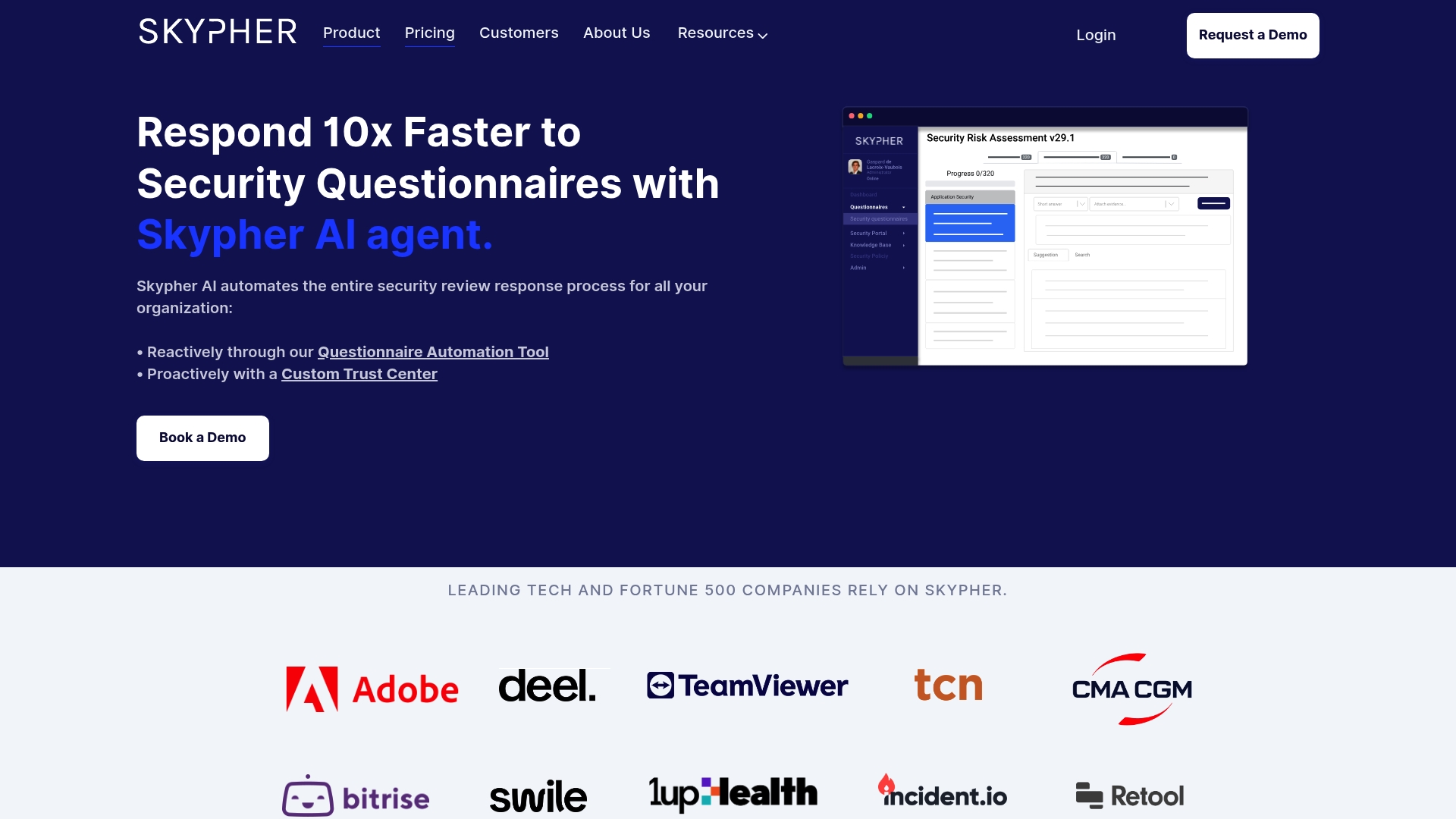
Skypher is here to transform your compliance journey. Our AI-driven Questionnaire Automation Tool effortlessly consolidates and organizes your security reviews, granting your team unprecedented efficiency. Imagine slashing completion time on security questionnaires while enhancing accuracy and collaboration among your teams—leaving more room to focus on strengthening your overall security posture!
Don't get bogged down by manual processes. Start your journey towards a smoother compliance experience today—visit Skypher now and discover how we can help you tackle SOC 2 Type 2 audits with ease! Act fast; your streamlined security processes await!