

Understanding Cloud Security Posture Management: Definitions & Key Concepts
Cloud Security Posture Management (CSPM) refers to the continuous process of monitoring, identifying, and remediating security risks across cloud infrastructure. It provides visibility and automated remediation capabilities to secure complex multi-cloud environments against misconfigurations and compliance violations.
At its core, CSPM encompasses several foundational concepts:
- Continuous Assessment: Automated scanning tools that constantly evaluate cloud resources against security best practices and compliance frameworks
- Configuration Monitoring: Detection of insecure configurations such as unencrypted data stores, excessive permissions, or publicly exposed assets
- Compliance Mapping: Alignment of cloud deployments with regulatory standards like GDPR, HIPAA, PCI-DSS, and industry benchmarks
- Risk Prioritization: Intelligent categorization of vulnerabilities based on potential impact and exploitability
- Automated Remediation: Capabilities to fix misconfigurations through policy-driven actions

According to Gartner's 2022 analysis, organizations implementing CSPM tools reduced cloud-related security incidents by up to 80%. A notable example is Netflix, which leveraged CSPM to scan over 150,000 AWS resources daily, identifying and remediating critical misconfigurations before they could be exploited.
CSPM differs from traditional security approaches by focusing specifically on cloud infrastructure posture rather than just perimeter defense or workload protection. This distinction has become crucial as cloud adoption accelerates, with Gartner noting that 99% of cloud security failures through 2025 will be the customer's fault, primarily due to misconfigurations.
Key Takeaways
| Key Point | Details |
|---|---|
| Continuous Assessment | CSPM employs automated tools to constantly evaluate cloud resources against security best practices. |
| Risk Prioritization | Vulnerabilities are categorized based on their potential impact, enabling organizations to focus on the most critical issues. |
| Automated Remediation | CSPM tools can fix misconfigurations automatically, helping organizations mitigate risks more efficiently. |
| Compliance Mapping | CSPM aligns cloud deployments with regulatory standards, ensuring adherence to necessary compliance requirements. |
| Shift in Responsibility | As cloud security failures are often due to misconfigurations, CSPM emphasizes the need for customer accountability in cloud security management. |
Cloud Security Landscape: Evolving Threats and the Need for CSPM
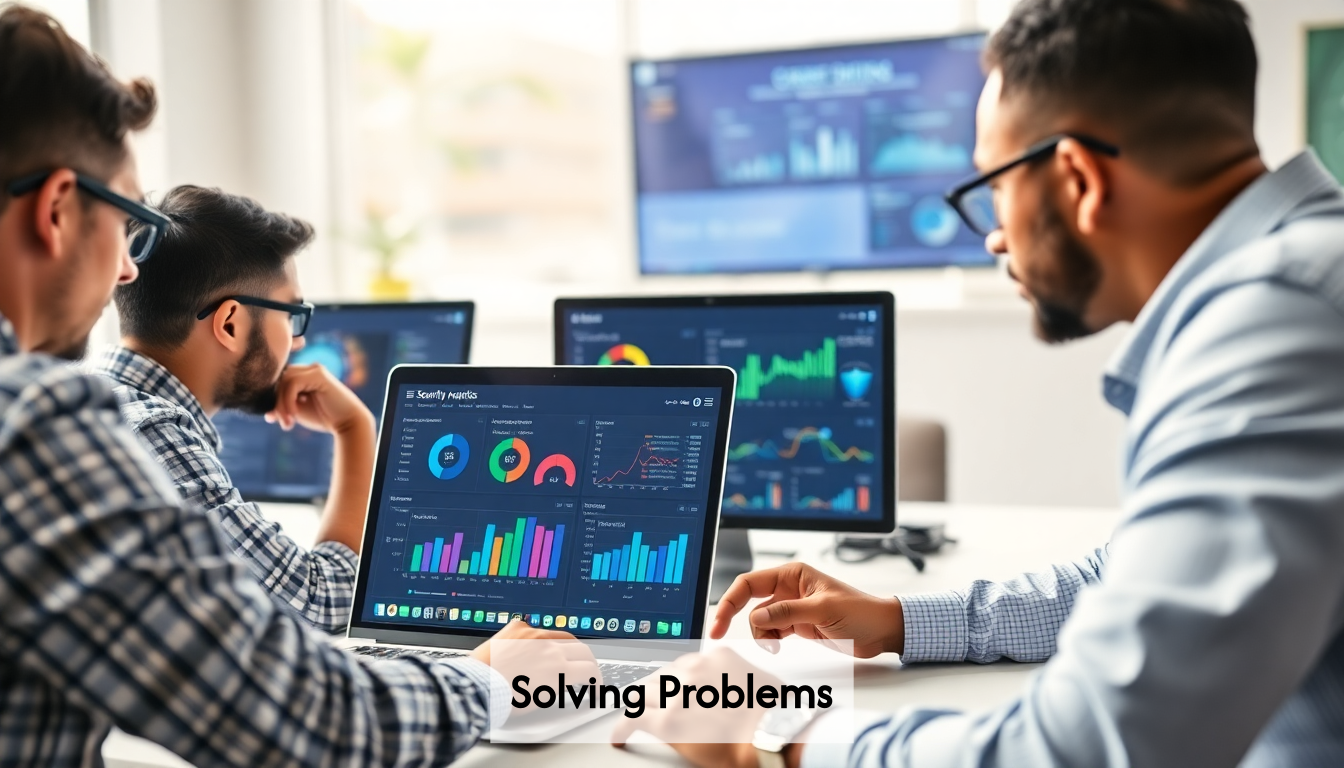
The cloud security landscape has transformed dramatically as organizations rapidly migrate to cloud environments. This acceleration has expanded the attack surface and introduced new security challenges that traditional security tools struggle to address.
Today's cloud environments face several critical threats:
- Misconfiguration Exploits: According to IBM's 2022 Cost of a Data Breach Report, cloud misconfigurations caused 15% of data breaches, with an average cost of $4.14 million per incident
- Identity and Access Management Gaps: Excessive permissions and inadequate credential controls
- Shadow IT Resources: Unmanaged cloud resources deployed outside security oversight
- Multi-Cloud Complexity: Security inconsistencies across different cloud service providers
- Compliance Drift: Gradual deviation from regulatory requirements as environments evolve
Capital One's 2019 breach exemplifies these challenges—an improperly configured AWS WAF allowed an attacker to access over 100 million customer records, resulting in $80 million in penalties and settlement costs.
CSPM emerged as a direct response to these evolving threats. Unlike conventional security approaches focused on threat detection, CSPM tools proactively identify and remediate misconfigurations before exploitation occurs. This preventative approach has proven essential for organizations with distributed cloud footprints spanning multiple providers and regions.
Gartner's research indicates that organizations implementing cloud security posture management solutions experience 50% fewer security incidents related to cloud infrastructure misconfigurations compared to those relying solely on traditional security tools.
How Cloud Security Posture Management Works: Key Components and Processes
CSPM solutions operate through interconnected components working in concert to provide comprehensive cloud security. The operational framework of CSPM revolves around continuous discovery, assessment, and remediation of security risks across cloud environments.
Effective CSPM implementations consist of these core components:
- Cloud Resource Discovery: Automated inventory of all cloud assets and resources across multiple providers (AWS, Azure, GCP) including VMs, storage buckets, databases, and serverless functions
- Policy Engine: Customizable rule sets based on industry standards (CIS Benchmarks, NIST) and organization-specific security requirements
- Configuration Assessment: Systematic evaluation of cloud resources against established security policies
- Risk Prioritization: Intelligent scoring and classification of identified issues based on severity and potential impact
- Remediation Workflow: Automated or guided correction processes for identified vulnerabilities
- Compliance Mapping: Correlation of security findings with regulatory frameworks and reporting capabilities
A typical CSPM workflow begins with API-based integration with cloud platforms, followed by continuous scanning at configured intervals. Microsoft reported that their internal CSPM processes scan over 300,000 resources hourly, identifying and remediating an average of 23 critical misconfigurations daily before they can be exploited.
The technology employs both agent-based and API-based approaches depending on monitoring requirements. API-based methods provide broad coverage without performance impacts, while agent-based approaches deliver deeper workload visibility for comprehensive protection across the entire cloud infrastructure.
Overcoming Common Challenges: Addressing Cloud Security Pain Points with CSPM
Organizations implementing cloud security strategies face several persistent challenges that CSPM solutions directly address. CSPM tools provide systematic approaches to complex cloud security problems that would otherwise require extensive manual effort.
CSPM effectively tackles these critical pain points:
- Multi-Cloud Governance: Centralizes security across diverse cloud providers using unified policies and standardized controls
- Visibility Gaps: Reveals shadow IT and previously unknown resources that escaped security oversight
- Configuration Drift: Continuously monitors for changes that deviate from secure baselines and compliance requirements
- Alert Fatigue: Reduces security noise through contextual prioritization and focused remediation recommendations
- Compliance Demonstration: Automates evidence collection and reporting for audits across multiple regulatory frameworks
A 2023 study by the Cloud Security Alliance revealed that organizations employing mature CSPM practices reduced their mean time to remediate cloud misconfigurations from 72 hours to just 8 hours on average—a 9x improvement in response time.
Additionally, CSPM helps bridge organizational silos between development, operations, and security teams. Salesforce implemented CSPM as part of their DevSecOps transformation, reducing security-related deployment delays by 64% while maintaining robust protection across their expansive cloud architecture.
By addressing these fundamental challenges, CSPM enables organizations to maintain secure cloud environments even as they scale rapidly and adopt increasingly complex cloud-native technologies.
Best Practices and Tools for Implementing Cloud Security Posture Management
Successful CSPM implementation relies on strategic planning and the right technology choices. Organizations that follow structured implementation approaches achieve significantly better security outcomes and maximize their return on security investments.
Follow these best practices when implementing CSPM:
- Start with Asset Discovery: Begin by creating a comprehensive inventory of all cloud resources across providers before applying security policies
- Prioritize Critical Workloads: Focus initial efforts on business-critical applications and sensitive data repositories
- Implement Least Privilege: Review and right-size permissions across cloud environments to minimize attack surface
- Automate Remediation Selectively: Begin with low-risk, high-volume issues for automated fixes while maintaining manual review for critical changes
- Integrate with DevOps: Embed CSPM checks into CI/CD pipelines to catch misconfigurations before deployment
- Establish Clear Ownership: Define responsibility matrices for remediation actions across teams
Leading CSPM tools in the market include Wiz, Prisma Cloud (Palo Alto Networks), Aqua Security Cloud Security Posture Management, Lacework, and Microsoft Defender for Cloud. According to Gartner's 2023 Magic Quadrant for CSPM, solutions offering integrated cloud-native application protection platforms (CNAPP) capabilities are delivering the most comprehensive security coverage.
Additionally, many organizations leverage cloud provider native tools like AWS Security Hub, Azure Security Center, and Google Security Command Center as foundational components of their CSPM strategy. A survey by ESG found that 76% of enterprises use a combination of cloud-native and third-party CSPM solutions to achieve comprehensive coverage across their environments.
Frequently Asked Questions
What is Cloud Security Posture Management (CSPM)?
Cloud Security Posture Management (CSPM) is a continuous process that monitors, identifies, and fixes security risks across cloud infrastructure, ensuring compliance and reducing misconfigurations.
Why is CSPM important for cloud security?
CSPM is crucial as it addresses the unique challenges of multi-cloud environments, helps mitigate risks from misconfigurations, and reduces the potential for security breaches that can lead to significant financial losses.
How does CSPM work?
CSPM works by continuously discovering cloud assets, assessing their configurations against best practices, prioritizing risks, and automating remediation processes to secure the cloud environment effectively.
What are some key features of CSPM tools?
Key features of CSPM tools include continuous assessment, automated remediation, compliance mapping, risk prioritization, and centralized visibility across multiple cloud service providers.
Transform Your Cloud Security Management with Skypher
Navigating the complexities of Cloud Security Posture Management (CSPM) can feel overwhelming, especially when considering the vast landscape of misconfigurations and compliance requirements. As highlighted, organizations face significant challenges with risk prioritization, compliance mapping, and automated remediation—making the stakes incredibly high for tech and finance sectors.
At Skypher, we understand the critical pain points that come with security questionnaires and compliance mandates. Our AI Questionnaire Automation Tool not only streamlines the response process but also reduces the burden of keeping track of configuration drift related to your cloud security posture. With real-time collaboration and robust API integrations with over 40 third-party risk management platforms, you can ensure every aspect of your security compliance is handled, allowing your teams to focus on what truly matters—secure growth and innovation.
Ready to enhance your cloud security measures and respond to security questionnaires with unprecedented speed and accuracy? Visit Skypher today and see how our solutions can safeguard your cloud infrastructure while boosting your operational efficiency. The time to enhance your cybersecurity posture is NOW!