

Defining Compliance Management: What It Is and Why It Matters
Compliance management is the systematic process of ensuring an organization adheres to all applicable laws, regulations, standards, and ethical practices relevant to its operations. At its core, compliance management involves identifying, assessing, and mitigating regulatory risks while maintaining documentation that demonstrates adherence to requirements.
The definition of compliance management extends beyond simple rule-following. It encompasses a holistic approach where organizations build frameworks to continuously monitor regulatory changes, implement policies, train employees, and verify ongoing compliance through audits and assessments.
According to a 2022 Thomson Reuters survey, organizations managing compliance effectively spend 58% less on regulatory penalties than their counterparts with inadequate compliance programs. This statistic underscores why compliance management matters—it protects organizations from significant financial and reputational damage.
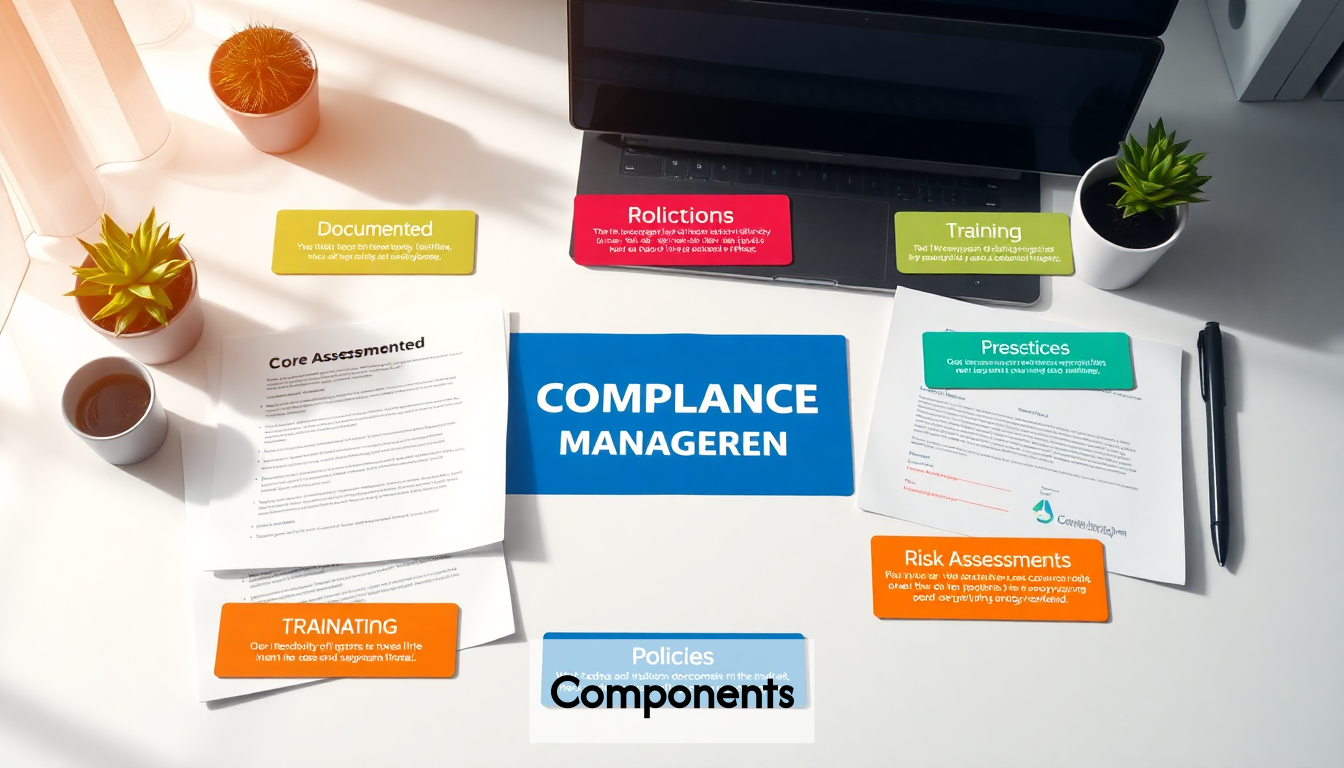
A robust compliance management system typically includes:
- Clearly documented policies and procedures
- Regular risk assessments
- Staff training and awareness programs
- Monitoring and testing mechanisms
- Reporting structures for compliance issues
- Response protocols for violations
For industries like healthcare, banking, and manufacturing, specialized compliance management approaches address sector-specific regulations while maintaining focus on universal compliance principles.
Key Takeaways
| Key Point | Details |
|---|---|
| Comprehensive Compliance Management | Involves building frameworks for continuous monitoring, implementation of policies, employee training, and verifying adherence through audits. |
| Financial Benefits | Organizations with effective compliance management spend 58% less on regulatory penalties, highlighting its importance in protecting financial and reputational aspects. |
| Core Components | Includes documented policies, risk assessments, training programs, monitoring, and issue management to create a holistic compliance approach. |
| Sector-Specific Approaches | Compliance management varies by industry, necessitating tailored strategies alongside universal compliance principles. |
Key Components and Regulatory Frameworks in Compliance Management
Effective compliance management relies on several interconnected components that work together to create a comprehensive compliance management system. Understanding these elements is essential for organizations seeking to build robust compliance programs.
Core Components of Compliance Management
A well-structured compliance management process typically includes:
- Compliance governance and oversight: Board-level accountability and dedicated compliance officers who establish the organization's compliance culture
- Risk assessment and prioritization protocols
- Policy development and management systems
- Training and communication programs
- Monitoring, auditing and testing activities
- Issue management and corrective action procedures
- Documentation and reporting mechanisms
The complexity of these components varies based on organizational size, industry, and regulatory exposure. For instance, financial institutions implementing compliance management must address multiple frameworks simultaneously, with the average bank managing compliance with over 200 distinct regulatory requirements.
Common regulatory frameworks that shape compliance management include GDPR for data protection, Sarbanes-Oxley for financial reporting, HIPAA for healthcare information, ISO standards for quality management, and industry-specific regulations. A 2023 Deloitte study revealed that organizations with integrated compliance management systems addressing multiple frameworks simultaneously reduced compliance costs by 30% compared to those managing each framework separately.
Corporate compliance management increasingly leverages technology solutions to streamline monitoring and documentation across these various frameworks, creating more responsive and adaptable systems.
Best Practices for Streamlining Compliance Management Processes
Implementing efficient compliance management processes requires strategic planning and continuous refinement. Organizations that excel at managing compliance typically follow these proven best practices:
Automation and Integration
Leverage technology to automate repetitive compliance tasks. According to a 2023 Gartner report, organizations that implemented compliance management software reduced manual documentation efforts by 65% while improving accuracy. Integrate compliance functions across departments rather than treating compliance as an isolated activity.

Risk-Based Approach
Allocate compliance resources according to risk exposure. A risk-based approach to compliance management prioritizes high-impact, high-likelihood regulatory requirements, ensuring efficient resource allocation. This methodology has helped organizations reduce compliance-related costs by up to 40% while maintaining comprehensive coverage.
Documentation and Policy Management
Implement a centralized policy compliance management system where all compliance documentation is accessible, searchable, and regularly updated. This creates a single source of truth for compliance requirements and evidence.
Effective compliance planning practices include:
- Regular review cycles for policies and procedures
- Clear assignment of compliance responsibilities
- Consistent compliance training schedules
- Automated compliance calendar alerts
- Streamlined reporting mechanisms
- Periodic compliance effectiveness assessments
Organizations with mature compliance management programs conduct quarterly reviews of their compliance processes, compared to annual reviews at less advanced organizations. This frequent reassessment allows for timely adjustments to changing regulatory landscapes and operational needs.
Leveraging Technology to Enhance Compliance Management
Technology has revolutionized how organizations approach compliance management, transforming it from a manual, resource-intensive process to a streamlined, data-driven function. Modern IT compliance management solutions offer powerful capabilities for maintaining regulatory adherence while reducing administrative burden.
Compliance management technology provides several key advantages:
- Real-time monitoring and alerts for compliance violations
- Automated documentation and evidence collection
- Centralized policy management and distribution
- Streamlined workflow for approvals and attestations
- Advanced analytics for compliance risk identification
- Audit trail creation and maintenance
A 2023 PwC compliance technology survey revealed that organizations implementing specialized compliance management platforms reduced compliance-related costs by 28% while simultaneously improving their regulatory readiness scores by 42%.
The most effective technology implementations integrate compliance management with existing business systems. For example, a mid-sized healthcare provider integrated their compliance management system with electronic health records, resulting in 94% faster reporting of potential HIPAA violations and reducing investigation time by 65%.
When selecting compliance technology, organizations should evaluate solutions based on their ability to address industry-specific regulations, scalability, integration capabilities, and reporting functionality. The investment typically yields returns through reduced manual effort, decreased regulatory penalties, and improved operational efficiency.
Overcoming Common Challenges and Pain Points in Compliance Management
Even well-designed compliance management systems face obstacles that can undermine their effectiveness. Understanding these challenges is the first step toward developing strategic solutions.
Regulatory Complexity and Change
Organizations often struggle with the volume and pace of regulatory changes. A 2023 Thomson Reuters study found that financial institutions experienced an average of 220 regulatory changes daily worldwide. To manage this complexity:
- Implement regulatory change management processes with clear accountability
- Utilize regulatory intelligence tools that monitor updates automatically
- Develop a compliance taxonomy that categorizes requirements by business function
- Create cross-functional teams to assess regulatory impact
Resource Constraints
Limited budget and staffing consistently rank among the top compliance management challenges. A recent survey by Compliance Week revealed that 67% of compliance departments operate with fewer than five staff members, regardless of organization size.
This resource gap can be addressed through:
- Risk-based allocation of compliance resources
- Targeted outsourcing of specialized compliance functions
- Technology automation for routine compliance tasks
- Integrating compliance responsibilities into existing roles
Siloed Compliance Approaches
Many organizations manage compliance in disconnected silos, leading to duplication, gaps, and inconsistencies. Companies that successfully overcome this challenge implement unified compliance management systems that harmonize requirements across multiple regulatory frameworks.
Technology industry leader Microsoft demonstrated this approach by creating a Common Controls Hub that mapped overlapping requirements across 200+ regulations, reducing compliance assessment efforts by 40% and improving overall compliance posture.
Building a Sustainable and Effective Compliance Management Program
Creating a compliance management program that withstands regulatory evolution and organizational growth requires strategic planning and ongoing commitment. Organizations that succeed in this area focus on building sustainable foundations rather than reactive responses.
Developing a Compliance-Focused Culture
Effective compliance management begins with organizational culture. According to a 2022 Ethics & Compliance Initiative study, organizations with strong ethical cultures experience 74% fewer instances of misconduct than those with weak cultures. Building this culture requires:
- Clear tone from leadership regarding compliance expectations
- Rewards and recognition for compliance-supporting behaviors
- Consistent accountability for compliance violations
- Open communication channels for compliance concerns
- Regular reinforcement of compliance values
Maturity-Based Approach
Sustainable compliance management programs evolve through distinct maturity stages. A practical approach involves assessing your current maturity level and developing incremental improvements:
| Maturity Level | Key Characteristics | Focus Areas |
|---|---|---|
| Initial | Reactive, ad-hoc compliance activities | Basic policy documentation |
| Developing | Defined processes but inconsistent application | Standardization and training |
| Established | Consistent implementation with regular monitoring | Metrics and measurement |
| Advanced | Proactive approach with continuous improvement | Integration and optimization |
| Leading | Predictive capabilities and strategic advantage | Innovation and influence |
The Netflix compliance team exemplifies this maturity-based approach. They built their compliance management system incrementally, focusing first on core regulatory requirements before expanding to more sophisticated risk analytics and predictive compliance capabilities. This phased implementation allowed them to sustain momentum while demonstrating clear value at each stage.
Regular program assessments using objective criteria help identify improvement opportunities and measure progress toward compliance management goals.
Frequently Asked Questions
What is compliance management?
Compliance management is the systematic process of ensuring an organization adheres to laws, regulations, standards, and ethical practices relevant to its operations. It involves risk identification, assessment, mitigation, and maintaining documentation to demonstrate compliance.
Why is compliance management important?
Compliance management is crucial as it protects organizations from financial and reputational damage. Effective compliance programs can reduce regulatory penalties by up to 58%, highlighting the significant cost-saving potential and risk mitigation it offers.
What are the key components of a compliance management program?
A robust compliance management program should include documented policies, risk assessments, training and awareness programs, monitoring and auditing practices, issue management procedures, and clear documentation and reporting mechanisms.
How can technology enhance compliance management?
Technology enhances compliance management by automating routine tasks, centralizing policy management, providing real-time monitoring, and improving documentation processes. This can lead to reduced compliance costs and increased readiness for regulatory changes.
Elevate Your Compliance Management with Skypher
Navigating the regulatory landscape can feel overwhelming, as organizations grapple with the complexities and ever-changing nature of compliance requirements. The Key Takeaways from our guide reveal how organizations that implement robust compliance frameworks often reduce costs and enhance their operational efficiency. Yet, the challenge remains: how can you effectively manage compliance without succumbing to resource constraints or regulatory chaos?
!
Skypher offers a solution tailored to meet these compliance challenges head-on. Our AI Questionnaire Automation Tool streamlines the often tedious process of answering security questionnaires, allowing you to respond with higher accuracy and speed—just what you need to safeguard your organization while maintaining regulatory compliance. By leveraging our platform, your teams will experience:
- Seamless collaboration and real-time updates
- Integrations with over 40 third-party risk management platforms
- A customizable Trust Center for enhanced communication
Don’t let compliance hurdles slow you down! Visit https://skypher.co today to explore how our platform can transform your compliance management strategy into a competitive advantage. Act now and empower your team to focus on what truly matters: driving your business forward.