

Introduction to Compliance Risk Management
Welcome to the fascinating world of compliance risk management! You might be wondering, what is compliance risk management exactly? Well, imagine navigating a complex maze where every turn could either lead to success or stumble you into potential pitfalls—this is where compliance risk management comes into play. It’s all about identifying, assessing, and mitigating risks that can disrupt an organization’s adherence to laws, regulations, and internal policies.
What is Compliance Risk?
To get started, let’s define compliance risk. Essentially, a compliance risk refers to the potential for financial or reputational loss that arises when a company fails to act in accordance with regulations or standards. Examples of these regulations include data protection laws, anti-money laundering statutes, and sector-specific mandates. If a company is non-compliant, the fallout could range from hefty fines to serious damage to its reputation.
The Importance of Managing Compliance Risk
Managing compliance risk is critical not just for legal reasons, but also for building trust with stakeholders and customers. After all, no one wants to associate with a company that constantly finds itself in hot water due to regulatory issues. Thus, having a solid risk management in compliance strategy is essential for any organization looking to thrive in today’s competitive landscape.
As the compliance landscape continues to evolve—driven by changes in legislation, technology advancements, and shifting societal expectations—understanding what is compliance risk management becomes a non-negotiable skill for businesses.
In this article, we'll delve deeper into the definitions, applications, and strategies for compliance risk mitigation, ensuring you're equipped with everything you need to confidently manage compliance risks. Let’s get started on this exciting journey together!
What is Compliance Risk? Definition and Implications
Alright, let’s break it down further by answering the question, what is compliance risk? Compliance risk is essentially the risk of legal penalties, financial forfeiture, and material loss an organization faces when it fails to comply with laws, regulations, and rules that apply to its operations. In simpler terms, it’s that nagging feeling you get when you think, "Uh-oh, are we following the rules?"
Compliance Risk Definition Breakdown
To give you a firmer grip, here’s a quick definition: Compliance risk refers to any risk arising from the failure to comply with applicable laws and regulations, which could lead to financial loss or reputational damage. Think of it as a ticking time bomb that can explode if not managed properly.
Implications of Compliance Risk
The implications of compliance risks can be far-reaching and severe. For example, a major corporation faced a staggering fine of over $1 billion for failing to adhere to anti-money laundering laws. That's not just pocket change; it's money that could have been used for innovation, employee bonuses, or even a fancy corporate retreat!
Managing compliance risk is critical, not just for avoiding penalties but also for maintaining operational integrity and stakeholder confidence. Organizations must stay informed about their regulatory environment, which is why risk management in compliance should be a core component of any business strategy.
Real-World Applications
Let’s look at a practical example. Suppose a healthcare provider does not comply with HIPAA regulations—which are designed to protect patient information. The fallout could be catastrophic, leading to audits, hefty fines, or even criminal charges against executives. That's the kind of risk that can sink a ship!
Thus, when we talk about the definition of compliance risk, it’s clear that the consequences are not just about avoiding monetary fines; they extend to the very operational fabric of an organization. As we move forward, we’ll delve into strategies for effectively managing compliance risk and mitigating its potentially disastrous effects.
Key Components of Compliance Risk Management

Now that we’ve established the foundation surrounding what is compliance risk and its implications, let’s roll up our sleeves and explore the key components of compliance risk management. Think of these elements as the building blocks that help organizations navigate the often-treacherous waters of regulatory compliance.
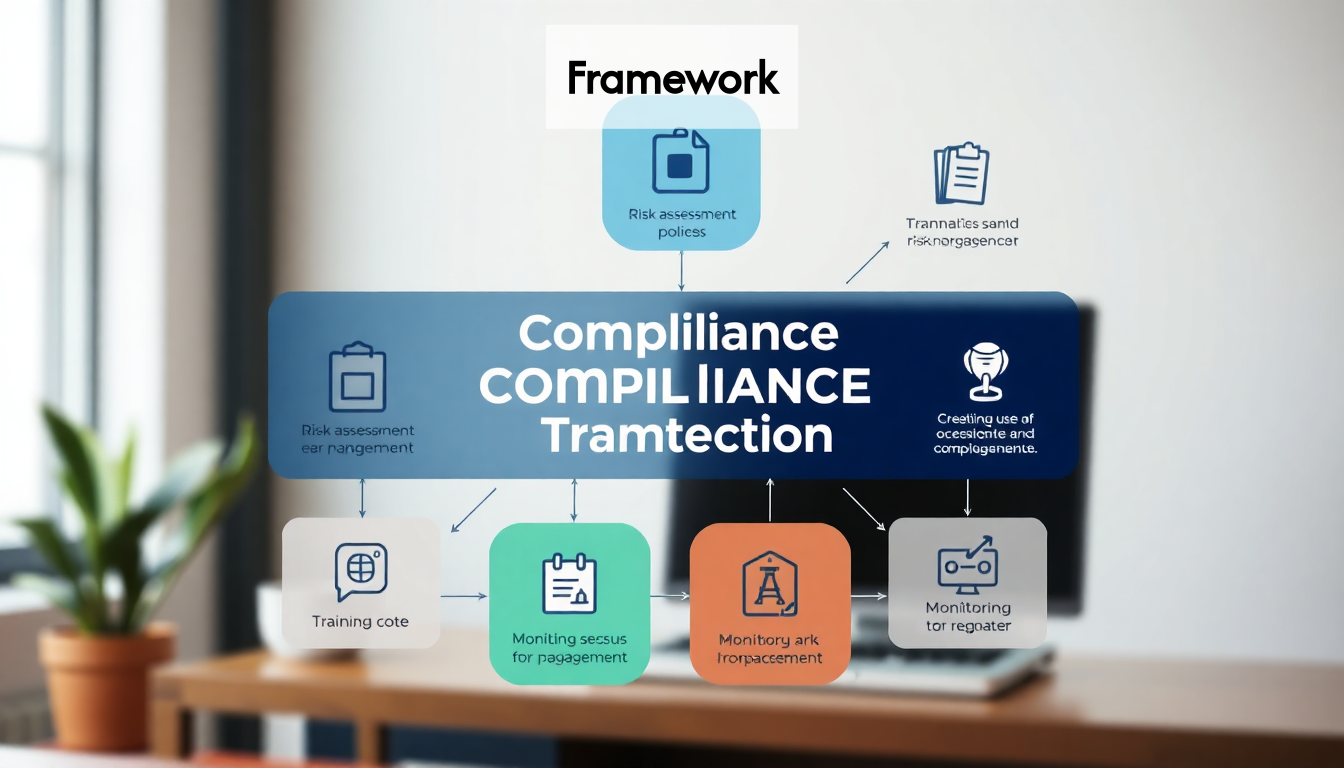
1. Risk Assessment
The first step in effective risk compliance management is conducting a thorough risk assessment. This involves identifying the various compliance risks that your organization may face. It’s like checking your blind spots before changing lanes in traffic. Are there new regulations on the horizon? Are there risks unique to your industry? By pinpointing these areas, you can tailor your compliance strategies effectively.
2. Policies and Procedures
Next up are policies and procedures. Establishing clear guidelines is essential for helping employees understand their obligations and how to meet them. This isn’t just about putting a document in a drawer; it’s about creating a living set of rules that everyone can reference when in doubt. The clearer your policies, the easier it becomes to mitigate any potential compliance risks down the line.
3. Training and Awareness
An often-overlooked element is the importance of training and awareness programs. It’s great to have policies, but if your team doesn’t understand them, they’re useless. Regular training sessions not only familiarize employees with compliance obligations but also empower them to recognize potential risks. Plus, a little game-show-style quiz never hurt anyone!
4. Monitoring and Reporting
Now, let’s talk about monitoring and reporting. Having a robust monitoring system ensures that compliance practices are adhered to and allows for the early detection of any potential issues. Implementing reporting mechanisms encourages a culture where employees feel comfortable flagging potential compliance concerns without fear of reprisal. Think of it as open communication—making your workplace an ecosystem of transparency.
5. Continuous Improvement
Finally, we wrap things up with continuous improvement. The landscape of regulations is always changing, which means that compliance risk management cannot be a one-and-done job. Regularly reviewing and updating compliance programs is crucial to ensure they stay relevant and effective. This iterative approach keeps your organization adept at handling the ongoing challenges in compliance and risk management.
In summary, these key components work together to create a solid framework for effective compliance risk management. By focusing on risk assessment, clear policies, employee training, monitoring, and continuous improvement, you can turn potential compliance risks into manageable aspects of your business, paving the way for sustained success.
The Importance of Risk Management in Compliance
Now that we've laid the groundwork on the components of compliance risk management, let's dive into an equally crucial topic—the importance of risk management in compliance. Trust me, understanding this relationship will help you see why compliance isn’t just an afterthought; it’s a fundamental part of successful business governance.
Safeguarding Against Financial Loss
At its core, implementing solid risk management in compliance helps safeguard organizations against significant financial loss. Non-compliance can lead to fines, penalties, and lawsuits that can decimate a company's financial health. For instance, in 2020, an American financial institution faced a staggering $3 billion penalty for violating securities laws. That’s a harsh wake-up call that emphasizes the need for solid compliance structures! Managing compliance risk effectively mitigates the chances of these costly scenarios.
Enhancing Reputation and Trust
Let’s not forget about the reputational damage that can ensue from compliance failures. In today’s digitally-connected world, bad news travels fast. If a company is seen as non-compliant, it risks losing the trust of customers, partners, and investors. A good example is the scandal involving a major retail brand that faced backlash over data privacy concerns. Their reputation took a nosedive, impacting sales and brand loyalty. Effective compliance risk mitigation strategies can enhance a company’s credibility, helping it gain a competitive edge.
Promoting Organizational Integrity
In addition to financial safeguards and reputation, risk compliance management fosters a culture of integrity and accountability. When businesses prioritize compliance, they promote ethical behavior among employees. This includes following laws and regulations, as well as adhering to internal policies that guide decision-making. An organization that values compliance is likely to attract high-quality talent and maintain a motivated workforce.
Regulatory Changes and Adaptability
The regulatory landscape is constantly evolving, which means risk management and compliance are in a state of flux. Companies that actively engage in compliance risk management are better positioned to adapt to changes. For example, in response to new data protection regulations like GDPR, organizations can proactively adjust their policies to stay compliant. Those caught off guard often find themselves scrambling to catch up—sometimes too late.
Bottom Line
In summary, the importance of risk management in compliance cannot be overstated. It serves as a protective barrier against financial loss, bolsters a company's reputation, promotes ethical practices, and ensures adaptability in a rapidly changing regulatory environment. Embracing compliance risk strategies is not just a best practice; it’s a crucial pillar that underpins long-term success. As we move forward, let’s explore actionable steps that organizations can take for effective compliance risk management!
Strategies for Managing Compliance Risk
Alright, folks! Now that we understand the significance of risk management in compliance, let’s roll up our sleeves and talk about practical strategies for managing compliance risk. Just as you wouldn’t tackle a mountain without a good pair of hiking boots, you shouldn't dive into compliance without a solid game plan. Here are proven strategies that can help your organization stay compliant while mitigating risks effectively.
1. Conduct Regular Risk Assessments
First things first—committing to regular risk assessments is a must. Think of this as your organization's health check-up. Assess how different regulations impact various functions, pinpoint vulnerabilities, and identify potential compliance gaps. Use quantitative measures where possible to truly understand the risk landscape. This proactive approach lets you identify emerging compliance risks before they become big headaches.
2. Develop a Robust Compliance Framework
Next up is unleashing your organizational creativity with a robust compliance framework. This includes creating detailed policies, procedures, and guidelines that align with legal requirements and industry standards. You want this framework to be easily digestible for all employees while ensuring compliance is woven into the fabric of the company culture. Remember, a strong policy is only as good as its ability to be followed!
3. Foster a Culture of Compliance
Speaking of culture, one of the most effective strategies for managing compliance risk is to foster a culture of compliance throughout the organization. This means communicating the importance of compliance at every level—from entry-level staff to the C-suite. When employees see leadership genuinely committed to compliance, they’re more likely to adopt those values themselves. Remember, it’s not just about following the rules; it’s about doing the right thing!
4. Leverage Technology
In today’s tireless digital age, technology can be your biggest ally. Utilizing compliance management software can help automate processes, streamline documentation, and monitor compliance in real time. Many organizations benefit from using tools that offer centralized dashboards to track compliance efforts and identify areas needing attention. For example, GRC (Governance, Risk, and Compliance) platforms enable organizations to oversee multiple compliance requirements efficiently and proactively.
5. Provide Ongoing Training and Education
Don't underestimate the power of ongoing training and education. Regularly scheduled training sessions equip employees with the knowledge they need to navigate compliance landscapes adeptly. Make it engaging—consider gamified training or scenario-based learning to heighten interest. You want them thinking, "I’m not just checking a box; I’m building a compliant future!"
6. Implement a Clear Reporting Mechanism
Finally, don’t forget the importance of a clear reporting mechanism. Employees should feel empowered to report potential compliance risks or concerns without fear of retaliation. Implementing anonymous reporting channels may encourage more people to come forward. An open dialogue can prevent small issues from snowballing into major compliance catastrophes.
Conclusion
In summary, managing compliance risk effectively requires a multi-faceted approach that integrates regular assessments, robust frameworks, a strong culture, the clever use of technology, ongoing education, and open reporting channels. With these strategies in your toolkit, your organization will be better equipped to tackle compliance challenges head-on, creating a safer, more compliant environment for everyone involved.
Compliance Risk Mitigation Techniques
Now that we have our strategies lined up, let’s delve into some essential compliance risk mitigation techniques that can add layers of protection to your organization. Think of these techniques as your safety nets, designed to catch any potential risks before they lead to significant issues.
1. Incorporate Risk-Based Approaches
One of the most effective compliance risk mitigation techniques is adopting a risk-based approach. This means prioritizing compliance efforts based on the level of risk associated with various operations or projects. For example, if your organization deals with sensitive customer data, focus your resources on ensuring strict adherence to data privacy regulations such as GDPR or CCPA. Think of it as putting your money where the risk is—addressing high-impact areas first allows for efficient use of time and resources.
2. Develop Incident Response Plans
Having an incident response plan is like having a fire extinguisher—you hope you never need it, but it’s vital to have it ready when the flames start. This plan outlines procedures for responding to compliance breaches effectively and swiftly. It should detail who needs to be notified, the steps to contain the breach, and how to communicate with relevant stakeholders. This level of preparedness can significantly minimize the fallout from any compliance incidents.
3. Regular Audits and Reviews
Don’t just set it and forget it! Conducting regular audits and reviews of your compliance policies and practices can reveal hidden vulnerabilities. These audits can be internal or conducted by third-party experts who can provide an unbiased perspective. Think of it as giving your compliance program a check-up—you might catch something before it escalates. Annual or semi-annual reviews should be part of your ongoing compliance strategy.
4. Utilize Compliance Technology
As previously mentioned, leveraging compliance technology is a crucial mitigation technique. Automation tools can help companies maintain oversight of compliance requirements, while workflow tools can help streamline tasks related to compliance documentation and reporting. By utilizing these technologies effectively, organizations can mitigate the risk of human error and ensure adherence to regulations. If you think of compliance as navigating a maze, technology can help illuminate the path forward.
5. Collaborate Across Departments
Employing a multi-disciplinary approach by collaborating across departments is another effective technique in managing compliance risk. Involve different stakeholders—think legal, finance, operations, and HR—in the compliance discussions. Each department can offer unique insights and perspectives on compliance risks specific to their areas. This collaboration helps create a holistic compliance environment that considers various angles and minimizes risks.
6. Adopt Third-Party Risk Management
In our interconnected world, third-party relationships can pose substantial compliance risks. Adopting a robust third-party risk management program helps you vet and monitor suppliers, vendors, and partners for compliance adherence. This process involves conducting due diligence assessments, monitoring compliance performance, and establishing clear contractual obligations for third parties. Failure to manage third-party risks can lead to significant consequences, so this technique is crucial.
Conclusion
In summary, utilizing these compliance risk mitigation techniques can fortify your organization against a multitude of potential compliance pitfalls. From incident response plans to comprehensive audits, proactive measures ensure that you’re not just reacting to compliance issues as they arise, but actively preventing them. As we continue our exploration, we’ll look at the future trends in compliance risk management that you’ll want to keep an eye on!
The Relationship Between Compliance, Risk Management, and Business Success
Now that we've explored the various techniques for compliance risk mitigation, let's take a step back and examine the bigger picture—the relationship between compliance, risk management, and overall business success. It’s easy to view compliance as a box to check, but when you dig deeper, you see that it forms a crucial backbone for sustainable growth and stability.
Compliance as a Foundation for Trust
To begin with, compliance is not just about adhering to laws; it’s about building trust. Whether you’re dealing with customers, investors, or regulatory bodies, demonstrating strong compliance practices communicates that your organization is responsible and ethical. This trust is invaluable, as studies have shown that companies perceived as compliant and ethical enjoy stronger customer loyalty and better vendor relationships. In our fast-paced digital age, safeguarding your organization’s reputation can be the difference between long-term success and fleeting attention.
Risk Management as a Strategic Tool
Next, let’s consider risk management. It isn’t just a preventive measure; it’s an essential tool for strategic decision-making. Effective risk management processes inform business strategies by identifying opportunities and potential pitfalls ahead of time. Businesses that actively manage risks are more adaptable to changes in the marketplace; they can pivot quickly without compromising compliance. It’s like driving a car with a clear view of the road ahead—you can react promptly to avoid obstacles.
Interplay Between Compliance and Risk Management
So, how do compliance and risk management interconnect? When you implement an effective risk management compliance strategy, you inherently enhance your compliance efforts. For instance, comprehensive risk assessments involve identifying compliance gaps and aligning policies accordingly. This interplay helps organizations not only avoid penalties but also position themselves as proactive entities in their industry.
Enabling Sustainable Business Growth
Furthermore, the relationship between compliance, risk management, and business success is essential for sustainable growth. Organizations that prioritize compliance are often better prepared for changes in regulations, which allows for smoother transitions and minimal disruptions to operations. Conversely, companies that neglect compliance face the risk of sudden fines or operational halts that can derail growth plans.
An Example in Practice
Consider a tech company that regularly updates its compliance programs to adapt to new data protection laws. By staying ahead of regulatory changes, they build customer trust and protect sensitive information while mitigating the risk of data breaches and fines. This strategy translates directly into increased user acquisition and retention—key components of business success.
Conclusion
In conclusion, the relationship between compliance, risk management, and business success is a tight-knit one. By fostering a culture that emphasizes both compliance and risk management, organizations can build trust, make informed decisions, and enable sustainable growth. As we move forward, let’s explore emerging trends and future directions in compliance risk management that every business should watch closely!
Conclusion: Future of Compliance Risk Management
As we wrap up our journey through the realm of compliance risk management, it’s essential to peer into the future and consider what lies ahead. The landscape of compliance is continually evolving, driven by technological advancements, shifting regulatory requirements, and changing business environments. Here’s a sneak peek at what we can expect in the future of compliance risk management.
Rise of Automation and AI
One of the most significant trends shaping the future of compliance is the increased integration of automation and artificial intelligence (AI). Organizations are rapidly adopting compliance technologies that streamline processes, provide real-time monitoring, and enhance risk assessments. Imagine having AI systems that can analyze vast amounts of regulatory data, flagging potential compliance risks before they become liabilities. This not only reduces the burden on compliance teams but also enhances accuracy—two birds, one very effective stone!
Increased Regulatory Scrutiny
As businesses adapt to the digital age, regulatory bodies are sure to step up their game. Expect heightened scrutiny in various sectors, particularly in data privacy and cybersecurity. Regulations like the GDPR and CCPA set high bars for compliance, and businesses that don't keep up will likely face severe consequences. Organizations will need to be proactive, adapting quickly to changing regulations to avoid penalties. The future will belong to those who can anticipate changes rather than merely react to them.
Focus on Training and Culture
The importance of cultivating a strong culture of compliance is something that will continue to grow. As regulations become more complex, the need for ongoing training and education for employees cannot be overstated. Organizations that prioritize a culture of accountability and open communication will find it easier to navigate compliance challenges. And let’s face it, doing it right also makes for a more engaged workforce—who doesn’t want that?
Collaboration Across the Business Landscape
Additionally, we will likely see an uptick in collaboration among industries, as companies increasingly realize that compliance isn’t just an internal affair. Partnerships between businesses and regulatory bodies can offer better guidance and share best practices. For example, sectors struggling with compliance might form coalitions to tackle common challenges, like combating fraud or ensuring fair trading. This collaborative approach can create a more level playing field.
Conclusion: Embracing the Future
In summary, the future of compliance risk management will be defined by innovation, adaptability, and collaboration. By embracing these changes, organizations can mitigate risks more effectively while cementing their reputations as responsible and reliable entities.
As we move forward, keep your eyes peeled on emerging trends and prepare to adapt—not just for compliance's sake but for the overall success and sustainability of your business. With the right strategies and technologies in place, the future of compliance risk management is bright, promising opportunities for those ready to seize them.
Frequently Asked Questions
What is compliance risk management?
Compliance risk management involves identifying, assessing, and mitigating the risks that arise when an organization fails to adhere to laws, regulations, and internal policies. It ensures that companies operate within legal boundaries to avoid financial and reputational losses.
Why is managing compliance risk important?
Managing compliance risk is critical as it helps safeguard organizations against financial penalties, enhances their reputation, and fosters stakeholder trust. A robust compliance strategy minimizes potential legal issues, ensuring operational integrity.
What are the key components of compliance risk management?
The key components of compliance risk management include risk assessment, policies and procedures, training and awareness programs, monitoring and reporting, and continuous improvement. These elements work together to create a solid framework for effective compliance.
How can organizations effectively mitigate compliance risks?
Organizations can effectively mitigate compliance risks by conducting regular risk assessments, developing robust compliance frameworks, fostering a culture of compliance, leveraging technology, and providing ongoing training to employees.
Bridge Compliance Risk Management with Skypher's Solutions
Ready to tackle compliance risks head-on? Navigating the complexities of compliance risk management can feel like a daunting maze, especially in sectors like tech and finance where the stakes are high. As we highlighted in our article, non-compliance can lead to significant financial penalties and reputational damage—issues that can derail your organization's success.
But fear not; Skypher is here to empower your organization with our AI-driven Questionnaire Automation Tool, designed specifically to streamline the notoriously cumbersome process of security reviews!
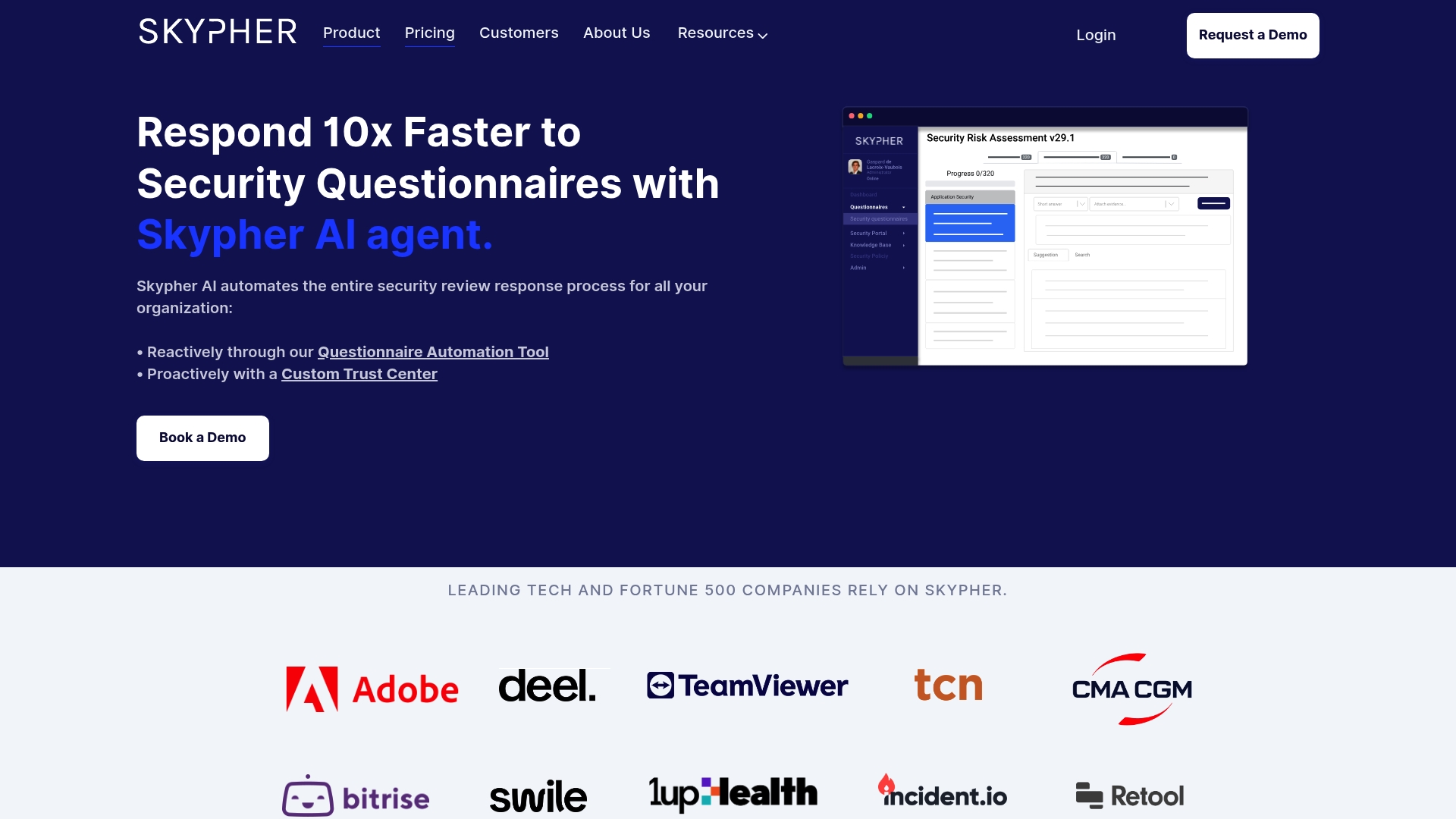
Picture this: with Skypher, you can automate your security questionnaire responses, slashing completion time while ensuring higher accuracy and adherence to compliance regulations. Imagine the ease of real-time collaboration amongst your teams and the integration with over 40 third-party risk management platforms. You’ll not only enhance your company’s compliance posture but also boost team efficiency and foster trust with stakeholders.
Don’t let compliance risks hold you back any longer! Transform your approach to compliance and security with Skypher today. Discover how our platform can help you mitigate compliance risks and elevate your operational productivity by visiting https://skypher.co. Act now—your path to effortless compliance management awaits!