
Enterprise Risk Management is revolutionizing how organizations perceive and handle risk. With over 80 percent of companies acknowledging that integrating risk management into their strategic planning enhances decision-making, it's clear this approach is reshaping business landscapes. But here's the twist: the real magic isn't just in curbing losses. Instead, it's all about seizing hidden opportunities that firms often overlook. By embracing ERM, businesses unlock the potential to not only navigate uncertainty but to thrive despite it.
Table of Contents
- ERM Basics and Core Concepts
- ERM Framework and Key Components
- Benefits and Challenges of ERM
- Key Benefits of Enterprise Risk Management
- Enhanced Leadership Decision-Making
- Proactive Risk Mitigation and Cost Reduction
- Improved Business Resilience and Continuity
- Competitive Advantage Through Risk Intelligence
- Challenges in Implementing ERM
- Cultural Resistance
- Resource Constraints
- Complexity and Integration Difficulties
- Measuring Effectiveness
- Balancing Benefits and Challenges
- Strategies for ERM Implementation
Quick Summary
| Takeaway | Explanation |
|---|---|
| Holistic Risk Management Approach | ERM integrates risk considerations into strategic planning and operations, allowing organizations to identify interconnected risks and opportunities rather than viewing them in isolation. |
| Key ERM Components | Implementing a robust ERM framework involves governance, strategy setting, performance assessments, and effective communication, all of which provide a structured methodology for managing risks. |
| Phased Implementation Strategy | A phased approach to ERM implementation allows organizations to build capability incrementally, starting with pilot programs and expanding across the enterprise as lessons are learned. |
| Cultural Transformation is Essential | Overcoming cultural resistance requires continuous communication, education, and recognition, making risk management a core value within the organization. |
| Integration with Strategic Planning | To maximize effectiveness, ERM must be integrated into strategic planning, ensuring that risk assessments inform decision-making and opportunity evaluations comprehensively. |
ERM Basics and Core Concepts

Enterprise Risk Management (ERM) represents a fundamental shift in how organizations approach risk. Rather than viewing risks in isolation, ERM establishes a comprehensive framework that integrates risk considerations into strategic planning and day-to-day operations. Understanding the core concepts of ERM provides the foundation for implementing an effective risk management program across any organization.
Defining Enterprise Risk Management
At its essence, Enterprise Risk Management is a structured, organization-wide approach to identifying, assessing, monitoring, and responding to risks that could impact an organization's ability to achieve its objectives. According to Western Washington University's Risk Management department, ERM is a collaborative process aimed at protecting a company's assets and operations through a holistic lens.
Unlike traditional risk management approaches that operate in silos, ERM takes an integrated view, recognizing that risks are interconnected across departments and functions. This holistic perspective enables organizations to identify risk interdependencies that might otherwise go unnoticed.
ERM isn't just about avoiding negative outcomes. It also focuses on identifying opportunities that emerge from a well-managed risk landscape. By understanding both threats and opportunities, organizations can make more informed decisions about which risks to accept, mitigate, transfer, or avoid.
Core Components of an ERM Framework
A robust ERM framework consists of several interrelated components that work together to create a comprehensive risk management system. The Committee of Sponsoring Organizations of the Treadway Commission (COSO) outlines five key components in their widely-adopted ERM framework:
- Governance and Culture - Establishing oversight responsibilities, defining risk appetite, and building a risk-aware culture
- Strategy and Objective Setting - Aligning risk management with the organization's mission and vision
- Performance - Identifying, assessing and prioritizing risks, then implementing responses
- Review and Revision - Evaluating changes in risk and reviewing risk management performance
- Information, Communication, and Reporting - Communicating risk information and reporting on risk, culture, and performance
This structured approach, as highlighted by Investopedia, provides organizations with a roadmap for developing and implementing effective ERM practices.
The ERM Process Cycle
Enterprise risk management operates as a continuous cycle rather than a one-time event. This ongoing process includes:
Risk Identification: Organizations systematically identify potential events that could affect achievement of objectives. This involves examining both internal factors (such as processes, systems, and personnel) and external factors (such as economic conditions, regulatory changes, and competitor actions).
Risk Assessment: Once risks are identified, they are analyzed in terms of likelihood and potential impact. This assessment helps prioritize risks and determine which require immediate attention.
Risk Response: Organizations develop strategies to address prioritized risks. Responses typically fall into four categories:
- Risk acceptance (taking the risk)
- Risk reduction (implementing controls)
- Risk sharing (transferring part of the risk, often through insurance)
- Risk avoidance (eliminating the activity creating the risk)
Monitoring and Review: The final step involves ongoing monitoring of risks and the effectiveness of controls. According to TrustCloud, this process includes regular reassessment as both internal and external environments change over time.
Benefits of Enterprise Risk Management
When properly implemented, ERM offers significant advantages over traditional risk management approaches. These benefits include:
-
Strategic Alignment: ERM aligns risk management activities with business objectives, ensuring resources are directed toward managing the most critical risks.
-
Enhanced Decision-Making: By providing a structured approach to understanding risks and opportunities, ERM enables more informed decision-making at all levels of the organization.
-
Operational Efficiency: ERM helps identify redundant or ineffective controls, allowing organizations to streamline their risk management efforts.
-
Improved Resilience: Organizations with mature ERM programs are better prepared to respond to unexpected events and recover more quickly from disruptions.
-
Stakeholder Confidence: Demonstrating a robust approach to risk management can enhance credibility with investors, regulators, customers, and other stakeholders.
Understanding these fundamental concepts provides the foundation for building an effective enterprise risk management program that protects and creates value for the organization.
ERM Framework and Key Components
A well-designed Enterprise Risk Management framework serves as the architectural blueprint for how an organization identifies, assesses, and manages risks across the enterprise. While the previous section outlined the basic concepts of ERM, this section delves deeper into the structural elements that make up a comprehensive ERM framework and explores its key components in greater detail.
Types of Risks in an ERM Framework
An effective ERM framework addresses three primary categories of risk that organizations face, according to Diligent:
Operational Risk: These risks arise from inadequate or failed internal processes, people, and systems. Examples include equipment failures, supply chain disruptions, human errors, cybersecurity breaches, and natural disasters that impact business operations.
Financial Risk: This category encompasses risks that could lead to financial losses. Common financial risks include market volatility, credit defaults, liquidity constraints, and currency fluctuations. These risks directly impact an organization's financial statements and can threaten its financial stability.
Strategic Risk: These risks affect an organization's ability to achieve its long-term objectives. Strategic risks often emerge from changes in the competitive landscape, shifts in customer preferences, technological disruptions, or regulatory developments that challenge the organization's business model.
By categorizing risks in this manner, organizations can develop targeted strategies for each risk type while still maintaining a holistic view of their overall risk landscape.
Nine Essential Components of an ERM Framework
While various ERM frameworks exist, most include similar fundamental components. Here are nine essential elements that form a comprehensive ERM framework:
1. Organizational Culture: A risk-aware culture forms the foundation of effective risk management. This component focuses on establishing values, behaviors, and attitudes toward risk throughout the organization. The internal environment, as noted by Saviom, encompasses the organizational structure, ethical values, and risk appetite that drive the approach to risk management.
2. Objective Setting: This component links risk management to the organization's mission and strategic objectives. By establishing clear objectives, organizations can better identify events that might impact their achievement.
3. Risk Identification: This systematic process involves identifying internal and external events that could affect the organization's ability to achieve its objectives. Effective identification requires input from stakeholders across different departments and levels.
4. Risk Assessment: Once risks are identified, they need to be analyzed in terms of likelihood and potential impact. This assessment helps prioritize risks and determine appropriate response strategies.
5. Risk Response: Organizations develop and implement strategies to address identified risks. These responses may include accepting, reducing, sharing, or avoiding risks based on the organization's risk appetite and tolerance levels.
6. Control Activities: These are the policies and procedures established to ensure risk responses are effectively carried out. Control activities occur throughout the organization, at all levels and across all functions.
7. Internal Communication: Effective communication channels ensure that risk information flows appropriately throughout the organization. This includes communicating risk policies, procedures, and responsibilities to relevant stakeholders.
8. Risk Reporting: Regular reporting on risk status and the effectiveness of risk management activities keeps management and the board informed. These reports should highlight emerging risks, significant changes in existing risks, and the status of response efforts.
9. Risk Governance: This component establishes oversight responsibilities and accountabilities for risk management. It typically includes board oversight, executive leadership, a risk management committee, and designated risk owners throughout the organization.
Widely Adopted ERM Frameworks
Several standardized frameworks have gained widespread adoption, offering organizations a proven structure for implementing ERM.
The COSO ERM Framework, developed by the Committee of Sponsoring Organizations of the Treadway Commission, is perhaps the most widely recognized. According to AlertMedia, this framework is particularly effective for multinational corporations due to its flexible, consistent approach to internal risk management. It addresses all types of business risks with an emphasis on continuous improvement.
Other notable frameworks include:
- ISO 31000: An international standard that provides principles and guidelines for effective risk management
- RIMS Risk Maturity Model: Focuses on assessing and improving an organization's risk management capabilities
- FERMA Risk Management Standard: Created by the Federation of European Risk Management Associations
Many organizations customize these frameworks to fit their specific needs, industry requirements, and organizational structure while maintaining the core components that make ERM effective.
Implementing the ERM Framework
Implementing an ERM framework requires thoughtful planning and organizational commitment. Organizations typically begin with an assessment of their current risk management practices, followed by the development of a roadmap for implementation. This process involves:
- Securing leadership commitment and resource allocation
- Establishing a governance structure for risk management
- Developing risk policies and procedures
- Training employees on risk identification and assessment
- Implementing risk response plans
- Developing monitoring and reporting mechanisms
The most successful implementations take an iterative approach, starting with a pilot program and gradually expanding across the organization as capabilities mature and lessons are learned.
By carefully constructing an ERM framework with these key components, organizations create a systematic approach to managing risk that protects existing value and positions them to capitalize on future opportunities.
Benefits and Challenges of ERM
Implementing Enterprise Risk Management (ERM) represents a significant organizational undertaking that comes with both substantial rewards and notable challenges. Understanding these potential benefits and obstacles is crucial for organizations considering or actively implementing an ERM program. This section explores the advantages that effective ERM can deliver and the hurdles organizations may face during implementation and operation.
Key Benefits of Enterprise Risk Management
Enhanced Leadership Decision-Making
One of the most significant benefits of ERM is how it transforms executive decision-making. According to CLA (CliftonLarsonAllen), ERM improves the focus of directors and executives by providing standardized risk reports with consolidated data. This standardization enables better-informed risk mitigation decisions and helps leadership develop a clearer understanding of risk appetite, thresholds, and tolerances.
With comprehensive risk information at their disposal, leaders can make more confident strategic decisions, knowing they've considered the full spectrum of potential risks and opportunities. This visibility across the organization's risk landscape prevents the siloed decision-making that often occurs in traditional management structures.
Proactive Risk Mitigation and Cost Reduction
ERM shifts an organization's approach from reactive to proactive risk management. By identifying and addressing risks before they materialize, companies can significantly reduce the likelihood of costly incidents. This proactive stance includes developing contingency plans, implementing targeted risk mitigation strategies, and continuously monitoring risks to improve business continuity and resilience.
The cost savings from prevented incidents can be substantial. These savings come not only from avoiding direct losses but also from reducing indirect costs such as reputational damage, regulatory penalties, operational disruptions, and recovery expenses. Organizations with mature ERM programs often experience lower insurance premiums as insurers recognize their improved risk profile.
Improved Business Resilience and Continuity
The International Labor Organization recognizes ERM as a crucial component of best management practices, essential for business continuity and long-term viability. As Sprinto notes, ERM integrates key elements such as risk governance, practices, tools, and communication with the development of comprehensive risk management strategies that enhance organizational resilience.
By systematically identifying potential disruptions and developing response plans, organizations become better equipped to weather crises and recover more quickly when incidents occur. This resilience is increasingly valuable in today's volatile business environment, where organizations face rapidly evolving risks from technology disruptions, supply chain vulnerabilities, geopolitical instabilities, and climate change impacts.
Competitive Advantage Through Risk Intelligence
Organizations that excel at ERM often gain competitive advantages through superior risk intelligence. This advantage manifests in several ways:
- Faster identification of emerging market opportunities
- More agile responses to changing conditions
- Greater confidence in pursuing strategic initiatives
- Improved stakeholder trust and confidence
- Enhanced ability to allocate resources to high-value, managed-risk activities
By understanding risks more thoroughly than competitors, organizations can make bolder strategic moves with appropriate safeguards in place, potentially outperforming more risk-averse competitors.
Challenges in Implementing ERM
Cultural Resistance
Perhaps the most significant barrier to effective ERM implementation is cultural resistance within the organization. Many employees view risk management as an added bureaucratic burden rather than a value-creating activity. Overcoming this perception requires conscious change management efforts, including clear communication about ERM's purpose and benefits.
Similarly, some business units may resist sharing information about their risks, fearing increased scrutiny or resource constraints. Creating a non-punitive environment where risk transparency is rewarded rather than penalized is essential for overcoming this challenge.
Resource Constraints
Implementing a comprehensive ERM program requires significant resources, including:
- Staff time for risk identification and assessment
- Technology investments for risk monitoring and reporting
- Training costs to build risk management capabilities
- Potential consulting fees for specialized expertise
Smaller organizations often struggle to allocate these resources, particularly when facing competing priorities and immediate operational demands. Even in larger organizations, securing adequate budget and staffing for ERM can be challenging when the return on investment isn't immediately apparent.
Complexity and Integration Difficulties
ERM's enterprise-wide scope creates inherent complexity. Organizations must address diverse risk types across different business units, geographies, and functional areas. Integrating these varied risk perspectives into a cohesive view presents both methodological and practical challenges.
Additionally, many organizations struggle to integrate ERM with existing governance structures, strategic planning processes, and performance management systems. Without this integration, ERM can become an isolated activity with limited impact on organizational decision-making.
Measuring Effectiveness
Demonstrating ERM's value presents an ongoing challenge. Unlike many business initiatives with clear metrics, ERM's success is often measured by what doesn't happen—the avoided crises and losses. Developing meaningful key performance indicators (KPIs) for risk management effectiveness requires creativity and a commitment to tracking both leading and lagging indicators.
The challenge is further complicated by the difficulty of attributing positive outcomes directly to ERM activities when multiple factors may have contributed to those outcomes.
Balancing Benefits and Challenges
Successful ERM implementation requires a thoughtful approach that maximizes benefits while addressing challenges head-on. Organizations should consider a phased implementation approach, starting with areas of highest risk or greatest potential value. Building early successes can generate momentum and make a compelling case for expanded ERM efforts.
By understanding both the potential rewards and obstacles, organizations can develop realistic expectations and appropriate strategies for realizing ERM's full value.
Strategies for ERM Implementation
Implementing Enterprise Risk Management (ERM) requires a strategic approach tailored to an organization's specific needs, culture, and maturity level. While previous sections outlined the components and benefits of ERM, this section focuses on practical strategies for successful implementation. Organizations looking to establish or enhance their ERM programs can benefit from these proven approaches that address common implementation challenges.
Phased Implementation Approach
A phased implementation strategy reduces complexity and allows organizations to demonstrate value before expanding. This approach typically involves:
Phase 1: Foundation Building
- Secure executive sponsorship and board support
- Establish a cross-functional ERM steering committee
- Define risk appetite and tolerance statements
- Develop initial risk identification and assessment methodologies
Phase 2: Pilot Implementation
- Select 1-2 business units or risk categories for initial implementation
- Conduct detailed risk assessments in the pilot areas
- Develop and test risk response plans
- Establish monitoring and reporting processes
Phase 3: Enterprise Expansion
- Apply lessons learned from the pilot to broader implementation
- Roll out ERM processes across remaining business units
- Integrate ERM with strategic planning and decision-making
- Develop consistent risk reporting for leadership
This measured approach allows organizations to build capability and demonstrate value while managing resource constraints.
Technology-Enabled Risk Management
As organizations move forward, technology plays an increasingly vital role in ERM implementation. According to TechTarget, effective ERM implementation requires integrated tools that provide a holistic view of risks, capture key risk indicators, promote accountability for risk mitigation actions, and enable real-time risk reporting to support management decisions.
Organizations should consider investing in:
Integrated GRC Platforms: These comprehensive solutions support the full risk management lifecycle, from identification through monitoring and reporting.
Risk Analytics Tools: Advanced analytics capabilities help predict emerging risks and quantify potential impacts more accurately.
Automated Risk Monitoring: Continuous monitoring tools that track risk indicators and alert stakeholders to changing risk conditions.
Mobile-Enabled Solutions: Tools that allow risk owners to update risk information and access reports from anywhere, improving timeliness and participation.
The Risk Management Association of India suggests that organizations should invest in digital tools for risk monitoring and automation to enhance precision in their risk management activities. These technology investments pay dividends through improved efficiency, more accurate risk assessments, and enhanced reporting capabilities.
Building a Risk-Aware Culture
Even the most well-designed ERM framework will fail without a supportive organizational culture. Strategies for cultivating risk awareness include:
Leadership Modeling: When executives visibly incorporate risk considerations into their decisions and communications, it signals the importance of risk management throughout the organization.
Risk Education Programs: Comprehensive training that helps employees understand risk concepts, the organization's risk appetite, and their role in managing risks.
Recognition and Incentives: Rewarding individuals and teams who demonstrate effective risk management practices reinforces desired behaviors.
Communication Campaigns: Regular communication about risk management successes, lessons learned, and emerging risks keeps risk awareness high.
Cultural transformation doesn't happen overnight. Organizations should plan for sustained effort over multiple years to fully embed risk-aware thinking into their operational DNA.
Addressing the Expanding Risk Universe
Gartner's 2025 Leadership Vision identifies managing an accelerating emerging risk universe as a key implementation priority for ERM leaders. The risk landscape is evolving rapidly, with new threats emerging from digital transformation, climate change, geopolitical instability, and other sources.
To address this challenge, organizations should:
Implement Horizon Scanning: Establish systematic processes to identify emerging risks before they impact the organization.
Develop Scenario Planning Capabilities: Use scenario analysis to understand how different risk combinations might affect the organization and prepare appropriate responses.
Create Cross-Functional Risk Teams: Assemble diverse experts to evaluate complex, interconnected risks that span traditional organizational boundaries.
Build Robust Contingency Plans: Develop detailed response plans for high-impact risks, particularly those affecting critical operations like supply chains, as recommended by the Risk Management Association of India.
Integrating ERM with Strategic Planning
For maximum effectiveness, ERM must be integrated with strategic planning rather than operating as a separate process. Integration strategies include:
Aligned Planning Cycles: Synchronize the timing of risk assessments with strategic planning activities.
Risk-Informed Opportunity Assessment: Incorporate risk analysis into the evaluation of new opportunities, ensuring a balanced view of both upside and downside potential.
Strategic Risk Discussions: Include dedicated time for risk discussions in strategic planning sessions and board meetings.
Shared Metrics and Reporting: Develop performance metrics that incorporate both strategic objectives and related risk indicators.
This integration ensures that risk considerations become an intrinsic part of strategic decision-making rather than an afterthought.
Driving Enterprise Risk Ownership
Gartner also highlights driving enterprise risk ownership effectiveness as a crucial implementation priority. The most successful ERM programs distribute responsibility for risk management throughout the organization rather than centralizing it within a single department.
Strategies for enhancing risk ownership include:
Clear Accountability Frameworks: Formally assign ownership of specific risks to appropriate individuals with the authority to manage them.
Risk Champion Networks: Establish a network of risk champions across business units who support local risk management activities and serve as liaisons to the central ERM function.
Capability Development: Provide risk owners with the tools, training, and resources they need to effectively manage their assigned risks.
Performance Integration: Incorporate risk management responsibilities into job descriptions and performance evaluations for risk owners.
By implementing these strategic approaches, organizations can overcome common ERM implementation challenges and develop a robust, value-adding risk management capability that supports strategic objectives while protecting organizational value.
Frequently Asked Questions
What is Enterprise Risk Management (ERM)?
Enterprise Risk Management (ERM) is a holistic approach to identifying, assessing, and managing risks that could impact an organization’s objectives. It integrates risk considerations into strategic planning and everyday operations, allowing businesses to view risks and opportunities more comprehensively.
What are the main components of an ERM framework?
An ERM framework typically includes key components such as governance and culture, strategy and objective setting, performance assessment, review and revision, and information communication and reporting, all of which work together to manage risks effectively.
What are the benefits of implementing an ERM program?
Implementing an ERM program provides several benefits, including enhanced decision-making, improved organizational resilience, efficient resource allocation, and the ability to identify and capitalize on opportunities, ultimately supporting better strategic alignment and stakeholder confidence.
What challenges might organizations face when implementing ERM?
Organizations may encounter challenges such as cultural resistance, resource constraints, the complexity of integrating ERM across various functions, and difficulties in measuring the effectiveness of ERM initiatives. Addressing these challenges is essential for successful implementation.
Transform Your Risk Management with Skypher's Innovative Solutions
As organizations increasingly recognize the value of Enterprise Risk Management (ERM), the need for efficient tools to tackle security questionnaires and risk assessments becomes paramount. Whether you’re navigating operational, financial, or strategic risks, the complexity involved can stall productivity and drain valuable resources. That's where Skypher steps in!
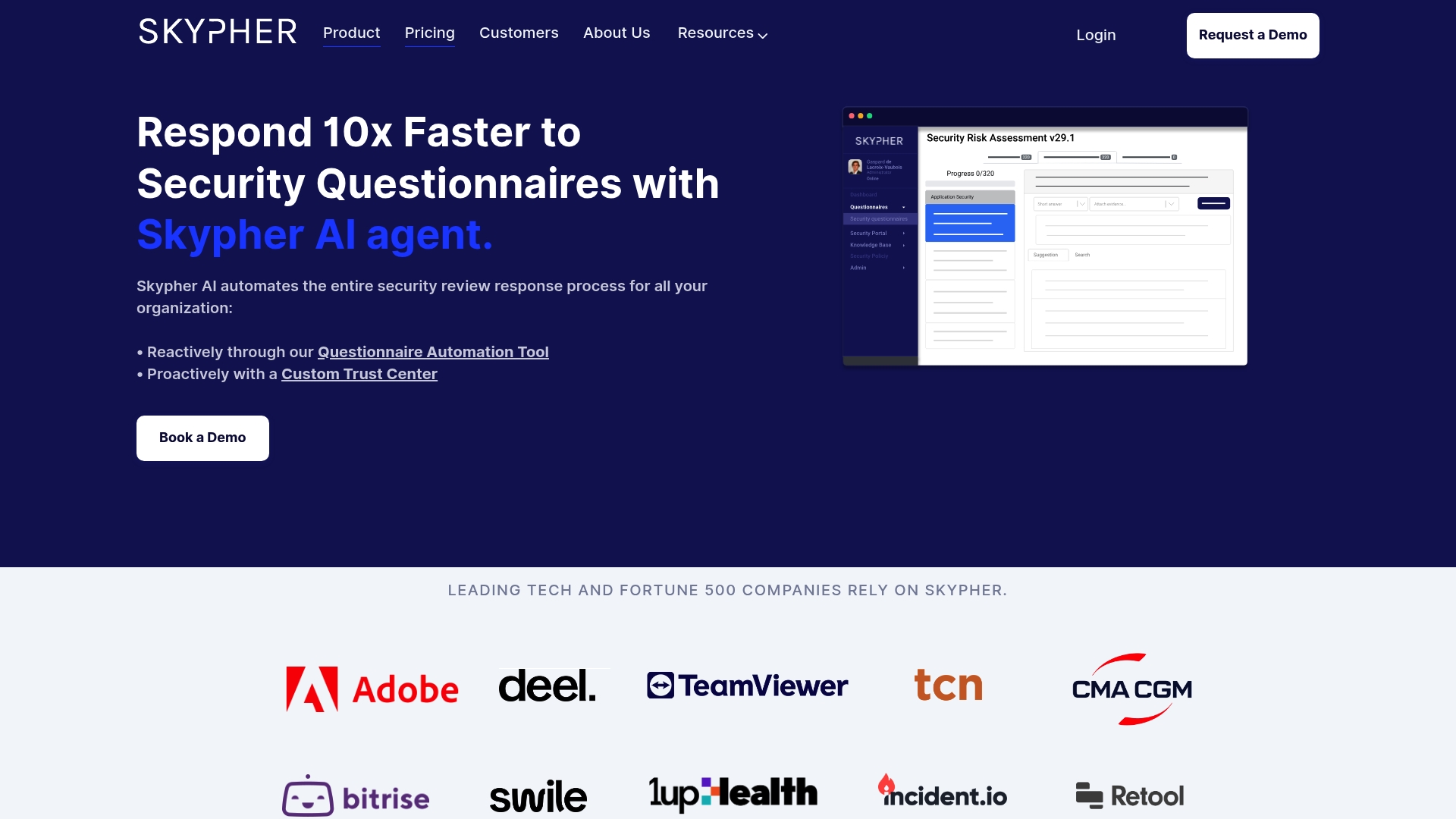
Imagine streamlining your security review process so effectively that you can focus on what really matters—growing your business and seizing opportunities in today’s dynamic market. With our AI Questionnaire Automation Tool, you can:
- Complete security reviews faster and with unmatched accuracy
- Enhance collaboration across teams with real-time integration
- Benefit from a customizable Trust Center that showcases your risk management practices!
Don’t let outdated processes hold you back. Act NOW to elevate your ERM strategy—visit Skypher and discover how you can ensure your organization is not just surviving but thriving amidst uncertainty!