
In today's rapidly evolving digital landscape, 60% of organizations experienced a data breach in the past year, making GRC security essential for protecting valuable assets. But here's the catch: the framework that keeps these organizations secure is often overlooked. Many think of cybersecurity as a technical issue, when in fact, it’s a strategic business imperative. Embracing GRC security transforms the way companies approach risks, turning potential threats into opportunities for growth and resilience.
Table of Contents
- Why GRC Security Matters Now
- Key Parts of GRC Security Explained
- How GRC Improves Security Actions
- Picking the Right GRC Tools
Quick Summary
| Takeaway | Explanation |
|---|---|
| GRC Security is Essential for Risk Mitigation | With 60% of organizations experiencing data breaches, GRC security provides a structured framework to proactively identify and mitigate cybersecurity risks, evolving beyond reactive security measures. |
| Integration with Business Objectives Enhances Security | Organizations are shifting from viewing risk management merely as a defensive mechanism to a strategic opportunity, aligning security with business goals to foster a culture of risk awareness. |
| Advanced Technology Streamlines GRC Processes | Leveraging automation and AI in GRC allows organizations to manage complex compliance requirements more effectively, transforming security into a strategic business enabler rather than a technical function. |
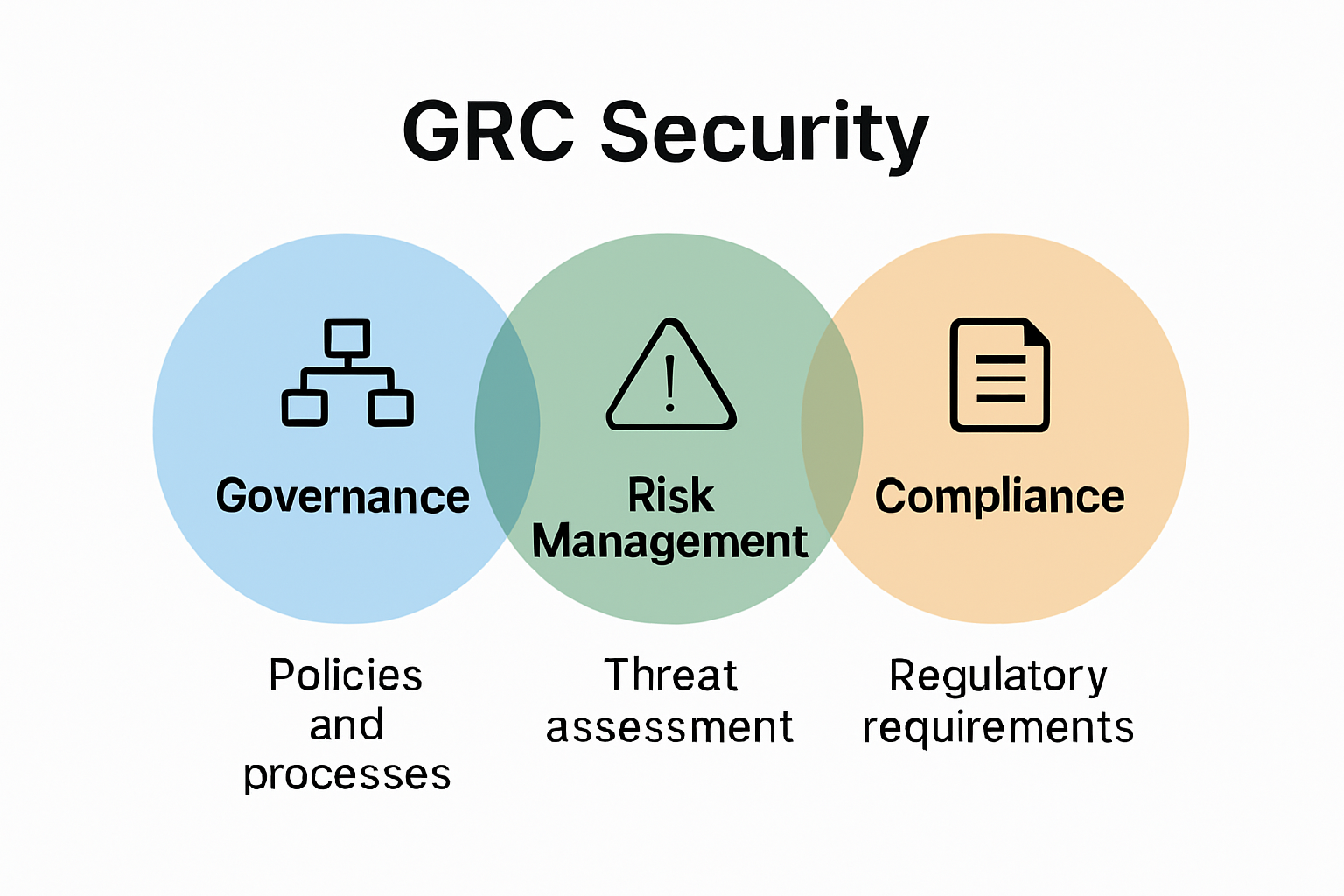
| Critical Components of GRC are Governance, Risk Management, and Compliance | Understanding the interconnected roles of governance, risk management, and compliance is vital for organizations to develop a robust cybersecurity strategy that addresses both immediate and long-term threats. |
| Choosing the Right GRC Tools is Key for Implementation | Selecting GRC tools that integrate well with existing systems and provide advanced functionalities is crucial for organizations to effectively manage compliance and improve overall security posture. |
Why GRC Security Matters Now
In today's rapidly evolving digital landscape, grc security has become more critical than ever for organizations seeking to protect their most valuable assets. The intersection of governance, risk management, and compliance represents a strategic approach to navigating the complex cybersecurity challenges of the modern business world.
The Rising Threat Landscape
Cybersecurity threats have transformed from isolated incidents to sophisticated, persistent challenges that can potentially cripple entire organizations. Research indicates that 60% of organizations experienced a data breach in the past year, underscoring the urgent need for comprehensive security strategies. GRC security provides a structured framework that goes beyond traditional security measures, enabling businesses to proactively identify, assess, and mitigate risks.
The contemporary threat environment demands more than just reactive security protocols. Cyber attackers continuously evolve their tactics, targeting vulnerabilities across technological, human, and procedural domains. Cyber security governance now requires a holistic approach that integrates technical safeguards with strategic organizational practices.
Aligning Security with Business Objectives
Modern organizations are recognizing that grc in cybersecurity is not just about preventing threats, but about creating a resilient and adaptive security ecosystem. According to recent market research, 62% of organizations now view risk management as an opportunity for strategic advancement rather than merely a defensive mechanism.
This shift represents a profound transformation in how businesses approach information security grc. By integrating security governance with overall business strategy, organizations can:
- Develop more agile and responsive security frameworks
- Align cybersecurity investments with core business objectives
- Create a culture of risk awareness and proactive management
- Demonstrate compliance and build stakeholder trust
The Technological And Regulatory Imperative
The complexity of modern regulatory environments demands sophisticated grc security approaches. Data protection regulations, industry-specific compliance requirements, and international security standards create a challenging landscape for organizations. Automation and artificial intelligence are increasingly being leveraged to help manage these intricate compliance and risk management challenges.
Moreover, the financial and reputational risks of non-compliance have never been higher. A single security breach or regulatory violation can result in substantial financial penalties, loss of customer trust, and long-term brand damage. Cyber security governance is no longer an IT department responsibility but a critical board-level strategic consideration.
As digital transformation accelerates and cyber threats become more sophisticated, grc in it security has transitioned from a optional strategy to an absolute necessity. Organizations that fail to implement comprehensive grc security frameworks are essentially leaving their most critical assets vulnerable in an increasingly hostile digital environment.
Key Parts of GRC Security Explained
GRC security is a comprehensive framework that integrates three critical components: Governance, Risk Management, and Compliance. Understanding these core elements is essential for organizations seeking to build a robust and strategic approach to cybersecurity.
Governance: The Strategic Foundation
Cyber security governance serves as the strategic blueprint that guides an organization's entire security approach. It establishes clear structures, responsibilities, and processes that align security initiatives with broader business objectives. Experts from PwC note that effective governance creates a systematic approach to managing security risks.
Key aspects of governance include:
- Defining clear roles and responsibilities for security management
- Establishing policies and procedures that support organizational security goals
- Creating mechanisms for accountability and oversight
- Ensuring that security strategies directly support business priorities
Governance transforms security from a purely technical function into a strategic business enabler, providing the necessary framework for comprehensive information security grc.
Risk Management: Identifying and Mitigating Threats
Research indicates that risk management is a critical component of grc in cybersecurity, focusing on systematically identifying, assessing, and addressing potential security threats. Nearly 40% of organizations anticipate significant cyber threats, making proactive risk management crucial.
 Risk management in grc security involves two primary assessment approaches:
- Qualitative risk assessment: Using subjective labels to categorize potential threats
- Quantitative risk assessment: Measuring potential impacts using concrete data and metrics
The goal is to create a comprehensive view of potential vulnerabilities, enabling organizations to prioritize and address the most critical security risks before they can be exploited.
Compliance: Navigating Regulatory Landscapes
The compliance aspect of cyber security governance ensures that organizations meet external regulatory requirements and internal security standards. An effective compliance strategy involves continuous monitoring, tracking regulatory changes, and implementing structured workflows to maintain adherence.
Comprehensive GRC frameworks typically include:
- Specialized GRC software for managing compliance data
- Regular risk assessments to identify potential threats
- Mechanisms for tracking and adapting to regulatory changes
- Structured approaches that integrate all GRC elements cohesively
 Compliance is not just about avoiding penalties; it's about creating a culture of security that protects an organization's most valuable assets, reputation, and stakeholder trust.
By understanding and effectively implementing these three interconnected components, organizations can develop a grc in it security approach that is proactive, strategic, and adaptable to the ever-changing cybersecurity landscape.
How GRC Improves Security Actions
GRC security transforms traditional cybersecurity approaches by providing a strategic, holistic framework that enhances an organization's ability to protect, detect, and respond to potential threats. By integrating governance, risk management, and compliance, GRC enables more intelligent and proactive security actions.
Enhancing Threat Detection And Response
Research from cybersecurity experts reveals that 60% of organizations experienced a data breach in the past year, underscoring the critical need for advanced threat detection mechanisms. Cyber security governance improves security actions by creating systematic approaches to identifying and mitigating potential risks before they escalate.
GRC frameworks enable organizations to:
- Implement continuous monitoring systems
- Develop real-time threat intelligence capabilities
- Create standardized incident response protocols
- Establish clear escalation and communication channels
These capabilities transform reactive security measures into proactive risk management strategies, allowing organizations to anticipate and neutralize potential threats more effectively.
Streamlining Compliance And Risk Management
Analysis indicates that 62% of organizations now view risk as an opportunity for strategic improvement rather than a mere defensive mechanism. Grc in cybersecurity provides a structured approach to understanding and managing complex security landscapes.
By integrating information security grc, organizations can:
- Align security investments with business objectives
- Create more comprehensive risk assessment frameworks
- Automate compliance tracking and reporting
- Develop more agile and responsive security strategies
This approach reduces manual intervention, minimizes human error, and creates a more consistent and reliable security environment.
Leveraging Technology And Strategic Insights
Modern grc in it security increasingly relies on advanced technologies like artificial intelligence and machine learning to provide deeper insights and more sophisticated security actions. These technologies enable organizations to:
- Predict potential security vulnerabilities
- Automate complex compliance processes
- Generate comprehensive risk assessment reports
- Provide board-level visibility into security performance
Technological analysis suggests that GRC frameworks are increasingly becoming intelligent systems that can anticipate and respond to emerging threats with unprecedented speed and accuracy.
Ultimately, grc security is not just about preventing threats but about creating a dynamic, adaptive security ecosystem that evolves with the organization's changing technological and business landscapes. By providing a comprehensive, strategic approach to cybersecurity, GRC transforms security from a purely defensive function into a strategic business enabler.
Picking the Right GRC Tools
GRC security tools have become essential investments for organizations seeking comprehensive cybersecurity strategies. Selecting the appropriate tools requires careful consideration of an organization's unique technological landscape, compliance requirements, and strategic objectives.
Evaluating Core Functionality And Integration
Research from leading cybersecurity analysts emphasizes the importance of selecting GRC tools that offer advanced analytics, scalability, and end-to-end risk visibility. When evaluating cyber security governance tools, organizations should prioritize platforms that can:
- Provide seamless integration with existing technological infrastructure
- Offer real-time monitoring and reporting capabilities
- Support automated compliance tracking
- Deliver comprehensive risk assessment features
The most effective grc in cybersecurity tools transform complex compliance challenges into manageable, strategic processes. Integration capabilities become crucial, ensuring that the tool can communicate effectively with existing security systems and business applications.
Advanced Features And Technology Considerations
Technological analysis reveals that modern information security grc tools are increasingly leveraging artificial intelligence and machine learning to provide deeper insights and more sophisticated risk management. Key technological features to consider include:
- AI-powered threat prediction and risk assessment
- Automated compliance workflow management
- Advanced analytics for strategic decision-making
- Scalable cloud-based architectures
- Customizable reporting dashboards
Organizations should look beyond basic compliance tracking and seek tools that can provide strategic insights, transforming grc security from a reactive function to a proactive business enabler.
Implementation And Organizational Alignment
Best practices from cybersecurity experts highlight the importance of selecting GRC tools that align with organizational culture and strategic objectives. Successful implementation requires:
- Comprehensive staff training and change management
- Clear communication of tool capabilities and benefits
- Alignment with existing organizational processes
- Flexible configuration options
- Ongoing support and continuous improvement mechanisms
The right grc in it security tool should not just manage risks but also empower teams to make more informed, strategic decisions. It should provide visibility across different organizational levels, from technical teams to board-level executives.
Ultimately, selecting the right GRC tools is not about finding a one-size-fits-all solution, but identifying a platform that can be tailored to your organization's specific needs, grow with your business, and provide meaningful insights that drive strategic security decisions.
Frequently Asked Questions
What is GRC security?
GRC security stands for Governance, Risk Management, and Compliance security. It is a comprehensive framework that helps organizations manage their security risks, ensure regulatory compliance, and align security initiatives with broader business objectives.
Why is GRC security important in 2025?
GRC security is crucial in 2025 due to the rising threat landscape and increasing complexity of regulatory environments. With 60% of organizations experiencing data breaches, adopting a GRC framework offers proactive risk mitigation and aligns security with overall business strategy.
What are the key components of GRC security?
The key components of GRC security include Governance, which provides the strategic foundation; Risk Management, which identifies and mitigates potential threats; and Compliance, which ensures adherence to regulatory requirements and internal standards.
How can organizations select the right GRC tools?
Organizations should evaluate GRC tools based on their core functionality, integration capabilities with existing systems, and advanced features like AI and automation. Choosing tools that align with organizational culture and facilitate effective implementation is essential for enhancing overall security posture.
Transform Your GRC Security Approach with Skypher's Solutions
In a landscape where 60% of organizations experience data breaches, the need for effective GRC security has never been more pressing. The article highlights how organizations recognize security as a strategic business imperative, not just IT noise. Yet, the burden of managing security questionnaires can often stall progress. Time-consuming manual processes not only waste precious resources but also impact accuracy in risk management and compliance—key areas where GRC frameworks shine.
With Skypher's AI-driven Questionnaire Automation Tool, you can streamline and automate the response process, achieving remarkably faster and more accurate results. Picture this: a world where your teams collaborate in real-time, seamlessly integrating with over 40 third-party risk management platforms. Experience a smoother sales journey, enhance client relations by reducing time to contract, and unleash the true potential of your cybersecurity measures.
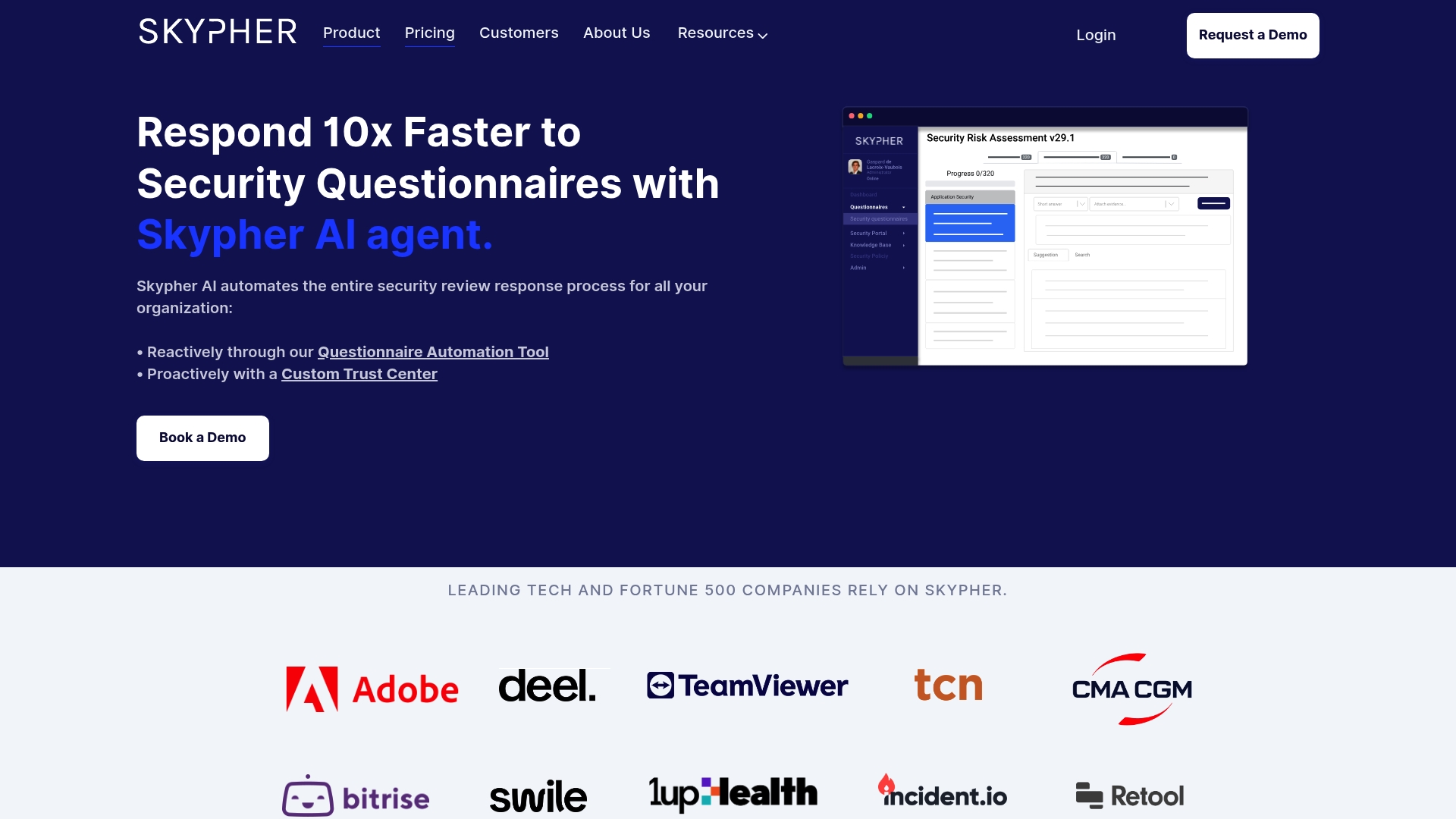
Don’t let inefficient processes hinder your organization’s resilience. Discover how Skypher can elevate your GRC security efforts today. Ready to revolutionize your approach? Visit https://skypher.co to explore your ideal solution and gain peace of mind in your security strategy.