

Information security management is rapidly turning into a non-negotiable requirement for any business that wants to survive. The scary part is that worldwide cybercrime costs are expected to hit 10.5 trillion dollars annually by 2025. Yet, while organizations pour money into the latest firewalls and threat detection software, most people still underestimate one glaring risk. Turns out, the weakest point in any security strategy is often simple human error, not just clever hackers or fancy malware.
Table of Contents
- Why Information Security Management Matters
- Key Components Of Information Security
- Implementing Effective Security Management
- Challenges In Securing Information
Quick Summary
| Takeaway | Explanation |
|---|---|
| Robust Information Security Management is Essential | With cybercrime costs projected to reach $10.5 trillion annually by 2025, organizations must prioritize strong information security strategies to ensure business survival and success. |
| Data Breaches Have Far-Reaching Consequences | The average cost of a data breach in 2023 was $4.45 million, but beyond financial losses, breaches also erode reputation, disrupt operations and lead to legal ramifications. |
| Adopt a Holistic Approach to Security | Successful information security management integrates technology, human awareness, and adaptive strategies, creating a security-conscious culture across the organization. |
| Continuous Monitoring and Improvement are Key | Information security is not a one-time effort; organizations must engage in ongoing assessments and adaptations to effectively manage risks and respond to threats. |
| Human Factors Are Critical in Security Management | Despite technological advancements, human behaviors, such as weak password management and susceptibility to phishing, significantly impact security, necessitating robust training and awareness programs. |
Why information Security Management Matters
The Rising Threat Landscape
In our hyperconnected digital world, information security management has transformed from a technical necessity to a critical business survival strategy. Organizations face unprecedented cybersecurity challenges that can potentially devastate their operations, reputation, and financial stability.
The global cybersecurity landscape is rapidly evolving, with threats becoming more sophisticated and frequent. According to Cybersecurity Ventures, worldwide cybercrime costs are projected to reach $10.5 trillion annually by 2025. This staggering figure underscores why robust information security management is no longer optional but mandatory for businesses across all sectors.
Financial and Operational Risks
Data breaches carry devastating consequences beyond immediate financial losses. IBM's Cost of a Data Breach Report reveals that the average total cost of a data breach in 2023 was $4.45 million. These incidents go far beyond monetary damage:
- Reputation Damage: Customer trust can be permanently eroded
- Operational Disruption: Critical business functions may halt
- Legal Consequences: Potential regulatory fines and legal actions
Moreover, 70% of data breaches cause significant operational disruptions, highlighting the urgent need for comprehensive information security management systems that can preemptively identify and mitigate potential vulnerabilities.
Strategic Business Imperative
Modern information security management is not just about preventing attacks but creating a resilient organizational ecosystem. Approximately 68% of business leaders recognize increasing cybersecurity risks as a strategic concern. This recognition drives investments in advanced security frameworks that protect digital assets while enabling business innovation.
Successful information security management requires a holistic approach that integrates technological solutions, human awareness, and adaptive strategies. It's about creating a proactive culture where every employee understands their role in maintaining organizational security.Organizations that implement comprehensive information security management systems gain significant competitive advantages. They demonstrate reliability to customers, partners, and stakeholders, transforming security from a cost center into a strategic business enabler.
The message is clear: in an era of constant digital transformation, information security management is not a luxury but a fundamental requirement for organizational survival and success.
Key Components of Information Security
Risk Assessment and Asset Identification
 Information security management begins with a comprehensive understanding of an organization's digital landscape. NIST Cybersecurity Framework emphasizes the critical first step of identifying and cataloging all digital assets, systems, and potential vulnerabilities.
Risk assessment involves a systematic approach to understanding potential threats and their potential impact. Organizations must conduct thorough evaluations that map out:
- Critical Assets: Identifying sensitive data and key information systems
- Potential Vulnerabilities: Analyzing potential weak points in the security infrastructure
- Threat Landscape: Evaluating current and emerging cybersecurity risks
Professional risk assessments go beyond simple checklists. They require deep analysis of an organization's unique technological ecosystem, considering factors like network architecture, data flow, and potential attack vectors.
Comprehensive Security Controls
Effective information security management demands a multi-layered approach to protection. Cybersecurity experts recommend implementing robust security controls that address various potential breach points.
Key security controls include:
- Access Management: Implementing strict authentication protocols and role-based access controls
- Encryption: Protecting sensitive data both at rest and in transit
- Network Segmentation: Isolating critical systems to minimize potential breach impacts
Technological solutions play a crucial role, but human factors are equally important. Regular system updates and patch management are critical. According to Cybersecurity Ventures, organizations that consistently update their systems reduce potential vulnerabilities by up to 85%.
Continuous Monitoring and Response
Information security is not a one-time implementation but an ongoing process of vigilance and adaptation. Gartner Research highlights the importance of continuous monitoring and rapid incident response mechanisms.
Effective monitoring involves:
- Real-time Threat Detection: Using advanced monitoring tools to identify suspicious activities
- Incident Response Planning: Developing clear protocols for addressing potential security breaches
- Regular Security Audits: Conducting comprehensive evaluations of security infrastructure
Modern information security management goes beyond traditional defensive strategies. It requires a proactive approach that anticipates potential threats, adapts to evolving technological landscapes, and creates a resilient security ecosystem.
The most successful organizations view information security not as a technical constraint but as a strategic advantage that protects their most valuable asset: their digital information.
Implementing Effective Security Management
Strategic Planning and Framework Development
Implementing effective security management requires a strategic approach that goes beyond simple technical solutions. CISA emphasizes the importance of developing a comprehensive cybersecurity framework that aligns with organizational goals and risk tolerance.
Successful implementation begins with creating a robust security strategy that encompasses:
- Clear Security Objectives: Defining specific and measurable security goals
- Organizational Alignment: Ensuring security strategies support business objectives
- Comprehensive Risk Management: Developing a systematic approach to identifying and mitigating potential threats
Organizations must view security management as a dynamic process that requires continuous adaptation. This means developing flexible frameworks that can quickly respond to emerging technological challenges and evolving threat landscapes.
Technology and Human Factor Integration
Effective security management bridges technological solutions with human capabilities. Cybersecurity expert Dannie Combs recommends adopting a zero-trust architecture as a critical strategy for modern organizations.
Key implementation strategies include:
- Zero-Trust Architecture: Implementing strict access controls that verify every user and device
- Comprehensive Training Programs: Developing ongoing security awareness education for all employees
- Advanced Authentication Methods: Utilizing multi-factor authentication and biometric security measures
The human element remains the most critical component of security management. Even the most advanced technological solutions can be compromised by a single uninformed employee action. Organizations must invest in creating a security-conscious culture that empowers employees to become active participants in protecting digital assets.
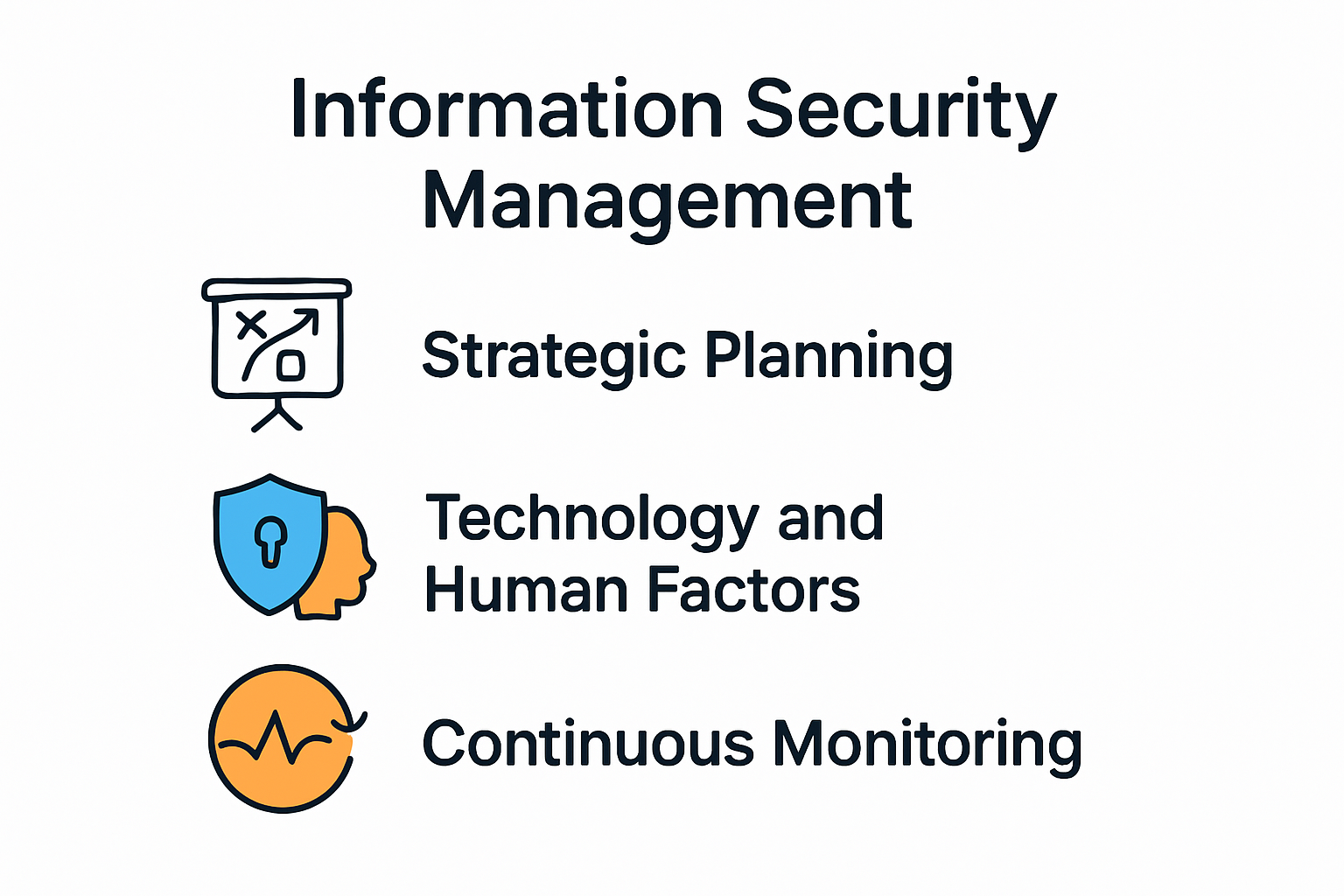
Continuous Monitoring and Improvement
Implementing effective security management is an ongoing process of assessment and adaptation. Cybersecurity frameworks highlight the importance of continuous risk assessment and proactive threat management.
Critical components of continuous improvement include:
- Regular Security Audits: Conducting comprehensive evaluations of existing security infrastructure
- Threat Intelligence Integration: Staying informed about emerging cybersecurity threats
- Adaptive Response Mechanisms: Developing flexible incident response plans
Successful organizations treat security management as a strategic business function rather than a purely technical concern. This approach requires leadership commitment, cross-departmental collaboration, and a forward-thinking mindset.
Ultimately, implementing effective security management is about creating a resilient ecosystem that can protect an organization's most valuable assets while supporting its strategic objectives. It demands a holistic approach that combines technological innovation, human expertise, and strategic thinking.
Challenges in Securing Information
Evolving Threat Landscape
The information security landscape continues to present increasingly complex challenges for organizations worldwide. Global Threat Intelligence Reports reveal a stark reality: over 3.2 billion credentials were stolen in 2024, representing a 33% surge in compromised digital identities.
Modern cybersecurity challenges are characterized by:
- Sophisticated Attack Vectors: Cybercriminals developing increasingly complex infiltration techniques
- Rapid Technology Transformation: Emerging technologies creating new potential vulnerabilities
- Distributed Work Environments: Remote work expanding potential security entry points
Organizations must recognize that information security is no longer about building impenetrable walls but creating adaptive, intelligent defense mechanisms that can anticipate and respond to dynamic threats.
Technological Vulnerabilities And Exploitation
The proliferation of technological vulnerabilities presents a significant challenge for information security management. Cybersecurity analysts have documented a 12% increase in identifiable vulnerabilities, with an alarming 39% of these having known exploitable weaknesses.
Key vulnerability challenges include:
- Unpatched Systems: Legacy infrastructure creating persistent security gaps
- Complex Network Architectures: Increased interconnectivity expanding potential attack surfaces
- Rapid Technology Adoption: New technologies outpacing traditional security protocols
The financial implications of these vulnerabilities are substantial. Organizations face significant risks from potential breaches, with recovery costs potentially devastating smaller enterprises.
Human-Centric Security Challenges
Despite advanced technological solutions, human behavior remains the most unpredictable security variable. Social engineering attacks continue to exploit psychological vulnerabilities, making employee awareness and training critical components of information security strategies.
Human-related security challenges encompass:
- Credential Management: Employees using weak or repetitive passwords
- Phishing Susceptibility: Increasing sophistication of social manipulation techniques
- Insider Threat Risks: Potential for unintentional or malicious internal security breaches
The emergence of ransomware-as-a-service (RaaS) has further complicated the security landscape. These platforms have dramatically lowered the technical barrier for potential attackers, with the average cost of recovering from a ransomware incident reaching USD 2.73 million.
Successful information security strategies must adopt a holistic approach that balances technological solutions with comprehensive human-centric training and awareness programs. Organizations need to view security not as a technological challenge but as a comprehensive organizational culture that requires continuous adaptation, education, and proactive risk management.
Frequently Asked Questions
What is information security management?
Information security management involves the processes and practices put in place to protect an organization's digital assets from unauthorized access, data breaches, and cyber threats. It includes risk assessment, security controls, and ongoing monitoring to ensure robust protection against evolving threats.
Why is information security management important for businesses?
Information security management is crucial for businesses to prevent financial losses, protect their reputation, and ensure compliance with legal regulations. With cybercrime costs projected to reach $10.5 trillion annually by 2025, having strong security measures in place can safeguard against potentially devastating consequences.
What are the key components of effective information security management?
The key components include risk assessment and asset identification, implementing comprehensive security controls, and continuous monitoring and response. These elements work together to create a robust security framework that addresses both technical and human factors affecting an organization's security posture.
How can organizations improve their information security management?
Organizations can enhance their information security management by adopting a holistic approach that integrates technology and human factors. This involves strategic planning, comprehensive training programs for employees, regular security audits, and adapting to new threats and technologies continuously.
Fortify Your Organization’s Defenses Today with Skypher
In the face of increasingly sophisticated cyber threats, the time to strengthen your information security management is now. With cybercrime costs projected to reach $10.5 trillion by 2025, organizations face immense pressure to not only protect their digital assets but also mitigate potential human errors—one of the most significant risks identified in recent studies. This is where Skypher steps in to transform your security questionnaire response process into a seamless, automated solution.
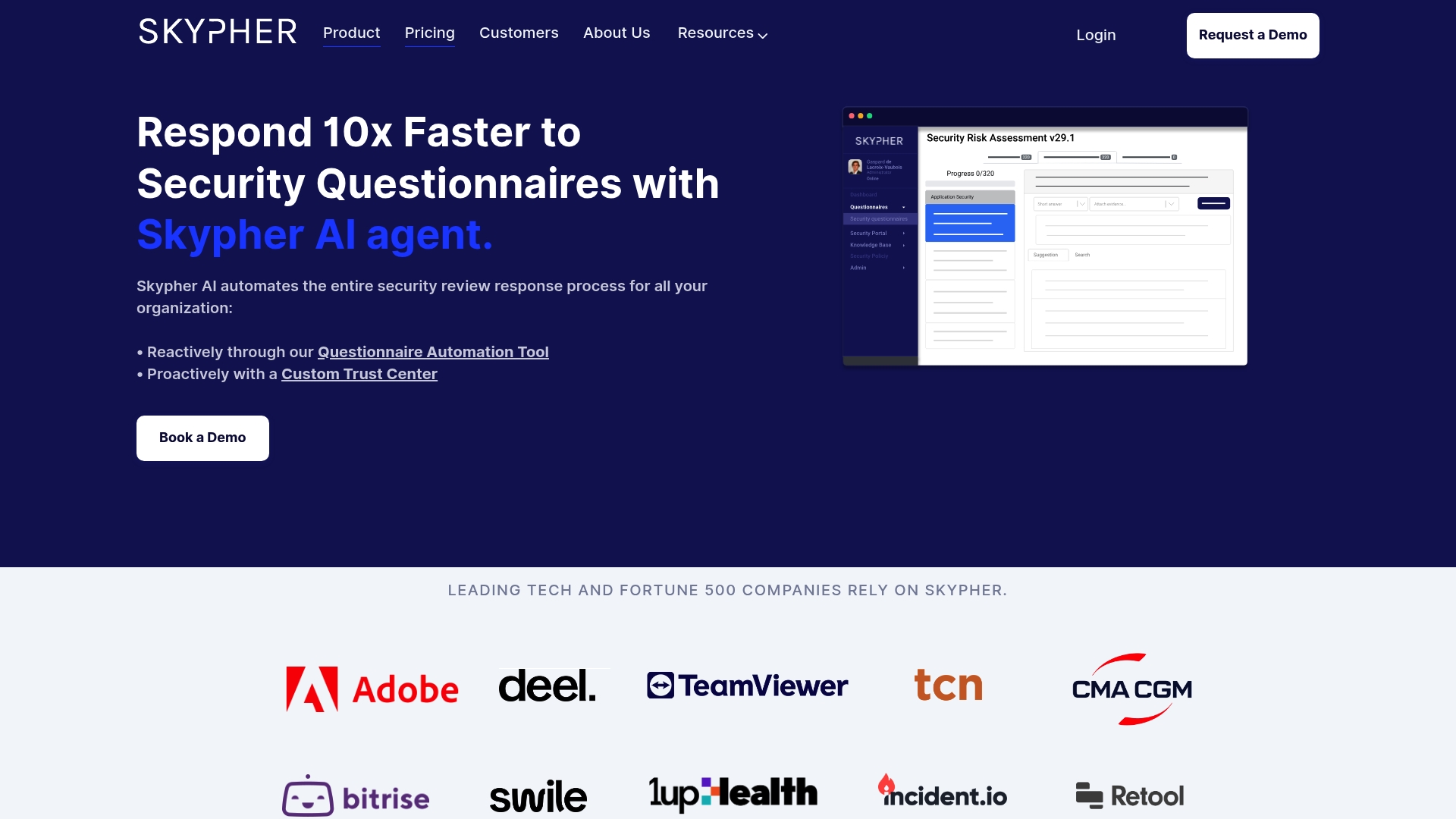
Imagine a world where your team can complete security reviews significantly faster—no more tedious back-and-forth communications or navigating complex spreadsheets. With Skypher's AI-driven Questionnaire Automation Tool, you can:
- Accelerate submissions with real-time collaboration
- Integrate with over 40 third-party risk management platforms
- Customize your Trust Center to instill confidence in your clients
Don't let complex security assessments hold you back from achieving operational excellence. Take action now and visit Skypher to discover how we can enhance your cybersecurity posture while improving productivity. Your organization's resilience against cyber threats starts here!