
In a world where data breaches can cost businesses an average of millions of dollars, the importance of a robust Information Security Management System cannot be overstated. But here’s the twist: it's not just about securing your systems; it’s about building an entire culture of security awareness. This cultural shift could be what saves your organization from catastrophic risks and enhances your trust with stakeholders.
Table of Contents
- What Is An Information Security Management System
- Why is an ISMS important for businesses?
- Key Steps to Build Your ISMS
- Benefits of Implementing an ISMS
Quick Summary
| Takeaway | Explanation |
|---|---|
| Structured Approach to Information Security | An Information Security Management System (ISMS) is essential for managing sensitive information through a holistic, organized methodology that emphasizes confidentiality, integrity, and availability. |
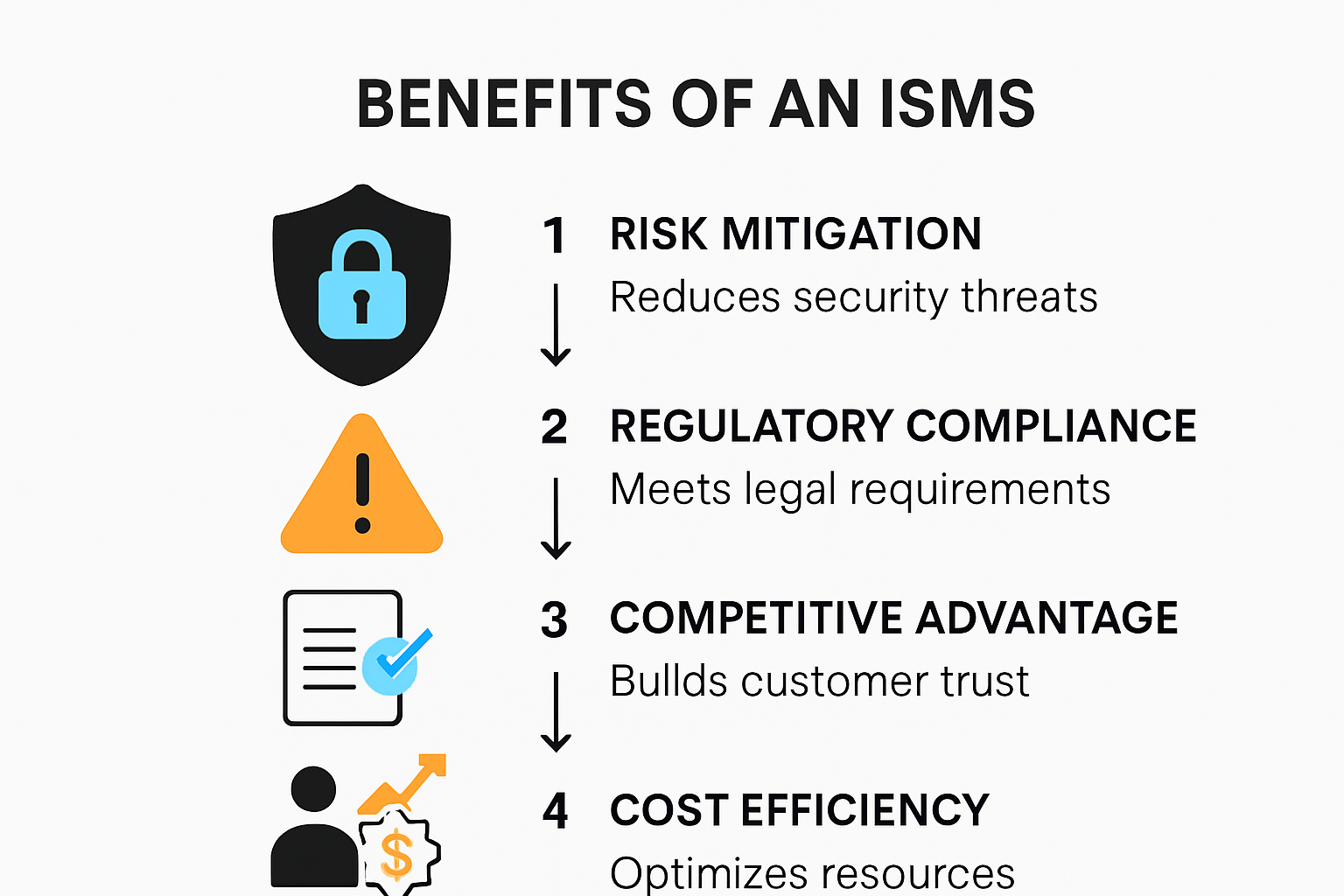
| Importance of ISMS for Businesses | Implementing an ISMS can mitigate financial and reputational risks, ensure regulatory compliance, and act as a cost-effective security strategy by directing resources effectively towards high-impact areas. |
| Key Steps to Building an ISMS | Establishing an ISMS requires defining organizational scope, conducting thorough risk assessments, and committing to continuous improvement through comprehensive policies and regular training. |
| Benefits of an ISMS | Adopting an ISMS enhances risk management, improves operational efficiency by streamlining processes, and builds trust with stakeholders, giving businesses a competitive advantage in the market. |
What is an ISMS Anyway?
In today's digital landscape, organizations face an unprecedented array of cybersecurity challenges that demand robust, systematic approaches to protecting sensitive information. An Information Security Management System (ISMS) emerges as a critical strategic framework designed to comprehensively manage and safeguard an organization's most valuable digital assets.
Defining the Core Concept
At its essence, an ISMS represents a structured methodology for managing sensitive information so that it remains secure. TechTarget defines it as a set of policies and procedures systematically designed to protect an organization's critical data infrastructure. Unlike ad-hoc security measures, an ISMS provides a holistic, organized approach to identifying, managing, and minimizing information security risks.
The fundamental goal of an ISMS is to ensure three core principles of information security: confidentiality, integrity, and availability. This means protecting data from unauthorized access, ensuring information remains accurate and unaltered, and guaranteeing that authorized users can access the information they need when they need it.Key Components and Strategic Framework
An effective ISMS is not a one-size-fits-all solution but a tailored approach that aligns with an organization's unique operational landscape. Centrale Eyes explains that a comprehensive ISMS involves creating detailed written policies, procedures, and controls that explicitly outline how sensitive information should be protected.
These components typically include:
- Risk Assessment Protocols: Systematic methods for identifying and evaluating potential security vulnerabilities
- Security Control Mechanisms: Technical and procedural safeguards designed to mitigate identified risks
- Continuous Monitoring Systems: Ongoing processes to track and respond to emerging security threats
Beyond Technical Protection: A Holistic Approach
What sets an ISMS apart from traditional security measures is its strategic, adaptive nature. Research from the International Association of Engineers highlights that an ISMS is not just about implementing technology, but about creating a dynamic system that can evolve with changing threat landscapes.
This means an ISMS goes beyond mere technical controls. It encompasses organizational culture, employee training, incident response planning, and a commitment to continuous improvement. By treating information security as an ongoing process rather than a static solution, organizations can develop more resilient and adaptive defense mechanisms.
Implementing an ISMS is no longer optional in today's interconnected digital environment—it's a strategic imperative for organizations seeking to protect their most critical asset: information. Whether you're a small startup or a multinational corporation, a well-designed ISMS can mean the difference between robust security and potential catastrophic data breaches.
Why is an ISMS Important for Businesses?
In an era of escalating cyber threats and increasingly complex digital landscapes, businesses face unprecedented challenges in protecting their most valuable asset: information. An Information Security Management System (ISMS) has transitioned from being a luxury to becoming a critical strategic necessity for organizations across all sectors and sizes.
Mitigating Financial and Reputational Risks
Research from Sprinto reveals that implementing an ISMS is not just about technical protection, but a strategic approach to winning customer trust and demonstrating organizational reliability. Cybersecurity breaches can result in devastating financial consequences, with the average cost of a data breach reaching millions of dollars. An effective ISMS helps businesses proactively identify and neutralize potential security vulnerabilities before they can escalate into catastrophic incidents.
The reputational damage from a significant data breach can be even more profound than immediate financial losses. When customers lose confidence in an organization's ability to protect their sensitive information, the long-term impact on brand perception and market position can be irreparable. By establishing a robust ISMS, businesses signal a serious commitment to data protection and customer privacy.
Regulatory Compliance and Competitive Advantage
Qentelli's insights highlight that modern ISMS frameworks are crucial for ensuring compliance with stringent regulatory requirements like GDPR, HIPAA, and ISO/IEC 27001. These frameworks aren't just bureaucratic checkboxes but comprehensive guidelines that protect the confidentiality, integrity, and availability of critical business information.
Compliance goes beyond avoiding penalties—it becomes a significant competitive differentiator. Organizations with certified ISMS demonstrate:
- Enhanced Credibility: Proving robust security practices to stakeholders
- Competitive Edge: Standing out in markets where data protection is paramount
- Risk Management: Systematic approach to identifying and mitigating potential security threats
Cost-Effective Security Strategy
Contrary to common misconception, implementing an ISMS is not an unnecessary expense but a strategic investment. Expert analysis suggests that a well-structured ISMS makes information security more economical by preventing redundant security investments and focusing resources on high-impact protective measures.
By adopting a holistic, structured approach to information security, businesses can:
- Reduce ad-hoc and potentially ineffective security spending
- Create a unified, comprehensive security strategy
- Minimize potential financial losses from cyber incidents
- Optimize resource allocation for maximum security effectiveness
 In today's digital ecosystem, an ISMS is not just a technical requirement but a fundamental business strategy. It represents a proactive, intelligent approach to managing information security—transforming potential vulnerabilities into opportunities for building trust, ensuring compliance, and maintaining competitive resilience.

Key Steps to Build Your ISMS
Building a robust Information Security Management System (ISMS) requires a strategic, systematic approach that goes beyond simple technological implementations. Organizations must develop a comprehensive framework that addresses technological, procedural, and human elements of information security.
Establishing the Foundation
GIAC research highlights that successful ISMS development follows the Plan-Do-Check-Act (PDCA) cycle, a dynamic methodology that ensures continuous improvement and adaptability. The initial phase involves critical preparatory steps that set the groundwork for a comprehensive security strategy.
Key initial activities include:
- Defining Organizational Scope: Precisely identifying which systems, processes, and data fall under the ISMS
- Asset Identification and Classification: Comprehensively mapping and categorizing organizational information assets
- Leadership Commitment: Securing top management support and establishing clear security governance
Risk Assessment and Mitigation Strategies
University research emphasizes that effective ISMS implementation hinges on robust risk assessment processes. This critical phase involves systematically analyzing potential security vulnerabilities and developing targeted mitigation strategies.
The risk assessment process typically encompasses:
- Conducting thorough threat and vulnerability analyses
- Estimating potential impact and likelihood of identified risks
- Developing specific control mechanisms and response protocols
- Prioritizing risks based on organizational criticality
Implementation and Continuous Improvement
Research from the International Research Journal of Multidisciplinary and Allied Sciences suggests that successful ISMS implementation depends on several crucial factors beyond technical controls. These include clear responsibility assignment, ongoing staff training, and maintaining a culture of continuous security awareness.
Key implementation strategies involve:
- Developing comprehensive security policies and procedures
- Creating robust incident response and communication protocols
- Implementing technical and administrative security controls
- Establishing regular monitoring and evaluation mechanisms
- Conducting periodic security awareness training
The ultimate goal of building an ISMS is not achieving a static state of security, but creating a dynamic, adaptive system that can evolve with changing technological landscapes and emerging threat environments. By following a structured approach and maintaining a commitment to continuous improvement, organizations can develop an ISMS that provides comprehensive, resilient protection for their most critical information assets.
Benefits of Implementing an ISMS
In an increasingly complex digital landscape, implementing an Information Security Management System (ISMS) offers organizations far more than simple protection—it provides a strategic framework for comprehensive digital resilience and operational excellence.
Enhanced Risk Management and Strategic Decision Making
Research from Scytale reveals that an ISMS provides a systematic approach to identifying, evaluating, and mitigating information security risks. This methodical process allows organizations to transform potential vulnerabilities into strategic opportunities for improvement.
By implementing a structured risk assessment framework, businesses can:
- Prioritize Critical Assets: Systematically identify and protect the most valuable information resources
- Allocate Resources Efficiently: Direct security investments toward high-impact areas
- Develop Proactive Defense Strategies: Anticipate and neutralize potential security threats before they escalate
Operational Efficiency and Organizational Alignment
Cybersecurity experts highlight that an effective ISMS goes beyond technical controls, fundamentally improving organizational operational efficiency. By establishing clear protocols and standardized security procedures, businesses can streamline their security operations and reduce redundant processes.
Key operational benefits include:
- Clarifying security roles and responsibilities
- Reducing complexity in security management
- Creating a unified approach to information protection
- Improving cross-departmental communication and collaboration
Building Trust and Competitive Advantage
Industry analysis demonstrates that implementing a robust ISMS serves as a powerful trust-building mechanism. In an era where data breaches can devastate corporate reputation, a certified ISMS becomes a compelling differentiator in competitive markets.
Benefits extend beyond internal improvements to include:
- Customer Confidence: Demonstrating a serious commitment to data protection
- Regulatory Compliance: Meeting stringent industry security standards
- Competitive Positioning: Distinguishing the organization as a security-conscious entity
- Business Opportunities: Attracting partners and clients who prioritize robust security practices
An ISMS is not merely a technical requirement but a strategic investment in organizational resilience. By providing a comprehensive, adaptive framework for managing information security, businesses can transform potential risks into opportunities for growth, innovation, and sustained competitive advantage. The true value of an ISMS lies not just in preventing potential threats, but in creating a culture of continuous security improvement and strategic awareness.
Frequently Asked Questions
What is an Information Security Management System (ISMS)?
An Information Security Management System (ISMS) is a structured approach to managing sensitive information, ensuring it remains secure through policies and procedures focused on confidentiality, integrity, and availability.
Why is an ISMS important for businesses?
An ISMS helps organizations mitigate financial and reputational risks, ensures regulatory compliance, and acts as a cost-effective security strategy by focusing resources on high-impact areas.
What are the key components of an effective ISMS?
Key components of an effective ISMS include risk assessment protocols, security control mechanisms, and continuous monitoring systems that adapt to changing security threats.
How can a business implement an ISMS?
To implement an ISMS, businesses should define the organizational scope, conduct risk assessments, establish security policies and procedures, and commit to continuous improvement through regular training and monitoring.
Elevate Your Information Security Management with Skypher
In a world where the threat landscape is constantly evolving, building a robust Information Security Management System (ISMS) isn’t just an option—it’s a necessity. Implementing an effective ISMS can be a daunting task, fraught with challenges like managing security questionnaires and ensuring compliance with various regulations. But what if you could streamline that tedious process, reduce the time it takes to respond to security reviews, and enhance your organization’s cybersecurity posture?
Skypher is here to turn that challenge into an opportunity! Our AI-driven Questionnaire Automation Tool cuts through the chaos, allowing you to complete security assessments rapidly and accurately. With seamless integration to over 40 third-party risk management platforms and features like real-time collaboration and a highly customizable Trust Center, we empower medium to large organizations—especially in tech and finance—to enhance their security practices and operational productivity while building trust with stakeholders.
Don’t let the barriers of traditional security processes keep you from achieving your cybersecurity goals. Visit Skypher today and unlock the efficiency you’ve been searching for! Elevate your ISMS and transform potential vulnerabilities into strategic advantages NOW!