

ISO audits are crucial for any organization aiming to uphold quality standards. They are more than just checkboxes to tick off. In fact, research shows that businesses that actively participate in audits see a 30% increase in operational efficiency. But here's the twist: many view audits as a necessary evil, something to dread. The surprising truth is that when embraced, these audits can spark significant positive change. Rather than merely verifying compliance, they can drive continuous improvement and foster a proactive risk management culture.
Understanding ISO Audit Basics
An ISO audit is a systematic, independent, and documented process for obtaining evidence and evaluating it objectively to determine the extent to which ISO standard requirements are fulfilled within an organization. These structured evaluations play a critical role in quality management systems and other standardized frameworks, helping businesses maintain compliance and drive continuous improvement.
What Defines an ISO Audit
At its core, an ISO audit is an assessment tool designed to verify conformity with International Organization for Standardization (ISO) requirements. Rather than being a punitive exercise, an ISO audit serves as a health check for organizational processes and systems. The ISO definition of audit emphasizes its evidence-based nature—auditors collect information through interviews, document reviews, and direct observations to form conclusions about the effectiveness of implemented systems.
According to research on automotive industry audit programs, effective ISO audits are driven by three primary factors: ensuring compliance with standards, maintaining certification, and addressing nonconformities before they become significant issues. This reflects the dual nature of ISO auditing as both a compliance verification tool and an improvement mechanism.
The scope of an ISO audit typically encompasses:
- Verification of documented procedures against ISO requirements
- Evaluation of actual practices against documented procedures
- Assessment of performance data and improvement initiatives
- Review of management commitment and resource allocation
Types of ISO Audits
ISO audits fall into three distinct categories, each serving different purposes within the quality management ecosystem:
First-party audits (internal audits) are conducted by the organization itself. These self-assessments help prepare for external audits and drive internal improvement. Organizations typically train internal auditors to evaluate departmental compliance with ISO standards. These audits provide early detection of issues and create opportunities for process refinement before external scrutiny.
Second-party audits occur when one organization audits another, usually in a supplier-customer relationship. These audits ensure that suppliers meet the quality standards required by their customers. They focus on specific requirements relevant to the business relationship rather than comprehensive standard coverage.
Third-party audits are performed by independent certification bodies to verify compliance for ISO certification purposes. These external assessments carry the most weight for stakeholders and customers, as they provide objective verification from accredited professionals with no ties to the organization.
The ISO Auditing Process

The ISO auditing process follows a structured approach regardless of audit type. Understanding this process helps organizations prepare effectively and maximize value from audits.
The typical ISO audit process includes:
- Planning phase: Defining objectives, scope, and criteria
- Document review: Examining quality manuals, procedures, and records
- On-site activities: Conducting interviews, observations, and sampling
- Finding development: Identifying conformities and nonconformities
- Reporting: Documenting conclusions and recommendations
- Follow-up: Verifying effective implementation of corrective actions
This systematic approach ensures thoroughness and consistency in evaluating organizational performance against ISO standards. The ISO auditing process emphasizes objective evidence rather than subjective impressions, making audit findings more reliable and actionable.
Understanding these fundamentals provides the foundation for successful audit participation, whether you're preparing for your first certification audit or maintaining an established ISO management system. As organizations mature in their ISO journey, audits typically evolve from compliance-focused exercises to valuable opportunities for organizational learning and improvement.
Key Takeaways
| Takeaway | Explanation |
|---|---|
| Effective Preparation is Key | Assign clear responsibilities and conduct thorough pre-audit assessments to transform the audit experience into a valuable opportunity for improvement. |
| Continuous Improvement Focus | Embrace ISO audits as a cycle of continuous improvement rather than a mere compliance check to drive ongoing enhancements in organizational processes. |
| Documentation is Crucial | Prioritize gathering and reviewing accurate documentation that reflects actual practices to avoid pitfalls during audits. |
| Employee Engagement Matters | Ensure that staff understands their roles in the audit process to foster genuine commitment and facilitate successful outcomes. |
| Adopt a Risk Management Approach | Utilize ISO audits to proactively identify and mitigate risks, enhancing organizational resilience and stakeholder trust. |
Preparing for an ISO Audit
Effective preparation is crucial for a successful ISO audit outcome. Whether you're facing your first certification audit or maintaining an existing ISO certification, proper planning and organization can transform the audit experience from stressful to valuable. A well-prepared organization not only increases its chances of a positive audit result but also maximizes the benefits gained from the auditing process.
Establish Clear Responsibilities
The foundation of audit preparation begins with assigning clear responsibilities. Organizations should designate an audit coordinator who serves as the primary point of contact for auditors and internal teams. This individual orchestrates the preparation activities, ensuring nothing falls through the cracks. Beyond this central role, departmental leaders should understand their specific responsibilities in preparing documentation and staff for the audit process.
Responsibilities typically include:
- Coordinating pre-audit assessments and gap analyses
- Gathering and organizing required documentation
- Ensuring staff awareness and training
- Managing logistics for the audit day(s)
- Facilitating communication between auditors and team members
Conduct a Pre-audit Assessment
A thorough pre-audit assessment is perhaps the most valuable preparation step. This internal review identifies gaps between current practices and ISO requirements before the official audit takes place. According to research on ISO 27001 compliance, organizations that conduct mock audits significantly improve their readiness by simulating the certification audit experience, identifying potential challenges, and ensuring staff preparedness.
An effective pre-audit assessment should:
- Follow the same methodology auditors will use
- Cover all relevant processes and departments
- Document findings systematically
- Prioritize addressing nonconformities
- Allow sufficient time for implementing corrections
This proactive approach transforms the audit from a pass/fail test into a continuous improvement opportunity. Organizations that identify and address their own nonconformities demonstrate maturity in their management system and commitment to the standards' principles.
Prepare Documentation and Evidence
Documentation preparation is often the most time-consuming aspect of audit readiness. ISO audits are evidence-based, meaning auditors will expect to see documented proof of compliance with various requirements. Organizations should systematically gather, organize, and review all relevant documentation before the audit.
Essential documentation typically includes:
- Policy statements and quality manuals outlining system scope
- Procedure documents describing how processes operate
- Work instructions detailing specific activities
- Records demonstrating implementation (meeting minutes, training records, inspection results)
- Previous audit reports and corrective action records
Beyond mere collection, documentation should be reviewed for accuracy, consistency, and alignment with actual practices. Nothing undermines audit success faster than procedures that don't match reality or missing records that should exist according to your own documentation.
Train Personnel on Audit Participation
The human element of audit preparation is often overlooked but critically important. Staff members who may interact with auditors should understand the audit process, their role in it, and how to respond to auditor questions effectively. This doesn't mean coaching employees to give "right" answers, but rather ensuring they can confidently explain their work processes and how these align with ISO requirements.
Effective personnel preparation includes:
- Explaining the purpose and benefits of the audit
- Clarifying what auditors typically look for
- Advising on how to interact professionally with auditors
- Conducting interview practice sessions for key personnel
- Addressing anxieties and misconceptions about the audit process
Well-prepared employees who understand the value of the audit process become assets rather than liabilities during the assessment. Their authentic engagement demonstrates the organization's genuine commitment to the management system beyond mere paperwork compliance.
By investing time in these preparation activities, organizations position themselves for both audit success and meaningful system improvements. Thorough preparation transforms the audit from a stressful external assessment into a valuable opportunity to strengthen organizational processes and demonstrate commitment to international standards.
Exploring ISO Audit Benefits

ISO audits deliver substantial value beyond the certificate that hangs on your wall. When approached strategically, these assessments become powerful tools for organizational transformation, offering benefits that extend well beyond basic compliance. Organizations that embrace the audit process fully typically experience advantages in multiple operational dimensions.
Strengthening Organizational Systems
The most fundamental benefit of ISO audits is the systematic improvement of business processes. Through methodical evaluation against international standards, organizations gain objective insight into their operations. This systematic review reveals inefficiencies, redundancies, and gaps that might otherwise go unnoticed in daily operations.
ISO audits enhance organizational systems by:
- Identifying process bottlenecks that impede efficiency
- Highlighting inconsistencies in procedure implementation
- Verifying the effectiveness of existing controls
- Encouraging standardization across departments or locations
- Ensuring proper documentation of critical activities
These improvements don't just satisfy auditors—they create measurable operational benefits. Organizations with mature ISO systems report streamlined workflows, reduced waste, and more consistent outputs. The structured approach required by ISO standards brings discipline to operations that might otherwise develop haphazardly.
Driving Continuous Improvement
While compliance with standards is important, the true power of ISO audits lies in their ability to drive ongoing improvement. Research into automotive industry ISO implementation found that many companies take a primarily reactive approach to their audit programs, responding to complaints and nonconformities rather than proactively promoting continuous improvement. This study of automotive quality management systems revealed that organizations missing this proactive dimension fail to realize the full potential of their ISO certification.
When properly implemented, ISO audits establish a cycle of continuous improvement through:
- Regular assessment against evolving best practices
- Structured management review of performance data
- Root cause analysis of identified issues
- Implementation of corrective and preventive actions
- Verification of improvement effectiveness
This disciplined approach to improvement creates a forward momentum that extends well beyond the minimum requirements for certification. Organizations that embrace this mindset find themselves constantly evolving, with each audit cycle pushing performance to higher levels.
Enhancing Risk Management
The risk-based thinking embedded in modern ISO standards transforms audits into powerful risk management tools. Rather than simply checking compliance boxes, contemporary ISO audits evaluate how effectively organizations identify, assess, and mitigate potential threats to their objectives.
This risk management perspective delivers benefits including:
- Earlier identification of emerging threats
- More systematic evaluation of risk likelihood and impact
- Better resource allocation to high-priority risks
- Improved contingency planning and business continuity
- Enhanced stakeholder confidence in organizational resilience
By addressing risks methodically through the audit process, organizations reduce the likelihood of disruptions and strengthen their ability to recover when unexpected events occur. This systematic approach to risk proves particularly valuable in volatile business environments where adaptability determines survival.
Building Stakeholder Trust
Perhaps the most valuable benefit of ISO audits comes from their power to build trust among critical stakeholders. The independent verification provided by certification audits offers objective evidence of an organization's commitment to quality, safety, security, or environmental responsibility—depending on the standard in question.
This independent verification builds trust with:
- Customers seeking reliable suppliers
- Regulators monitoring compliance obligations
- Investors evaluating organizational governance
- Partners considering collaborative ventures
- Employees concerned about workplace standards
In competitive markets, this trust creates tangible business advantages. Many organizations find that ISO certification opens doors to new business opportunities, particularly in sectors where standards compliance is expected or required. The certification becomes a differentiator that communicates reliability and quality commitment without extensive additional marketing.
When organizations move beyond viewing ISO audits as bureaucratic hurdles and instead embrace them as strategic improvement tools, these benefits multiply. The most successful implementers integrate ISO principles deeply into their operational DNA, creating a culture where quality, risk awareness, and continuous improvement become second nature rather than special initiatives driven by upcoming audits.
Managing ISO Audit Challenges
While ISO audits offer significant benefits, organizations inevitably face obstacles throughout the implementation and audit process. Recognizing and effectively addressing these challenges is essential for maintaining compliance and maximizing the value of ISO certification. By understanding common pitfalls, organizations can develop strategies to overcome them.
Resource Constraints
One of the most prevalent challenges organizations face is inadequate resources for ISO implementation and audit preparation. This includes financial resources, personnel time, and specialized expertise. According to research on ISO implementation challenges, lack of funding and human resources consistently rank among the top obstacles to successful ISO adoption.
Resource constraints typically manifest as:
- Insufficient budget allocation for implementation activities
- Limited staff time available for documentation and preparation
- Lack of trained internal auditors or quality specialists
- Inadequate systems or technology to support compliance efforts
- Competing priorities that divert attention from ISO requirements
Successful organizations address these constraints by making a compelling business case for ISO implementation, clearly articulating the return on investment beyond basic compliance. This helps secure leadership commitment to adequate resource allocation. Additionally, phased implementation approaches can distribute resource demands more manageably across longer timeframes.
Documentation Challenges
Documentation remains a significant challenge for many organizations facing ISO audits. The requirement to document processes, procedures, and evidence of implementation can seem overwhelming, particularly for organizations with limited previous experience with formal management systems.
Common documentation challenges include:
- Uncertainty about documentation requirements and appropriate detail level
- Difficulty capturing existing processes that have never been formally documented
- Managing version control and document approval workflows
- Ensuring documentation reflects actual practices rather than idealized procedures
- Maintaining documentation current as processes evolve
Effective documentation strategies focus on pragmatic approaches that create usable, meaningful documents rather than paperwork for its own sake. Starting with simple process maps and gradually adding detail has proven effective for many organizations. Digital document management systems can significantly reduce the administrative burden of version control and approval processes.
Resistance to Change
Perhaps the most challenging obstacle to overcome is resistance to the changes required by ISO implementation. Employees may perceive new procedures as bureaucratic impositions that complicate their work without adding value. This resistance can manifest as superficial compliance—following procedures during audits but reverting to previous practices afterward.
Resistance typically stems from:
- Lack of understanding about the purpose behind requirements
- Insufficient involvement in system development
- Perception that ISO is primarily for external marketing rather than internal improvement
- Fear of increased scrutiny or performance evaluation
- Comfort with existing practices regardless of their effectiveness
Addressing resistance requires a multi-faceted approach centered on communication and involvement. Successful organizations invest heavily in explaining the "why" behind ISO requirements, connecting standards to practical business benefits rather than abstract compliance. Involving employees in developing processes that meet both ISO requirements and operational needs creates ownership that reduces resistance.
Finding and Addressing Nonconformities
Nonconformities—instances where actual practices don't meet standard requirements—present challenges both before and during audits. Some organizations struggle with identifying their own nonconformities through internal audits, while others have difficulty implementing effective corrective actions.
Challenges with nonconformities include:
- Reluctance to identify internal issues for fear of negative consequences
- Difficulty determining root causes rather than addressing symptoms
- Implementing corrections without addressing underlying systemic issues
- Following through on corrective action plans to completion
- Verifying the effectiveness of implemented solutions
Organizations that excel at handling nonconformities create a culture where finding improvement opportunities is rewarded rather than punished. They implement structured problem-solving methodologies that dig beneath surface issues to identify true root causes, and they establish accountability mechanisms for corrective action implementation and verification.
Sustaining Momentum Between Audits
Many organizations face the challenge of maintaining ISO implementation momentum between audit cycles. The tendency to focus intensely on preparations immediately before scheduled audits, followed by reduced attention afterward, undermines the continuous improvement potential of ISO systems.
This cyclical attention often results from:
- Viewing audits as discrete events rather than points in a continuous process
- Insufficient integration of ISO requirements into daily operations
- Overreliance on quality departments rather than operational ownership
- Lack of ongoing measurement and monitoring of system effectiveness
- Infrequent management review of system performance
Successful organizations overcome this challenge by embedding ISO principles into routine business processes, making compliance a natural outcome of regular operations rather than a special effort. Regular internal audits, scheduled throughout the year rather than concentrated before external assessments, help maintain consistent focus on the management system.
Frequently Asked Questions
What is an ISO audit?
An ISO audit is a systematic evaluation process designed to assess an organization's compliance with International Organization for Standardization (ISO) requirements. It helps ensure that quality management systems are effectively implemented and continuously improved.
What are the types of ISO audits?
There are three main types of ISO audits: first-party audits (internal audits conducted by the organization), second-party audits (audits performed by one organization on another, often in a supplier-customer relationship), and third-party audits (independent audits conducted by certification bodies for compliance verification).
How can organizations prepare for an ISO audit?
Organizations can prepare for an ISO audit by establishing clear responsibilities for audit coordination, conducting pre-audit assessments to identify gaps, preparing accurate documentation, and training personnel on the audit process and their roles during the audit.
What are the benefits of ISO audits?
ISO audits provide multiple benefits, including the strengthening of organizational systems, driving continuous improvement, enhancing risk management, and building trust among stakeholders by demonstrating a commitment to quality and compliance.
Elevate Your ISO Audit Experience with Skypher
Are you ready to transform the daunting ISO audit process into a streamlined powerhouse of productivity? ISO audits can be a key driver for continuous improvement, but challenges like documentation, resource constraints, and employee engagement can turn them into a stressful event. At Skypher, we understand these pain points intimately. That’s why our AI-driven Questionnaire Automation Tool helps organizations tackle security questionnaires efficiently, ensuring that your team is not just compliant but excelling in your audit journey.
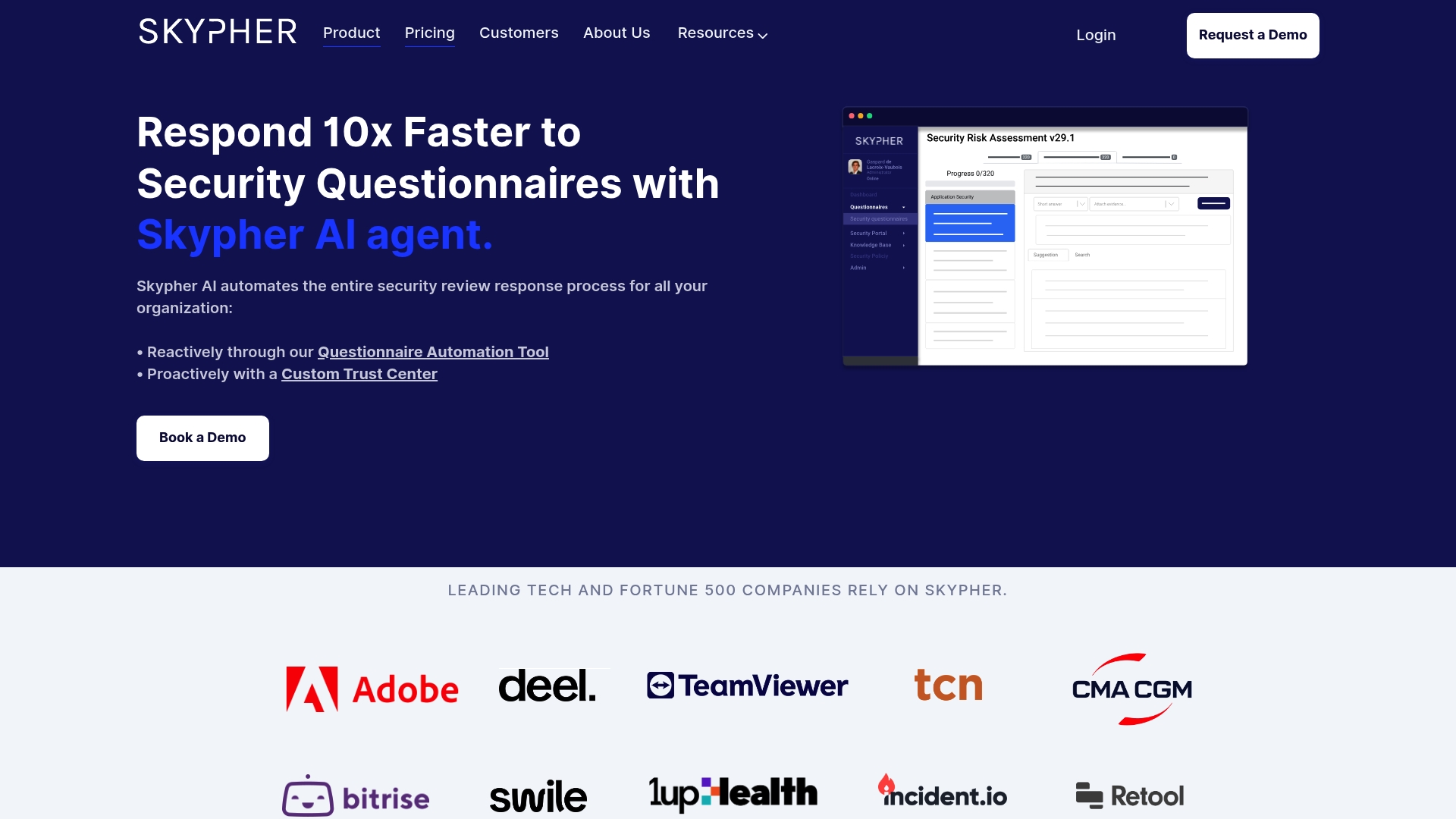
Imagine a future where preparing for ISO audits is seamless. With Skypher, you can:
- Automate document preparation so you never miss a critical requirement.
- Facilitate real-time collaboration among your teams, making audits less about stress and more about mutual growth.
- Integrate effortlessly with over 40 third-party risk management platforms, enhancing your overall audit readiness.
Don’t let ISO audits be another obstacle in your path; let them be your springboard to excellence! Start today and discover how you can elevate your ISO audit experience. Visit us at https://skypher.co and unlock the potential of streamlined audit preparation!