

The Salesforce Administrator role is crucial in today's digital landscape. They do more than manage software; they steer business success. A staggering 150,000 companies globally now rely on Salesforce, making skilled administrators indispensable for leveraging its power. But hold on. Most people think this position is all about tech support and troubleshooting. The real shock? Salesforce Administrators are strategic business partners who transform complex requirements into actionable insights and drive significant organizational change.
Table of Contents
- Understanding Salesforce Admin Role
- Daily Duties and Responsibilities
- Essential Skills & Certifications
- Career Path and Learning Resources
Quick Summary
| Takeaway | Explanation |
|---|---|
| Salesforce Administrators Bridge Business and Technology | They align business objectives with Salesforce capabilities, translating requirements into technical solutions and driving digital transformation initiatives. |
| Core Responsibilities Include User Management and Data Quality | Admins handle user account setups and troubleshoot issues while ensuring data integrity and implementing preventive measures for data quality within the CRM system. |
| Essential Skills Combine Technical and Soft Skills | Proficiency in Salesforce tools, understanding of business processes, and strong communication skills are crucial for effective administration and user support. |
| Certifications Are Key for Career Advancement | Obtaining certifications like Salesforce Certified Administrator enhances employability and credibility, with structured pathways available for development. |
| Continuous Learning Is Essential | Engaging with resources like Trailhead, community events, and hands-on practice helps administrators stay updated with evolving Salesforce technologies. |
Understanding Salesforce Admin Role

The Salesforce Administrator serves as the backbone of an organization's Salesforce ecosystem. Far more than just a technical position, this role bridges the gap between business needs and technological capabilities. Let's explore what a Salesforce Administrator actually does and why this role has become increasingly crucial for businesses worldwide.
Core Responsibilities
Salesforce Administrators are responsible for configuring, managing, and maintaining Salesforce CRM platforms to support business efficiency and user adoption across organizations. As 4 Corner Resources notes, these professionals ensure that the Salesforce instance runs smoothly while aligning with business objectives.
The day-to-day duties of a Salesforce Admin typically include:
- User management and security controls (access permissions and authentication)
- System configuration and customization
- Data management and quality assurance
- Report and dashboard creation
- Workflow and automation implementation
Administrators are often the first point of contact when users encounter issues with the platform. They troubleshoot problems, provide training, and work to enhance user adoption throughout the organization.
Strategic Business Partner
Contrary to the misconception that Salesforce Administrators only handle technical settings and IT tasks, they actually serve as strategic business partners. They translate business requirements into technical solutions, identify opportunities for process improvement, and help drive digital transformation initiatives.
A successful Salesforce Admin understands both the technical capabilities of the platform and the business processes it supports. This dual knowledge allows them to make recommendations that improve efficiency, data quality, and user experience.
According to CX Today, Salesforce supports over 150,000 businesses globally as of 2025, highlighting the widespread need for skilled administrators who can maximize the platform's potential.
Required Skills and Knowledge
The Salesforce Administrator role requires a unique blend of technical and soft skills:
Technical Skills:
- Proficiency in Salesforce configuration and customization
- Understanding of data models and database concepts
- Knowledge of security principles and best practices
- Ability to create reports, dashboards, and workflows
- Familiarity with Salesforce's programming languages (like Apex and Visualforce) is beneficial though not always required
Soft Skills:
- Strong communication abilities to translate between technical and non-technical stakeholders
- Problem-solving aptitude for troubleshooting issues
- Project management capabilities for implementing new features
- Training and coaching skills for supporting users
The Salesforce ecosystem continues to evolve rapidly, with new AI-powered tools like Agentforce becoming part of the administrator's toolkit. According to Salesforce Ben, administrators need to consistently update their expertise in areas such as Flow automation, reporting, security, data quality, and new AI features to stay relevant in 2025.
As the platform grows more sophisticated, so too does the role of the Salesforce Administrator, making it an exciting and dynamic career path with substantial opportunities for growth and specialization.
Daily Duties and Responsibilities
What does a Salesforce Administrator actually do on a day-to-day basis? Let's break down the core responsibilities that define this multifaceted role.
System Configuration and Maintenance
The foundation of a Salesforce Admin's work involves configuring and maintaining the Salesforce environment. This includes creating and modifying:
- Custom objects and fields
- Page layouts and record types
- Validation rules
- Picklist values and dependent fields
- User interfaces and Lightning components
Admins must ensure the system remains aligned with business processes while keeping it intuitive for users. This often means making ongoing adjustments as organizational needs evolve.
A significant part of system maintenance involves managing releases and updates. Salesforce releases major updates three times a year, and administrators must test these changes in sandbox environments before implementing them in production.
User Management and Support
Salesforce Administrators serve as the first line of support for users across the organization. Their user-focused responsibilities include:
- Creating and deactivating user accounts
- Setting appropriate permission levels and access controls
- Creating and managing public groups, roles, and profiles
- Providing training and educational resources
- Troubleshooting user issues and answering questions
According to CX Today, with Salesforce supporting over 150,000 businesses globally, effective user management has become increasingly crucial as organizations rely on the platform for critical business operations.
Data Management and Quality
Data is the lifeblood of any CRM system, and Salesforce Administrators play a vital role in ensuring data quality. Their data-related tasks include:
Maintaining data integrity through validation rules and duplicate management Implementing data import and export processes Configuring data backup procedures Cleansing data and resolving inconsistencies Managing storage limitations and archival strategies
Poor data quality can undermine business decisions and user adoption. Effective administrators implement processes that prevent bad data from entering the system while establishing regular maintenance routines.
Automation and Process Improvement
One of the most valuable contributions a Salesforce Admin makes is identifying and implementing automation opportunities. This includes creating:
- Workflow rules
- Process builders
- Flow automations
- Approval processes
- Assignment rules
As Salesforce Ben highlights, in 2025, mastering Flow automation is particularly important as Salesforce continues to enhance these capabilities while deprecating older automation tools.
Reporting and Analytics
Businesses rely on Salesforce for data-driven insights, making reporting and analytics a critical responsibility for administrators. This includes:
Creating and maintaining reports and dashboards Developing custom report types Configuring role hierarchies for report visibility Training users on self-service reporting Automating report distribution
The ability to translate raw data into actionable business intelligence is what transforms Salesforce from a simple database into a strategic decision-making tool.
Change Management and Communication
Salesforce Administrators don't operate in isolation. They must effectively communicate changes, gather requirements, and manage stakeholder expectations. This involves:
- Documenting changes and customizations
- Communicating new features and processes to users
- Soliciting feedback on system improvements
- Collaborating with IT, business units, and executive teams
- Creating user guides and training materials
The most successful Salesforce Admins are those who build strong relationships across departments and position themselves as strategic partners rather than just technical resources.
The daily life of a Salesforce Administrator is dynamic and varied, requiring both technical aptitude and business acumen. As the 4 Corner Resources career guide notes, administrators serve as the bridge between technology and business needs, making them invaluable to organizations leveraging the Salesforce platform.
Essential Skills & Certifications
Salesforce Administrators need a specific set of skills and credentials to excel in their roles. Whether you're just starting your Salesforce journey or looking to advance your career, understanding these essential requirements will help guide your professional development.
Technical Skills
Successful Salesforce Administrators possess a blend of technical capabilities that allow them to configure and optimize the platform. Key technical skills include:
-
System configuration: The ability to create and modify objects, fields, page layouts, and other Salesforce components without requiring developer intervention
-
Data management: Understanding data models, relationships, and strategies for maintaining data quality and integrity
-
Security knowledge: Implementing role hierarchies, permission sets, profiles, and sharing rules to maintain proper access controls
-
Automation tools: Proficiency with Flow, Process Builder, workflow rules, and other automation capabilities
-
Reporting and dashboards: Creating insightful reports and visualizations that deliver business intelligence
According to Salesforce Ben, administrators need to consistently update their expertise in areas such as Flow automation, security, and new AI features to stay relevant in 2025. The platform constantly evolves, requiring admins to adapt their technical skills accordingly.
Business and Soft Skills
While technical proficiency is important, what often distinguishes exceptional Salesforce Administrators is their business acumen and interpersonal abilities:
-
Business process understanding: Comprehending how different departments function and translating business requirements into technical solutions
-
Communication skills: Clearly explaining technical concepts to non-technical users and stakeholders
-
Project management: Coordinating implementations, enhancements, and maintenance activities
-
Problem-solving: Diagnosing issues and developing creative solutions
-
Change management: Guiding users through transitions and promoting adoption of new features
The misconception that Salesforce Administrators only handle technical settings and IT tasks undermines the strategic nature of the role. In reality, administrators bridge technology with business process needs, train users, and often lead cross-functional projects.
Certifications and Credentials
Salesforce offers a structured certification pathway that validates an administrator's expertise and enhances their marketability:
-
Salesforce Certified Administrator: The foundational certification that verifies your ability to perform essential setup, configuration, and maintenance tasks. This is often considered the entry point for Salesforce careers.
-
Salesforce Certified Advanced Administrator: Demonstrates deeper knowledge of complex configurations, advanced formula fields, automation tools, and security controls.
-
Salesforce Certified Platform App Builder: Validates skills in creating custom applications using the declarative capabilities of the Salesforce platform.
-
Additional specialized certifications: Depending on your career focus, you might pursue certifications in Sales Cloud, Service Cloud, Experience Cloud, or other Salesforce products.
The 4 Corner Resources career guide emphasizes that these certifications are often required by employers and serve as fundamental steps in proving capabilities and advancing career prospects.
Continuous Learning Resources
Salesforce launched Trailhead, its free online learning platform, in 2014 to provide structured training for aspiring administrators. This resource has democratized access to Salesforce skills and credentials, creating pathways for professionals from diverse backgrounds.
Beyond Trailhead, Salesforce Administrators should leverage:
- Salesforce release notes for each seasonal update
- Community groups and events such as Dreamforce
- Blogs and forums like Salesforce Stack Exchange
- Webinars and virtual learning opportunities
- Hands-on practice in developer sandboxes
As CX Today notes, despite some market slowdowns, the demand for skilled Salesforce professionals, especially in specialized or AI-integrated roles, remains strong. This underscores the importance of continuous learning to stay competitive.
Practical Experience
While certifications provide credibility, employers value practical experience. New administrators can build experience through:
- Volunteer work for nonprofit organizations (often through the Salesforce Pro Bono Program)
- Contributing to open-source Salesforce projects
- Taking on Salesforce responsibilities in current roles
- Building personal demo environments to showcase skills
The combination of certified knowledge and hands-on experience creates a compelling profile for Salesforce Administrator positions at all levels. Remember that the journey to becoming a proficient Salesforce Administrator is ongoing, as the platform and its capabilities continue to evolve.
Career Path and Learning Resources

The journey to becoming a Salesforce Administrator follows a clear progression that combines learning, certification, and practical experience. Whether you're contemplating a career change or looking to advance your existing Salesforce expertise, understanding this path can help you navigate your professional development effectively.
Typical Career Progression
A typical Salesforce Administrator career path often follows these stages:
-
Entry-level Administrator: Focuses on basic system maintenance, user support, and simple configurations. This role often serves as the foundation for more specialized positions.
-
Mid-level Administrator: Takes on more complex configurations, leads small projects, and starts implementing more sophisticated automation and customization.
-
Senior Administrator: Manages enterprise-wide implementations, leads complex projects, mentors junior administrators, and contributes to strategic decision-making.
-
Specialization or Advancement: Many administrators eventually specialize in specific clouds (Sales, Service, Marketing) or transition to related roles such as Business Analyst, Solution Architect, or Technical Consultant.
According to 4 Corner Resources, a typical career progression often starts from mastering CRM principles and business processes, moving through certification, hands-on experience, and continuous skills expansion in specialized Salesforce capabilities.
Salary Expectations
Salesforce Administrator salaries vary based on experience, certification level, location, and industry. While the market has become more competitive in recent years, Salesforce roles continue to command competitive compensation.
Entry-level positions typically start between $60,000-$80,000, while mid-level administrators can expect $80,000-$105,000. Senior administrators and those with specialized certifications often earn $105,000-$130,000+, particularly in major tech hubs or industries with high Salesforce adoption.
Though Salesforce Ben notes that salaries have seen some fluctuation due to increased competition, they remain higher than industry averages for many comparable IT roles, especially for those who develop expertise in high-demand areas like AI integration.
Essential Learning Resources
The Salesforce ecosystem offers numerous resources for aspiring and current administrators to develop their skills:
Trailhead: Salesforce's official learning platform provides guided, hands-on training through modules, projects, and learning paths (trails). This free resource has democratized Salesforce education since its launch in 2014, as highlighted by CX Today. The platform offers structured paths specifically designed for administrators.
Certification Programs: Official Salesforce certifications validate your knowledge and significantly enhance your employability. Start with the Administrator certification and progress through Advanced Administrator and specialized credentials as your career develops.
Community Resources: The Salesforce community is renowned for its accessibility and knowledge sharing. Key resources include:
- Salesforce Stack Exchange for technical questions
- Trailblazer Community groups (both online and local)
- Official Salesforce events like Dreamforce and TrailheaDX
- Independent blogs like Salesforce Ben, Admin Hero, and Salesforce Admins Blog
Hands-on Practice: Developer sandboxes and personal developer orgs let you experiment with configurations and customizations without impacting production environments.
Breaking into the Field
For those looking to enter the Salesforce ecosystem, several practical approaches can help overcome the common "experience required" challenge:
-
Start with Trailhead: Complete the Administrator Trailmix and aim for Ranger status to demonstrate your commitment.
-
Volunteer Experience: Organizations like Salesforce.org connect volunteers with nonprofits needing Salesforce support, providing real-world experience.
-
Internal Transitions: If your current company uses Salesforce, express interest in supporting the platform as part of your existing role.
-
Networking: Attend Salesforce community events, participate in online forums, and connect with other professionals to learn about opportunities.
-
Certification: While not a substitute for experience, certification demonstrates your knowledge and commitment to prospective employers.
Staying Current in 2025 and Beyond
As Salesforce continues to evolve, maintaining relevance requires ongoing education. The introduction of AI-powered tools like Agentforce is reshaping administrative responsibilities, creating both challenges and opportunities for professionals in this space.
The Salesforce Ben goals for administrators in 2025 emphasize mastering advanced Flow automation, enhancing data quality management, and developing expertise with AI capabilities. Administrators who embrace these emerging technologies position themselves at the forefront of the field.
The Salesforce Administrator career path offers remarkable flexibility and growth potential. By combining structured learning through Trailhead, practical experience, certification, and community engagement, professionals can build rewarding careers within the vast Salesforce ecosystem.
Frequently Asked Questions
What is the role of a Salesforce Administrator?
A Salesforce Administrator is responsible for configuring, managing, and maintaining Salesforce CRM platforms. They serve as strategic business partners, aligning business needs with Salesforce capabilities and driving organizational change.
What skills are required to become a Salesforce Administrator?
Essential skills for Salesforce Administrators include technical proficiency in Salesforce configuration, data management, security principles, and reporting, as well as strong communication, problem-solving, and project management abilities.
How do I become a certified Salesforce Administrator?
To become a certified Salesforce Administrator, you should start by studying the Salesforce platform through official resources like Trailhead, gain practical experience, and then take the Salesforce Certified Administrator exam.
What is the salary expectation for a Salesforce Administrator in 2025?
Salary expectations for Salesforce Administrators in 2025 vary based on experience and location. Entry-level positions typically range from $60,000 to $80,000, while mid-level administrators can earn between $80,000 and $105,000, and senior roles may exceed $130,000.
Elevate Your Salesforce Administration with Skypher's Automation Tools
As a Salesforce Administrator, you know that being a strategic business partner goes beyond simply configuring systems; it involves driving efficiencies and enhancing user experience. However, the burden of managing security questionnaires can often distract you from your core responsibilities, impacting data quality and user adoption. With Skypher's AI Questionnaire Automation Tool, you can tackle this challenge head-on!
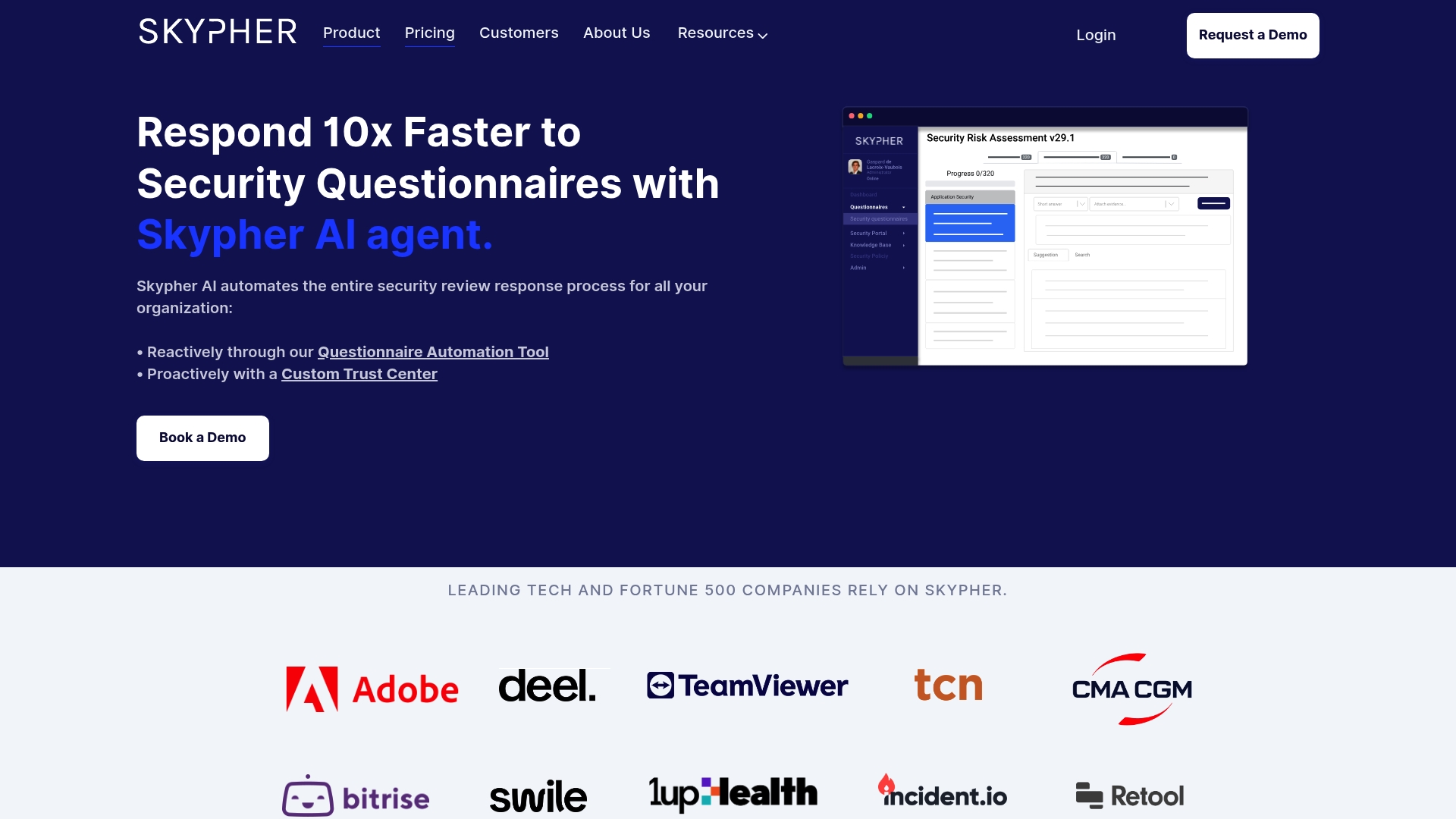
By streamlining the response process for security reviews, our platform allows you to focus on critical tasks like user management and process improvement. Integrate our Questionnaire Automation Tool with over 40 third-party risk management platforms, enjoy real-time collaboration, and enhance your operational productivity—all while reducing the time spent on tedious security assessments.
Don’t let security processes slow you down! Transform how your organization manages security questionnaires—visit https://skypher.co today and discover how Skypher can empower you to elevate your Salesforce effectiveness to new heights!