

Security compliance management is crucial in today's digital world. With over 60 percent of small businesses closing within six months of a cyber attack, this issue isn't just about compliance; it's about survival. But here's the kicker: many organizations still treat compliance as a burden rather than a strategic advantage. The twist? Adopting a robust compliance framework can actually enhance operational efficiency and build trust with customers, transforming security from a necessity into an opportunity for growth.
Table of Contents
- Why Security Compliance is Important
- Key Elements of Compliance Management
- Challenges in Achieving Compliance
- Implementing Effective Compliance Management
- Defining Compliance Scope and Objectives
- [Comprehensive Risk Assessment And Mitigation](#compre hensive-risk-assessment-and-mitigation)
- Technology and Cultural Integration
Quick Summary
| Takeaway | Explanation |
|---|---|
| Security compliance is essential for protecting assets and reputation | Organizations must proactively safeguard their data and customer trust through robust security compliance measures to mitigate risks and withstand cyber threats. |
| Risk assessment is foundational to compliance management | Comprehensive risk assessments are necessary to identify vulnerabilities, evaluate risks, and develop proactive strategies for mitigating potential threats effectively. |
| Continuous monitoring is crucial for effective compliance | Organizations should implement ongoing evaluations and adaptations of their compliance mechanisms to address evolving threats and regulatory requirements. |
| Securing adequate resources is critical for compliance success | Financial and operational constraints must be managed, especially for small and medium-sized enterprises, to ensure that adequate investments are made in security compliance measures. |
| Integration of technology and culture enhances compliance efforts | Effective compliance management requires a holistic approach that combines technological solutions with a culture of security awareness and cross-functional collaboration within the organization. |
Why Security Compliance is Important
Security compliance management is not just a checkbox exercise; it's a critical strategic imperative for modern organizations navigating an increasingly complex digital landscape. In an era where data breaches can devastate businesses financially and reputationally, understanding the profound importance of security compliance is no longer optional—it's essential.
Protecting Organizational Assets and Reputation
The fundamental purpose of security compliance goes far beyond meeting regulatory requirements. It represents a comprehensive approach to safeguarding an organization's most valuable assets: its data, reputation, and customer trust. Research from SecurityScorecard reveals that organizations with robust security compliance management systems are significantly more resilient against cyber threats and potential financial losses.
Companies that prioritize security compliance demonstrate a proactive commitment to protecting sensitive information. This approach involves systematically monitoring and assessing systems, devices, and networks to identify and mitigate potential vulnerabilities before they can be exploited by malicious actors.
Navigating Complex Regulatory Landscapes
The regulatory environment for information security continues to evolve rapidly, with increasingly stringent requirements across multiple industries. Cybersecurity research indicates that compliance in information security management (CISM) is now a critical component of organizational risk management.
Organizations must implement comprehensive security controls that not only protect sensitive information but also align with specific industry standards and regulatory mandates. This means developing and maintaining security policies that address:
- Data protection and privacy requirements
- Cybersecurity risk management
- Incident response and reporting protocols
- Continuous monitoring and assessment mechanisms
Financial and Strategic Implications
Beyond risk mitigation, security compliance offers significant strategic advantages. Cybersecurity studies demonstrate that organizations with strong security compliance frameworks experience enhanced operational efficiency, improved stakeholder confidence, and reduced potential for costly security incidents.
The financial implications are substantial. A single data breach can result in millions of dollars in direct costs, including legal fees, remediation expenses, and potential regulatory fines. Moreover, the indirect costs—such as reputational damage and loss of customer trust—can be even more devastating.
Effective security compliance is not about creating restrictive barriers but about building a resilient, adaptive security infrastructure that enables business innovation while protecting critical assets. It transforms security from a perceived overhead cost to a strategic enabler of organizational growth and trust.
In today's interconnected digital ecosystem, security compliance is no longer a technical afterthought—it's a fundamental business imperative that directly impacts an organization's sustainability, reputation, and competitive advantage.
Key Elements of Compliance Management
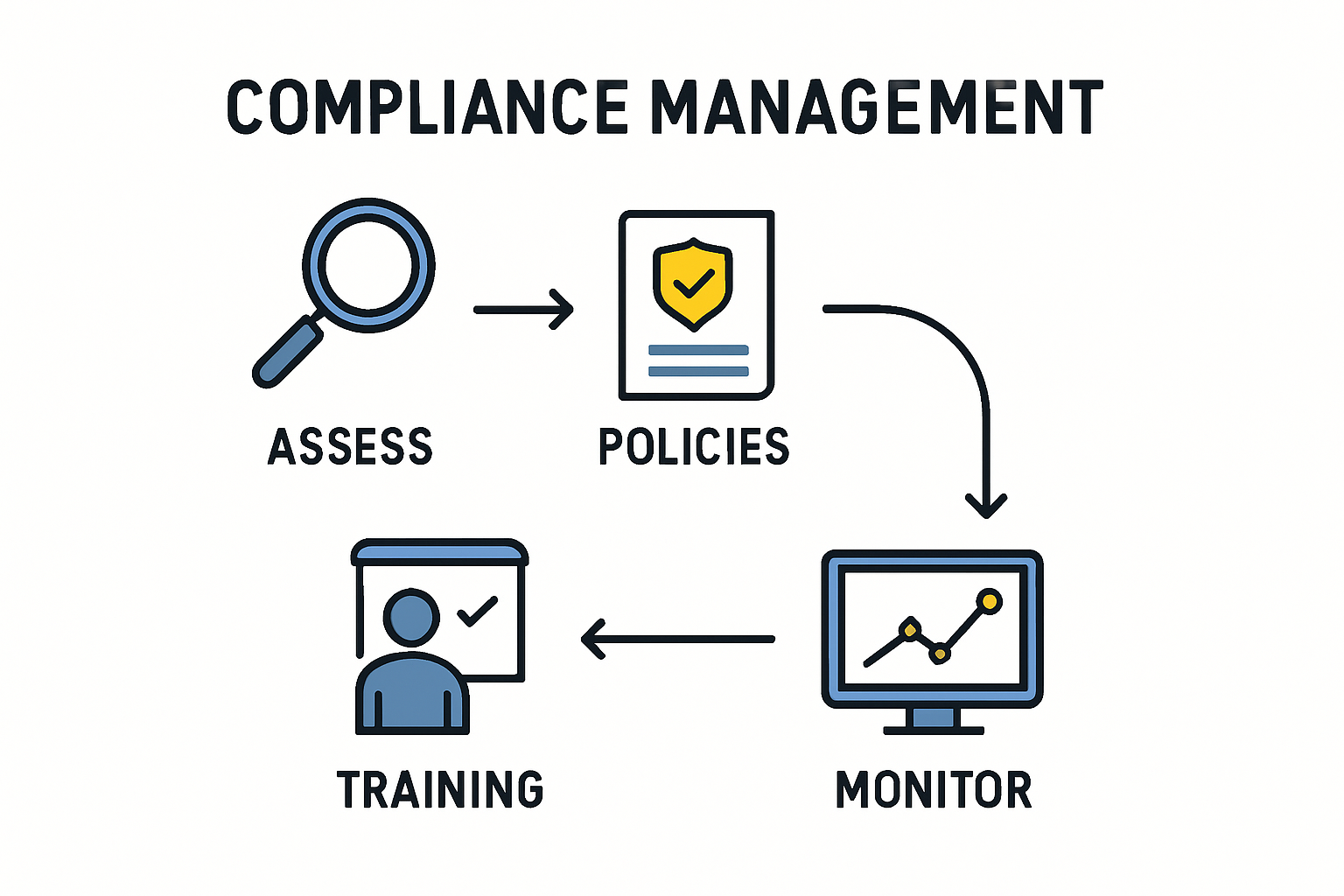
Building an effective security compliance management strategy requires a comprehensive, multifaceted approach that goes beyond simple checklist completion. Organizations must develop a holistic framework that integrates technological solutions, human expertise, and strategic planning to create a robust compliance ecosystem.
Risk Assessment and Identification
Research from information security experts emphasizes that the foundation of security compliance management lies in comprehensive risk assessment. This critical process involves systematically identifying, analyzing, and evaluating potential vulnerabilities within an organization's technological infrastructure and operational processes.
Effective risk assessment requires organizations to:
- Conduct thorough inventory of data assets and information systems
- Identify potential security vulnerabilities and threat vectors
- Evaluate the potential impact of identified risks
- Prioritize risks based on their likelihood and potential organizational impact
Implementation of Security Controls
Compliance management research highlights the importance of establishing a comprehensive security compliance risk database. This involves creating a structured approach to implementing robust security controls that address identified risks and meet regulatory requirements.
Key elements of implementing effective security controls include:
- Developing clear security policies and procedures
- Implementing multi-layered security mechanisms
- Establishing access control and authentication protocols
- Creating data encryption and protection strategies
- Designing incident response and emergency management plans
Continuous Monitoring and Improvement
 Compliance management experts underscore the dynamic nature of security compliance, emphasizing the need for continuous monitoring and adaptive strategies. This approach requires ongoing evaluation and refinement of compliance mechanisms.
Continuous monitoring involves:
- Regular security audits and assessments
- Real-time threat detection and response
- Automated control tracking and reporting
- Consistent system patching and updates
- Cross-functional collaboration between IT, security, and compliance teams
Organizations must view security compliance management as an evolving process rather than a static achievement. The digital landscape continuously changes, with new threats emerging and regulatory requirements constantly shifting. A truly effective compliance management strategy remains flexible, adaptive, and proactive.
By integrating these key elements—comprehensive risk assessment, robust security controls, and continuous monitoring—organizations can create a resilient security compliance framework that protects their most valuable assets while enabling strategic business innovation.
Challenges in Achieving Compliance
Achieving comprehensive security compliance is far from a straightforward process. Organizations face a complex landscape of technological, financial, and operational challenges that can significantly complicate their compliance efforts, requiring strategic planning and innovative approaches.
Resource and Financial Constraints
Global research reveals that the financial and operational burden of security compliance represents a substantial challenge, particularly for small and medium-sized enterprises. These organizations often struggle with limited budgets and resources, making it difficult to implement comprehensive compliance strategies.
The financial implications of compliance are multifaceted:
- Significant investments in security technologies
- Costs associated with ongoing training and education
- Expenses related to compliance audits and assessments
- Potential penalties for non-compliance
- Opportunity costs of dedicating resources to compliance management
Small businesses frequently find themselves caught in a challenging dilemma: investing in robust compliance measures can strain their financial resources, yet failing to do so exposes them to potentially catastrophic risks.
Technological Complexity and Evolving Threat Landscapes
Information security research highlights the overwhelming complexity of compliance management. The rapid technological evolution and continuously changing threat landscapes create significant challenges for organizations attempting to maintain robust security compliance.
Key technological challenges include:
- Rapidly changing cybersecurity threats
- Complex integration of diverse technological systems
- Keeping pace with emerging regulatory requirements
- Managing intricate network and data protection mechanisms
- Implementing adaptive security architectures
Organizations must develop agile, flexible compliance strategies that can quickly adapt to technological shifts and emerging security challenges.
Sector-Specific Compliance Challenges
Different industries face unique compliance hurdles that require specialized approaches. Healthcare compliance research provides a compelling example, demonstrating how smaller providers struggle with limited technological and human resources when implementing sector-specific security safeguards.
Sector-specific challenges manifest in various ways:
- Healthcare: Protecting sensitive patient information
- Finance: Meeting stringent regulatory requirements
- Technology: Addressing rapidly evolving cybersecurity standards
- Government: Ensuring multi-layered security protocols
Each sector requires nuanced understanding of its specific compliance landscape, necessitating tailored strategies that go beyond generic security approaches.
Successfully navigating these challenges demands a proactive, strategic approach. Organizations must view compliance not as a burdensome requirement but as a critical investment in their long-term resilience and operational integrity. By understanding and anticipating these challenges, businesses can develop more effective, efficient compliance management strategies that protect their assets while enabling sustainable growth.
Implementing Effective Compliance Management
Transforming security compliance from a theoretical concept to a practical, actionable strategy requires a systematic and holistic approach. Organizations must develop a comprehensive framework that integrates technology, processes, and human expertise to create a robust and adaptable compliance management system.
Defining Compliance Scope and Objectives
Compliance management experts emphasize the critical importance of clearly defining the scope and objectives of security compliance systems. This initial step involves creating a detailed roadmap that outlines the specific regulatory requirements, organizational goals, and potential risk landscapes.
Key considerations in defining compliance scope include:
- Identifying applicable regulatory standards
- Mapping organizational assets and information systems
- Establishing clear compliance boundaries
- Determining specific security control requirements
- Aligning compliance objectives with broader business strategies
A well-defined scope provides organizations with a clear direction, enabling more targeted and efficient compliance efforts.
Comprehensive Risk Assessment and Mitigation
Cybersecurity research highlights the necessity of proactive and continuous risk assessment. Organizations must implement sophisticated methods to identify, evaluate, and mitigate potential security vulnerabilities before they can be exploited.
Effective risk assessment strategies include:
- Conducting regular penetration testing
- Implementing comprehensive vulnerability scanning
- Developing robust intrusion detection systems
- Creating detailed risk prioritization frameworks
- Establishing ongoing monitoring mechanisms
The goal is to transform risk assessment from a periodic checkbox exercise into a dynamic, continuous process that adapts to evolving technological landscapes.
Technology and Cultural Integration
Information security studies reveal that successful compliance management requires more than technological solutions—it demands a holistic approach that integrates technology with organizational culture.
Key elements of comprehensive integration include:
- Implementing advanced compliance management technologies
- Developing comprehensive training programs
- Fostering a culture of security awareness
- Establishing cross-functional collaboration mechanisms
- Creating transparent communication channels
Organizations must recognize that effective compliance management is not solely an IT function but a strategic imperative that requires engagement from all levels of the organization.
Implementing effective compliance management is an ongoing journey of continuous improvement. By adopting a strategic, holistic approach that balances technological sophistication with human expertise, organizations can develop resilient compliance frameworks that protect their assets, maintain regulatory adherence, and support sustainable business growth.
Frequently Asked Questions
What is security compliance management?
Security compliance management involves implementing policies, procedures, and technologies to ensure that an organization adheres to regulatory requirements and standards related to information security. It aims to protect organizational assets and maintain customer trust.
Why is security compliance important for businesses?
Security compliance is crucial for businesses as it helps protect sensitive data, enhances organizational reputation, and minimizes financial risks associated with data breaches and regulatory penalties. It transforms security from a compliance burden into a strategic advantage.
What are the key elements of compliance management?
Key elements of compliance management include comprehensive risk assessment, implementation of robust security controls, continuous monitoring and improvement, and fostering a culture of security awareness within the organization.
What challenges do organizations face in achieving compliance?
Organizations face several challenges in achieving compliance, including resource and financial constraints, technological complexity, and sector-specific compliance hurdles. These factors can complicate the implementation of effective security compliance strategies.
Transform Compliance Challenges into Opportunities with Skypher
Navigating the intricate landscape of security compliance can be daunting. As highlighted in our article, many organizations grapple with the burden of managing complex regulatory requirements and the constant need for risk assessment and monitoring. The stakes are high—60% of small businesses fold after a cyber attack, emphasizing the urgent need for robust compliance frameworks that don't just check boxes but enhance business resilience.
Imagine a solution that streamlines your security questionnaire process, amplifying your operational efficiency while safeguarding your organizational reputation. With Skypher's AI-driven Questionnaire Automation Tool, you can seamlessly handle security reviews faster and with greater accuracy. ⚡️ Coupled with real-time collaboration features and an integrated Trust Center, your teams will not only respond effectively to complex compliance requirements but also foster trust with clients like never before.
Ready to turn compliance into a strategic advantage? Don’t let compliance be a hurdle—make it your competitive edge! Experience how Skypher can empower you today. Visit Skypher.co and revolutionize your approach to security compliance management.