

Understanding SOC 1: Definition, Scope, and Purpose
A SOC 1 (Service Organization Control 1) report is a specialized audit report that evaluates the effectiveness of internal controls at service organizations that could impact their clients' financial reporting. Developed by the American Institute of Certified Public Accountants (AICPA), SOC 1 compliance provides assurance about the security and reliability of services provided to customer organizations.
The fundamental question that determines if your organization needs a SOC 1 report is: "Can your service impact the financial statements of your clients?" If the answer is yes, a SOC 1 report should be considered essential according to compliance experts.
SOC 1 reports come in two distinct types:
- Type I: Evaluates the design and implementation of controls at a specific point in time
- Type II: Assesses both the design and operating effectiveness of controls over a defined period (typically 6-12 months)

The scope of a SOC 1 audit specifically focuses on internal controls relevant to financial reporting. This includes examining processes, systems, and procedures that could affect the accuracy and reliability of financial data your clients use for their own reporting purposes.
Unlike other compliance frameworks that might address privacy or general security concerns, SOC 1 is distinctly focused on financial reporting controls. The purpose is to provide your clients with confidence that their financial data is being handled with appropriate controls, reducing their audit burden while strengthening trust in your services.
Key Takeaways
| Takeaway | Explanation |
|---|---|
| SOC 1 reports are essential for organizations impacting client financial statements | If a service can affect clients' financial reports, a SOC 1 report becomes crucial for compliance and trust. |
| Understanding the two types of SOC 1 reports | SOC 1 Type I assesses control design at a point in time, while Type II evaluates both design and operating effectiveness over a period. |
| SOC 1 focuses solely on financial reporting controls | This report is specifically geared toward ensuring the integrity of services that can impact financial data, contrasting with broader compliance standards. |
| Operational efficiencies arise from SOC 1 compliance | Implementing SOC 1 standards often uncovers procedural gaps, leading to improved operations and better resource allocation. |
The Role of SOC 1 in Strengthening Internal Controls and Risk Management
SOC 1 compliance plays a crucial role in enhancing an organization's internal control framework and risk management capabilities. By implementing the rigorous standards required for SOC 1, organizations create systematic safeguards that protect both their operations and their clients' financial reporting integrity.
The AICPA's SOC 1 framework establishes five fundamental control categories that form the backbone of effective risk management:
- Control Environment: Establishes the organization's governance and oversight structure
- Risk Assessment: Identifies and analyzes potential threats to financial reporting
- Control Activities: Implements specific policies and procedures that mitigate identified risks
- Information and Communication: Ensures relevant information flows appropriately
- Monitoring Activities: Provides ongoing evaluation of control effectiveness
These components work together to create a comprehensive system that identifies, addresses, and continuously monitors risks. For example, a payroll processing company that implemented SOC 1 controls discovered and remediated security vulnerabilities that could have exposed sensitive financial data, potentially saving millions in breach-related costs according to IS Partners.
Beyond compliance requirements, SOC 1 implementation delivers tangible business benefits through improved operational efficiency. The process of documenting controls forces organizations to examine their procedures critically, often revealing redundancies or gaps that can be addressed. This systematic approach to control evaluation leads to more streamlined operations, reduced error rates, and better resource allocation.
Additionally, the risk assessment component of SOC 1 helps organizations identify potential threats before they materialize, allowing for proactive rather than reactive risk management strategies.
SOC 1 vs. SOC 2: Key Differences and Use Cases
While both SOC 1 and SOC 2 fall under the AICPA's System and Organization Controls framework, they serve distinctly different purposes and apply to different organizational contexts. Understanding these differences is crucial for determining which report your organization needs to pursue.
The fundamental distinction lies in their focus areas:
- SOC 1: Concentrates exclusively on internal controls relevant to financial reporting
- SOC 2: Addresses information security practices and data protection across five Trust Service Criteria
According to Secureframe, the choice between SOC 1 and SOC 2 depends primarily on the nature of your services and client needs:
| Report Type | Primary Focus | Ideal For | Key Considerations |
|---|---|---|---|
| SOC 1 | Financial reporting controls | Payroll processors, billing services, investment managers | Impact on client financial statements |
| SOC 2 | Data security and privacy | Cloud service providers, SaaS companies, data centers | Protection of sensitive information |
You should pursue SOC 1 compliance if your organization:
- Processes or manages financial data for clients
- Performs services that directly impact your clients' financial statements
- Receives requests from clients needing assurance for their financial audits
Conversely, SOC 2 is more appropriate when your organization:
- Stores, processes, or transmits sensitive customer data
- Provides technology services or platforms
- Needs to demonstrate robust security practices beyond financial controls
Some organizations may need both reports if they process financial data and handle sensitive customer information. For instance, a financial technology company providing accounting software would benefit from SOC 1 to address financial controls and SOC 2 to demonstrate security over customer data.
Understanding these distinctions helps organizations invest resources in the compliance program that delivers the most relevant assurance to their specific clients and business operations.
Preparing for a SOC 1 Audit: Essential Steps and Best Practices
Successfully navigating a SOC 1 audit requires thorough preparation and strategic planning. Organizations that invest time in audit readiness not only achieve better outcomes but also maximize the business value derived from the certification process.
Effective preparation begins with understanding the scope of your SOC 1 audit. This includes identifying which systems, services, and controls will be evaluated. According to Sensiba, proper scoping should focus on features and functions that directly impact your clients' financial statements.
Key preparation steps include:
- Conduct a comprehensive risk assessment involving stakeholders from across the organization to identify potential threats to financial reporting
- Document control objectives and processes that address identified risks
- Perform a gap analysis to identify control weaknesses or missing documentation
- Remediate identified gaps before the audit begins
- Train personnel on control responsibilities and the audit process
Developing robust documentation is critical for SOC 1 audit success. This includes detailed policies and procedures that govern financial reporting controls, evidence of control implementation, and records of monitoring activities. Remember the auditor's perspective: if a control isn't documented, it effectively doesn't exist.
For organizations with existing compliance frameworks, leverage control mappings to minimize duplication of effort. Many controls implemented for other frameworks (like SOC 2 or ISO 27001) can be adapted to address SOC 1 requirements, particularly in areas like access controls and change management.
Finally, consider conducting a readiness assessment with your auditor before the formal audit begins. This provides valuable insights into potential issues and allows time for remediation, significantly increasing the likelihood of receiving an unqualified opinion on your SOC 1 report.
Real-World Impact: How SOC 1 Compliance Transforms Business Trust and Performance
Beyond the technical aspects of control implementation, SOC 1 compliance delivers tangible business benefits that directly impact an organization's market position, client relationships, and operational efficiency.
The most immediate impact of SOC 1 compliance is enhanced trust with clients and partners. When financial service providers can present a clean SOC 1 report, they effectively demonstrate their commitment to protecting financial data integrity. According to Thoropass, this independent verification builds credibility that marketing claims alone cannot achieve.
This trust translates into measurable business outcomes:
- Competitive advantage: Organizations with SOC 1 reports often win contracts over non-compliant competitors
- Reduced sales cycle: Pre-emptively addressing security concerns streamlines vendor assessment processes
- Client retention: Existing clients gain confidence in continued partnership
- Operational excellence: The discipline required for SOC 1 compliance improves internal processes
A mid-sized payment processor experienced this transformation firsthand after implementing SOC 1 controls. Not only did they secure three major enterprise clients who required SOC 1 compliance as a prerequisite for partnership, but they also identified and remediated inefficiencies in their reconciliation processes, reducing monthly close times by 40%.
For organizations providing financial services, SOC 1 compliance also reduces the burden on clients during their own financial audits. When clients can rely on a service organization's SOC 1 report, they can avoid duplicative testing of those controls during their annual financial statement audits, creating value beyond the immediate security benefits.
The internal focus on control effectiveness also frequently reveals opportunities for process improvements and risk reduction that might otherwise remain undiscovered, creating operational efficiencies that benefit the bottom line while strengthening client trust.
Frequently Asked Questions
What is SOC 1?
SOC 1, or Service Organization Control 1, is an audit report that evaluates a service organization's internal controls relevant to financial reporting, helping clients assess the reliability of services affecting their financial statements.
Why is a SOC 1 report important for businesses?
A SOC 1 report is crucial for businesses that impact client financial statements, as it builds trust, enhances client confidence, and helps organizations streamline operations through improved internal controls, ultimately facilitating compliance and reducing audit burdens.
What are the differences between SOC 1 Type I and Type II reports?
SOC 1 Type I evaluates the design and implementation of controls at a particular point in time, while SOC 1 Type II assesses the design and operating effectiveness of controls over a defined period, typically between 6 to 12 months.
How does SOC 1 compliance benefit operational efficiency?
SOC 1 compliance leads to operational efficiencies by identifying and remediating control gaps, improving process documentation, and minimizing redundancies, which can result in streamlined operations, reduced error rates, and better resource allocation.
Elevate Your Compliance Game with Skypher
Navigating the complex landscape of SOC 1 compliance can be daunting, especially when it comes to documenting internal controls and ensuring reliability in financial reporting. Organizations frequently face hurdles such as cumbersome security questionnaire responses and time-consuming audits, which can siphon valuable resources and lead to operational inefficiencies.
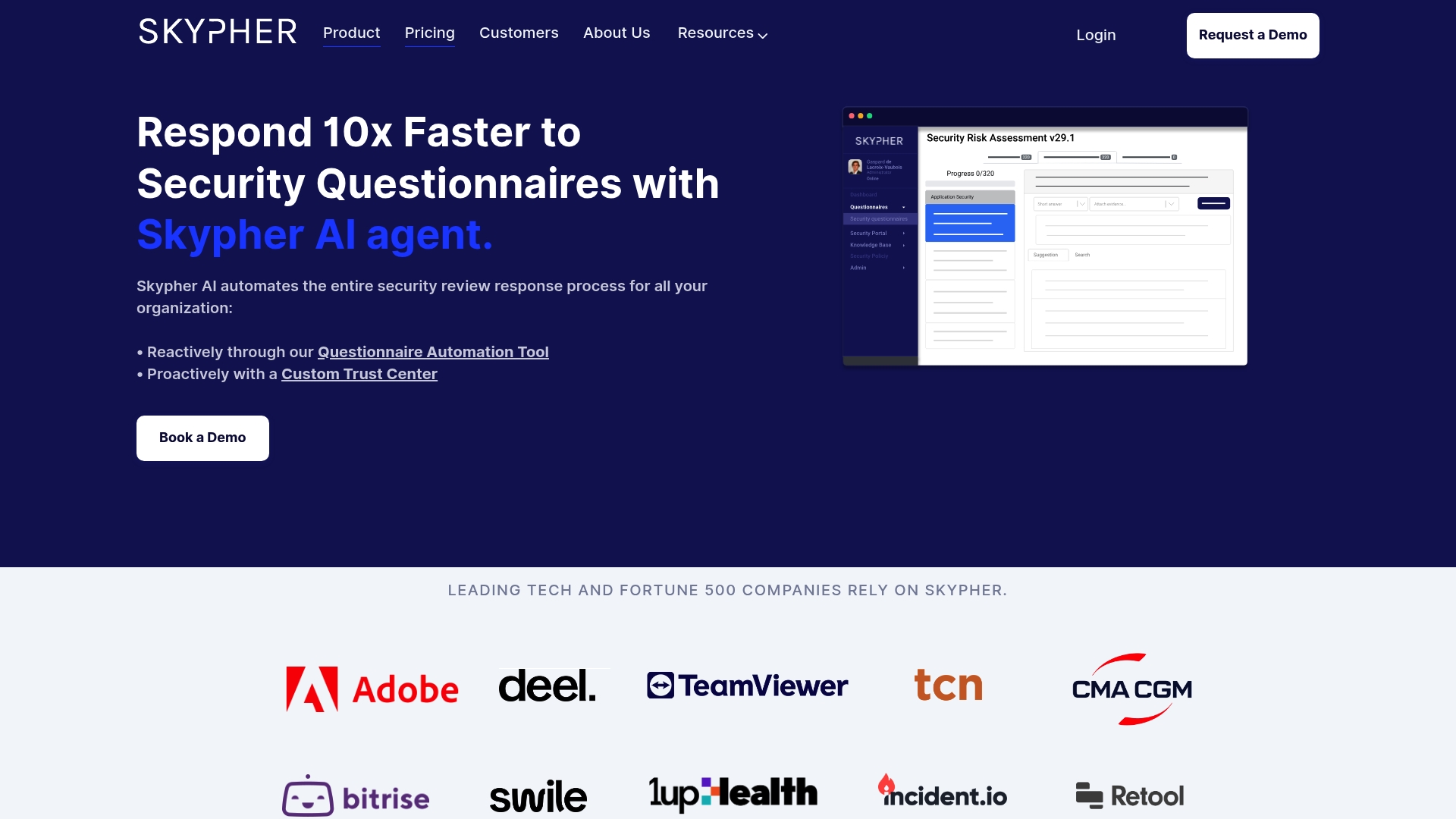
Skypher is here to transform your compliance journey! Our AI-driven Questionnaire Automation Tool simplifies the response process for security questionnaires, enabling you to tackle financial service audits with ease. Imagine having a custom Trust Center that organizes all documentation, facilitates real-time collaboration, and integrates seamlessly with over 40 third-party risk management platforms. With features designed to optimize communication and enhance efficiency, you can focus on what matters most—building trust with your clients and ensuring the effectiveness of your controls.
Don’t let compliance challenges hold you back. Start your journey towards enhanced security and operational excellence today! Explore how Skypher can redefine your compliance process at https://skypher.co.