

Understanding the Fundamentals of SOC 2 Certification
SOC 2 certification is a framework developed by the American Institute of Certified Public Accountants (AICPA) that evaluates an organization's information systems and controls related to security, availability, processing integrity, confidentiality, and privacy. This certification has become the gold standard for data security among service organizations that store, process, or transmit customer information.
The foundation of SOC 2 rests on five Trust Service Criteria (TSC):
- Security: Protection against unauthorized access and system vulnerabilities
- Availability: System uptime, performance monitoring, and disaster recovery
- Processing Integrity: Accurate, complete, and timely data processing
- Confidentiality: Protection of sensitive information from unauthorized disclosure
- Privacy: Personal information handling in accordance with privacy policies
Most organizations begin with Security (the Common Criteria) as it's required for all SOC 2 audits. According to a 2022 Coalfire study, 84% of companies that achieved SOC 2 certification reported improved security posture and increased customer trust.
SOC 2 certification comes in two types: Type 1 evaluates the design of controls at a specific point in time, while Type 2 assesses both design and operational effectiveness over a period (typically 6-12 months). The Type 2 report provides stronger assurance and is increasingly demanded by enterprise clients seeking secure vendors.
Key Takeaways
| Key Point | Details |
|---|---|
| SOC 2 Certification Importance | SOC 2 is the gold standard for data security, vital for service organizations handling customer data. |
| Trust Service Criteria | SOC 2 is based on five Trust Service Criteria: Security, Availability, Processing Integrity, Confidentiality, and Privacy. |
| Types of SOC 2 Reports | Type 1 evaluates control design at one point in time, while Type 2 assesses effectiveness over 6-12 months, with Type 2 being more preferred by clients. |
| Benefits of Certification | Companies with SOC 2 compliance see improved security, reduced risk, and enhanced customer trust, driving sales and operational efficiency. |
Business Benefits and Risk Management with SOC 2 Certification

Implementing SOC 2 compliance delivers substantial benefits that extend far beyond merely ticking a regulatory box. Organizations that achieve SOC 2 certification experience measurable improvements in security posture and business outcomes.
A 2023 Ponemon Institute study found that businesses with SOC 2 certification experienced 63% fewer security incidents compared to non-certified peers. This translates directly to risk reduction and cost savings, as the average data breach now costs $4.45 million according to IBM's Cost of Data Breach Report.
Key business advantages of SOC 2 certification include:
- Competitive differentiation in security-conscious markets
- Accelerated sales cycles with enterprise clients who require vendor compliance
- Reduced third-party risk assessment questionnaires and security reviews
- Strengthened internal controls and improved operational efficiency
- Enhanced stakeholder trust, particularly among customers and investors
Case in point: Fintech startup Plaid accelerated enterprise client acquisition by 35% after obtaining SOC 2 Type 2 compliance, as reported in their 2022 security transparency report. The certification eliminated security concerns that had previously lengthened their sales cycle with financial institutions.
Moreover, SOC 2 creates a comprehensive risk management framework that proactively identifies vulnerabilities before they become breaches. This systematic approach to security transforms reactive security practices into strategic business assets that protect both data and reputation.
Navigating the SOC 2 Audit Process: Preparation and Key Steps
The SOC 2 audit process involves a systematic examination of your organization's security controls and policies. Proper preparation is crucial for a successful SOC 2 certification and can significantly reduce both the time and resources required.
A typical SOC 2 journey consists of these essential phases:
- Readiness Assessment: Evaluate your current security posture against SOC 2 requirements to identify gaps
- Remediation: Implement necessary controls and policies to address identified gaps
- Auditor Selection: Choose a reputable CPA firm authorized to conduct SOC 2 audits
- Type 1 Audit: Initial assessment of control design at a specific point in time
- Type 2 Observation Period: 6-12 months of control operation monitoring
- Final Audit and Reporting: Formal evaluation and issuance of the SOC 2 report
According to a 2023 survey by Compliance Week, organizations that conducted thorough readiness assessments reduced their audit time by an average of 40% and lowered costs by approximately $25,000 compared to those that didn't prepare adequately.
Evidence collection is particularly challenging during SOC 2 audits. Organizations must document how each control operates through screenshots, logs, records, and policy documentation. Cloud-based compliance platforms like Vanta, Drata, and TrustCloud have emerged to streamline this process, with 67% of companies now using automated tools to maintain continuous compliance rather than treating SOC 2 as a point-in-time project.
Establishing clear responsibility for control ownership across departments ensures no critical areas are overlooked during the audit process.
Overcoming Common Challenges in SOC 2 Compliance
Achieving and maintaining SOC 2 compliance presents several obstacles that organizations must navigate effectively. Understanding these challenges in advance allows companies to develop targeted strategies rather than facing unexpected roadblocks during the certification process.
A 2022 Compliance Benchmark Report by Hyperproof found that 78% of organizations underestimated the time and resources required for their initial SOC 2 audit. Resource constraints typically appear in three critical areas:
- Documentation Gaps: Policies exist in practice but lack formal documentation required by auditors
- Technical Debt: Legacy systems that don't support modern security controls
- Third-Party Risk Management: Insufficient oversight of vendors who access sensitive data
- Employee Training: Inadequate security awareness across the organization
- Continuous Monitoring: Difficulty maintaining evidence of ongoing control effectiveness
Organizations with limited compliance experience often struggle with scope definition. Unnecessarily broad scopes increase audit complexity and costs. For example, fintech company Marqeta initially included non-customer-facing systems in their SOC 2 boundary, which extended their audit timeline by three months and increased costs by 40%.
Vendor management presents another significant hurdle. According to a Whistic survey, 63% of companies report challenges obtaining sufficient security documentation from critical vendors. This becomes particularly problematic when these vendors process customer data but lack their own SOC 2 certification.
Addressing these challenges requires a phased approach, beginning with a focused scope covering only systems that process customer data, then implementing automated compliance monitoring, and establishing clear ownership of controls across departments.
Strategies for Long-Term SOC 2 Compliance Success
Maintaining SOC 2 compliance beyond initial certification requires a sustainable approach rather than treating it as a one-time project. Organizations that integrate compliance into their operational DNA achieve better security outcomes while reducing the resource burden of annual audits.
According to a 2023 Deloitte study on compliance maturity, companies with integrated compliance programs spend 30% less on audit preparation while detecting security issues 2.5x faster than those with siloed approaches.
Effective long-term SOC 2 strategies include:
- Continuous Monitoring: Implement automated tools that track control effectiveness year-round instead of scrambling before audits
- Change Management Integration: Evaluate security implications of all system changes as part of standard processes
- Cross-functional Ownership: Distribute compliance responsibilities across departments rather than isolating them in security teams
- Evidence Collection Automation: Use purpose-built compliance platforms to gather and organize audit evidence automatically
- Regular Internal Assessments: Conduct quarterly mini-audits to identify and remediate control failures early
Zoom's compliance team provides a compelling case study in sustainable SOC 2 management. After their explosive growth in 2020, they implemented continuous compliance monitoring that automated 73% of evidence collection. This approach reduced their annual SOC 2 preparation time from twelve weeks to just three, as detailed in their security whitepaper.
Aligning SOC 2 controls with other frameworks like ISO 27001, GDPR, and HIPAA creates a unified compliance program that achieves multiple certifications with minimal additional effort. This consolidation of security requirements dramatically improves efficiency while ensuring consistent control implementation across frameworks.
Frequently Asked Questions
What is SOC 2 certification?
SOC 2 certification is a framework developed by AICPA that assesses an organization's controls related to security, availability, processing integrity, confidentiality, and privacy of customer information.
Why is SOC 2 certification important for businesses?
SOC 2 certification is crucial as it demonstrates a company's commitment to maintaining a high standard of data security, improving customer trust, and enhancing competitive differentiation in the market.
What are the types of SOC 2 reports?
There are two types of SOC 2 reports: Type 1, which evaluates the design of controls at a specific point in time, and Type 2, which assesses the operational effectiveness of those controls over a period of 6-12 months.
How can a company prepare for a SOC 2 audit?
Preparation for a SOC 2 audit involves conducting a readiness assessment to identify gaps, remediating these gaps, choosing an accredited auditor, and documenting control operations effectively throughout the audit process.
Unlock Your Path to SOC 2 Certification Success
Navigating the intricate waters of SOC 2 compliance can feel overwhelming. With rising expectations from clients and stringent security requirements, organizations are confronted with the challenge of tackling security questionnaires efficiently while maintaining rigorous standards. You may find yourself stressed over documentation gaps or the fear of missing critical controls, which can jeopardize your certification process.
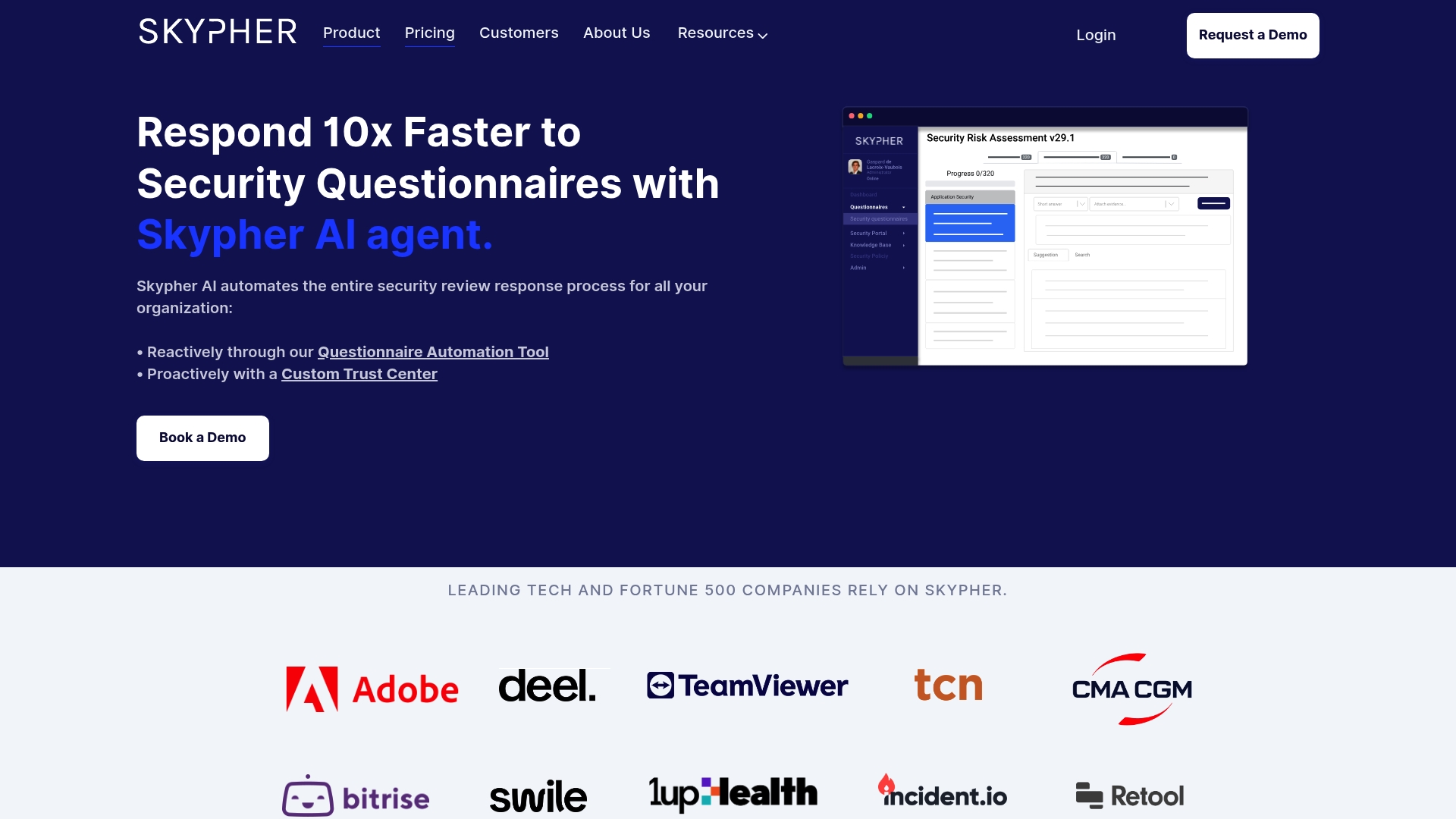
Skypher is here to alleviate that burden. Our AI-driven Questionnaire Automation Tool simplifies the security review process, enabling you to respond to security questionnaires with increased speed and accuracy. Imagine reducing your audit preparation time while enhancing collaboration across teams—all with a platform designed specifically for organizations like yours in tech and finance. Don’t let compliance be a barrier to growth; let it strengthen your market position. Ready to conquer SOC 2 compliance without the headaches? Explore how Skypher can transform your audit journey today at https://skypher.co.