

Understanding SOC 3: Purpose and Scope
A SOC 3 report is a trust services report designed for public distribution that provides assurance about an organization's controls related to security, availability, processing integrity, confidentiality, and privacy. Unlike its more detailed counterpart, SOC 2, the SOC 3 report offers a simplified overview without revealing sensitive information about internal systems.
The primary purpose of SOC 3 is to enable organizations to demonstrate their commitment to security and compliance while sharing the validation with a broader audience. This makes SOC 3 particularly valuable for marketing and building consumer trust.
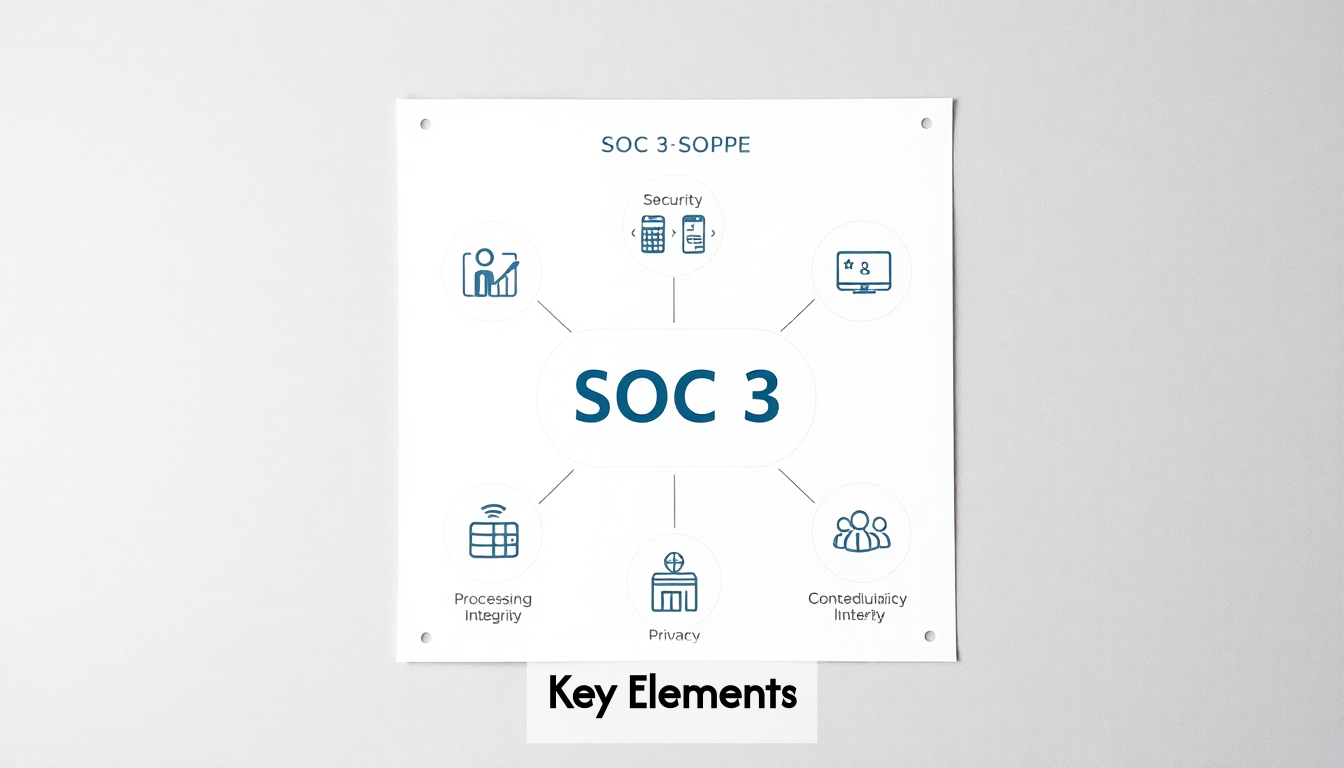
Key Elements of SOC 3 Scope
- Security: Protection against unauthorized access (both physical and logical)
- Availability: System accessibility for operation and use as committed or agreed
- Processing integrity: System processing is complete, accurate, timely, and authorized
- Confidentiality: Information designated as confidential is protected as committed or agreed
- Privacy: Personal information is collected, used, retained, and disclosed in conformity with commitments
According to the American Institute of CPAs (AICPA), organizations that successfully complete a SOC 3 audit can display the SOC 3 SysTrust seal on their website, providing immediate visual confirmation of compliance to potential customers and partners. This tangible trust symbol helped Cloud provider Dropbox increase enterprise adoption by 34% after obtaining their SOC 3 certification.
Key Takeaways
| Key Point | Details |
|---|---|
| Purpose of SOC 3 | SOC 3 reports provide public assurance of an organization's security and compliance controls with a simplified overview suitable for wider audience accessibility. |
| Differences from SOC 1 & SOC 2 | SOC 3 is for public distribution, while SOC 1 and SOC 2 are restricted and detailed; SOC 3 offers valuable marketing utility without sensitive information. |
| Marketing Value | Organizations that share SOC 3 certifications typically see increased trust and reduced security questionnaire burdens from potential clients. |
| Components of SOC 3 Report | A SOC 3 report includes an independent service auditor’s report, management assertion, system description, criteria coverage, and a summary of results. |
| Business Benefits | Achieving SOC 3 compliance strengthens marketing leverage, streamlines the sales process, differentiates from competitors, and simplifies customer assurance. |
SOC 3 vs SOC 1 & SOC 2: Key Differences
Understanding how SOC 3 differs from other SOC reports is crucial for determining which compliance framework best suits your organization's needs. Each report serves distinct purposes and audiences.
SOC 1 focuses on controls relevant to financial reporting, making it primarily valuable for service organizations that impact their clients' financial statements. In contrast, SOC 2 and SOC 3 address the same trust service criteria but differ significantly in their detail level and distribution scope.
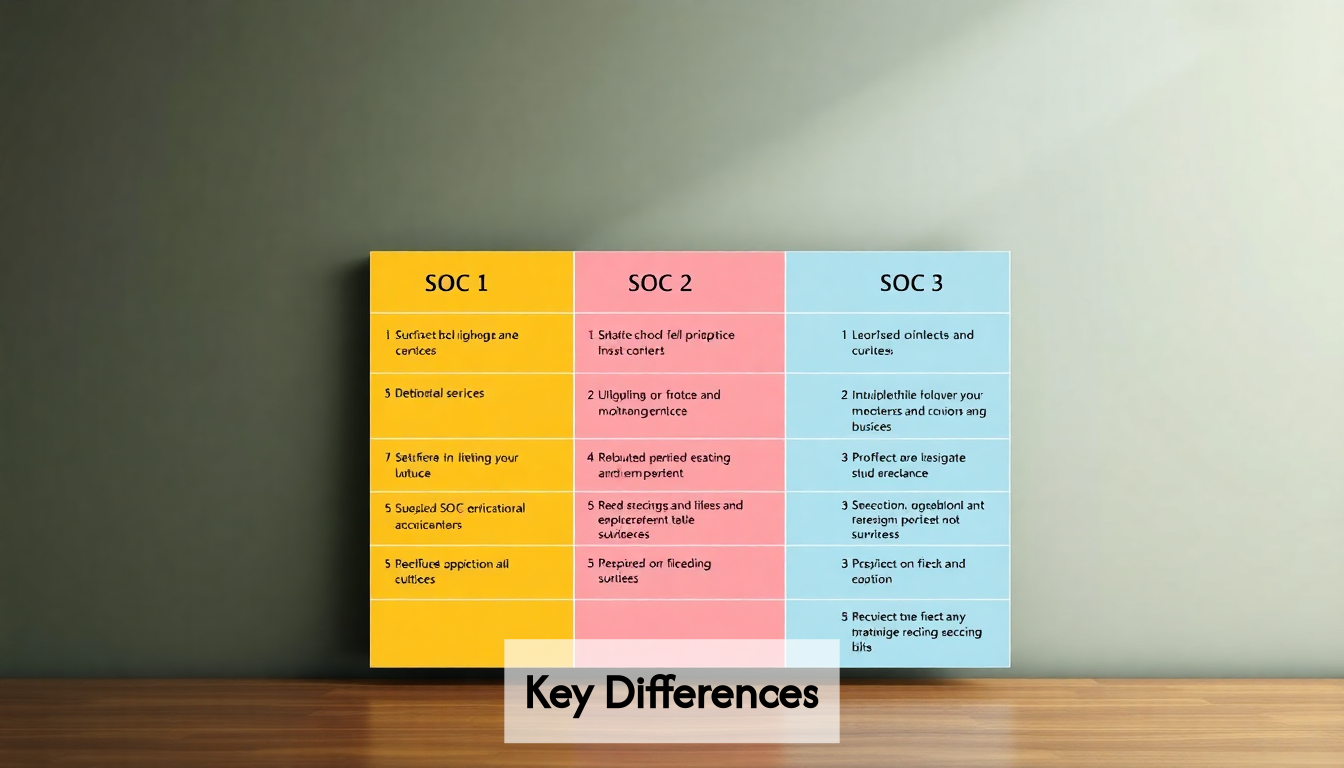
Comparative Analysis
- Report Distribution: SOC 1 and SOC 2 reports contain sensitive information and are restricted to management, existing customers, and prospects under NDA. SOC 3 reports are designed for public distribution without restrictions.
- Detail Level: SOC 2 provides comprehensive details about control objectives, activities, and testing procedures. SOC 3 offers a high-level summary without revealing sensitive system specifics.
- Audience Focus: SOC 1 targets financial auditors and financial stakeholders. SOC 2 serves technical evaluators and security professionals. SOC 3 addresses general stakeholders, marketing teams, and the public.
- Marketing Value: Among all SOC reports, SOC 3 has the highest marketing utility, with 76% of enterprises reporting increased trust from stakeholders after public sharing of their SOC 3 certification.
According to a 2022 study by Coalfire, organizations that obtained SOC 3 certification after completing SOC 2 experienced a 28% reduction in security questionnaires from potential clients, as the public report adequately addressed many common security concerns.
Components and Structure of a SOC 3 Report
A SOC 3 report follows a standardized structure designed to provide clear assurance information while maintaining accessibility for non-technical audiences. The concise nature of SOC 3 reports typically results in a document between 3-10 pages, significantly shorter than SOC 2 reports that often exceed 50 pages.
Understanding the components of a SOC 3 report helps organizations leverage it effectively for building trust with stakeholders.
Standard SOC 3 Report Elements
- Independent Service Auditor's Report: The auditor's opinion on whether the organization's controls meet the relevant trust services criteria
- Management Assertion: A statement from the service organization affirming their responsibility for maintaining effective controls
- System Description: A high-level overview of the system or service being evaluated
- Trust Services Criteria Coverage: Specification of which criteria were evaluated (security, availability, processing integrity, confidentiality, privacy)
- Results Summary: Overall conclusion without detailed control information or test results
According to data from the AICPA, 87% of enterprise customers consider the auditor's opinion section the most critical component when evaluating a vendor's SOC 3 report. The simplicity and standardization of SOC 3 reports make them particularly valuable for public-facing trust documentation – a recent Ponemon Institute study found that vendors who publicly share SOC 3 reports reduce the sales cycle by an average of 12 days compared to those requiring NDA-protected compliance documentation.
Business Benefits of Achieving SOC 3 Compliance
Obtaining SOC 3 compliance delivers substantial competitive advantages beyond mere regulatory adherence. Organizations that invest in SOC 3 certification realize tangible business benefits that directly impact their bottom line and market position.
The ability to publicly distribute SOC 3 reports creates unique opportunities for building trust with a broader audience than possible with other compliance frameworks.
Strategic Advantages of SOC 3 Certification
- Enhanced Marketing Leverage: SOC 3 reports can be freely shared on websites, in sales materials, and through public channels without NDAs or restrictions
- Streamlined Sales Process: Reduces security questionnaires and accelerates vendor assessment processes
- Competitive Differentiation: Provides visible evidence of security commitment, particularly valuable in industries where not all competitors maintain rigorous compliance
- Trust Symbol Recognition: Enables use of the SOC 3 seal on websites and marketing materials
- Simplified Customer Assurance: Offers a digestible security validation document for non-technical stakeholders
According to a 2023 Deloitte survey of procurement professionals, 71% of enterprise buyers consider SOC compliance a critical factor when selecting vendors, with 43% specifically requesting SOC 3 documentation during initial evaluation phases. Real-world results are equally compelling - SaaS provider ServiceNow reported a 22% increase in enterprise deal closure rates after making their SOC 3 report publicly available through their trust portal.
Common Challenges and FAQs on SOC 3 Reporting
While SOC 3 offers significant advantages, organizations often encounter challenges during implementation and have questions about the certification process. Understanding these common roadblocks helps prepare for a successful audit experience.
Many organizations initially struggle with determining whether SOC 3 is the right fit for their specific business needs compared to other compliance frameworks.
Frequently Asked Questions
- Is SOC 3 enough without SOC 2? No, SOC 3 is essentially a public-friendly version of SOC 2. Organizations must complete a SOC 2 audit before obtaining a SOC 3 report.
- How long does SOC 3 certification take? The process typically takes 3-6 months, including preparation time and audit procedures.
- What's the cost range for SOC 3? SOC 3 costs are incremental to SOC 2 audit fees, typically adding $5,000-$15,000 depending on organization size and auditor.
- How often must SOC 3 be renewed? SOC 3 reports cover a specific period (usually 12 months) and require annual renewal to maintain current certification.
- Can we customize our SOC 3 report? Unlike SOC 2, SOC 3 follows a standardized format with limited customization options.
A study by compliance platform Vanta revealed that 64% of first-time SOC audit candidates underestimate preparation requirements. The most successful implementations come from organizations that leverage their SOC 2 compliance foundation rather than treating SOC 3 as a separate initiative. Cloud infrastructure provider DigitalOcean documented reducing their second-year SOC compliance costs by 40% through process automation and better integration of compliance activities into regular operations.
Steps to Implement SOC 3 Best Practices in Your Organization
Implementing SOC 3 compliance requires a methodical approach that builds upon existing security frameworks. Since a SOC 3 report derives from SOC 2 audit results, proper preparation focuses on establishing robust control environments that satisfy both requirements simultaneously.
Following a structured implementation pathway increases efficiency and reduces compliance costs while maximizing business value.
Implementation Roadmap
- Gap Assessment: Evaluate current controls against Trust Services Criteria to identify deficiencies
- Controls Design: Develop and document controls addressing security, availability, processing integrity, confidentiality, and privacy requirements
- Internal Testing: Validate control effectiveness through internal audit before engaging external auditors
- SOC 2 Audit Completion: Work with a qualified CPA firm to complete the comprehensive SOC 2 examination
- SOC 3 Report Creation: Collaborate with auditors to develop the simplified, public-facing SOC 3 report
- Distribution Strategy Development: Create a plan for leveraging the SOC 3 report across marketing, sales, and customer assurance channels
According to compliance platform Drata, organizations that implement continuous monitoring technologies reduce their SOC audit preparation time by an average of 62% in subsequent years. Software company GitLab demonstrated this efficiency by establishing an integrated compliance program that allowed them to simultaneously achieve SOC 2, SOC 3, ISO 27001, and GDPR compliance, reducing total compliance costs by 30% compared to separate implementation approaches.
Frequently Asked Questions
What is the purpose of a SOC 3 report?
A SOC 3 report provides assurance about an organization’s controls related to security, availability, processing integrity, confidentiality, and privacy, and is designed for public distribution.
How does SOC 3 differ from SOC 1 and SOC 2?
SOC 3 is designed for public distribution and offers a high-level overview, while SOC 1 and SOC 2 contain sensitive information and are restricted in distribution. SOC 2 provides detailed insights, whereas SOC 3 simplifies them for a broader audience.
Is SOC 3 certification enough without SOC 2?
No, SOC 3 is essentially a public-friendly version of SOC 2, and organizations must complete a SOC 2 audit before obtaining a SOC 3 report.
How often must a SOC 3 report be renewed?
SOC 3 reports typically cover a specific period of 12 months and require annual renewal to maintain up-to-date certification.
Unlock Your SOC 3 Compliance Potential with Skypher
Achieving SOC 3 compliance is not just a badge of honor—it's a strategic advantage in today's trust-centric marketplace. As highlighted in our ultimate guide, organizations that proudly share their SOC 3 certifications see significant increases in stakeholder trust and reduced security questionnaire burdens. Yet, managing the complexities of security assessments can be daunting, especially for medium to large enterprises in tech and finance.
Imagine transforming your security questionnaire response process from a cumbersome chore into a seamless experience. With Skypher's cutting-edge AI Questionnaire Automation Tool, you can streamline your compliance efforts, improve communication and collaboration among your teams, and drastically cut down the time needed for proof of concepts (POCs) and contracts.
Don't let the challenge of security compliance hold you back. Take control of your security assessments today, enhance your cybersecurity posture, and present a unified front to your stakeholders with confidence. Visit Skypher now to start your transformation towards effortless compliance and build the trust your clients deserve!