

A SOC 3 is the public, general-use summary of a SOC 2 Type II attestation, built on the AICPA's Trust Services Criteria and issued alongside the same audit period. It contains management's assertion and the auditor's opinion, but skips the detailed test tables. Use it as a shareable trust signal on your website or trust center, not as a stand-in for the full SOC 2 report.
TL;DR:
- A SOC 3 provides a public, simplified summary of your SOC 2 Type II audit, focusing on security with minimal technical detail for easy sharing requiring no NDA.
- Most companies scope their SOC 3 around security controls such as access management, encryption, continuous monitoring, disaster recovery, and change management.
- To obtain a SOC 3, you should include it in your SOC 2 audit scope early, conduct a readiness assessment, and synchronize evidence collection with your SOC 2 process.
- Publishing SOC 3 reports on your website or partner directories enhances trust signals for prospects who do not require detailed control testing, unlike detailed SOC 2 reports.
- Asking your auditor for a sample SOC 3 from your industry before engagement helps ensure clarity, quality, and that the report will meet your marketing and trust needs.
Table of Contents
- What Does a SOC 3 Report Actually Cover?
- SOC 3 vs SOC 2: Which Report Do You Actually Need?
- Who Should Publish a SOC 3, and When?
- How to Get a SOC 3: Steps, Timeline, and Cost
- Where Should You Publish a SOC 3 Once You Have It?
- What SOC 3 Cannot Do for You
- How Skypher Supports SOC 3 Publication and Evidence Readiness
- A Practitioner's Take on SOC 3 as a Trust Signal
- Publish SOC 3 and Cut Response Time With Skypher
- Sources
What Does a SOC 3 Report Actually Cover?
A SOC 3 rests on the same audit as its companion SOC 2 Type II report. It draws on the AICPA's attestation standards under AT-C Section 205, the same lineage that governs SOC 2 work, so nothing about the underlying testing changes between the two documents.
The Trust Services Criteria give auditors five categories to evaluate: security, availability, processing integrity, confidentiality, and privacy. Most companies scope their SOC 3 around security alone, then add categories as customer demand justifies the extra testing.
Within those categories, auditors typically assess:
- Access control and identity management
- Encryption practices for data at rest and in transit
- Continuous monitoring and logging
- Disaster recovery and business continuity procedures
- Change management and vendor risk oversight
A SOC 3 typically contains management's assertion, a short system overview, and the CPA firm's opinion, and it intentionally leaves out the control test tables and granular system descriptions that fill a SOC 2 report. That omission is the whole point: it turns a restricted, technical document into something you can hand to any prospect without an NDA.
SOC 3 vs SOC 2: Which Report Do You Actually Need?
Both reports come from the same exam. The difference is who gets to read them and how much detail they contain. SOC 3 is a public, general-use report derived from the SOC 2 Type II examination, while SOC 2 stays restricted to parties who sign a nondisclosure agreement, typically enterprise buyers deep in procurement.
A practical decision rule:
- If a prospect wants proof before they'll even talk to sales, send the SOC 3. It answers the "do you have a real audit" question without triggering legal review.
- If procurement has already opened a security questionnaire and is asking for control descriptions, you need the SOC 2 Type II. That's the document their risk team is actually trained to evaluate.
- If you're building a partner marketplace listing or a public trust page, SOC 3 is the correct artifact. No enterprise buyer wants to click a link that demands their legal team's signature first.
- If a deal is stuck because the buyer's audit committee needs test-level evidence, no amount of SOC 3 polish substitutes for the SOC 2 Type II detail they're asking for.
Our breakdown of SOC 1 vs SOC 2 vs SOC 3 goes deeper on scoping each report to the right audience, but the short version holds: SOC 3 wins the top of the funnel, SOC 2 wins the deal.
Who Should Publish a SOC 3, and When?
SOC 3 delivers the most value for companies with a lot of prospects who will never sign an NDA before evaluating you. Self-serve SaaS products, partner marketplaces, and companies selling through broad reseller ecosystems all fit this pattern, since SOC 3 reports are effective marketing and procurement unlocks precisely because anyone can read them.
Two signals tell you it's time:
- Prospects repeatedly ask for "proof of your security audit" before they'll even schedule a call.
- Your sales team is fielding the same basic security question dozens of times a month, and a public document would answer it once.
If procurement keeps asking for NDAed detail instead, prioritize your SOC 2 Type II work first. Once you're already engaging an auditor for that exam, ask them to add SOC 3 to the same engagement letter. Requesting it afterward tends to run slower and cost more, since it means reopening a closed engagement rather than scoping it in from the start.
How to Get a SOC 3: Steps, Timeline, and Cost
Getting a SOC 3 issued cleanly comes down to sequencing it correctly with your SOC 2 Type II work, not treating it as a separate project.
- Run a readiness assessment. Define your system boundaries and pick which Trust Services Criteria you'll be tested against, usually security at minimum.
- Ask for SOC 3 in the engagement letter. Tell your auditor up front that you want both reports from the same exam. Auditors recommend deciding on SOC 3 during initial SOC 2 scoping to avoid reopening a finished engagement later.
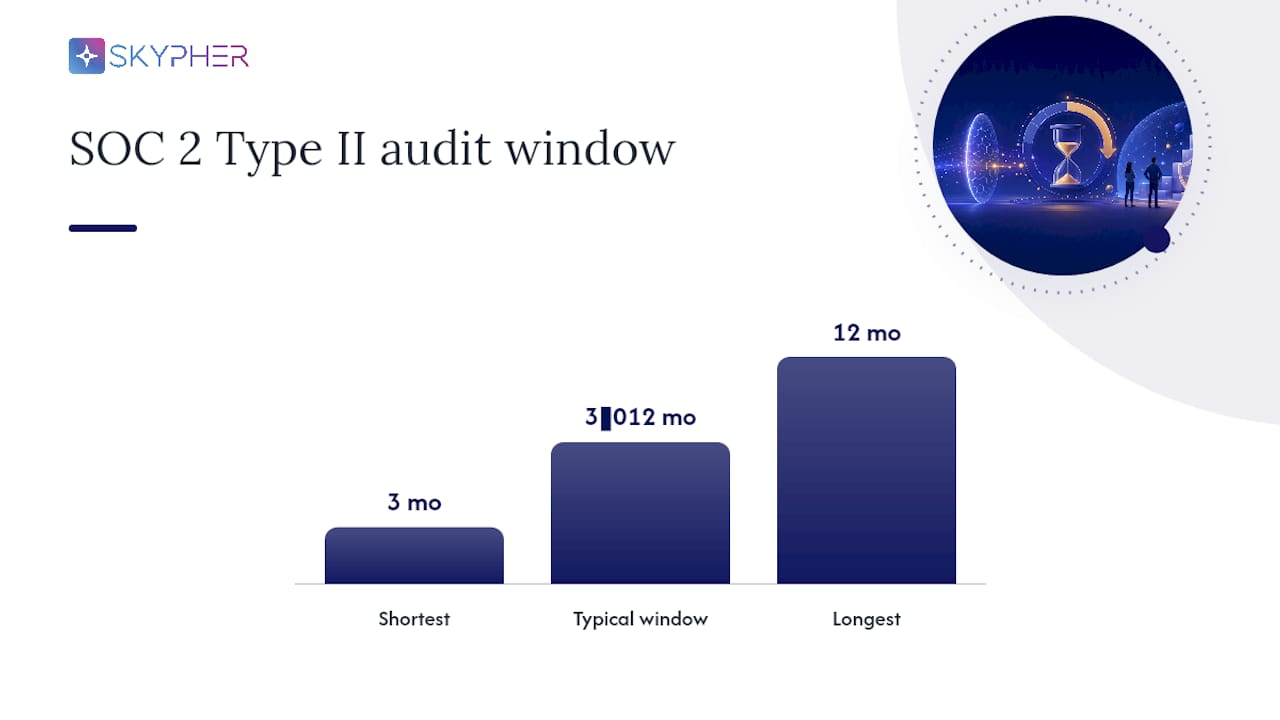
- Collect evidence continuously. Auditors will request access logs, configuration screenshots, incident tickets, and policy documents across the audit window, typically three to twelve months for a Type II exam.
- Confirm CPA firm licensing. Only a licensed CPA firm can issue the attestation, though compliance consultants can help with readiness work beforehand.
- Review the draft opinion before issuance. Confirm the scope statement and assertion language match what your sales and legal teams expect to publish.
Expect the SOC 3 itself to add a modest incremental fee on top of your SOC 2 Type II cost, since it reuses the same audit work rather than requiring a separate exam. Cost mainly moves with the number of Trust Services Criteria in scope and the complexity of your system boundary.
When vetting CPA firms, ask about their SaaS audit experience, request a sample SOC 3 report to review the writing quality, and confirm their typical issuance timeline after fieldwork closes. For guidance on auditor selection and audit services, see Auditing & VARA Licensing - Proud Lion Studios.
Pro Tip: Ask your auditor for a sample SOC 3 from a company in your industry before you sign an engagement letter. The writing quality and system description clarity vary a lot between firms, and you're stuck with whatever they produce for a full year.
Where Should You Publish a SOC 3 Once You Have It?
Publish the issued PDF as-is. There's no reason to summarize or reformat it, since the whole value of SOC 3 is that anyone can open it without friction.
The strongest placements are:
- A dedicated trust center page, linked from your main navigation
- A downloadable asset on your security or compliance webpage
- Partner and marketplace directories that list your certifications
- Sales decks and proposal templates for early-stage deals
SOC 3 reports work best when posted where prospects naturally look for trust signals, rather than buried in a support portal. Pairing it with an ISO 27001 certificate summary and a penetration test attestation rounds out a credible public posture. Most organizations refresh their SOC 3 annually alongside the SOC 2 Type II exam so the public document never falls out of sync with the audited period it represents.
What SOC 3 Cannot Do for You
SOC 3 cannot replace SOC 2 Type II when procurement demands detailed control testing under an NDA. It's a complement to that deeper report, not a substitute for it.
It's also not a certification, despite how often that word gets attached to it in sales conversations. It's an attestation covering a specific audit period, and it expires in relevance once that period ages out. And a qualified opinion still matters here: most published SOC 3 reports carry a clean opinion, but a qualified or adverse one should never get glossed over in your marketing copy just because the document is public-facing.
How Skypher Supports SOC 3 Publication and Evidence Readiness
Once you have an issued SOC 3, hosting it somewhere prospects can actually find it matters as much as earning it. A Trust Center gives security and compliance teams a dedicated, customizable place to publish SOC 3 alongside other public compliance artifacts, cutting down the manual back and forth that usually follows a report request.
Behind that public page, a Questionnaire Automation Tool speeds up the evidence collection that comes with follow-up diligence, pulling from a connected knowledge base instead of starting each questionnaire from scratch. For enterprise audit programs, integrations with common platforms keep evidence synced across the tools your team already uses.
A Practitioner's Take on SOC 3 as a Trust Signal
SOC 3 earns its keep at the top of the funnel, where it removes the "have you even been audited" objection before a deal ever reaches legal. That's real friction saved, especially for self-serve products fielding hundreds of prospects who'll never sign an NDA.
Where I'd push back on how teams often use it: treating SOC 3 as sufficient for enterprise deals is a mistake. If a prospect's security team is asking real questions, get them the SOC 2 Type II. Keep SOC 3 in its lane as a marketing and early-trust artifact, and the roadmap for both reports stays a lot less confusing.
— Gaspard
Publish SOC 3 and Cut Response Time With Skypher
Security and compliance teams benefit from a Trust Center that offers a customizable, public page to post SOC 3 alongside other attestations, so prospects get the proof they need before a deal ever touches legal. Pair that with a Questionnaire Automation Tool, and the follow-up questions that inevitably come after someone reads your SOC 3 get answered from a shared knowledge base instead of a fresh document every time.

Beyond hosting, connections to many third-party risk platforms and enterprise tools enable evidence auditors already reviewed to feed directly into the answers sales teams send prospects. If your team is juggling audit prep, questionnaire backlog, and a public trust page in three different tools, that gap can be addressed by integrating these processes in one platform. Explore the Trust Center platform or request a demo to see how your SOC 3 and your questionnaire workflow can finally live in one place.